 |
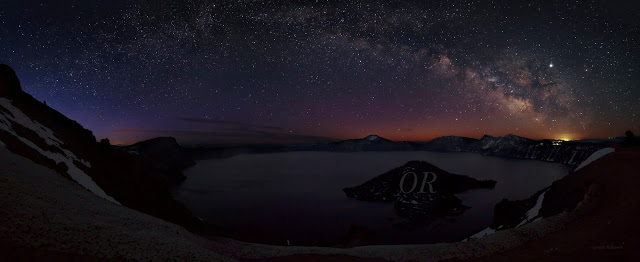
| Starlight over Crater Lake |
The road into Crater Lake National Park thread through a fire-bitten, young pine forest, the ground underneath the pathetic trees patched with snow. It was going to be cold at the top of the mountain.
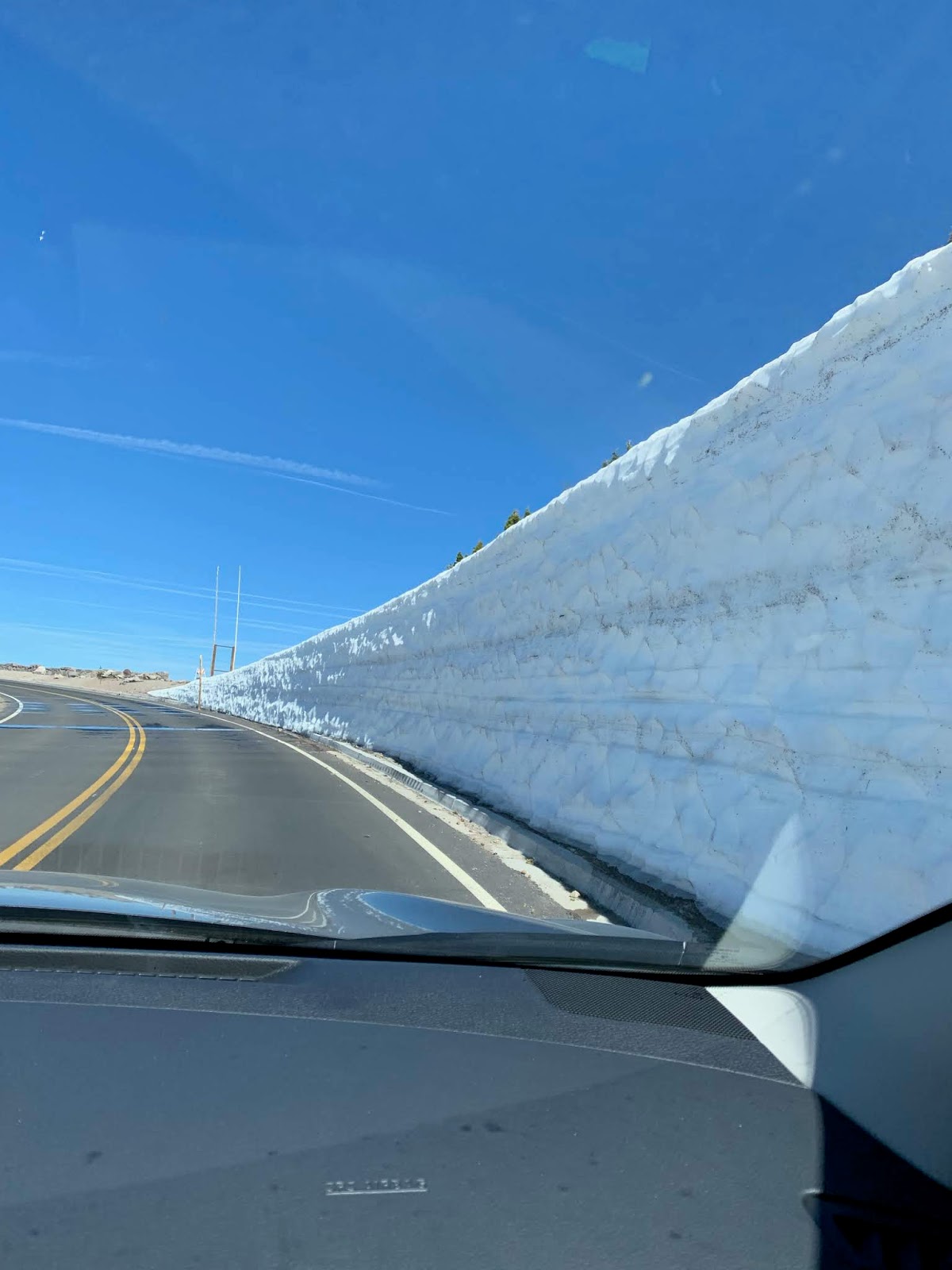
They stopped and paid the entrance fee to the park, then, as it is in so many of the national parks, kept driving a few miles before coming to the center of the park. As they drew closer to the visitor\’s center, Astrid noticed snow poles along the sides of the road. These are poles put in the ground vertically, marking the edges of the road when the snow is high. The poles were about eight feet tall.
At the visitor’s center they picked up information and maps. Astrid bought a National Park patch, which then obligated her to buying one in every national park she would ever go to and try to collect the ones from the places where she had already been.
 Half the 33 mile road circumventing the lake was closed because of snow, many of the trails were part-snow, part-mud, so snow-shoeing or skiing were not attractive activities for the day they had to spend. They drove as far as they could around the road, then back to a pull-off overlooking the lake.
Astrid stood on a ledge looking over a jewel-blue lake; to her right was a tall, still-snow-covered mountain with tracks that could tell a tale going up, then down. To her left was a smaller hill, a trail traversing it, but with snow obstructing it at the top. In front of her was a caldera. This caldera happened when the mouth of Mount Mazama volcano collapsed. It was one of the most beautiful things she had ever seen. The lake was one of her favorite colors, filled with the bluest, oddest water. There were no tides, not even proper waves driven by wind like in the Great Lakes, just little patches of shimmer here and there where the breeze brushed the surface. All the water in the lake came from snow melt and rain–no springs, no rivers, no streams fed into it.
Snow in June (6/19) was a bit incongruous, even to a Michigander who is not surprised and even expects a dusting into April. It was cold and windy, but they skies were clear, and promised to stay cloudless and that was the most important thing.
 |
| Phlox |
One of the first sights that caught Astrid’s eye, despite the glittering deep-blue marvel in front of her, was the plants. There were patches of Phlox subulata, a plant she was very familiar with, being a staple of the nursery industry for early spring blooming and groundcover. Here, it was planted by no home-owner or landscaper, but by Mother Nature herself.
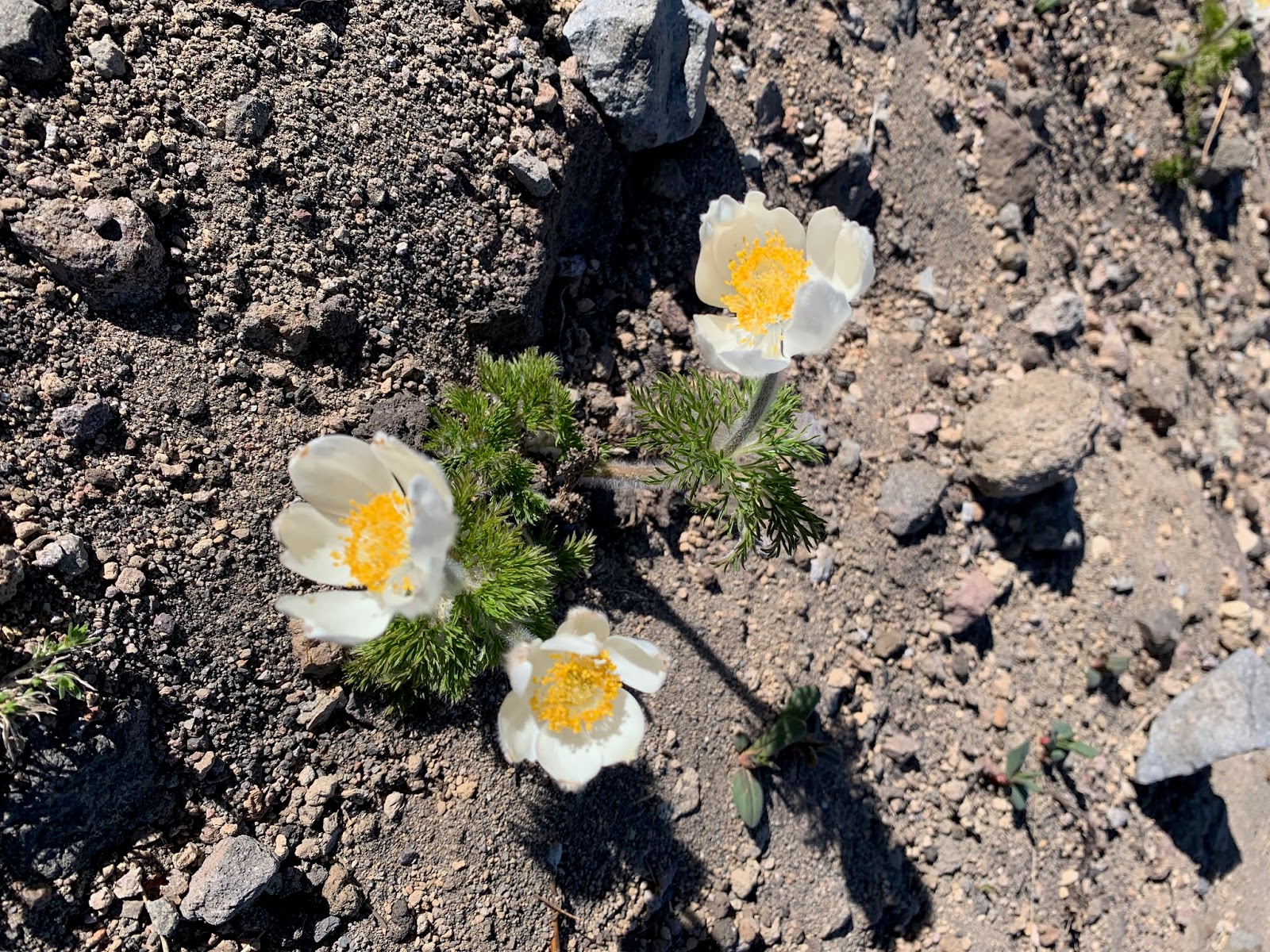
Another little gem that sparkled up from the dry, gravely ground was a small, unassuming little flower, Anemone occidentalis, Western pasque flower. It was an anemone, a plant Astrid had tried countless times to grow from seed, to her utter failure. But here they were, growing in what looked like harsh stony soil, on the side of a caldera, with snow just a few feet away.
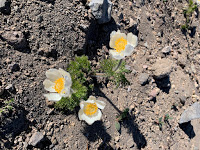 |
| Pasque Flower |
Bjorn, in all his planning prowess, had gotten them a room in the lodge for one night. Of all the national parks they had visited, they had never been able to stay in the lodges. The Crater Lake Lodge was built in 1915, of stones and logs, in a very rustic, but sturdy architecture. Over the years, sections were added, re-built, reinforced.
They checked into their room with literal keys to unlock the white-painted door. Everything–from the paint on the walls, the style of furniture, the bathroom fixtures, the windows–was refreshingly from another era. It was a treat for Astrid to stay there, even if their room looked out onto the parking lot and she had to fiddle with the bathroom door for it to stay shut.
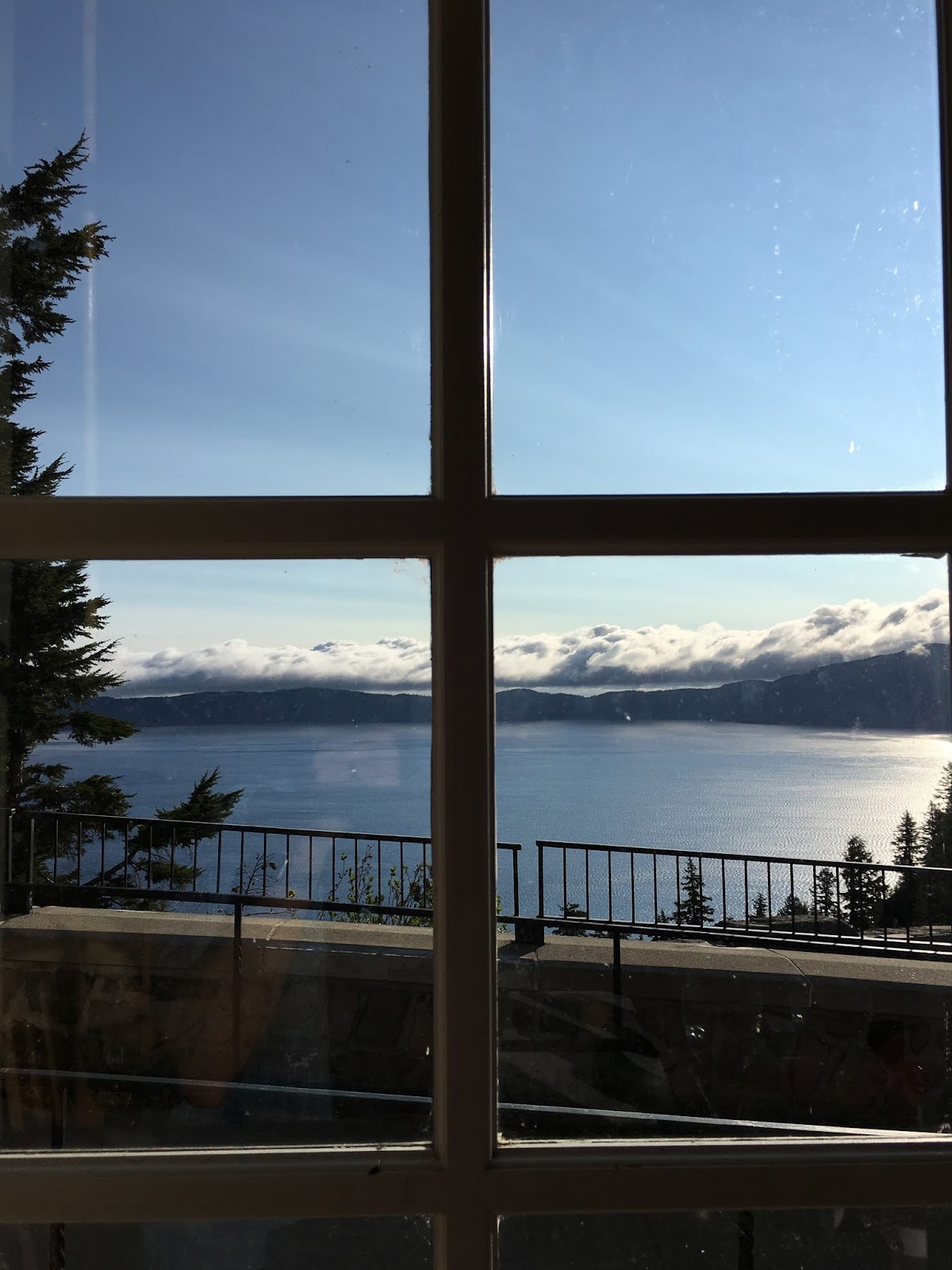
They ate dinner in the lodge dining room, seated a few yards from the windows looking out over the lake, but still able to see the glistening blue. Teddy Roosevelt had made Crater Lake the sixth national park on May 22, 1902, and Astrid was so glad of it.
 |
| Crater Lake Lodge |
“This place would be utterly ruined in the hands of private citizens,” she said, sparking the conversation. “This is one instance where I am glad that the government owns it and keeps it whole and uninfested. There would be boat launches, docks and cabins all around the edges, motor boats … maybe an ugly mansion on the island, who knows what else”
Bjorn had planned to photograph the dark skies over the lake that evening, so for that, he would need night. They hung out in their room, reading, resting, staying warm until the sun was almost gone.
As the sun was slowly being extinguished by the turn of the earth, they drove back to the overlook they had been at during the day and sat in the parking lot while the darkness and cold moved in. Bjorn got out to set up Tripod and Camera, then hopped back in the driver’s seat, shivering. He wrapped the towels they had borrowed from the hotel room around his neck and shoulders for a little extra warmth.
“Okay, here goes,” he said and walked out into the night, out of sight of the car to the steep edges of the lake.
Astrid sat in the cold dark for a while, wondering what to do. Standing out there for more than ten minutes in her sorely thin clothes was out of the question. She read from her e-reader a little, but was distracted by shivering. She started to watch some episodes of Father Brown, a show very loosely based on Chesterton’s detective priest stories, on a screen dimmed to the lowest level. But her distractions did not satisfy. Neither did her insufficiently insulated clothes keep her warm. What was a little cold, when before her lay such visual splendor?\” she asked, steeling herself to get out and look at the sky.
A few cars passed by, cutting the undiluted dark like sharp, severe knives. At the click of the car door, she unlocked the doors and Bjorn hopped in, huffing and puffing with cold.
“Ah it’s cold out there, but … you have to go out and see. It’s so clear, the light over to the right,” he said, pointing out of the windshield, “It’s a town, it’s a small town, but makes a lot of light.” He showed Astrid the view on the tiny screen of his camera.
“Well … give me the towels,” she said, pulling them from his neck, then headed out into the dark with a flashlight.
“Turn off your flashlight when you get out there,” Bjorn called after her.
She shined the light in front of her, on the trail, up steps to the cement platform of the overlook, then switched the light off.
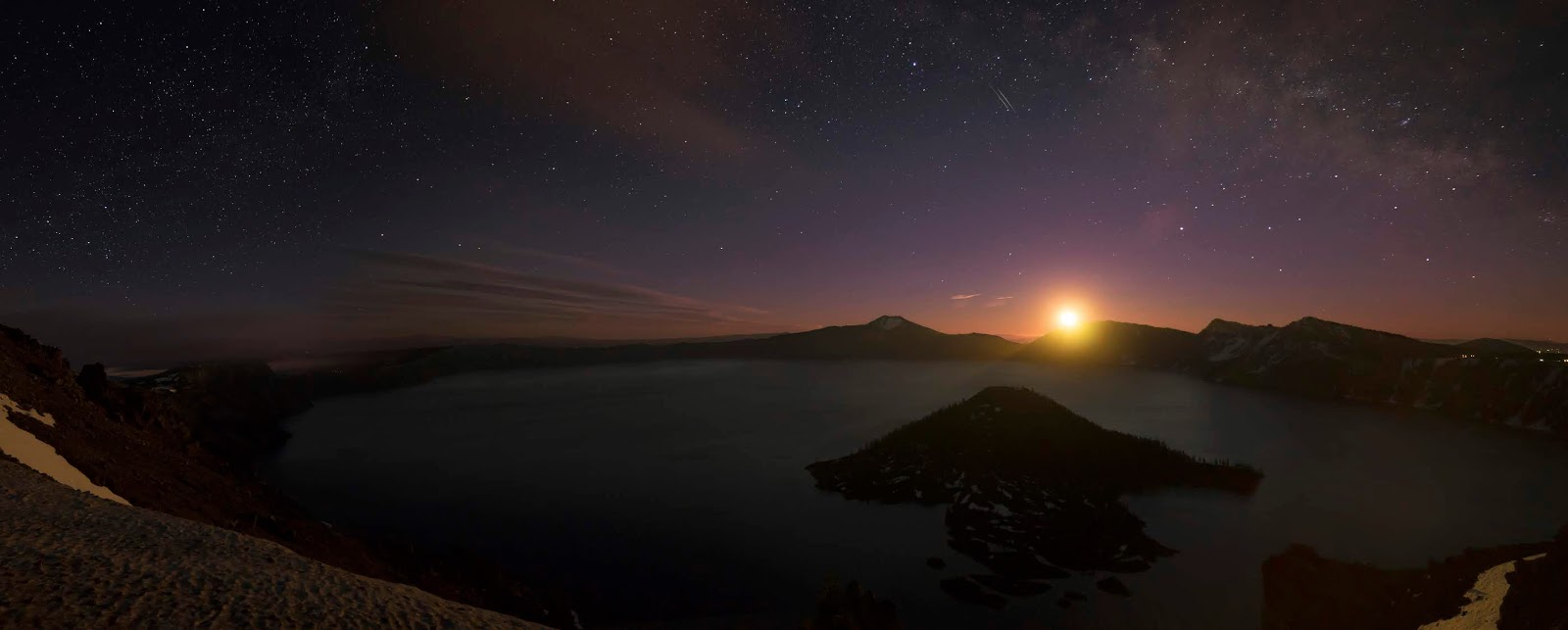
But it wasn’t dark; the sky was covered in light. She stood, turning, trying to take in the view, trying to see deeper, more. The Milky Way lit up as a vapory trail splitting the star-spattered sky. She breathed in the cold air, blowing it out in a white puff. It felt as if she were standing on the edge of the earth, floating, vulnerable out in the middle of the sky (she was, after all, on top of a mountain, just not the tallest mountain around). The light phenomena of stars in the dark was so very far away, yet it made a profound impact on her senses. It was a beautiful sight, but there was something else.
It was the lights. Concealing darkness lay like a heavy fog near the ground, in the crevices, along paths, under trees, but the sky, the immense, engulfing sky, was lit up as if it didn’t know that it was a time of darkness and fear for us puny humans on earth. For the sky, it was a time of splendor, to paint with the more subtle nuances of light and not-so-light.
 |
| Moon rise over Crater Lake |
It wasn’t like the sun which blanks out every other light during the day–this sky was filled with millions, trillions of tiny little points of light**–and that made all the difference in that cold night.
If you are a human living in the world, at times in your life you will experience figurative darkness. It may be because of pain, evil, loss, literal sight-loss, natural disaster or illness–anything that holds you back from moving forward. In those times, it is of utmost importance to remember that there is light in the world. There is more light in and around the world than we know, and it has power to dispel darkness. The light is all around us but sometimes, to see it, one must shut off the artificial light from our screens, put on a layer of courage, go out into the cold night, and look up.
The light in the sky made her think of the TSA man checking tickets and passports at the airport before their flight. She had noticed him because he shown bright out of the miasma of stressed and hurried passengers, and the stone faces of every other airport employee. He smiled, greeted people, even laughed as he processed their information; he was cheerful. People smiled back at him. Astrid loved him for it. There is light in the world. When the moon peeked up over the mountains, Bjorn packed up. The moon shine was so strong it overpowered the millions of tiny lights, making capturing good pictures of starlight almost impossible.
 We need the big lights, like the sun and moon, the heroic deeds and millionaire philanthropists, but don’t think for a minute that your little kindnesses and generosities, your hours of caring volunteerism, your smile in drudgery, your little points of light don’t make a difference in a sometimes very dark world.
 Figurative language goes only so far. There is absolute darkness, literally, under the earth. Some plants’ seeds require darkness to germinate, people and animals use darkness as cues to their circadian rhythms. Bats are wonderfully freaky animals that thrive in the dark. Astrid experienced absolute darkness in the Upper Peninsula of Michigan mines, Hawaiian lava tubes, and Kentuckian Mammoth Caves. Speaking figuratively, like evil, absolute darkness is disorienting, demoralizing and paralyzing. But the tiniest bit of light shining through it inspires hope in expanding, infectious magnitudes. Next morning, Astrid and Bjorn watched the gentle yellow sun light up Crater Lake as they ate breakfast in the dining room. As she sipped her coffee, she knew there was a lot more to this place that she didn’t see and may never, but was eternally thankful for the opportunity to visit, and experience the clear celestial skies that blessed the spot at night.
The whole time they were at Crater Lake, there was no cell service. She had no contact with either of her boys, or the outside world, but it turned out to be okay.
They drove past the giant crater on their way out, into the wilderness spotted with tiny towns and all their usual small-town components, where they recovered cell service, a little to her relief and dismay.
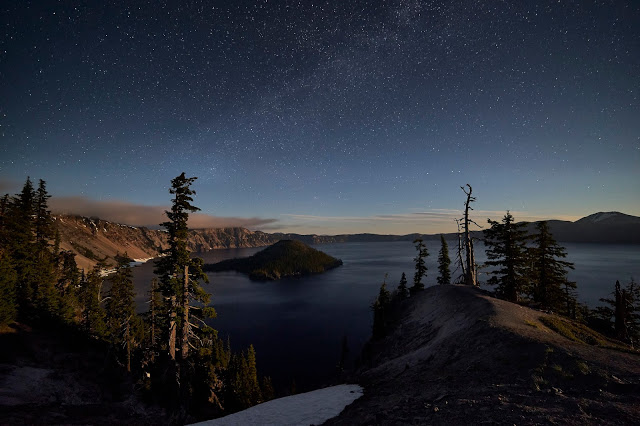 |
| Moon-lit Crater Lake |
As they drove on, the road leaving flat, visually dry areas and plunging into pine-covered, close mountains, they were unaware and unprepared for the severe trial of conservation principles that lay before them …
***
*John 1:5 The light shines in the darkness, and the darkness has not overcome it. Astrid (AJ, then) wrote about Hawaii’s light in A Light in Darkness
**President G.H.W.Bush mentions “points of light,” in a few of his speeches, referencing volunteer clubs and organizations, and he later founded a volunteer organization named Points of Light.

 Half the 33 mile road circumventing the lake was closed because of snow, many of the trails were part-snow, part-mud, so snow-shoeing or skiing were not attractive activities for the day they had to spend. They drove as far as they could around the road, then back to a pull-off overlooking the lake.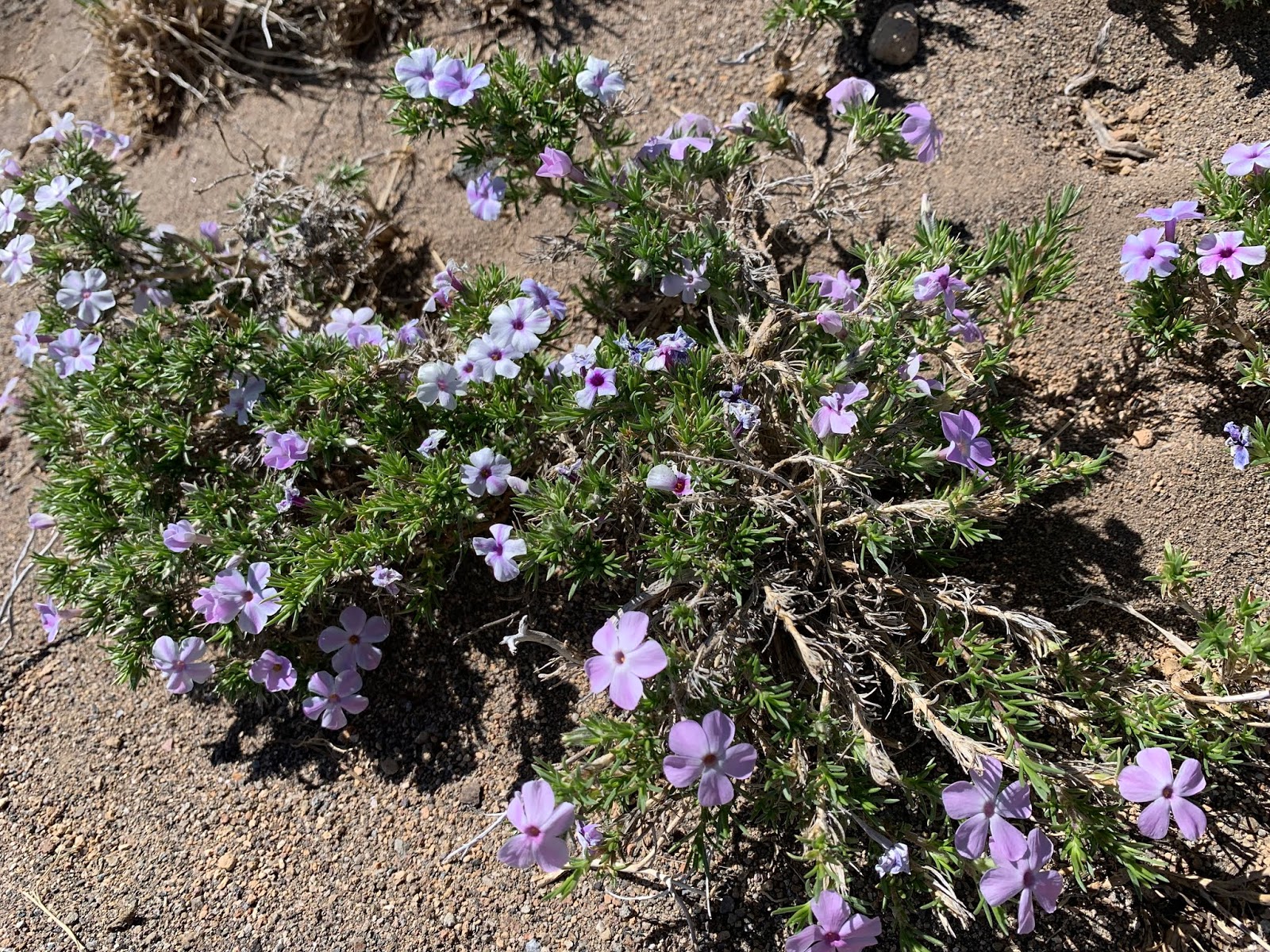


 We need the big lights, like the sun and moon, the heroic deeds and millionaire philanthropists, but don’t think for a minute that your little kindnesses and generosities, your hours of caring volunteerism, your smile in drudgery, your little points of light don’t make a difference in a sometimes very dark world.
 Not I
Not I 