On the way back from an early morning shower, Astrid had been lured down a trail leading to a lake by burning orange light filtering through the trees. The skies wanted to give her something.
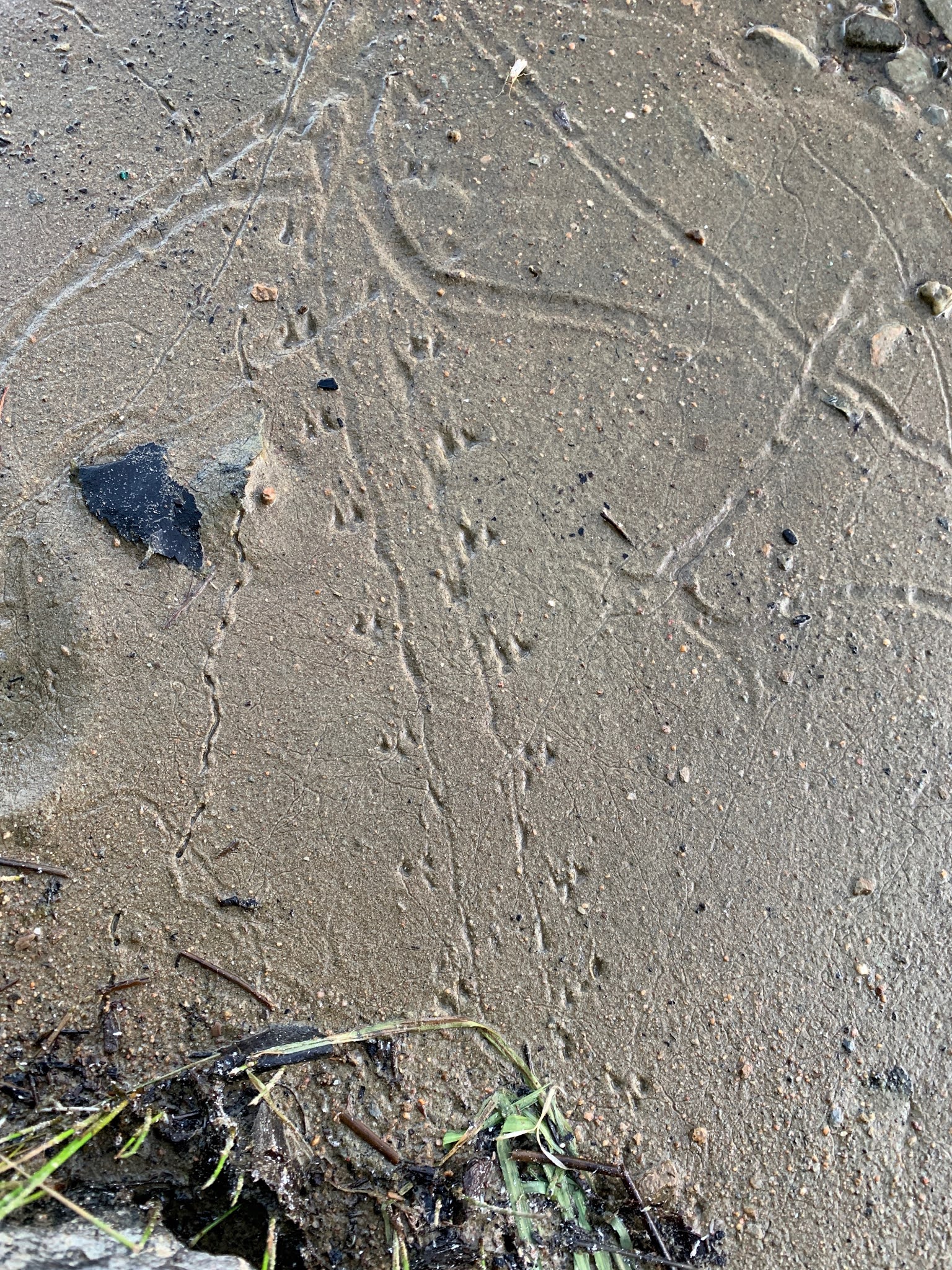
She crouched at the edge of the lake, distracted by wispy little footprints running toward the water: a little turtle? As she pondered these small marks in the mud, the soft light of dawn reached over the water and lifted her face to a magnificent horizon.
She was standing on the edge of one of the many lakes in Superior National Forest, in the Fall Lake Campground. Up the shore a distance, fishermen were setting off in noisy motor boats, fishing poles standing at the ready, off the bows.
This sunrise was the first gift she received from the wilderness during her time in Boundary Waters Canoe Area Wilderness. The 17-person group she was traveling with arrived in Ely, Minnesota the evening before, after a many-hours-long drive from southwest Michigan, and spent the night at the campground before setting off into the wild.
Within a few dim and dusky morning hours, everyone had eaten breakfast, packed the tents and myriad necessities away into backpacks and drove to LaTourelle’s Outfitters to pick up their canoes and head out into the Boundary Waters (BW).
Groups are limited to nine canoeists in the Boundary Waters, so the larger group split into two: one high-mileage group, group 1 (G1), the other, a lower-mileage, more leisurely, fishing-intensive group, group 2 (G2). Though neither were fisherman, Astrid and Snorri chose the low-mileage group.
After seeing G1 off into the tannin-tinted waters by the outfitters, G2 followed their canoes (being hauled on a trailer) to drop-off point numbered 30 on their maps.
***
\”Canoeing is pretty straight forward,” a friend commented when discussing the trip the previous December.
“I don’t find it so,” Astrid said. In her very limited experience, canoeing was not straight forward–it was a very crooked endeavor. It’s not a difficult thing to paddle a tandem canoe, but there is some finesse needed, some learning and refining of a technique to keep the canoe moving in a straight-ish line. As in life, speaking and walking, it involves constant course correction, but most people have more practice speaking and walking.
“The attempt to speak what I mean is the same kind of failure that walking is–a mere constantly recurring recovery from falling.” -George MacDonald
For the next six days, with few variations, G2 would follow this routine: breakfast, pack-up camp, paddle/portage, lunch, paddle/portage, set up camp, fish/swim/rest, dinner, sleep. But there was so much more to it.
G2’s three canoes paddled around the first shallow lake, through yellow water lilies (Nuphar lutea), looking for an outlet. When they finally found their way out to a bigger waterway, other canoeists, were heading out–going home from their week in the wild. One group they encountered consisted of a single canoe full of young children, with their ingenuous father using boat oars to row the canoe (one usually rows a boat, but paddles a canoe). After paddling down Lake One (dashed line on the map), G2 encountered their first portage.
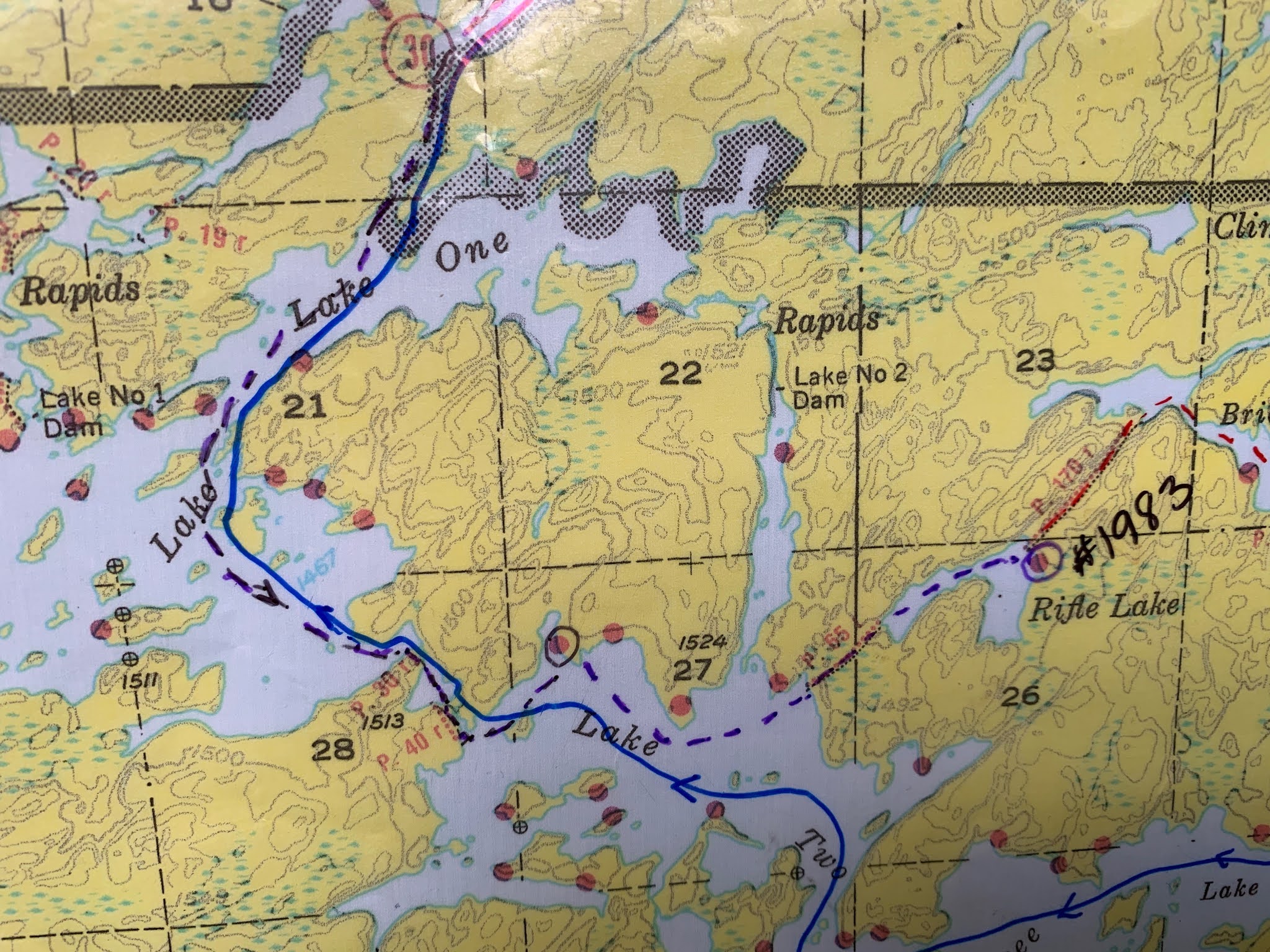 |
Portaging is the act of carrying your canoe over dry land. It meant donning backpacks, and carrying any other lose equipment, one or both persons turning the canoe upside down and carrying it on their shoulders over sometimes rocky and challenging terrain. Their first portage was marked 30r, or 30 rods. (1 rod =16.5’ or 5 meters.) Regrettably, Astrid only carried the canoe once, a last short portage at the end of their week.
After their first two portages, they stopped at a campsite on Lake Two for lunch. Campsites were denoted on the map by a red dot, and in real time by a “hob” or grate to cook on, usually situated on a big rock if possible.
As they prepared to pull their canoes up onto the campsite, a couple with photographic equipment paddled close by. Astrid saw them earlier, pointing large, long camera lenses at the bank.
“There’s a Merganser nest with babies,” the woman said, eyes sparkling as she paddled past.
She was in her element, doing what she loved, what made her heart full, you could hear it in her voice. To some people, it sounded odd. It was just a bird, with a nest, in a watery wilderness. What’s the big deal?
Everyone has their deep interests, those subjects and pursuits which, when engaged in, build us up, and though they may involve strenuous work, exhaustive tedium or deep laborious study, they grow us and energize us like nothing else can.
Taking pictures of waterfowl and wildlife was this woman’s (and presumably, her spouse’s) deep joy, her big deal and Astrid thanked God to see it in her, thanked God for the woman’s joy and excitement about a tiny, but significant bit of His creation.
When two canoe-fulls of fishermen went out to find a side-dish to dinner, Astrid and Snorri (a curious soul, but not necessarily a fisherman) explored the campsite. Astrid followed faint paths in the undergrowth up hills and around dozens of car-sized boulders. Unlike Merida in the movie Brave, who found will-o-the-wisps and a witch’s hut among Gaelic boulders, Astrid found something much more practical and useful: a vault toilet–just the toilet, no walls. It was a lot less repulsive than most she\’s seen.
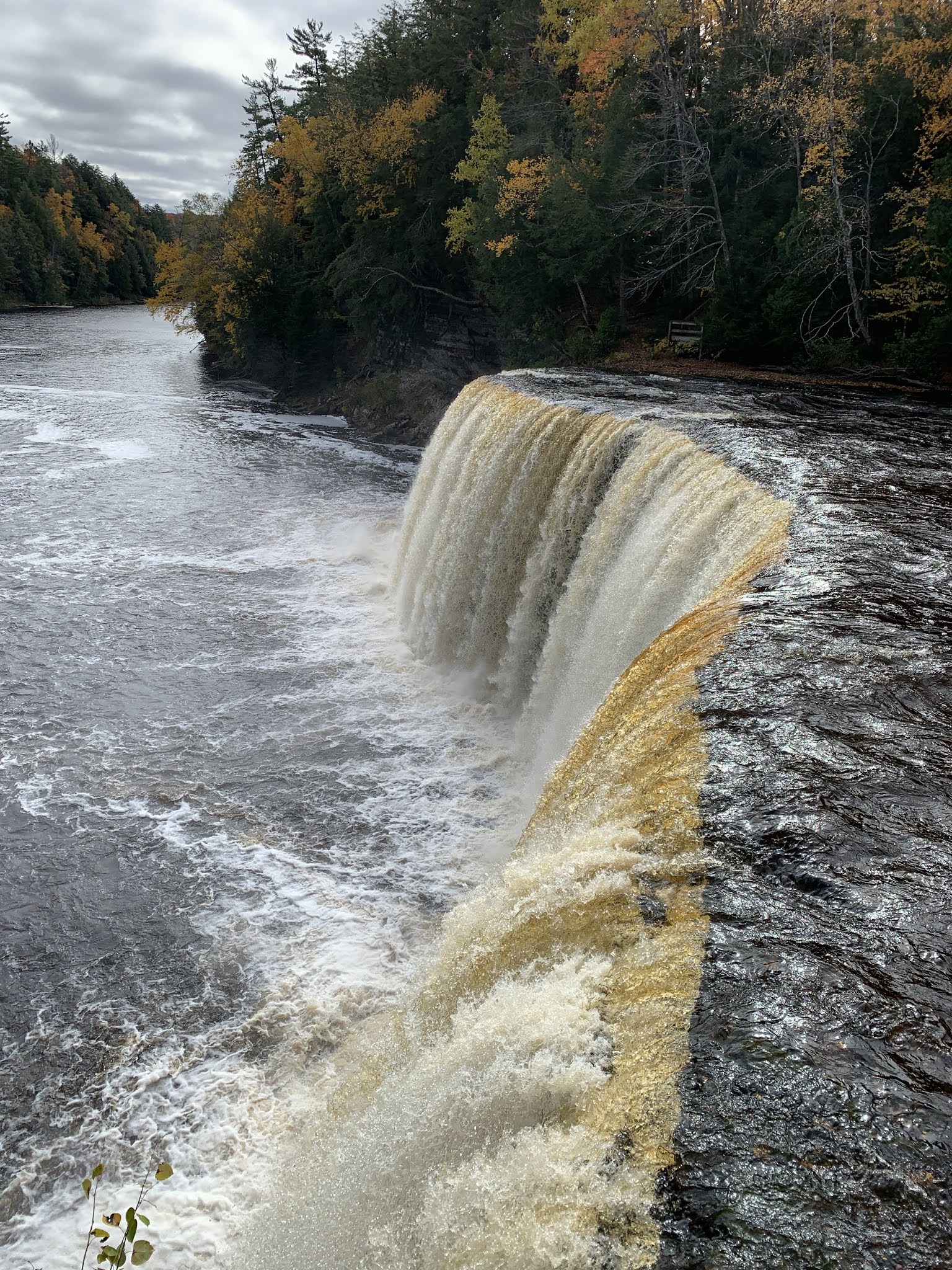
The water of many of BW’s lakes were tinged brown with tannins. Tannins are plant phenolic compounds that come from decomposing plants and leach out of the ground, into the water. They are largely harmless for human consumption, and cannot be filtered out by typical backpacking water filters. It’s always a little weird and disquieting to see and drink if one is not used to it. The water of Tahquamenon Falls (pictured above) in the UP of Michigan is brown with tannins.
Gun Lake’s water was brown with tannins, too and when in the evening, it became still as glass, it created a surface filled with dynamic reflections of the cloudy evening sky. The mature forest floor of the campsite was sparse, with a few understory plants, the thick canopy of trees keeping the sun to a minimum. Although voices and sounds traveled far in the clear watery wilderness, the quiet was just as profound, the only noises coming from animals or the weather. The night was even more quiet, punctuated by soft splashes of some aquatic animal frolicking in the dark, and the far-away calls of waterfowl, the loon’s song eerily distinct over them all.
On Loons (Gavia immer)

***

The morning promised another beautiful day with a clear blue sky, and after taking a bit long to breakfast and pack up, G2 hiked the 170r portage into Bridge Lake, then through a few short portages into Fire Lake.
The flotilla stopped at a campsite for lunch which had a curious mix of vegetation. The landscape was no longer thick with tall pines and huge boulders, the trees were sparse and undergrowth thick and green. As they paddled further on that day, they moved into not-so beautiful areas that were slowly reclaiming themselves from a decade-old fire.
In August 2011, a lightning strike started a fire that would eventually burn 93,000 acres of northern Minnesota, including areas of the BW. What Astrid saw was the latest, northern-most areas where the fire burned.
 After the trip, Snorri said the recovering landscape was ugly and bare. And it was. Dead trees still stood, making for a ragged and eerie horizon, especially at sunset and sunrise, but there was more to this picture than first impressions. The short, young, green grown was not majestic or beautiful yet, but it was a lot like hope sometimes; desperate, fledgling, awkward at first, but with a promise to grow into something glorious. Nature would and is turning the forest fire ashes into beauty, slowly, but surely. These forests, and many plants in them adapted to tolerate forest fires every 20-30 years; Jack pine (Pinus banksiana) cones only open in intense heat, fireweed (Chamerion angustifolium) flourishes after fires, forests are renewed and \”cleaned out\” by fires.
Bald Eagle (Haliaeetus leucocephalus)
They paddled on against a stiff breeze, from Fire Lake down to Hudson Lake, stopping to check out a potential campsite in which a bald eagle was perched on top of a dead tree. The bird sat surveying its domain while the members of the G2 flotilla came up on shore to check out the place. The eagle flew away, and the canoeists did too, the site was too small.
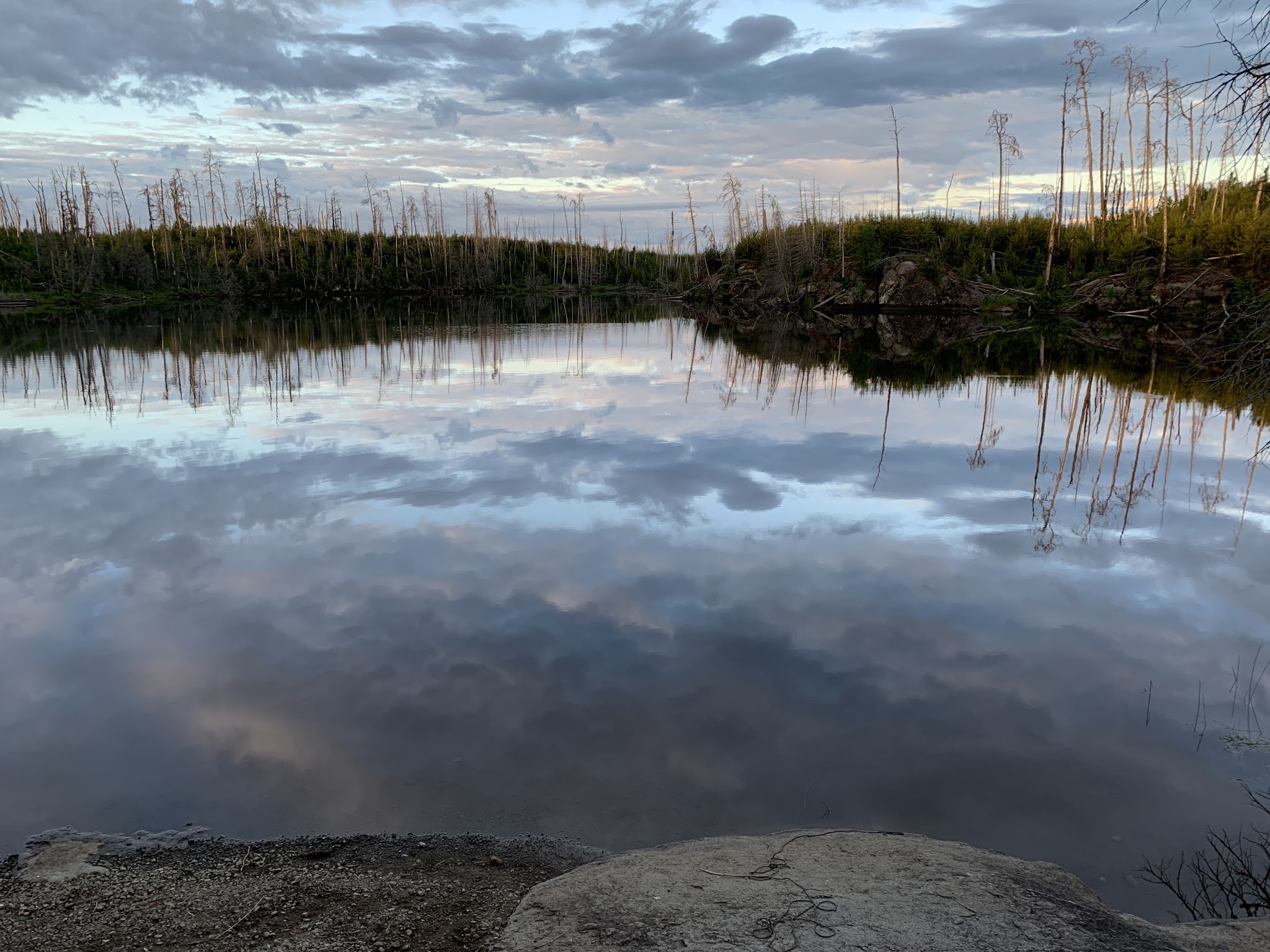
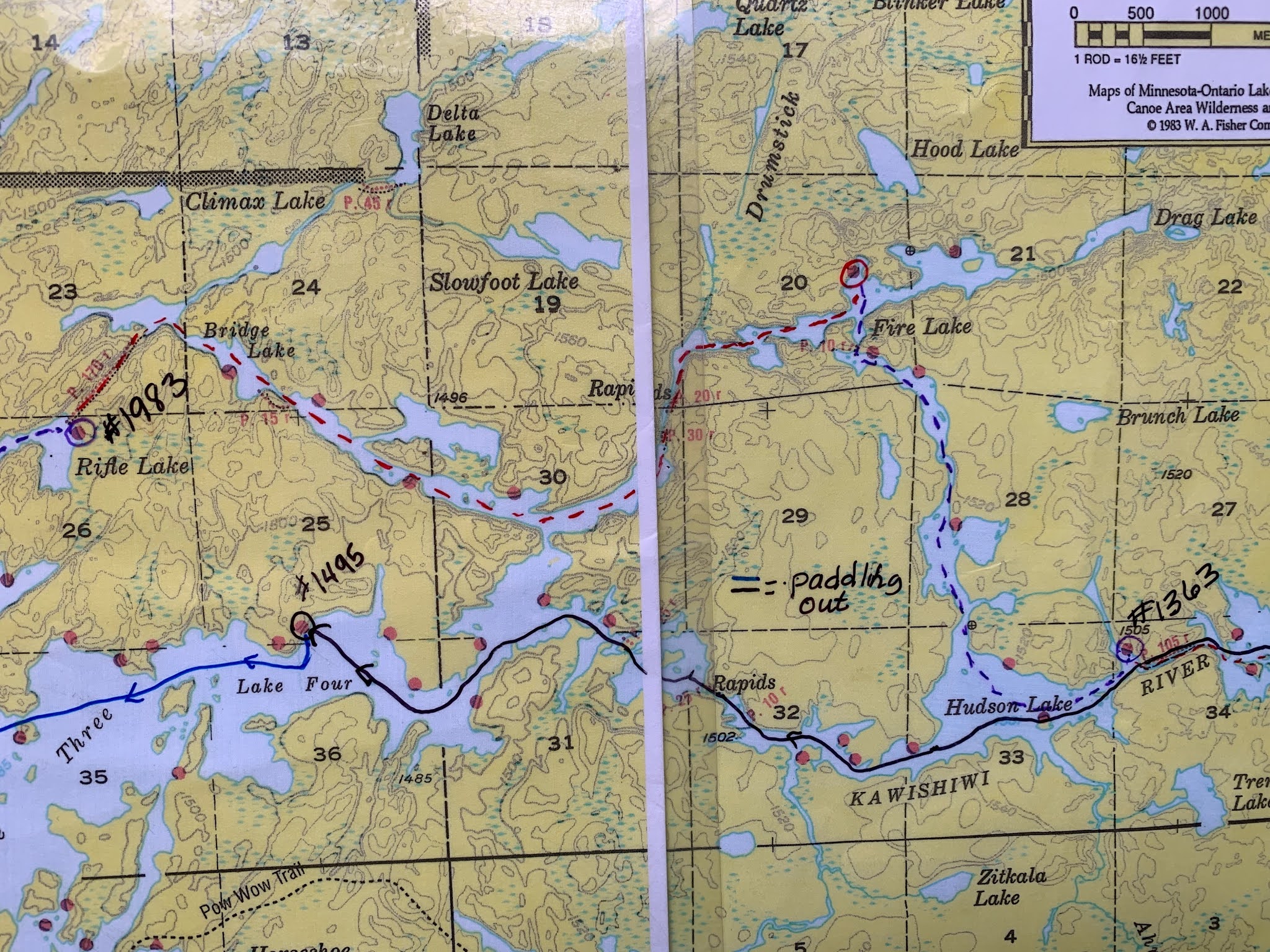
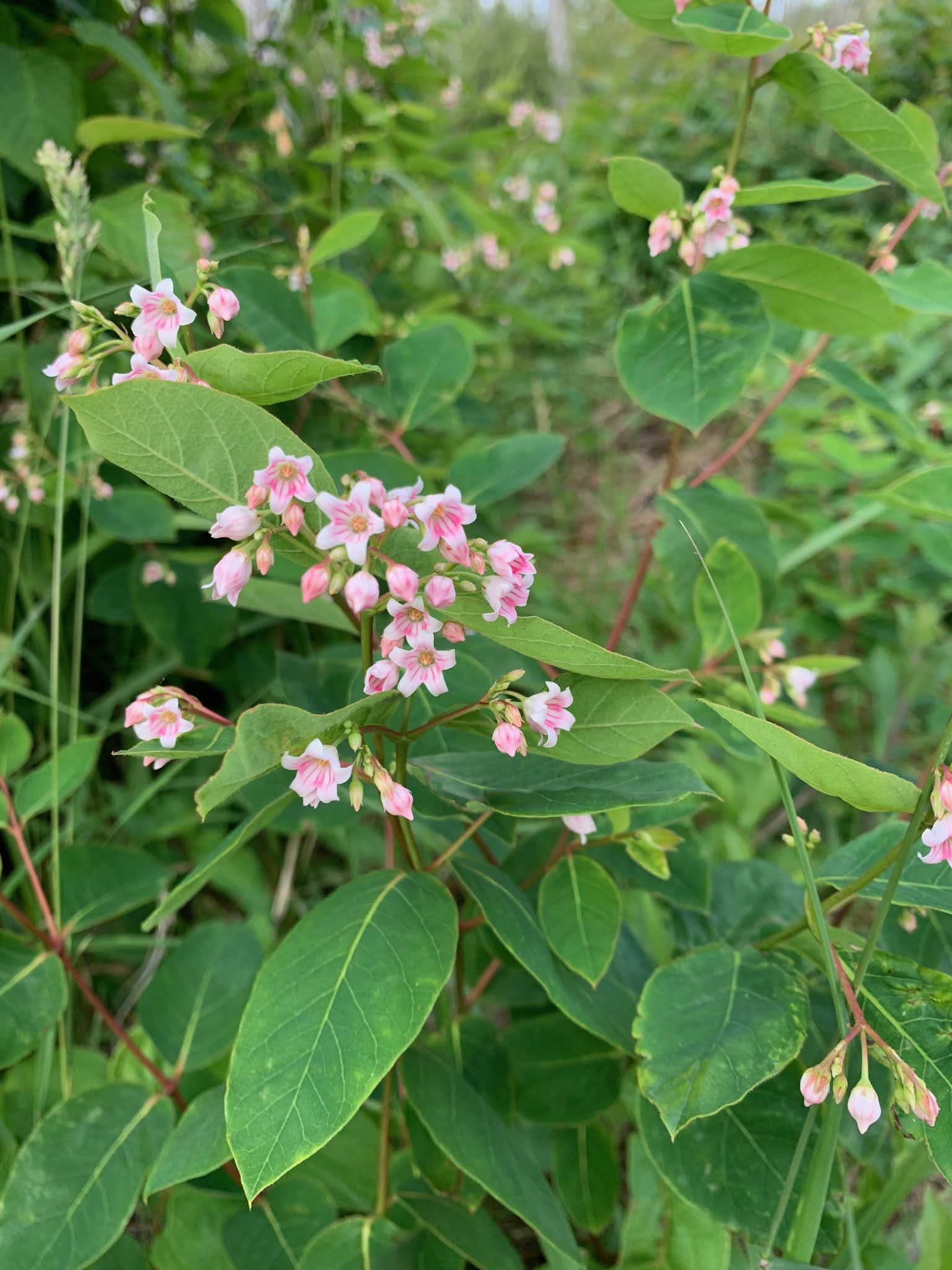
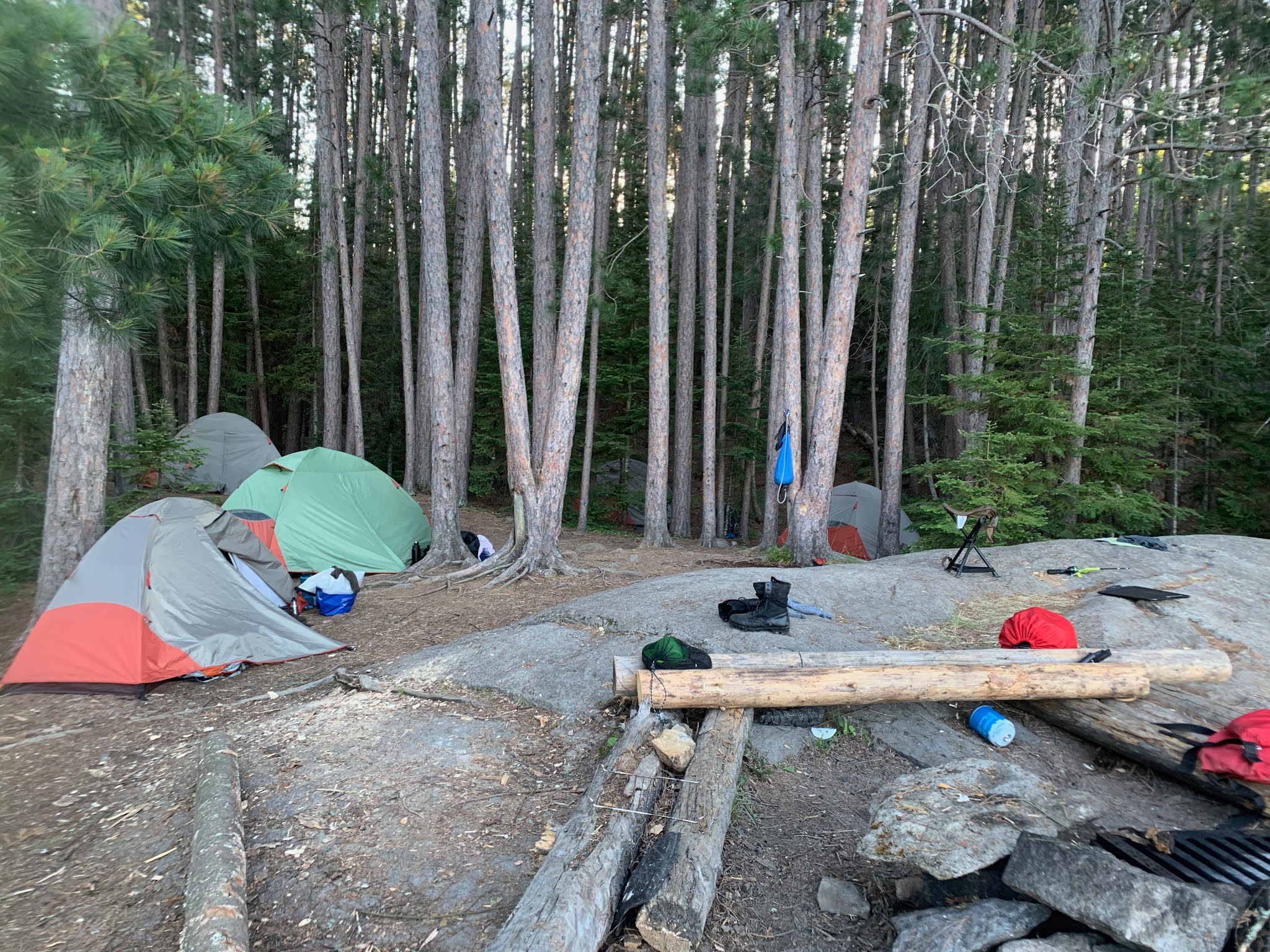
G2 moved on, eventually finding a suitable campsite, #1363 (dotted line, to the right of the map) amidst the recovering landscape, at a site next to a portage on Hudson Lake. As Astrid put up her tent and settled into the spot, she could see better how so many different plants were helping the fire-ravaged land heal. All around her was low, green brush. Wild rose, blackcap raspberries, dogbane, wildflowers of many kinds, Christmas tree-sized Jack Pine, grasses, were filling in, taking advantage of the full uninterrupted sunlight. All around, in what should have been thick shade, under the green brush, was fallen, burnt trees, dead rotting logs. The fire had been devastating, but life goes on; a forest was rising from the ashes; it was going to be beautiful someday.
“In some ways, our journey may be said to end with this letter-bag at Compiegne. The spell was broken. We had partly come home from that moment. No one should have any correspondence on a journey; it is bad enough to have to write, but the receipt of letters is the death of all holiday feeling.” –Robert Louis Stevenson, An Inland Voyage
Surely, Astrid’s loved ones at home were glad to hear she and Snorri hadn’t been eaten by bears or drowned in a freak canoe-moose accident, but the worries from home, of economic situations, of COVID, could just as easily come over those communications, and they did, interrupting Astrid’s concentrated immersion into the wilderness.

The next morning Astrid rose early as usual and haunted the campsite, took pictures of the sunrise against a jagged fire-carved horizon and collected firewood for cooking breakfast.
Dried pine needles were the best tinder, they caught fire in a second and burned fast, with a snapping, fire-cracker like crescendo. It gave her a better understanding to how the fire moved through the area: the existing smallish lightning-sparked fire heated and dried the pine needles on the trees around it until they became dry like tinder and exploded in fire, growing exponentially, moving across the landscape. As she loaded the hob with the dried pine needles and dead wood, a swarm of mosquitoes which were keeping warm on the ashes flew up into the air.
With some help from the morning\’s cook, she lowered the bear bag of food down from a dead tree and helped start breakfast.
**Blogger seems to be buggier with it\’s new format … I can\’t seem to get the formatting streamlined, sorry if that annoys you as much as it does me. Thanks for reading!
 Not I
Not I