
Again, it might have been the American tendency in travel. One goes, not so much to see but to tell afterward.
John Steinbeck, Travels with Charley in Search of America
Looking at her cell phone the next morning, she found smoke alarm alerts, then Bjorn’s text message conversation with Olaf (their two phones were inextricably and mysteriously linked at the time), who was at home.
“It’s okay … no fire. Olaf took care of it.” After more investigative questions, Astrid found that the not-very-old sump pump in the basement had been stuck “on,” to pump, and thenceforth overheated, causing smoke to fill the basement, triggering the whole-house smoke alarm. Luckily, Olaf got there in time to unplug it and ventilate the basement.
“And the snake! You didn’t get bit, did you?” Astrid asked knowing full well he wouldn’t be there if he did get bit.
“No, but that snake wasn’t happy with me.”
~~~
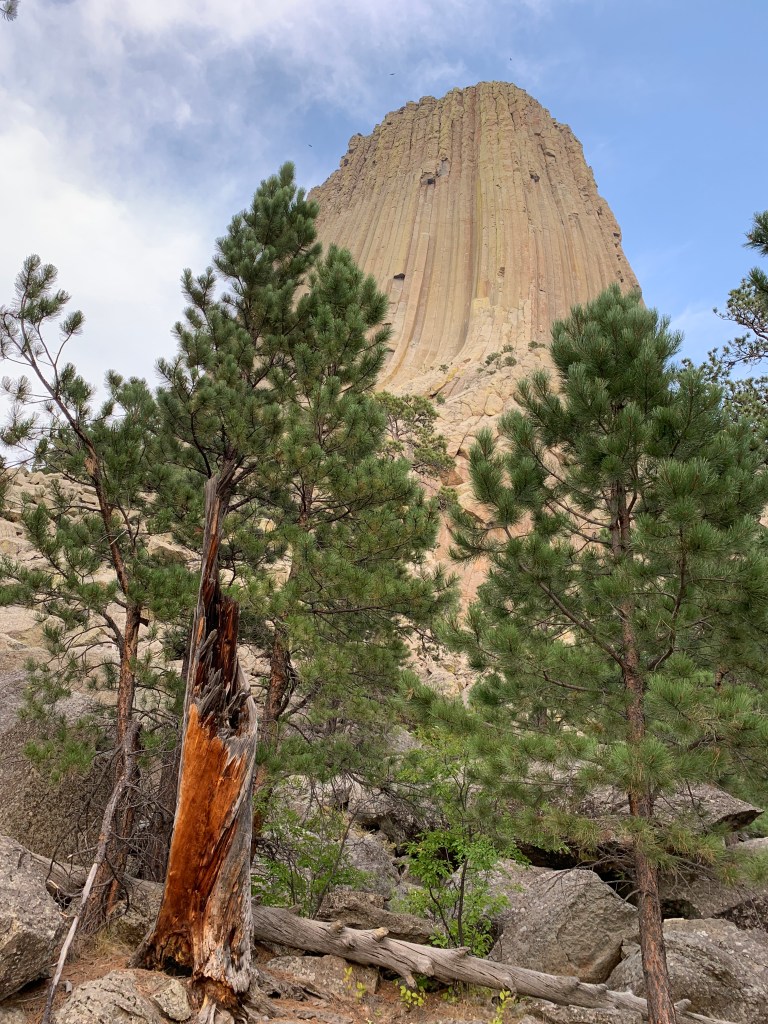
Stand-Off at Devil’s Tower, A Second-Hand Tale
Bjorn arrived in the parking lot of Devil’s Tower National Monument in the dark the night before, proceeded around the giant stump of rock and found the perfect place to set up his tripod between a boulder and a fallen log to get the best pictures. He had programmed Camera to take a photo every so many seconds, which, when the photos were combined, would make a star trails photo (as seen here) with Devil’s Tower in the foreground. As he was positioning Tripod and Camera, a telltale rattling sound interrupted his concentration. In vain, he swept the area with his flashlight, looking for the reptilian hazard, without pinpointing the source. He threw a handful of gravel in every direction, but still could not sight the rattler. He could only hear it getting more and more annoyed. He finished aiming the camera abandoned it to do its work, then quickly removed himself to across the path and climbed a boulder, thinking rattle snakes don’t climb boulders. (Astrid bet that if it really wanted to, the rattler could climb the boulder.) Every time the camera clicked, the Prairie Rattle Snake protested in the only way it knew. Click … hiss, rattle. Click, hiss, rattle. But Bjorn wasn’t backing down.
When Camera fulfilled its mission and its memory card, Bjorn had to brave his way back to rescue it from the fury of the rattler. He showered the area again with gravel, hoping to scare away the ever-hidden reptile, and didn’t get a reaction, so he gingerly and efficiently grabbed the tripod and high-tailed it out of the park.
~~~
The next day started off with less excitement than the night before, with a drive to Mount Rushmore. The highway weaved through rocks, mountains, trees, and rocky mountains covered in trees. They drove through the little town of Rapid City, South Dakota replete with patriotic shops and attractions of all kinds, then all of a sudden, around the corner of the highway, there it was: Mount Rushmore. Four presidents–Washington, Jefferson, Lincoln, and Roosevelt (Teddy)–immortalized in granite on the side of a mountain.

At the Mount Rushmore National Memorial, after visiting the gift shop for patches, the family walked along a corridor of states’ flags, then strolled along the Presidential Trail, a circular trail under the towering stoney gazes of the four immortalized presidents.
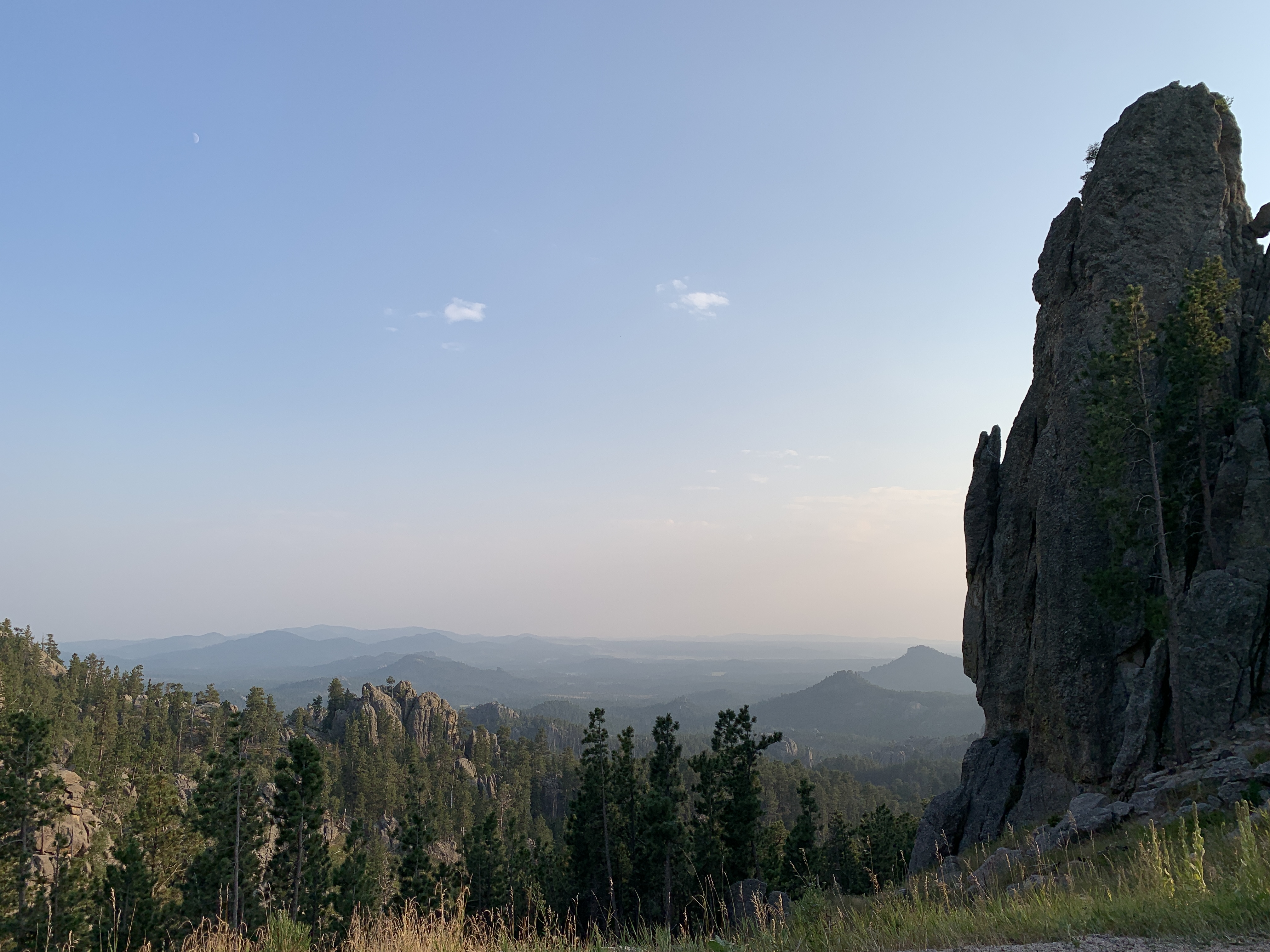
Then they hopped in their conveniently smaller car and drove to The Needles Highway, SD-87, for some spectacular views and anxiety inducing rock tunnels. The Needles Highway is a National Scenic Byway, finished in 1922. It’s south of Rapid City, and winds its way through to Custer State Park, where they would be staying in a cabin–not a tent– just outside the park property. All the camping and cabin sites were full that day, since camping was the nation’s new favorite pastime, because COVID.
One could write about how the road squeezed through square granite openings in the mountains, then snaked around the fantastic rock formations and lined the gravely picturesque valleys … but pictures illustrate these things so much better, especially when the event is so far away in time.
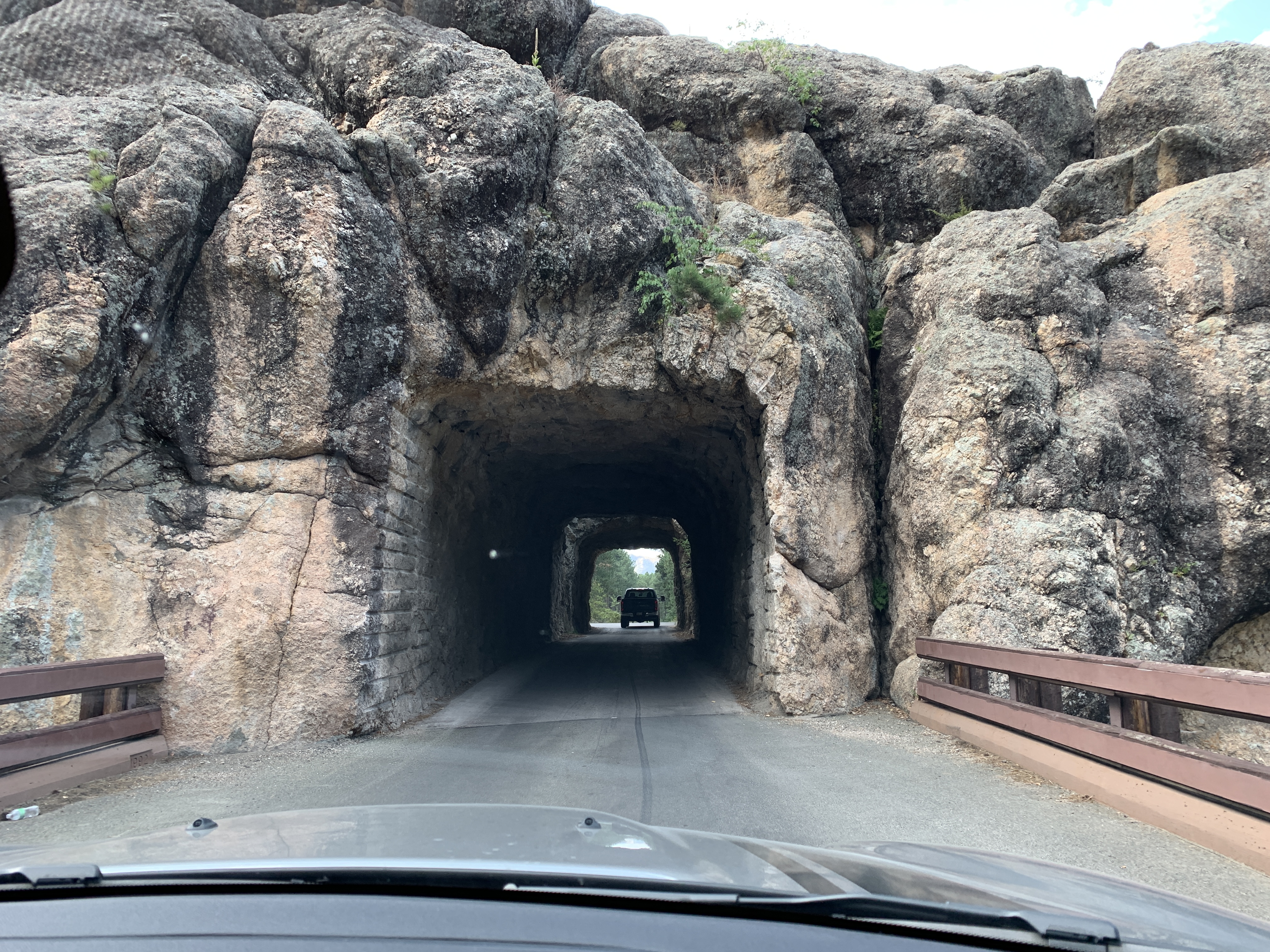
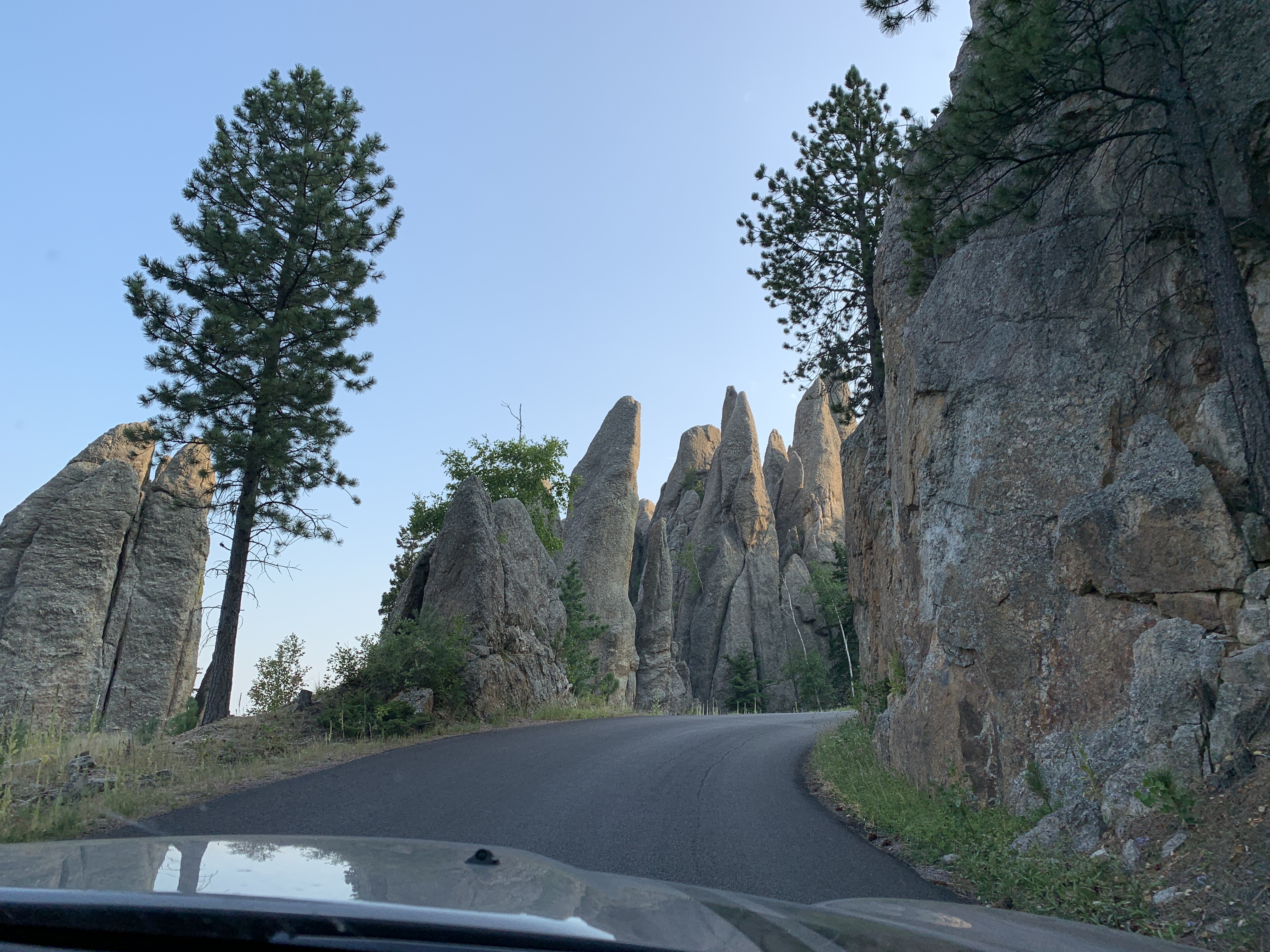


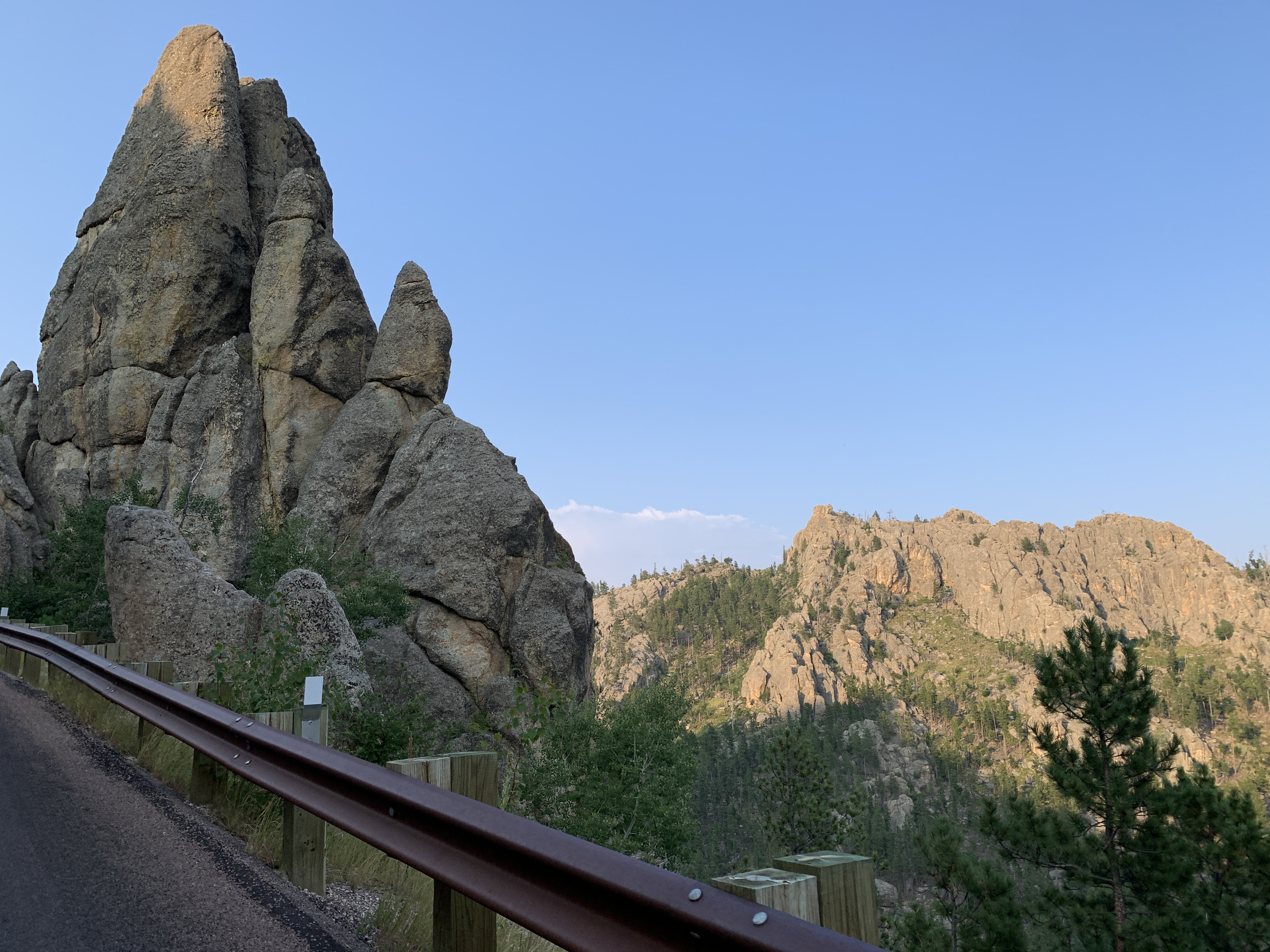


As the entered Custer State Park, and made there way to their cabin just on the outskirts of the park, they witnessed a lone bison, walking in the road in front of them, just minding his own business. The car in front of them veered closer, possibly to pet it, but the beast was having none of it. It swung his bulking head with its pointy horns at the vehicle, almost taking off its passenger side mirror.

Bison (or sometimes called Buffalo, but some argue that is not accurate) are not cows. Cows, the usually sweet cumbersome bovine of civilization can be, if provoked, dangerous in their heft and mass. Bison, with their heft, mass and pointy horns, are much quicker, they are fast on their feet, and the females are infamous for their “Mama Bear Syndrome.” It is not recommended to try to pet one in the wild or drive intentionally close to one, especially a lone bull who knows how to take care of himself.
After a side trip to check into their cabin and unload some luggage, they continued on the highway, weaving through even more narrow tunnels and through forests of narrow pointy boulders to Sylvan Lake Lodge to eat a decadent dinner. Ironically, Astrid had to have the pork chops because they were out of bison burgers.
The day was filled with rocks. First, a mountain of solid rock carved to resemble four U.S. presidents, then a road intentionally built around and through a forest of dynamic natural rock formations. Compared to southwest Michigan’s sandy, almost rock-less flats, the Dakotas have a lot of rocks. Some states in our expansive country don’t have to try too hard to accentuate their natural beauty and make it accessible to visitors, but South Dakota, some of whose natural beauties lie in rock, had to put extra effort into these attractions, but they made the best of them, made them beautiful, and found a way to share them with everyone with a small-enough car to fit through the rock tunnels on The Needles Highway.
 Not I
Not I 