As humans, we have a penchant for making comparisons, sorting things and putting them into hierarchies or categories. It’s a reflex that helps us bring order to the chaos of our physical and mental lives. If there is a “best day ever,” somewhere among the thousands of days of our lives, there must be ranked a “worst day ever.” The superlative things, thoughts, people and experiences stand out in our memories, marked usually by emotion and impact.
Astrid wrote about her highest ranked hike in The Gift of Snow . This hike involved cool, damp swirling snow, glacial water falls, mud, a black sheep and a white sheep, ponies in the snow, and at the end, a soak in thermal pools.
By the end of the day at Great Sand Dune NP, she would have another ranking hike–the best of her worst hikes.
Before starting the day, they stopped at a local store and bought a very precious can of bug spray for the mosquitoes. The first hike led them through the Pinon Flats Campground to the Dunes Overlook Trail, along a dry, pebbly trail lined with yellow-flowered cactus, rocks and deer. It was warm, the sun was strong, the air, dry and dusty.


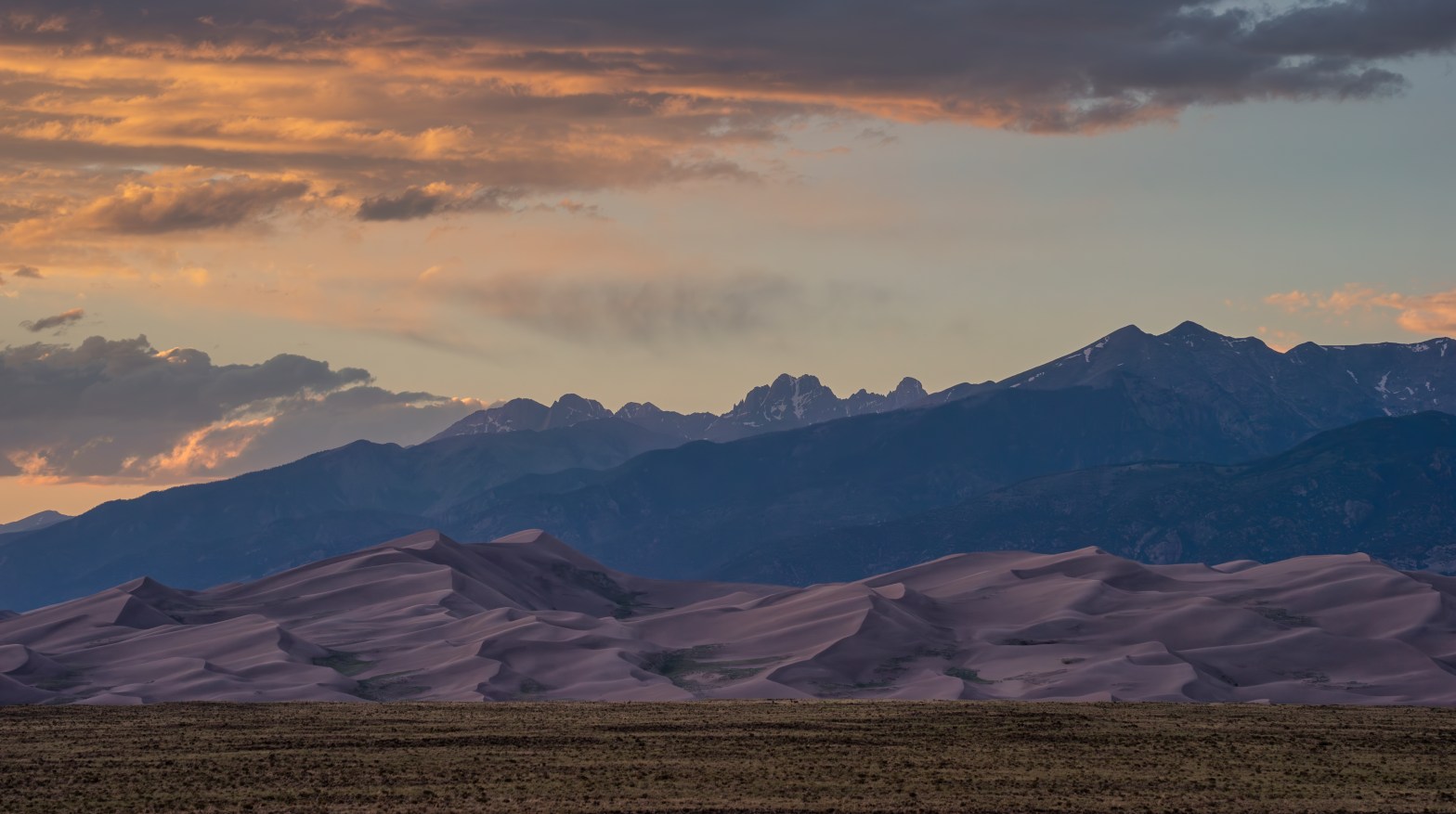
The pinnacle rewarded them with a view to the great sand dune, on a backdrop of the black Sangre de Cristo Mountains. There, Astrid broke out her binoculars to do a little ocular fishing, scanning the view, near and far for anything interesting. She didn’t catch anything.
Next was a more verdant, water-based hike. And where there is water, there are more people. Humans tend to congregate around water, whether to live or to visit. Zapata Falls Trail, southeast of the Great Sand Dune National Park is managed by The US Bureau of Land Management (not a park). The trail is wide, rocky in places and passes through sparse dry scrub, but it leads to a trail flanked by a crowd of green trees, and intersects South Zapata Creek. Astrid and Bjorn walked up the creek, through a narrow rocky canyon, trying to keep their feet dry. The falls at the end fell into a cavern sprayed with water.
After lunch, they rested while their socks dried in the breeze. Then the real challenge of the day began.
“Where are we going?” Astrid asked.
“Somewhere on the dunes for sunset pictures.”
Who wouldn’t want to take a moon-lit stroll through beautiful dunes, a gentle breeze at your back, stars twinkling and bright? The prospect sounded so much better than the eventual reality of that night.
Man must have just enough faith in himself to have adventures, and just enough doubt of himself to enjoy them. –G. K. Chesterton


After carefully walking across the trickling, sandy stream bed so as not to get their feet wet again, they started up the foot of the giant dune. Astrid tried to note the surroundings in case she had to find her way back. Except for the varying density of little shrubs, there were no real distinguishing characteristics. It was all sand. But not beach sand. It was very big piles, dunes of sand, narrow and blown into sharp peaks, with drop-offs to bare ground.
Bjorn had not shared details of the itinerary with Astrid because there were none. She just had to trust him. And that exposed a crack in her character. Surprises, imprecise plans at a certain level, and unknowns, all put Astrid on edge. She couldn’t prepare for what she didn’t know.
They had been trudging up dune and down, in a random pattern for the better part of an hour, when her patience eroded a little.
“Where do you want to be?” she asked. They were sitting at the very narrow top edge of a sand dune. She was trying to read her Kindle and regretting not packing a camp stool
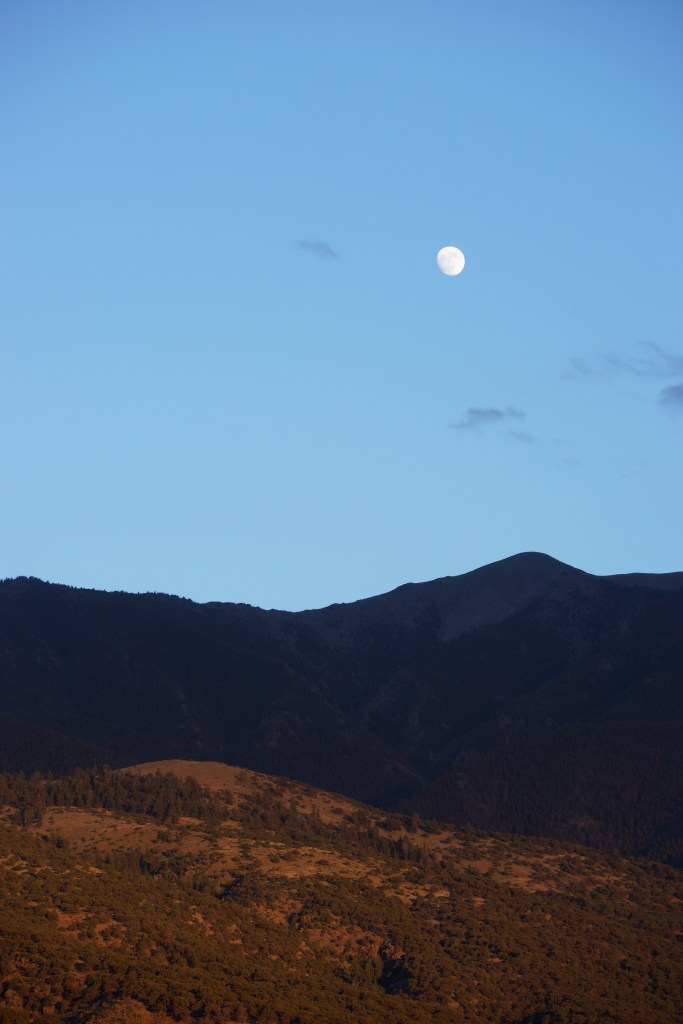
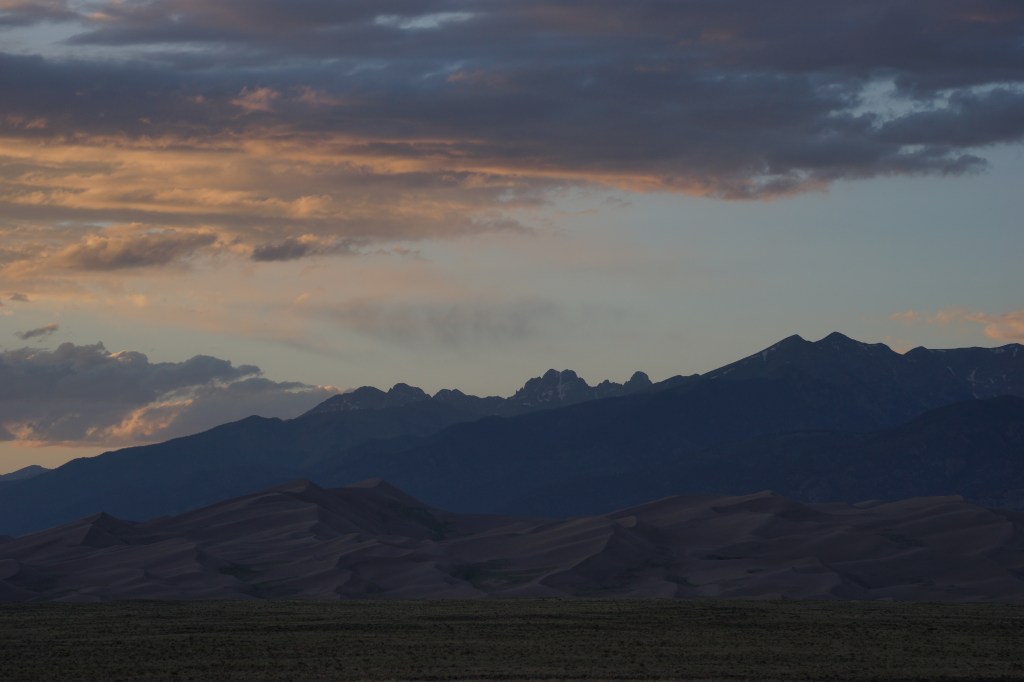
“I’ll know when I see it,” Bjorn replied, and started off for another spot. Clouds blocked out the gold glow of the sunset, dimming the moon and stars.
The dull light was dwindling, the narrow peaked ridges of the tall dunes were becoming hard to discern. Astrid had to warn Bjorn of a sharp drop-off right in front of him. And then the wind came to play. It was the same wind that formed and re-formed the dunes they were on. It was gentle at first, then it started to whip the sand around in gusts.
Bjorn was looking at the sky, trying to find some good angle for a photograph. The sky said, “No.”
Weather does what it wants. It doesn’t care where you are, how prepared you are, whether you are on vacation, or need to get a job done outside. It also doesn’t care if you want a good sunset picture through the dunes. Sometimes, “weather” is part of the excitement and challenge of going outdoors.


“I think we’re done here. I’m afraid the sand will damage the camera,” Bjorn said, finally giving up the quest.
The hike back was much more challenging than the hike in. They walked into the wind, which was strong enough to push back on them, whipping sand everywhere. Astrid held a light handkerchief (she always carried one) to her mouth and face for protection. They slogged on and on, through the inefficient, sometimes ankle-deep sand.
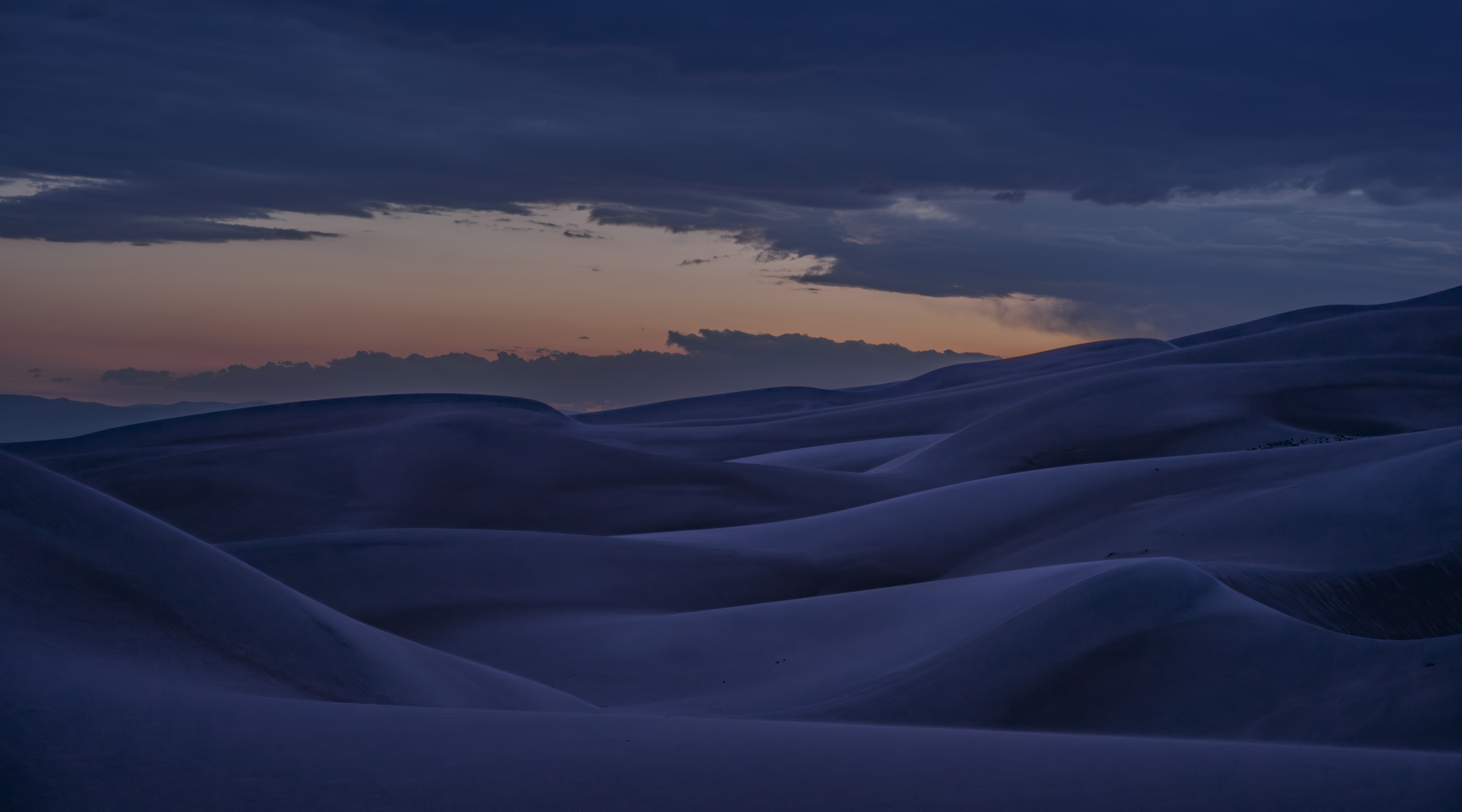
There was no path, only dune after dune after dune in the growing, wind-whipped darkness. It took all her effort to keep moving. Astrid wheezed with the effort, but she wouldn’t stop. Fear threatened.
If not for the hazy glow of the moon at their backs, and the sometimes-dense shrubs marking the shallow sand near the stream bed, they might have gotten very lost. Finally, but still being stung by the dune-forming winds, they saw little, artificial lights of people camping in tents near the stream bed and parking lot in the distance.
There were few physical markers, so they walked past where they had parked, and had to retrace. In the parking lot, fighting to keep the car doors open against the wind, they dumped little mounds of sand out of their shoes. As she tried desperately to get sand out of her hair, Astrid was internally fuming.
“That was the worst hike ever. I hated every minute of that. I hate sand. I hate sand forever.”
After venting her frustrations (audibly and not), she grew calmer by degrees. Eventually she realized that time would heal and help the memory of that hike, and in the end she would remember it as an edifying challenge, which she won bodily, but failed mentally. She had to find a way to respond better and curate a calm attitude about unexpected challenges.



It didn’t rain hard. There was that.
An adventure is only an inconvenience rightly considered. An inconvenience is only an adventure wrongly considered. – G. K. Chesterton
She had failed. Failed to see the inconvenience for the adventure it was, for the chance to strengthen and grow her character through the challenge of sand, wind, dark and physical struggle. But failures, if we recognize that we have fallen short, teach us what we lack, what we need to be better at. The fact that she could describe the hike as one of the most memorable, best, worst hikes ever, and that she was glad to have done it (and survived without getting lost in the dunes*) was a sign of growth.
I never lose. I either win or learn. –Nelson Mandela
It would not be the last time Astrid failed to live up to her standards. But she wouldn’t stop trying to cultivate a calm, collected and grateful attitude in the face of unexpected inconveniences. She added an 8th rule to Astrid’s Rules for Hiking:
Rule 8. Choose Your Attitude … especially when/if things get challenging, urgent, unpleasant and /or unexpected. With proper planning, a hiker/outdoor adventurer should know generally what lies before them on the trail. Sometimes unexpected circumstances of all kinds, or weather happens for which a hiker is not prepared. Instead of letting your brain choose panic, anger, and frustration, you choose to maintain a presence of mind, calmness, gratitude, patience and a problem-solving demeanor. It may turn your inconvenience into a exquisite adventure.
*In reality, there was no real danger of them getting lost. Bjorn had downloaded the “trail” map from AllTrails.com, and the GPS worked. It was the sandstorm, the significant physical struggle against weather and the darkness that added a sense of severity to the whole experience.
 Not I
Not I 