
“Are there sand dunes? What’s the weather like, is it going to rain? “ Astrid asked the next day as they drove north toward Denver. The skies were clear, it was sunny and warm. The plan was to do one last hike before catching their flight back to Michigan.
“No sand dunes, but it might be crowded. It’s a popular trail, “ Bjorn assured her. “We’ll stop by and check it out. It’s along the way. We don’t have to hike, we have plenty of other stuff we can do.”
They had left the plains surrounding The Great Sand Dunes National Park behind and were plunged into Colorado’s beautiful mountains again. On a topographical map, there is a line running north and south through the state, delineated by Interstate 25, which marks the very mountainous regions of CO on the west from the flatter side on the east. Astrid preferred the mountains, but saw value in spending time in flat arid wilderness, too.


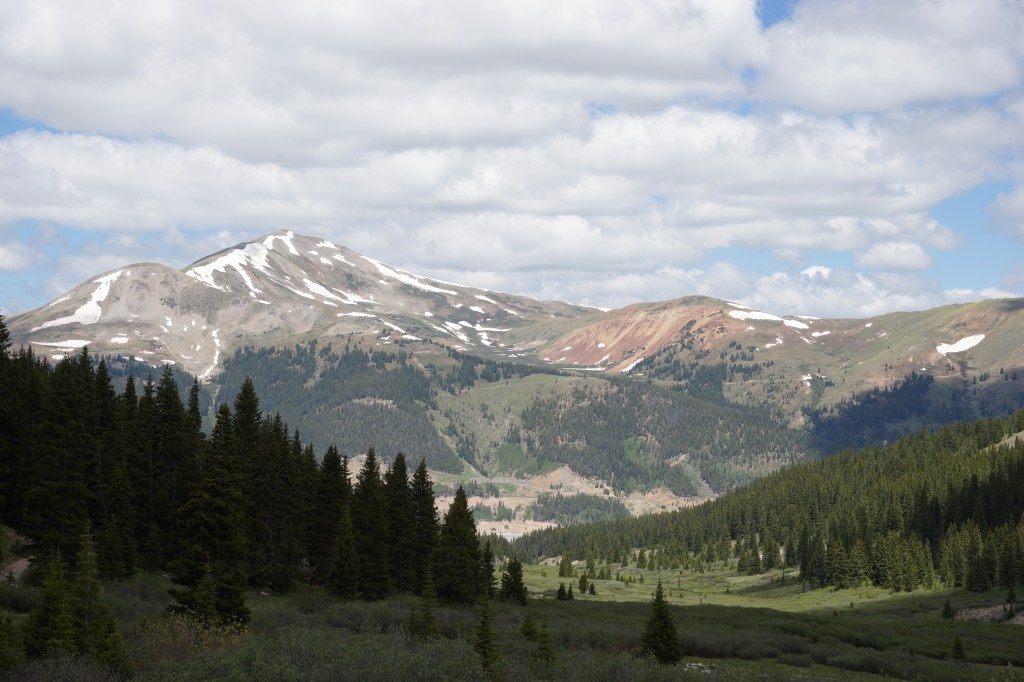

Winding highways thread through mountains to lead them to the Mayflower Gulch Trailhead (10,986’ elev.). The parking lot was full of cars, but not all the way full. Astrid and Bjorn squeezed their Jeep Liberty rental into one of the last spaces, and started up the trail. It was once a mining road that led to a valley sheltered by a crescent of tall black, snow-topped mountains. The trail was steep, of course, but was smooth and graveled, a road for sturdy mining equipment to travel in the past.
Astrid pushed on, up the inclines, determined to start boldly on her path to better reactions. The trail led them through an evergreen forest, which opened to a stream-lined prairie valley on one side. They were surrounded by green as they walked, with verdant nature crowding the trail on two sides. The air was cool and damp from the storm the night before. There were patches of snow in places.
***
In conversation, when Astrid would refer to the geologically ancient Appalachian valley where she grew up as “the mountains,” Bjorn, a stickler for details at times, would try to correct her. “They’re not mountains. Mountains are 2,000 feet or higher.” He grew up on a flat-ish, hilly part of PA. Astrid thinks he has mountain envy.
But he is technically correct. Like a person is correct, in a sense, when they say a tomato is not a vegetable. Yes, botanically, a tomato is not classified as a vegetable. Botanically, a tomato is a fruit. Most people are not botanists, but they do eat, and possibly cook, and as tomatoes are culinarily used as a vegetable, most people will call tomatoes “vegetables.” And that is generally acceptable.
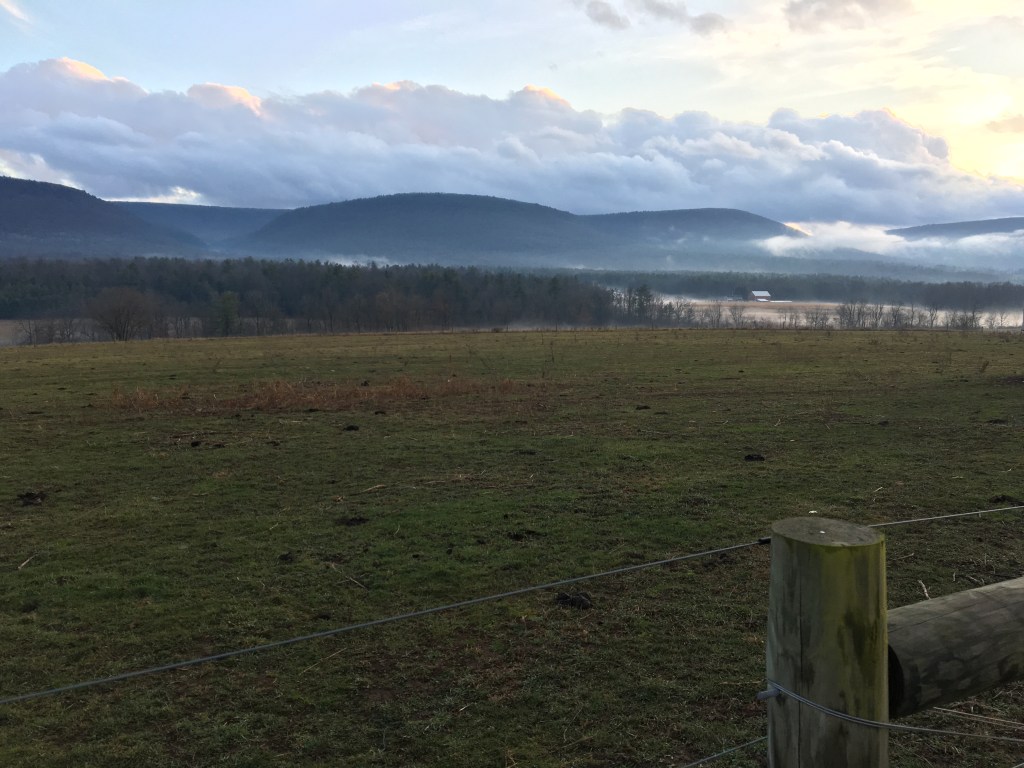

Geologically, many of the “mountains” immediately surrounding the small valley where she grew up did not measure over 2,000’, but a few did. And they were no joke to hike up. Astrid was not a geologist. They were mountains to her.
Astrid was nurtured and sheltered by these ancient behemoths all her young life. They made her feel secure. They sparked her curiosity and imagination, because they were secretive and hid so much she could never see. She didn’t know how beautiful they were until she left them for the lazy rolling hills of Central Kentucky, then the wide open, honest skies of Michigan. It’s why the plains of the western US, dry, dusty and brown, scared her a little, enough to make visiting them a bit thrilling.
***
There were a lot of dogs on the Mayflower trail that day, sniffing and walking and just loving where they were. Astrid loved to see dogs enjoying themselves. Eventually the trail opened up to a small mountain plain, where the deserted remnants of the mining camp lay, persisting through the years. It was a piece of Alpine beauty, and Astrid treasured the opportunity to just stand and look at the towering mountains before them.
The trip ended with lunch in Frisco, a ski/mountain town. The return flight was uneventful. They landed back in the flatlands, greeted by dense, humid air tinged with the smoke from Canadian wildfires.
June 2023
More Mountains to Come!

 Not I
Not I 