
Astrid and her family started to understand their mistake, when, on their way out of Mt. Rainier National Park for lunch, they passed car after car after car waiting in the line–at least a mile long–to get into the park. So they weren’t surprised after lunch, as they made their way back, to find the same slow line in which they crawled forth slowly for 1.5 hours. Lesson learned: Never leave a busy national park until you are 100% done there.
When they finally made it into the park, they found their camping spot at Cougar Rock Campground, and set up tents. The spot was right next to the bathrooms, which was not ideal for Astrid because of the smells, all-night lights, and banging doors, but she was camping in an unfamiliar state, at a campground with “cougar” in the name, so it felt right.


***
Have you ever met someone so extraordinary (not for fame, or beauty) who was immediately intimidating? Not off-putting, but intimidating and intriguing in a way such that you wanted to know everything about them? If you were ever a teenager, you also know that you would probably be disappointed if you did know everything about them. It’s the basis for the saying, “Never meet your heroes.”
Mountains are the same … they are intriguing, attractive, and most humans see them and want to climb them, or “know everything about them.” But if you’ve never encountered altitude and inclines, you might not know that mountains are conspiring with gravity to suppress humanity and put it in its place. Mountains keep close company with wicked, temperamental weather patterns, and flora and fauna who don’t care a bit about human rights or welfare. Mountains don’t care about humanity and never will, it doesn’t matter how much we love them or fight for them.
But we just can’t stay away.
“A mountain is a strange and awful thing. In old times, without knowing so much of their strangeness and awfulness as we do, people were yet more afraid of mountains, but then somehow they did not come to see how beautiful they are as well as awful, and they hated them. And what people hate, they must fear. Now that we have learnt to look at them with admiration, perhaps we do not feel quite awe enough of them. To me they are beautiful terrors.”
George MacDonald, The princess and curdie, Chapter 1, first paragraph.
After worrying and debating with Bjorn about the best time to see the mountain in relation to weather and visibility, Astrid suggested, “The mountain is so fickle in its appearances, I don’t think we should plan on seeing Mt. Rainier again–we should just go and do.”
So the family went and did. Back at the Paradise Area, they hiked the Paradise Meadows Nisqually Vista Trails, a paved path through green swaths pocked with millions of wildflowers. At the visitors center, Astrid bought a patch, but because the food court there was closed, they took a short hike across the parking lot to The Paradise Inn food court for a snack. The Paradise Inn was built in 1917, fortified by large logs to hold it up against the snow that buried it every winter. The family munched away in the cavernous log-framed lobby, as a piano man filled the space with pleasant music.
It was the best place to spend their extra time. It was cold out and when the sun went down, they would have nowhere to go except into tents, with only the heat from their bodies to keep them warm. So they sat. It was cozy and comfortable on the bottom floor of the lobby, but with a crowd of impatient and annoyed guests waiting with luggage to check into their rooms, so Astrid explored.
The lobby of the Paradise Inn has a balcony running the whole way around it. As heat does, Astrid rose with it, discovering a Most Cozy Place. She found it in the corner of this creaking wood balcony, tangibly warmer than the bottom floor, rife with the aroma of old wood and mocha drifting up from the snack shop below. Soft yellow light diffused from shaded lamps, the lobby piano music still audible, but softer, and in the corner, sat just enough Morris chairs for Bjorn, Snorri and her. It was the ultimate nook. All that was missing was a wool blanket. It was the perfect spot to enjoy the inn’s wi-fi, cozy atmosphere, and heat. Astrid scribbled in her notebook, and read a book.
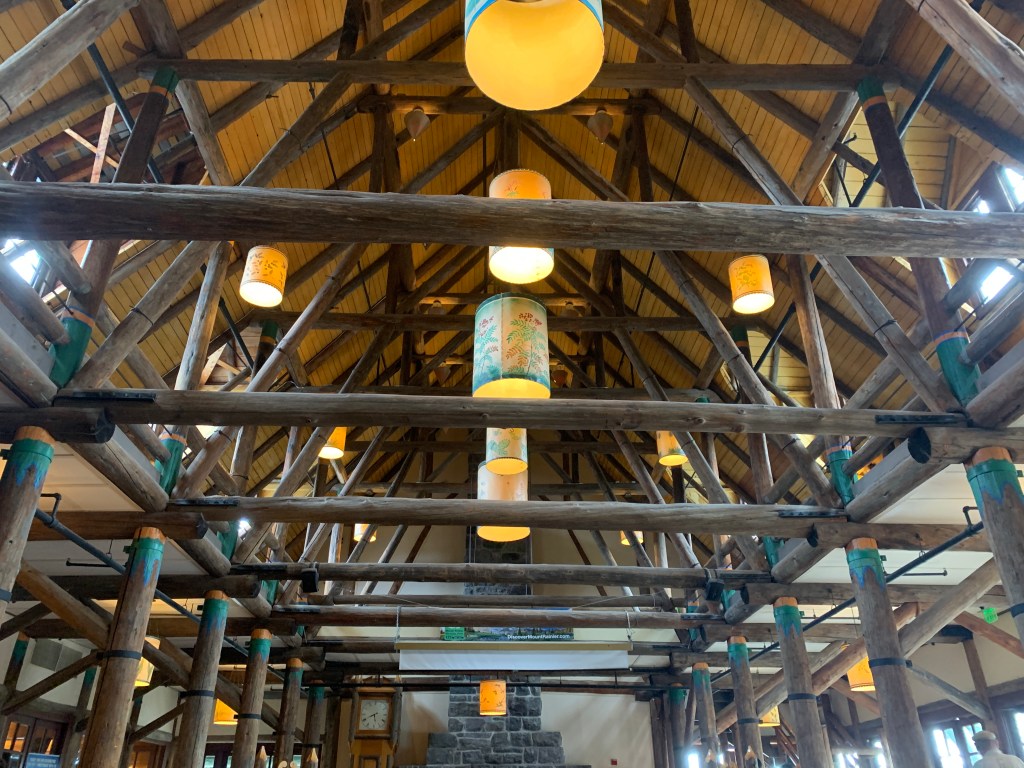

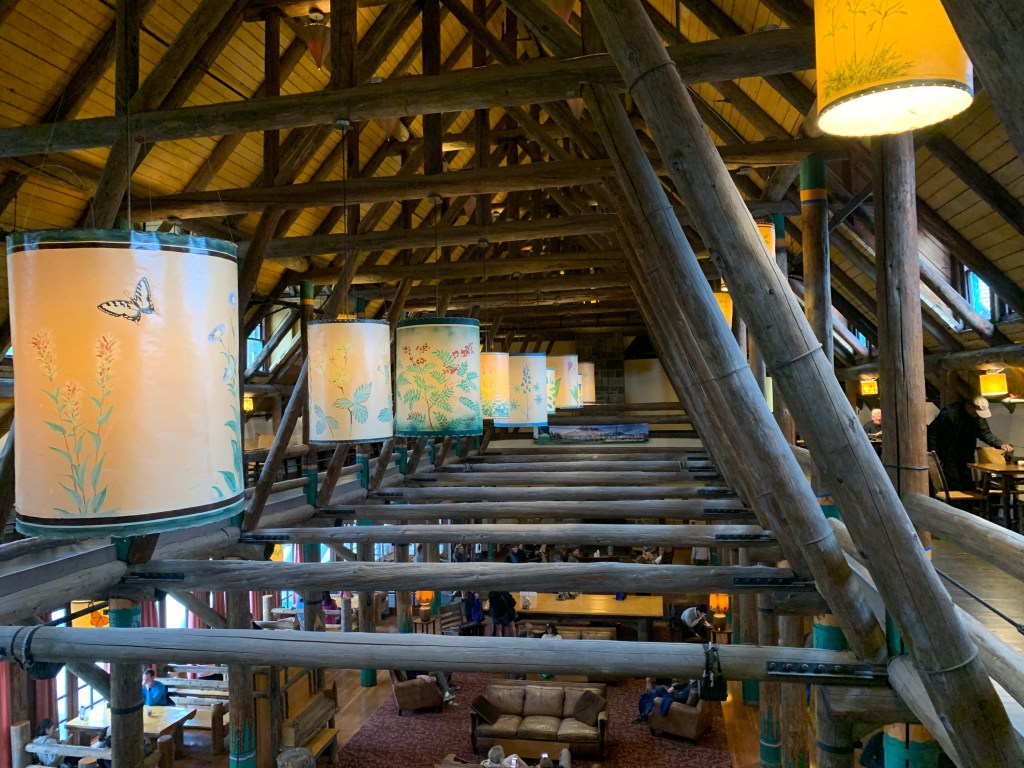
The building smelled old–as if the years and history which passed had soaked into the grain of the wood. There was a weird other-worldliness about where she was and why, in the corner of the coziest lobby, after a day of hiking up hill, which hinted at something so intangible at those times, when all sensations are pleasant and dream-like. Astrid didn’t have words for it yet, and maybe never would.
It was not “awe,” she knew that, the sensation is fueled by memory, of bits and pieces sewn together, and touching the present in a myriad tiny points of recalled senses. The result is an unfinished, cerebral patchwork quilt, without shape, but it covers and warms just the same.
The highlight hike on Skyline Trail that morning still reverberated in Astrid’s memory. She would have loved to go the whole loop–9-ish miles didn’t seem far in retrospect and from her comfy seat. “It was beautiful,” and it was enough. The trail, her small and incomplete adventures in the park gave her the experience of the most wonderful wild flowers Astrid ever saw. And it was more than enough.

Before the light started to fade, the family stepped out of their comfortable spot and left Paradise Inn. At Narada Falls, they took a short hike to a waterfall hiding fascinating pillars of trap rock.
18819 Steps
***
Mist Turns To Rain
A huge advantage of camping at the national parks is that campers avoid the long morning lines going into the park. No timed passes, no long lines to wait in. You may not have slept very well on the wonky air pad, and awoke to weird noises in an unfamiliar strange forest, but you’re already in the the park!
The family splurged on the breakfast buffet at the Paradise Inn, then started on the Skyline Trail again–this time on the right side looking up to the mountain. But there was no mountain, only misty white clouds on a backdrop of grey skies. Everything was covered in mist and fog. The mist gathered on everything and everyone–glasses, coats, bodies, trees, rocks, mud. The mist gathered on itself and turned into rain sometimes.
But Astrid was not miserable. She still saw some interesting, edifying things and wonder-inducing scenes.
At one point, the family hiked behind a pair of women, one wearing a bear-bell which she didn’t really need since the two were talking so excitedly and loud, there was no chance a bear would want to bother them, except maybe to tell them to keep it down.
Astrid congratulated a couple who got engaged on the trail. As in, she had to wait (from a distance) for the bride-to-be to answer, because the groom-to-be was kneeling right in the middle of the trail as it crossed a dry stream bed. Further up the trail, on the steeper parts, she noticed an older hiker sucking down oxygen from a portable can, which was a new concept for Astrid. “You can do that? It’s not cheating? I had no idea!”
She passed a couple ignoring the “Don’t Feed The Wildlife” signs, and tried desperately not to judge them. They were feeding a fat chipmunk some nuts, and petting it. Maybe they didn’t know how they were harming the little creatures. She walked by them as fast as she could.


The family got lost a few times trudging up the slope. Every passing minute, they absorbed more mist, and grew more damp, and cold. So they abandoned the hike, and turned back since there was little chance of seeing the mountain through the heavy mist. On the drive out they stopped at a waterfall by a bridge, then said farewell to Mt. Rainier.
The little town of Toledo, WA, near Mt. St. Helens, is a humble collection of residences, with a few restaurants, a gas station, a convenience store, and the purple AirBnB where Astrid and family would stay for the night after dinner at a Mexican restaurant nearby. With sore bodies and leg muscles angry at the workout of the previous days, sleeping in the tent, and uphill climbs, they rested and planned in the purple house. They would be tent camping again the next night.
 Not I
Not I 