
July 8, 2021
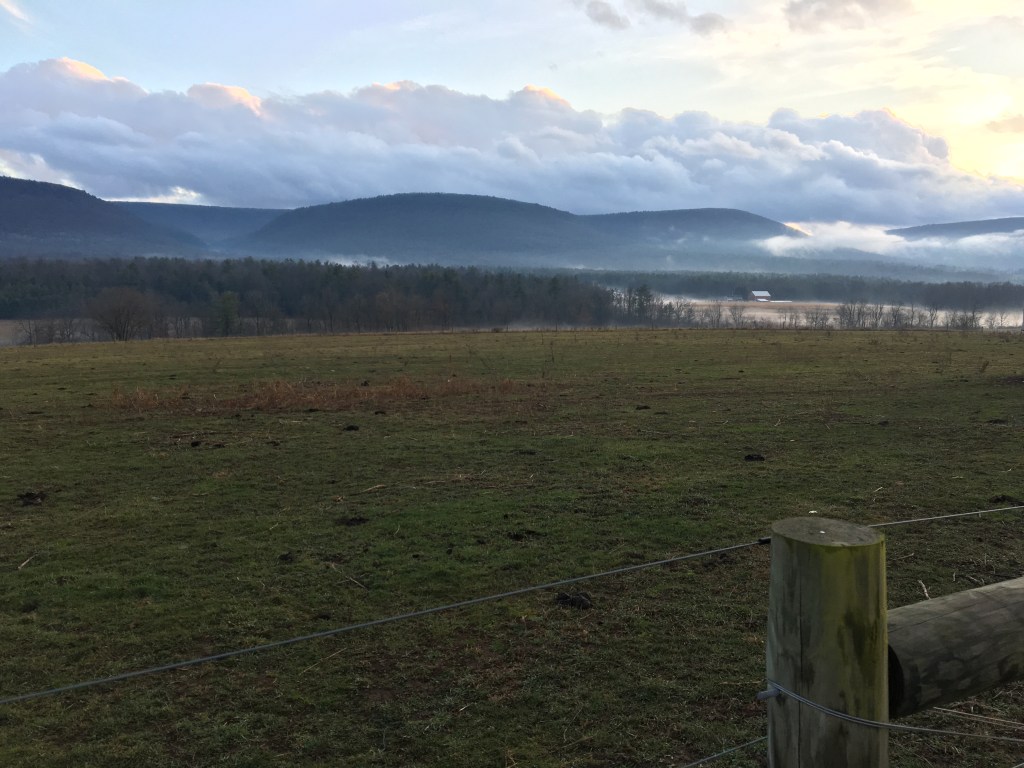
It was their second day in Gettysburg, Pennsylvania. After packing up from a rainy night at the local campground, Astrid and Snorri drove south on West Confederate Avenue, past dozens of cannons pointed east to where the Union Army had been mustered in the American Civil War, then past South Carolina’s war memorial, to park at Virginia’s war memorial, where a bronze General Lee sat on his bronze horse, overlooking the battlefield. They started down the grassy path mown between fields of soybeans, toward where the map said Pickett’s Charge was attempted.
Astrid watched as Snorri strode on ahead of her, but she slowed down. It was not a common thing to visit a battle field in America, and she wanted, as the Gettysburg National Military Park guide encouraged, “to reflect and try to understand what happened here.”
On that day, 158 years before, she would have found a much different landscape. It would have been strewn with the rotting corpses of Confederate soldiers, who had no one to bury them properly. It would have been pock-marked with cannon craters, strewn with the wooden wreckage of military wagons, and dead horses. The three days of fighting had occurred on July 1,2 and 3, but the carnage and destruction would have been left for months afterward.


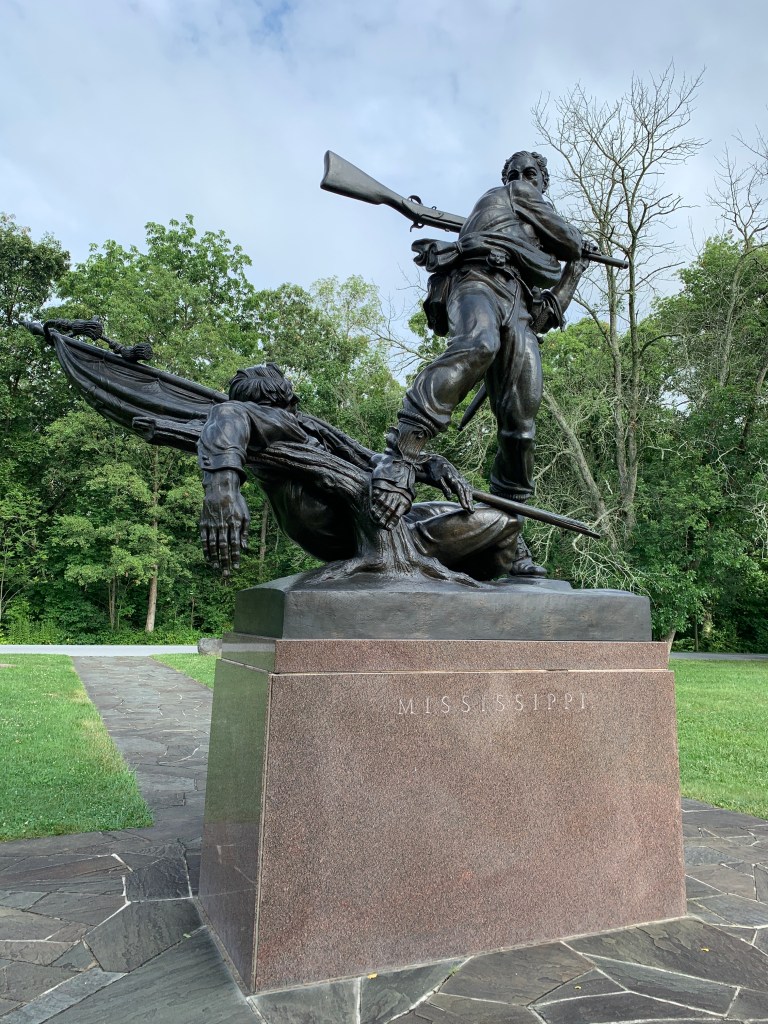
The opposite of love is not hate, it is indifference. People often go to great lengths to stop a loved one from ruining their soul with evil. And so it was with the United States in the 1860s. Despite many other elements that incited the Civil War, the United States as a whole, which was “conceived in Liberty, and dedicated to the proposition that all men are created equal*” needed to finally fulfill that declaration.
Frederick Douglass in An American Slave, and Booker T. Washington in Up From Slavery both expressed the horrific fact, which they experienced first hand: slavery is a dehumanizing evil, for all who are involved. It demoralizes and oppresses the enslaved, but absolutely hardens and corrupts the slave-holders, too**.
War was the length the United States would go to correct this great evil and save the country from this sin of slavery; war against part of itself, its brothers, its family. It was, undeniably, hell. Astrid did feel gravity and meaning as she walked, but knew she could never understand the hell that was invoked on that ground 158 years before. But she did begin to understand some things. Like why Lincoln wanted to restore the Confederate States to the Union, not crush and isolate them.
Grace, mercy, empathy, infatuation, desire, charity, tolerance, preference–many things can be called “love” and it can be insisted that all those definitions of love “win.” But in that park, walking on the ground consecrated by violence, blood, death and strife, combined the previous day’s experience of visiting all the monuments–Union and Confederate–Astrid was overwhelmed with the feeling that grace, truth and forgiveness win more often and more completely.


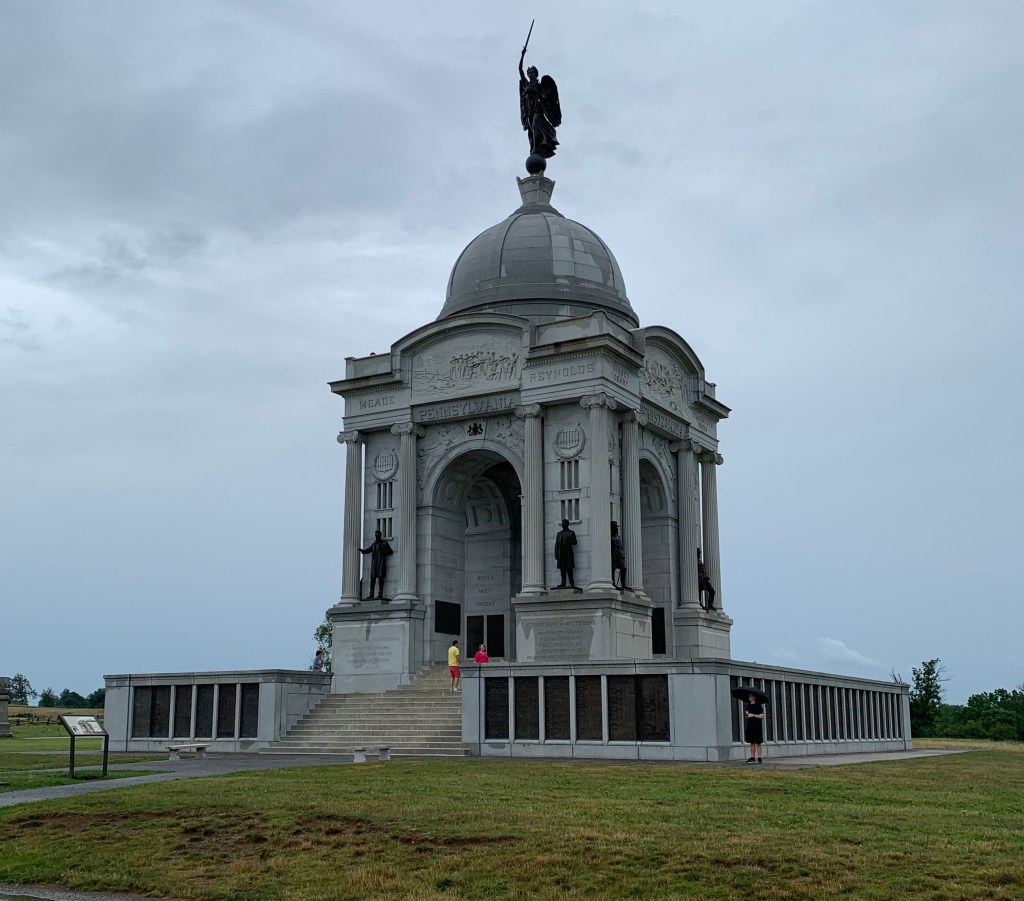

To beat a foe because they are wrong, to stop them from evil acts, and then to extend a hand to lift them up and bandage their wounds is mercy and love. It is what Lincoln wanted (as Astrid understood the history). Separation, severe punishment and despair in beaten foes (as the world has seen in WWI & WWII), comes back to haunt the victor, it makes things worse, every time. And we have lived it.
Astrid knew that to write this, in the margins of her map, while walking those fields, was easy, but to live it out in her personal life would prove more challenging.
If one does not have an inkling of understanding of the depth and possibility of human depravity in oneself, of a potential inhumanity lying not-so-deep under our modern niceties and manners, one will not understand why there are hundreds of Confederate memorials in Gettysburg. A person might want them erased, because they lost, they were wrong, they must be punished by obliteration. But we must remember the hurt they caused, the humanity they denied, and the price America paid for it.
Every state that sent soldiers to the battle in Gettysburg has memorial there–from Mississippi, Florida, Arkansas, Texas on the Confederate side, to Maryland (both Union and Confederate soldiers fought), New York, Minnesota and Wisconsin on the Union side, just to name a few. The Confederate soldiers remembered by their memorials were fighting for a wrong cause, for states’ rights to enslave human beings, but they were our countrymen and that makes it all the more important that we remember: America loved its founding principals of freedoms and wanted them for all the inhabitants, to the point of war against itself. It is a tragedy worth trying to understand.
If you have 5 minutes, go read the Gettysburg Address by Abraham Lincoln. It takes under two minutes to read, but it is one of the most poignant, powerful speeches in American History.
***
*The Gettysburg Address, Abraham Lincoln, 1863
**I pity from the bottom of my heart any nation or body of people that is so unfortunate as to get entangled in the net of slavery.” -Booker T. Washington, Up From Slavery, Kindle Loc 312
“Thus is slavery the enemy of both the slave and the slaveholder. … Slavery proved as injurious to her as it did to me. … Under its influence the tender heart became stone, the lamb-like disposition gave way to one of tiger-like fierceness.” An American Slave, by Frederick Douglass, Page 31-34 Yale University Press.






















































 Not I
Not I 