The Dakotas: Moving Against the Herd

Magnificent Dirt

The next morning the family checked out of their cabin and hit Custer State Park’s Wildlife Loop for sight seeing. 

“What is that?” Astrid leaned forward in her seat, squinting to better see what comprised the brown mass of things which was moving toward them on the highway. 

“Yeah, one of the websites for the park mentioned that this might happen.” 

“Are they … are they buffalo? Or is it bison? Why do Custer’s signs say, ‘buffalo?’ I’m gonna look this up when I get home. Are they walking in the road? That’s a lot of bison!” 

A expansive herd of bison, ranging in size from gigantic bulls to more reasonable-sized babies, was moseying up the road, spreading to the grassland on either side and coming right toward them. Bjorn slowed the car to a stop as the wave of dark brown hairy behemoths filtered around them and the other cars. The bison didn’t seem to mind the car traffic, they just went around, which gave Astrid an up-close look: they were all branded on their backsides and had weed burs in their furry hair. These were super-charged bovines, furry, muscley animals of a beautiful, rich dark brown. They were a little scary. 

Nomenclature

Teddy Roosevelt National Park used the term “bison” for these majestic bovine creatures. Custer State Park used the term “buffalo,” for the same animal. Scientifically speaking, the creature found in these areas are Bison bison. Yep, that’s their scientific name. They are very bisony. There are two subspecies in America: Bison bison bison, (Plains Bison) and Bison bison athabascae (Wood Bison).  Buffalo is a term usually used for “old world buffalo” like water buffalo or African buffalo. Custer State Park holds an annual Buffalo Roundup and Auction every fall. You could buy a bison, if you wanted. 

They watched and waited patiently as the herd moved past, because there was nothing else they could do. Some of the bulls walked off-road and kicked up clouds of dust as they rolled and frolicked. Once able to move the car again, they encountered feral (but really they were super-tame) burros standing in the road, waiting for some soft-hearted family to feed them. Onward up the road, after traveling through rolling prairies, they stopped at a small visitor’s center/museum and learned some things, then retraced their drive. By this time, the burros had flagged down a family and were eating bread and carrots from their hands. The burros are not native to the area, but were left to run wild after they lost their usefulness as pack animals.

On their way out of the park they drove past the giant herd of bison again, but this time the beautiful beasts were on a expansive hillside pasture, dark brown patches dotting the golden meadow. 

On the road to Wind Cave National Park, signs warned of “bison”because national parks have bison, state parks have buffalo. As named, the Wind Cave attraction was a cave, but since it included a closed-in ride in an elevator, it was closed, because COVID. So they took the mostly uphill Rankin Ridge Trail to a fire watchtower (but the watchtower was closed, because COVID), where, at the top, one could see 40 miles away to The Badlands National Park, the family’s next stop. 

Back on 90 East, Astrid started to notice some interesting signs … some advertised Free Ice Water, some advertised food, some, jewelry, some were for .05$ coffee, all from a place called Wall Drug. But before they could reach the famous store in Wall, South Dakota, they came to The Badlands National Park, where they would be camping for the night. 

Because COVID, the ranger pointed a credit card reader on the end of a stick at Bjorn for payment, and they traveled down a dusty road, along a canyon-type formation filled with hills of striated colors. It was hot, with temperatures reaching 100 degrees Fahrenheit as they moved along the bumpy road to stop at pull-offs for Bjorn to take pictures. It was the start of a day largely filled with Looking and Waiting

At the Pinnacles viewpoint off the Badlands Loop Road (240), they were mobbed again by the tiny, gnat-like biting insects. They swarmed anything white, including tee-shirts.

Looking and Waiting was a big part of their family trips. It was not a bad thing, but one must plan for it, by packing something to do while waiting in the magnificent landscapes Bjorn was immersing himself in, because just to be in these places was an extraordinary experience. Snorri usually packed electronic games. Astrid packed books, pens and notebooks. The previous night Astrid went to read her e-reader and … nothing. Something had happened which erased all her books out of her e-library (huge con for e-readers, pro for paper books). She had nothing but some pamphlets and papers from their previous stops to peruse. And that she did, as she waited for Bjorn to shoot and click at the magnificent dirt. 

As the sun snuck closer toward the western horizon, it was time to think about dinner and where they would spend the night. Backcountry camping was free in the park, allowed within some of the usual parameters: 1/2 mile off a trail or road, not visible from said road or trail. The Badlands National Park is a narrow strip of hilly, dry, gullied, unusable land in South Dakota, so there wasn’t a lot of choices. But they had coordinates from a hiking website. The strange decision was made to hike (without packs) out to the site to see if it really existed. With the help of spotty internet, GPS and after a few wrong turns down dead-end small canyons, they found it: a flat, almost cement like space just big enough for their tents, marked by big rocks in a medium sized canyon, backed on all three sides by high walls of rugged dirt hills. So they trudged back to the car, signed in at the trail head, got all their gear and went back to their little canyon. Astrid warmed and rehydrated some taco meat while Snorri put up the tents and Bjorn set up his tripod.

After eating and getting settled, Snorri and Astrid went to bed while Bjorn caught some night-time light. Lightning lit up the sky in the far distance and Astrid scoured her weather apps for the forecast. The park pamphlet and website had warned her: “Severe thunderstorms are common during the summer, so are days above 100ºF (38ºC). September and early October are the best backpacking months.” and “Sudden and dramatic weather changes are common. Visitors are urged to dress in layers and be prepared with hats, sunglasses, sunscreen, and adequate water for hiking.”

As the available forecasts indicated no rain or storms that night, she put away her phone and tried to sleep. Between wind gusts, it was eerily quiet in that little canyon, and warm. On the way in, she saw evidence of rabbits, but could believe that snakes frequented the area, too. Strange, night-time bird calls echoed in the breeze. Since sleep eluded her, Astrid dearly wanted to distract her mind with a story–any one would do–but her e-reader remained empty. She opened the Bible app on her phone and read a little, but didn’t want to run the battery down. 

If Astrid had slept that night, she didn’t know it. Bjorn came in from the dark after the shining moon rose, ruining his chances of good night sky pictures. Between staring up at the ceiling of her tent and reading snippets of the Bible, time passed in the dark and creepy quiet. At about 4:30 a.m. MDT, she decided to check the weather report. It hinted at something, close, maybe. Trying to figure out what city was closest, and/or what county they were in was a little challenging with spotty internet, but the skies were hinting at something too. “Golf-ball sized hail,” the weather report said.How could she deal with that in tents? They might have to get under their sleeping pads…. 

The Dakotas: Stand-Off at Devil’s Tower, and Carved in Stone

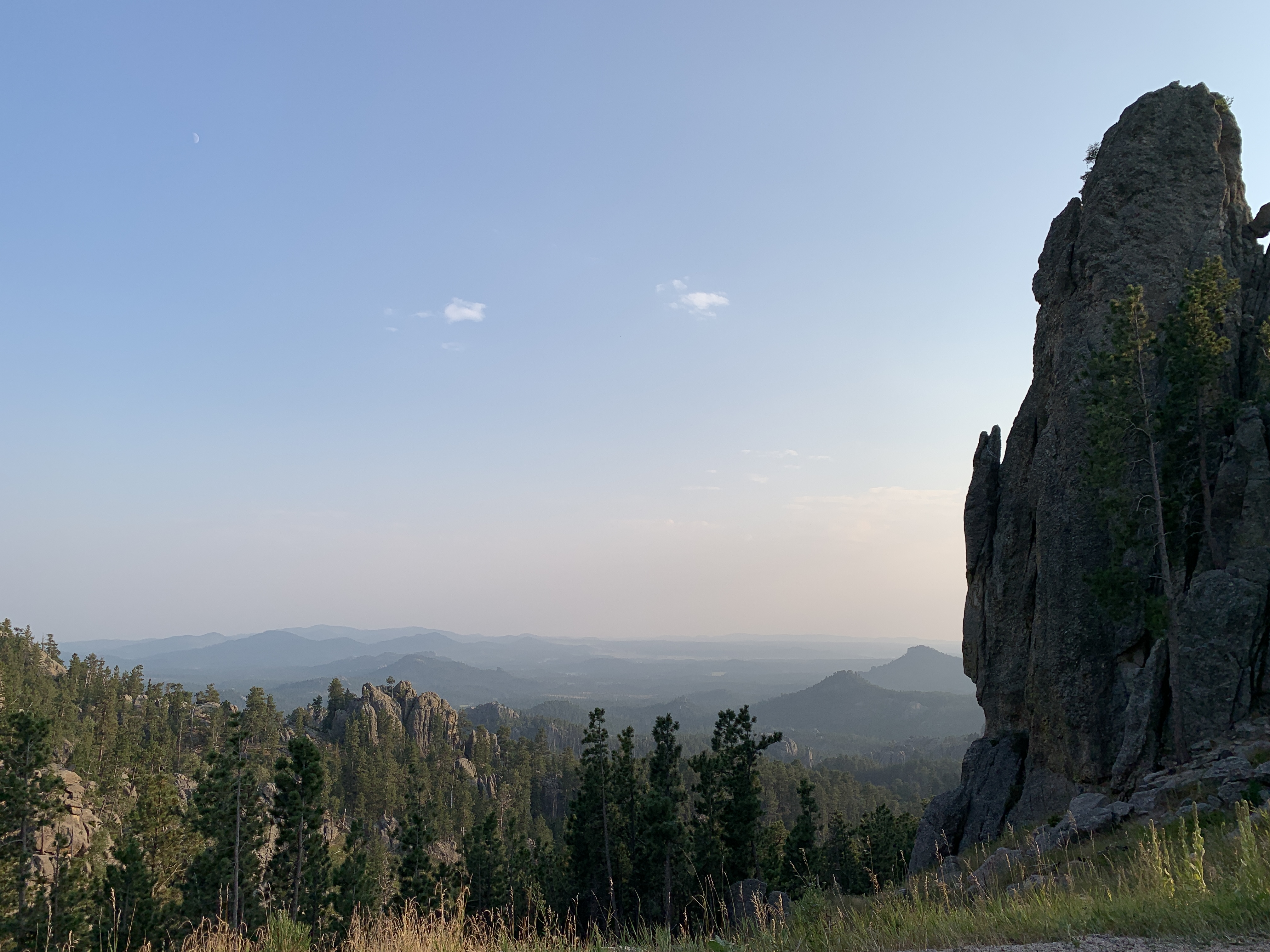
Along The Needles Highway

Again, it might have been the American tendency in travel. One goes, not so much to see but to tell afterward.

John Steinbeck, Travels with Charley in Search of America

Looking at her cell phone the next morning, she found smoke alarm alerts, then Bjorn’s text message conversation with Olaf (their two phones were inextricably and mysteriously linked at the time), who was at home.

“It’s okay … no fire. Olaf took care of it.” After more investigative questions, Astrid found that the not-very-old sump pump in the basement had been stuck “on,” to pump, and thenceforth overheated, causing smoke to fill the basement, triggering the whole-house smoke alarm. Luckily, Olaf got there in time to unplug it and ventilate the basement. 

“And the snake! You didn’t get bit, did you?” Astrid asked knowing full well he wouldn’t be there if he did get bit.

“No, but that snake wasn’t happy with me.” 

~~~

Stand-Off at Devil’s Tower, A Second-Hand Tale

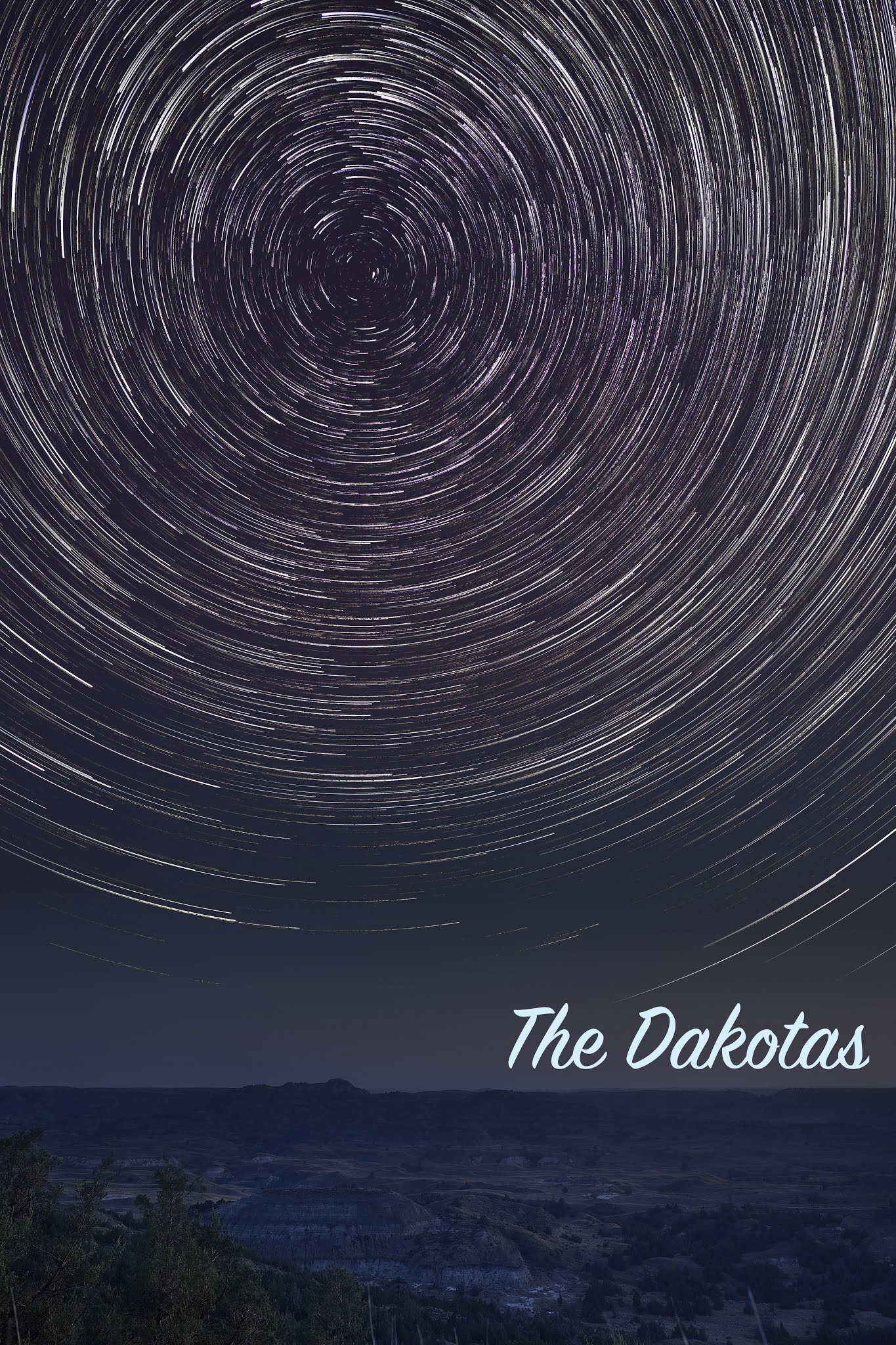
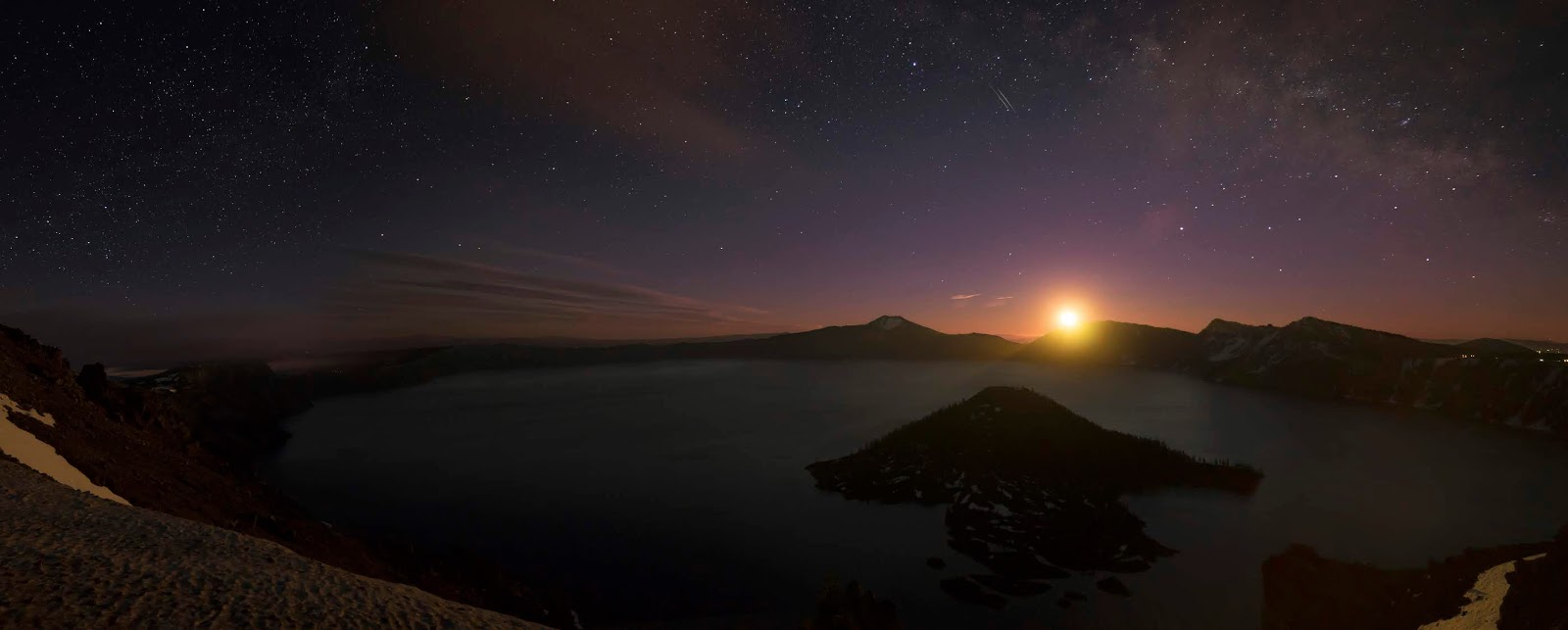
Bjorn arrived in the parking lot of Devil’s Tower National Monument in the dark the night before, proceeded around the giant stump of rock and found the perfect place to set up his tripod between a boulder and a fallen log to get the best pictures. He had programmed Camera to take a photo every so many seconds, which, when the photos were combined, would make a star trails photo (as seen here) with Devil’s Tower in the foreground. As he was positioning Tripod and Camera, a telltale rattling sound interrupted his concentration. In vain, he swept the area with his flashlight, looking for the reptilian hazard, without pinpointing the source. He threw a handful of gravel in every direction, but still could not sight the rattler. He could only hear it getting more and more annoyed. He finished aiming the camera abandoned it to do its work, then quickly removed himself to across the path and climbed a boulder, thinking rattle snakes don’t climb boulders. (Astrid bet that if it really wanted to, the rattler could climb the boulder.)  Every time the camera clicked, the Prairie Rattle Snake protested in the only way it knew. Click … hiss, rattle. Click, hiss, rattle. But Bjorn wasn’t backing down. 

When Camera fulfilled its mission and its memory card, Bjorn had to brave his way back to rescue it from the fury of the rattler. He showered the area again with gravel, hoping to scare away the ever-hidden reptile, and didn’t get a reaction, so he gingerly and efficiently grabbed the tripod and high-tailed it out of the park.

~~~

The next day started off with less excitement than the night before, with a drive to Mount Rushmore. The highway weaved through rocks, mountains, trees, and rocky mountains covered in trees. They drove through the little town of Rapid City, South Dakota replete with patriotic shops and attractions of all kinds, then all of a sudden, around the corner of the highway, there it was: Mount Rushmore. Four presidents–Washington, Jefferson, Lincoln, and Roosevelt (Teddy)–immortalized in granite on the side of a mountain. 

At the Mount Rushmore National Memorial, after visiting the gift shop for patches, the family walked along a corridor of states’ flags, then strolled along the Presidential Trail, a circular trail under the towering stoney gazes of  the four immortalized presidents. 

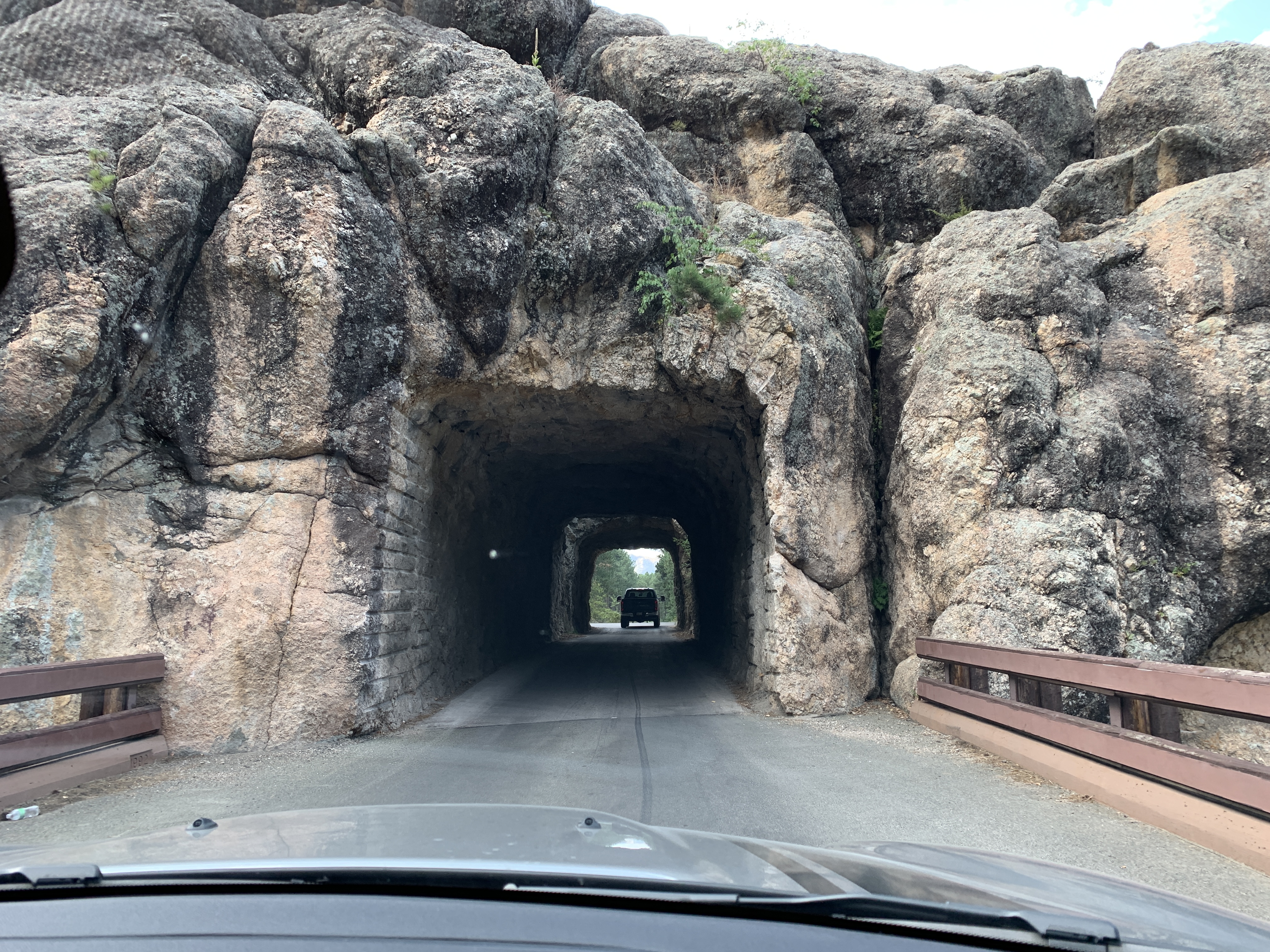
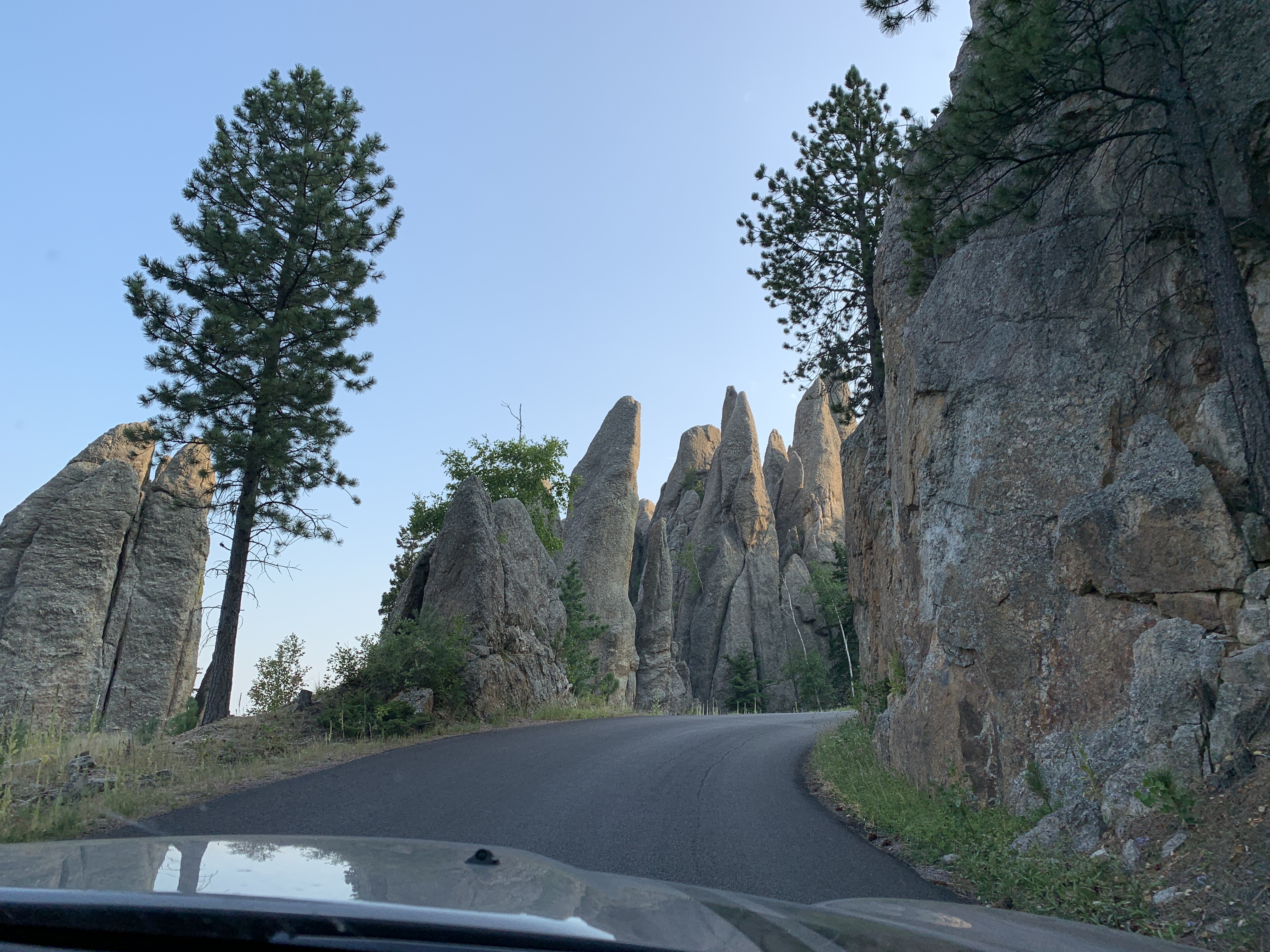
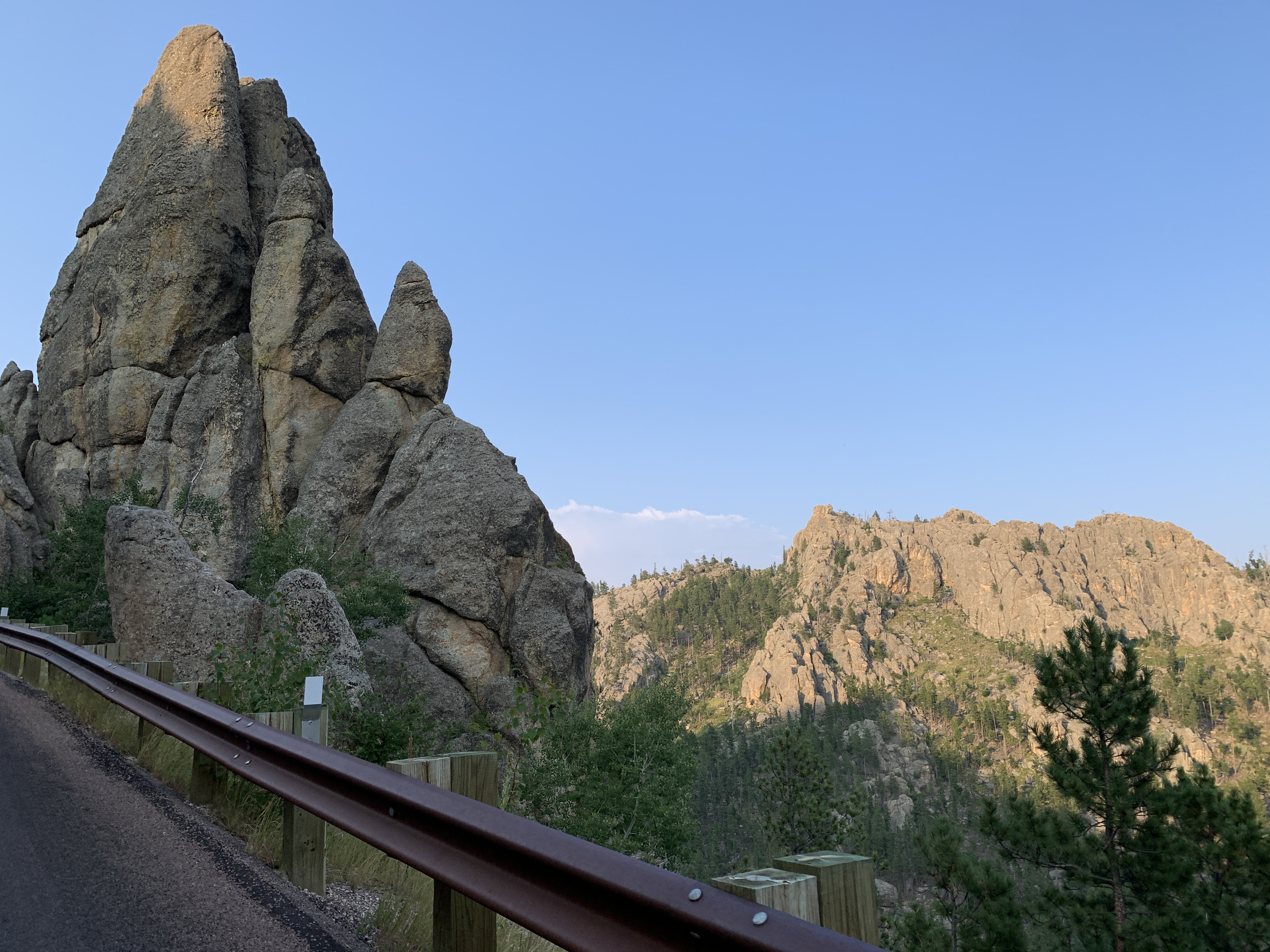
Then they hopped in their conveniently smaller car and drove to The Needles Highway, SD-87, for some spectacular views and anxiety inducing rock tunnels. The Needles Highway is a National Scenic Byway, finished in 1922. It’s south of Rapid City, and winds its way through to Custer State Park, where they would be staying in a cabin–not a tent– just outside the park property. All the camping and cabin sites were full that day, since camping was the nation’s new favorite pastime, because COVID. 

One could write about how the road squeezed through square granite openings in the mountains, then snaked around the fantastic rock formations and lined the gravely picturesque valleys … but pictures illustrate these things so much better, especially when the event is so far away in time. 

As the entered Custer State Park, and made there way to their cabin just on the outskirts of the park, they witnessed a lone bison, walking in the road in front of them, just minding his own business. The car in front of them veered closer, possibly to pet it, but the beast was having none of it. It swung his bulking head with its pointy horns at the vehicle, almost taking off its passenger side mirror. 

Bison (or sometimes called Buffalo, but some argue that is not accurate) are not cows. Cows, the usually sweet cumbersome bovine of civilization can be, if provoked, dangerous in their heft and mass. Bison, with their heft, mass and pointy horns, are much quicker, they are fast on their feet, and the females are infamous for their  “Mama Bear Syndrome.” It is not recommended to try to pet one in the wild or drive intentionally close to one, especially a lone bull who knows how to take care of himself.

After a side trip to check into their cabin and unload some luggage, they continued on the highway, weaving through even more narrow tunnels and through forests of narrow pointy boulders to Sylvan Lake Lodge to eat a decadent dinner. Ironically, Astrid had to have the pork chops because they were out of bison burgers.

The day was filled with rocks. First, a mountain of solid rock carved to resemble four U.S. presidents, then a road intentionally built around and through a forest of dynamic natural rock formations. Compared to southwest Michigan’s sandy, almost rock-less flats, the Dakotas have a lot of rocks. Some states in our expansive country don’t have to try too hard to accentuate their natural beauty and make it accessible to visitors, but South Dakota, some of whose natural beauties lie in rock, had to put extra effort into these attractions, but they made the best of them, made them beautiful, and found a way to share them with everyone with a small-enough car to fit through the rock tunnels on The Needles Highway.

The Dakotas: Fear, Wild Horses, and The Best Place to Cut a Narrative


An equine scream, rife with fear and anger, shot through the air like lightning to wake Astrid from almost-sleep, set her heart and mind racing. It was a high-pitched, but throaty roar of what sounded like a very wild and nearby horse. **Just a little note for next time- this is the best, better place to cut this  narrative. Sometimes, where you cut the frame of a visual or verbal picture makes all the difference. **
Wild horses. That’s what made the ball-like manure, helped to make the trail they followed off the people-trail, and what was screaming, somewhere very close to where Astrid and her family were sleeping in the tents.Astrid had never been comfortable around horses, never had much experience with them, but had the same healthy respect for them as she did other, very, very big, massive herbivores she’s been around. The shear mass of the creatures, never mind their potential velocity, made for some trepidatious imaginings.


The horse-scream sounded close, shooting through the air with the wind. And it sounded angry. After a few minutes of heart-racing and uncontrolled fear-fueled thoughts, she tried to regain some reason, “Think, Astrid, think. Assess the situation,” she told herself.  The wild horses were angry and probably scared … somewhere. Maybe near, but, their screams seemed to carry on the wind. She couldn’t feel or hear the beasts through the ground (foot falls of very large animals usually can be felt through the earth, especially if you are lying on it). The animals could have been just below the ledge they camped on. Maybe they were spooked-she knew horses get spooked. Astrid had been spooked since the sun went down. Maybe the flapping tent entrance (Bjorn saw no reason to secure the tent vestibule flaps), or the tripod outside, or the camera which was automatically clicking away at the night time sky, was scaring them. Eventually Astrid came to a more comforting thought: the horses are either 1) fighting amongst themselves, or 2) probably just as scared of you as you are of them. She felt better, her heart was slowing, but she lay awake, kept up by the cacophony of the all-out fight between her fear and her reason, listening to the whinnies and horse screams, now sounding close, now far-away, her ears tuned sharp to any other noise, and expecting to hear the snort of a bison any minute. Eventually the angry horse noises gave way to a chorus of coyotes, and somehow, she fell asleep.  
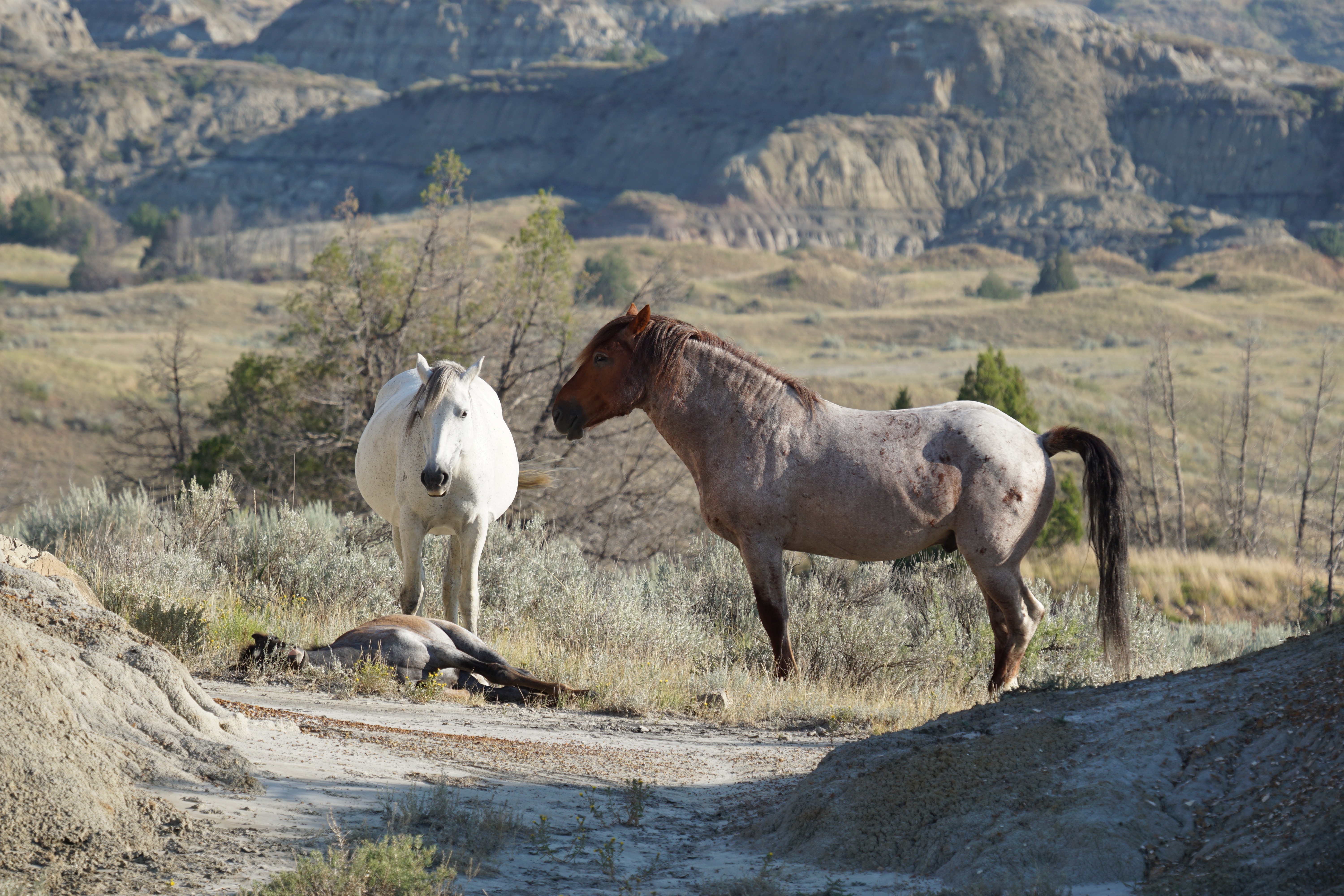
Wild Horses (the little one is not dead, just tired)
The next time she woke it was still disappointingly night, but she was faced with a different dilemma: she had to go outside. After minutes of tortuous debate, the call of nature overcame her fear of nature and, leaning into her trepidations, she unzipped the tent, expecting to see a massive, snorting, pointy horned bison staring her in the face.  But there wasn’t. She couldn’t see any animal, just a massive sky full of clear, twinkling, untouchable stars. A shooting star lit up the sky so bright that it made her turn and look.  In the morning, she found herself and Bjorn and Snorri un-trampled and whole, but not necessarily well-rested. The wind was still breezy, so instead of cooking breakfast at the campsite (the vegetation was very dry), they made due with granola bars. Bjorn’s camera was still standing, battery exhausted, but full of night sky pictures. He traipsed off to catch the morning light amongst the hills while Astrid and Snorri packed up camp. As they drove off Buck Hill Trailhead, they passed a family of wild horses standing, the colt tired enough to lie down.   They drove to the end of the remaining TRNP park road, stopping at the Coal Vein Trail, walking along with a booklet that explained certain landscape features, including a dead bison in the process of going back from whence it came, and that there had been a ground fire sparked by lightning and fueled by a coal vein which burned for 26 years, .  The grand vistas in this TRNP park are fascinating mounds and sometimes hills of stratified color, dotted with hearty, drought resistant shrubs and plants, junipers, some dead, some alive … and bison, horses, big-horn sheep and deer.  On the way out, they stopped at the Cottonwood Campground picnic area to cook their dinner for lunch from dehydrated supplies: a modified shepherd’s pie, with instant mashed potatoes, rehydrated ground beef and corn. 

Would Astrid camp in such uncomfortable circumstances again? Despite the irrational fear, the discomfort-yes, absolutely. She would experience the same eerie discomfort while camping before the week was out, but not because of animals. The experience made for good practice of reining in unexpected and sudden fear, and to reflect with caution, reason, and thought.  But life is a great adventure, and the worst of all fears is the fear of living.-Theodore Roosevelt~~~

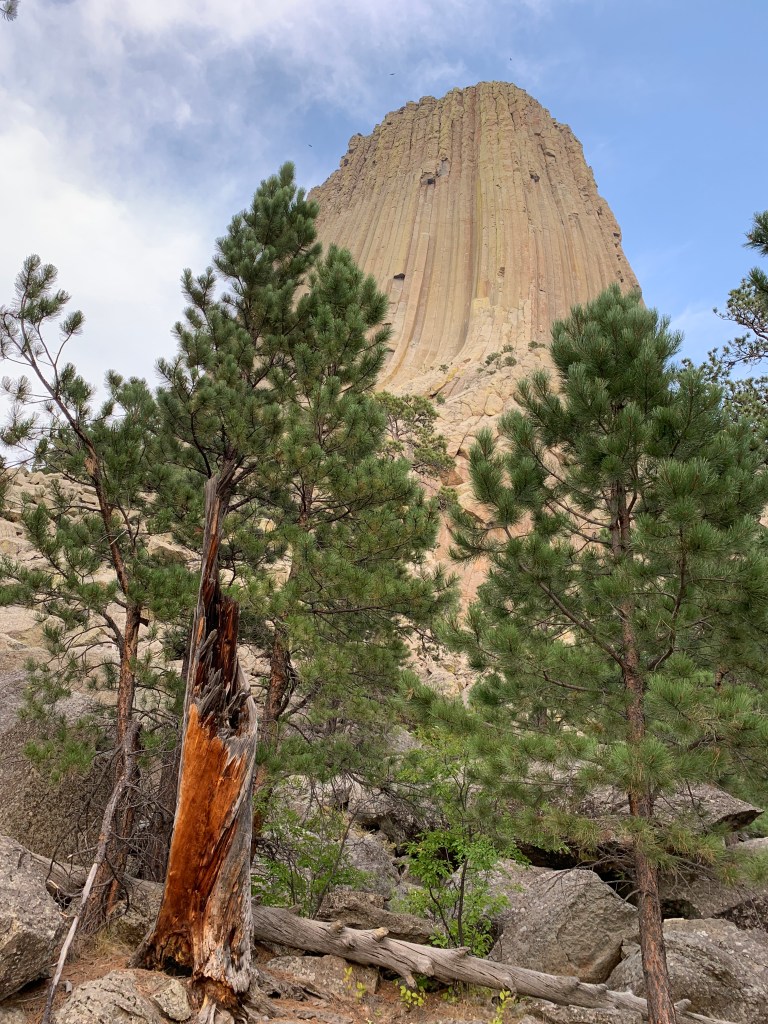
Leaving Medora, South Dakota, they drove South on US-85, into Wyoming, where the landscape changed from dry hills to green mountains and streams and pine forests. After arriving in Hulette, Wyoming, which was strangely be-speckled with freely roaming wildlife (turkeys and deer), and checking into the very clean Best Western, they walked around Devil’s Tower. It is a big conglomerate of rock pillars sticking out of the green rolling hills. The attraction held spectacular photographic potential, and patches of tiny, evil, biting insects. 


Some time in the innumerable past, magma pushed up through other rock, creating a column, then the rock around it eroded, leaving a gigantic tree-stump like rock formation. The family had seen this rock on previous adventures in Iceland and Scotland. Geologists theorize that Devil’s Tower is the largest example of columnar jointing in the world. 


That evening, as usual, Bjorn left the hotel when most patrons were turning in. He was out to catch the light of another night sky, as a backdrop to Devil’s Tower. It wasn’t until he came back, after midnight that Astrid was informed of the many things that can happen when one is asleep. “I had an interesting encounter with a rattle snake, oh, and the smoke alarms went off at home. I’ll tell you more about it in the morning.” 
 

“What?!” One just doesn’t hear news of  rattle snakes and smoke in your home and go quietly back to sleep. 


The Dakotas: Through Amber Waves to The Badlands


Power lines … hills … cows … giant eagle nest … dead white tree … eagle … sunflowers … plains … Boyhood Home of Louis L’Amour … cell tower … bright gold wheat field … fields of round bails … soybean field … black cows … grain silos … piles of round bales … oil derricks … gigantic cow statue … 

“We can, of course, sit around and say to each other the names of nearby things, but that would be an idiotic enterprise suitable for nothing more important than passing the time on long automobile rides.” -Richard Mitchell, Less Than Words Can Say


Nouns don’t make a language, naming things doesn’t communicate much. But it does pass the time when one is driving ten and a half hours from southwest Michigan to Fargo, North Dakota. Besides being even more frightfully flat and expansive to Astrid’s agoraphobic senses, the passing and gently changing landscape wasn’t particularly interesting, except that it represented agriculture–acres of wheat, soy, sunflowers and corn.


But the landscape was more intriguing than the audio book that rambled on from the car speakers. Astrid, Bjorn and Snorri listened to the novel Eragon, by Christopher Paolini. A better phrase might be “was distracted by” or “tolerated” the story.  (Mini book review: It is, more or less, a contrived, derivative, obese, but engaging wizard/dragon/dwarf/elf/journey story.) It provided good talking points on “good vs bad story telling, subjective tastes in literature, copy-cat fiction, and the value of a good editor.

In Fargo, the family picked up dinner at a local Chik-fil-A, then took it back to their hotel room to eat, because COVID. Although their hotel room had a “seal of cleanliness” on the door, Astrid’s detail-oriented eyes were not impressed. There were hand smudges on various handles and knobs and dirt on the carpet, but not for long. Because COVID, she brought sanitizing wipes and wiped down all the touch points in the room, then was comfortable enough to eat. 


The next morning they set out westward on I-94 again, into a land full of bucolic nouns, through Bismarck and a dozen other small towns to finally stop at the most curious landscape Astrid she’d ever seen: The Badlands, particularly Theodore Roosevelt Nation Park South (TRNP). 


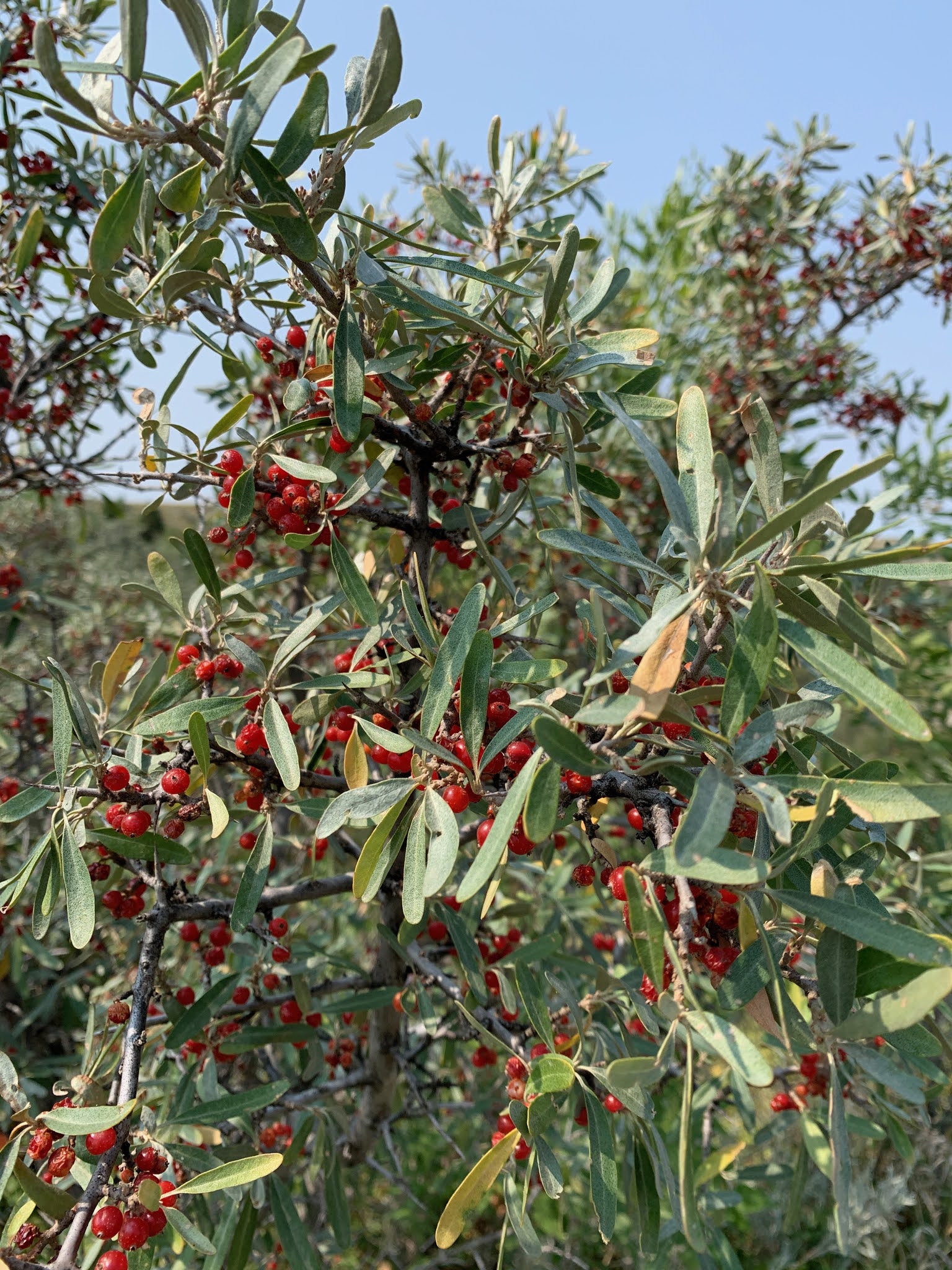
Silver Buffaloberry


Their first stop was at Painted Canyon Visitor Center and Overlook where they … overlooked the canyon. They were in the Badlands, what stretched out before them was myriad dirt/rock hillocks of different sizes running on for miles, with gullies and tough, short trees and shrubs eking out a life amongst it all.  


They located the trail head to Painted Canyon Nature Trail and  headed into the stark terrain that was new experience to all of them. 


Before the trip, Astrid watched videos about the parks. The only things that stood out was that it was rough, dry and hot hiking, and sometimes there were bison and there were snakes. Sometimes, there were Prairie Rattle Snakes, which are poisonous, and of course, that’s all she could look for for the first few days.  


Despite walking in the hoof-steps of some probably very big bison, they saw no animals save their fellow humans on that picturesque, first foray into the badlands. 


But there were some very interesting plants: creepy black low trees, Silver Buffaloberry (Shepherdia argentea) and Prickly Pear (Opuntia spp.). 


After the hike, they drove through Medora, North Dakota to TRNP, registered and drove into the park, over the highway that cut into it, into the fenced-off hills. The road climbed and turned into grassy hills, then into dirt hills, then grassy plains filled with curious little holes. 


Because they might be looking for much bigger animals, i.e. bison, a visitor could drive right by the prairie dog towns and not know it until one of the little critters runs across the road in front of them. The “towns” consist of plains and small hills pock-marked with little eruptions of dirt surrounding prairie dog holes. The little vermin usually sit on their door stoop, looking around, chirping gossip to their neighbor doing the same, or grooming. Funny little things. 


Next, they stopped at Wind Canyon Trail, a short trail looped over hills of rock and dirt, overlooking pastures of bison and deer above a muddy, hoof-pocked Little Missouri River. 


Back in Medora, they walked the small-town streets looking for penny smashers in the various shops. Smashed pennies had become a tradition and the family tried to take one from every trip they took. It was something tangible, a proof they were in a place. 


Medora is a small town, but it has direct ties to Theodore Roosevelt, our 26th president. His Elkorn Ranch was situated north Medora. He served as deputy sheriff there for a season. Roosevelt credits his time in The Dakotas with developing the personal qualities he would need to be president. 


After smashing the penny, they walked through the town to Rough Riders Hotel and Dining for dinner. They ate a nice, big dinner, because they would be walking in Teddy Roosevelts footsteps later that night: they were roughing it, camping–in tents. 

Astrid and Snorri had a lot of experience camping in groups. Astrid was very comfortable with it. What made her nervous that day was 1) Prairie Rattle Snakes 2) new and unknown landscape and 3) bison. 


In her group camping experiences, Astrid was used to hearing a variety of night sounds : snoring, very creepy, haunting coyote yowls and small vermin scratching at tents or scurrying through camp. Sometimes ferocious carnivorous beasts alarmed her imagination at night when she lay awake, but it didn’t concern her much. She relied on statistics and personal precedent: with more people around for the hungry carnivorous beasts to eat, she figured she would be ignored (or picked last, as in so many of her previous experiences in life) and could get away while the beasts were harassing the many other campers. But camping with just Bjorn and Snorri put the odds way up. The ferocious beasts, real and imaginary, had three choices this time, and having red hair usually made her stick out. 


After dinner and dessert, and the use of the clean, not-a-tree bathrooms in the hotel, they set out again, back into TRNP, back to where they would spend the night. 


Boicourt Overlook

They passed the prairie dog town and the Wind Canyon Trail, and drove slowly, looking around at the park. They stopped at Boicourt Overlook and Trail, walking into the stark, dry and stony landscape overlooking more of the same, painted with the mute colors of different kinds of sediment. It didn’t ease Astrid’s anxiety about camping. The terrain before them was challenge to walk into, let along to set up a tent in. 


The next stop was Buck Hill Trail, where they would be camping. To backcountry camp in TRNP, one must walk at least one-fourth a mile off trail, and not be visible to any roads or trails. In this instance, it is a real advantage to have nature-colored tents, because though they had walked more than the required one-fourth mile off the official trail, in the morning, Astrid discovered that they could see two roads, one highway, one park road (which they were not aware of when they put down the tents behind a shrubby cover). 


Astrid had packed a backpack with “the house” for these camping nights–two tents, three sleeping mats, three sleeping bags, two tarps, two camp stools, extra blankets and a camp stove. They parked the car, gathered all the things they would need (food, clothes, First Aid kit, water, e-reader), loaded Snorri with the “house” backpack and started their hike, along something that looked a lot like a trail, but wasn’t marked on a map, because large, lumbering animals made it, and marked it as theirs. 


“Nothing could be more lonely and nothing more beautiful than the view at nightfall across the prairies to these huge hill masses, when the lengthening shadows had at last merged into one and the faint after-glow of the red sunset filled the west.” -Theodore Roosevelt


“There are two different kinds of manure here,” Snorri remarked after they had set up camp and sat watching as the sun went down. He had set up his tent backing up to and touching Astrid’s and Bjorn’s. He was a little unsure of the endeavor, too, and was especially wary of the little cacti all around. 
 

“Yes, I noticed. One splat-like, one, a bunch of ball-like pieces,” Astrid said, but didn’t think too much about the significance. She was still looking out for rattlesnakes. 


Bjorn set up his camera at a ledge of rock covered in shrubs and started clicking away at the night sky, while Snorri and Astrid went into their tents to read.


Night fell, Astrid turned off her e-reader and made an effort to sleep. She could hear the tent flapping in the breeze, a few coyote solos far off, and the faint sound of Bjorn’s camera clicking, but eventually these sounds faded into the background and her mind started down the soft slope from consciousness into sleep. 


Out of Myself I Go: Beauty for Ashes Pt. 2

Beauty for Ashes Pt. 2


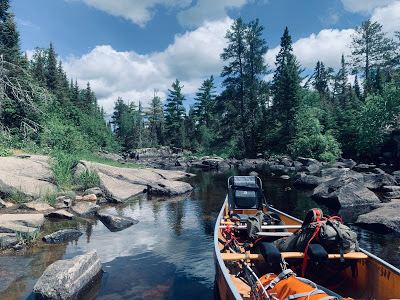
After a 105r portage the next morning, G2 entered the many-islanded Lake Insula. 


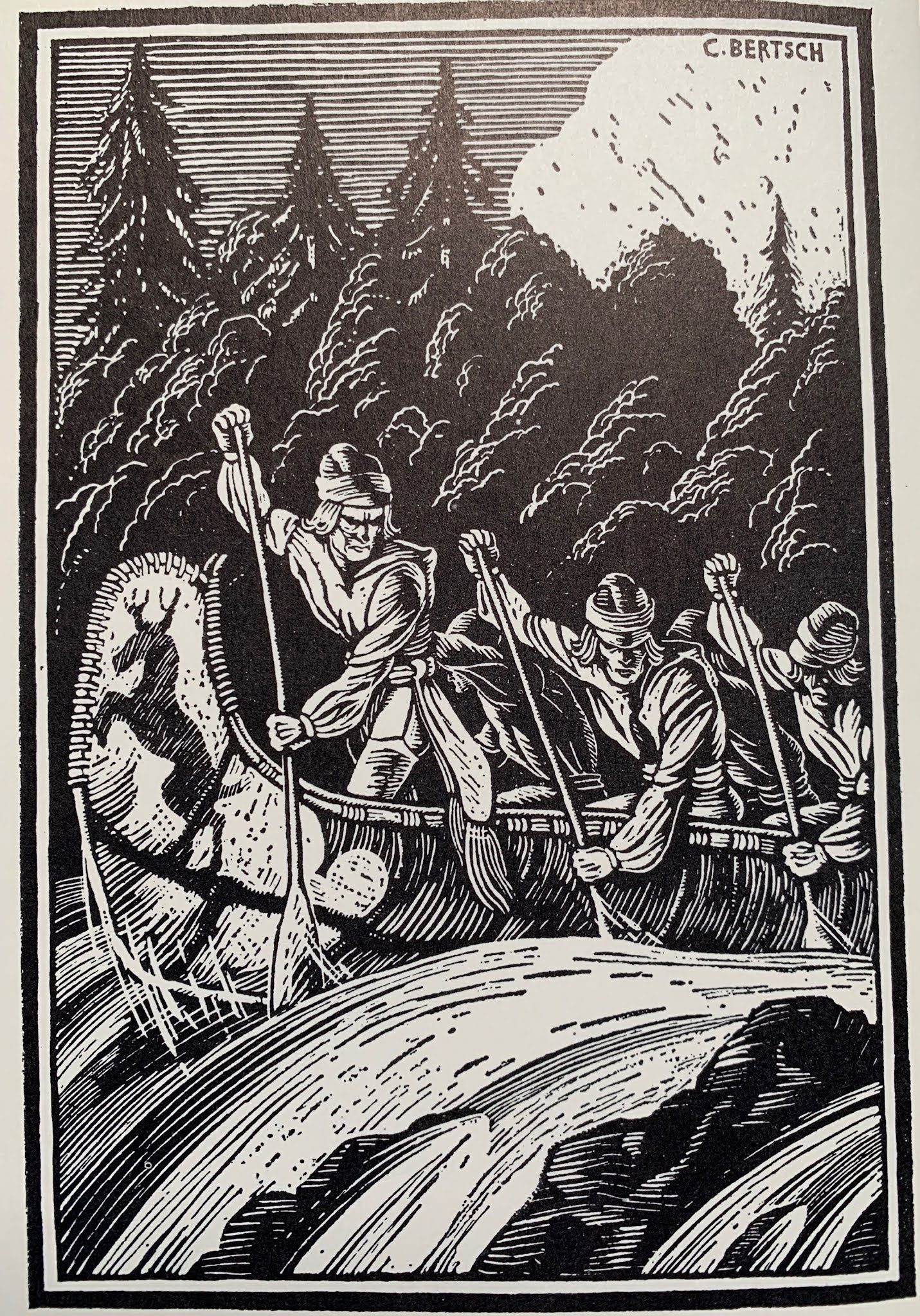
As always, Astrid had read what she considered to be a relevant book before the trip. This time it was The Voyageur by Grace Lee Nute, a historical study on the men who moved products through the upper Great Lakes on very big canoes in the 18th and 19th centuries. They were usually French, uneducated and impressively strong because they paddled all day, everyday for long seasons, in addition to portaging tons of materials between lakes. 

One whole chapter of the book was dedicated to their songs. Why songs? Paddling against the wind, up through Lake Insula that day, Astrid understood. When one eventually falls into an effective rhythm when paddling a canoe, it becomes a mesmerizing cadence that lends itself to song. The voyageurs’ songs helped them to pass the time, grew camaraderie, helped them synchronize their paddling strokes and was a lot more pleasant than just staring into the horizon. 


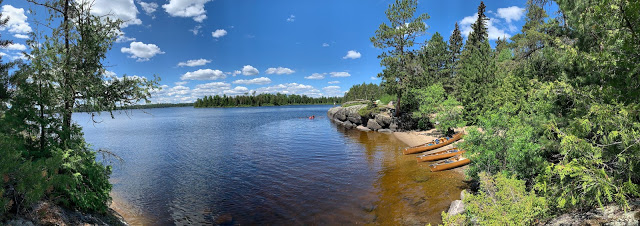
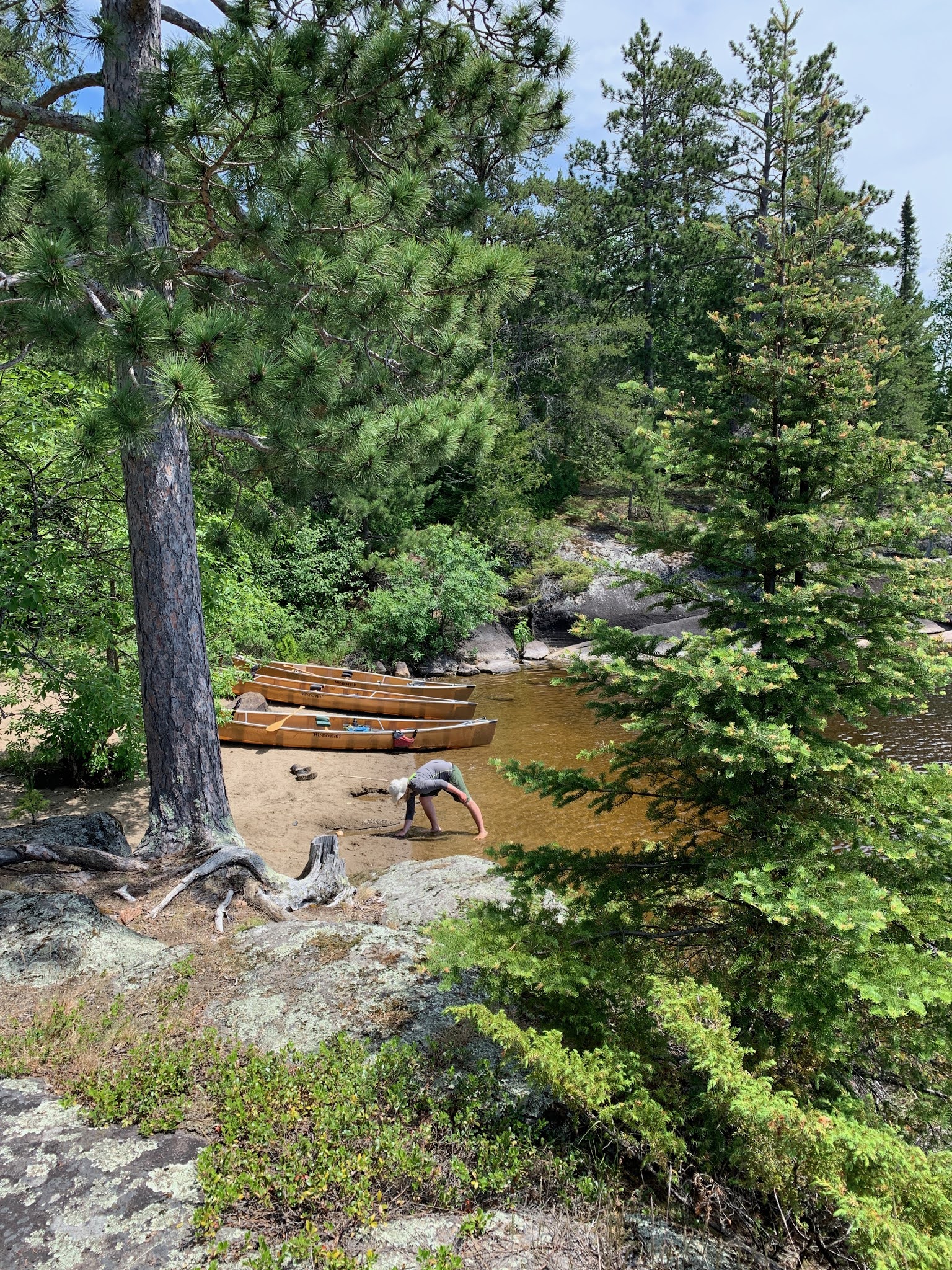
Just in time to disappoint a few other canoeing parties searching for a campsite, G2 made it to site #1323, a 5-star campsite with a sand beach, and campsite perched high on top of flat rocks overlooking an expanse of Lake Insula. This Best Campsite Ever would be their home for the next two days. 


Campsites in BW vary in size and beauty, but like so many things these days, are also rated by a 5-star system (BWCA campsite map with ratings). What impressed Astrid, eventually, when she thought about it, was that she saw nothing human-made other than the grates in each campsite. There were no signs, no random stakes in the ground, no surveying posts– only nature. 

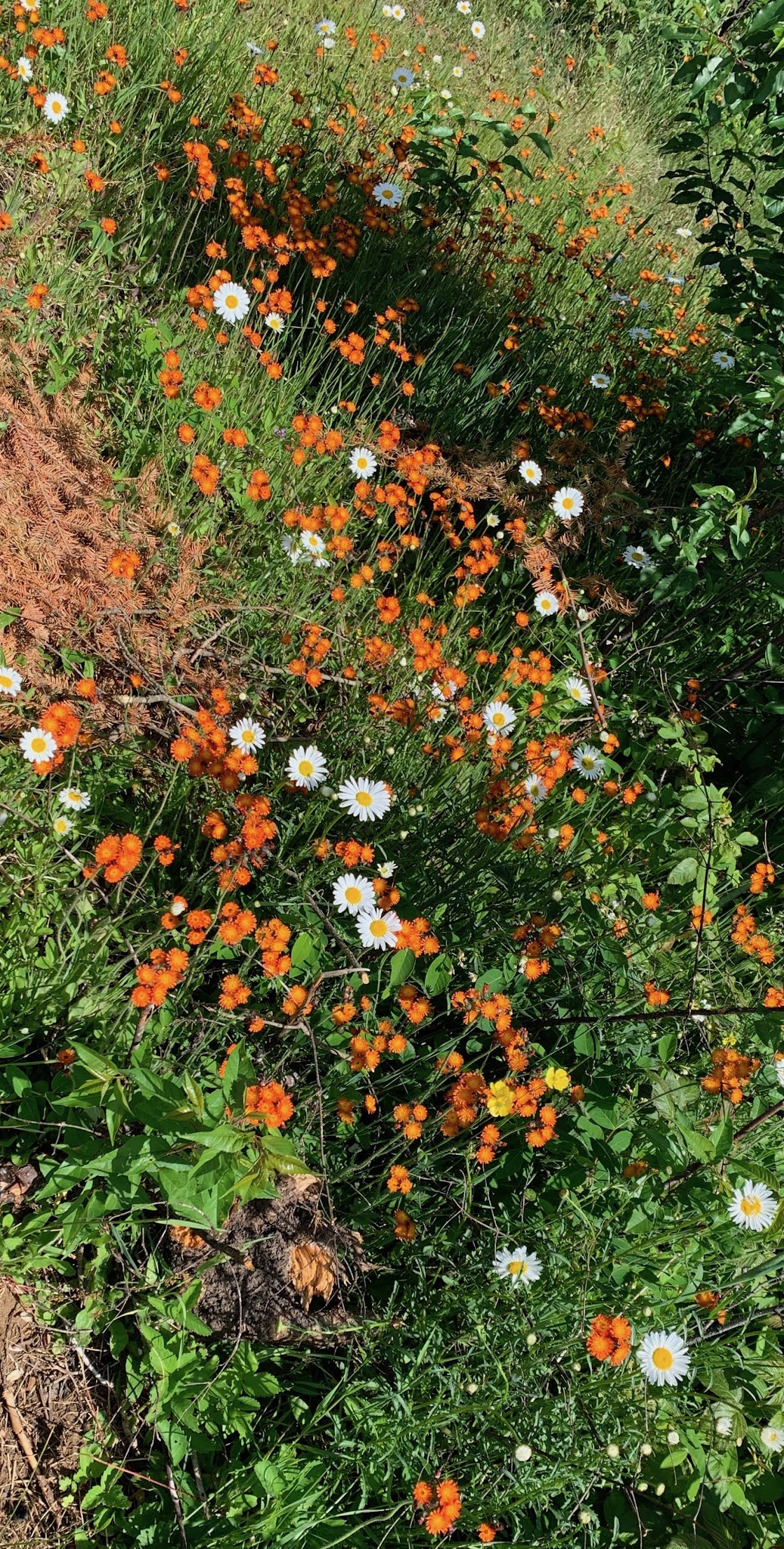
Astrid picked a spot for her tent which backed up to a patch of oxeye daisies, but the whole campsite was sprinkled with wildflowers–orange hawkweed (Hieracium pilloseloides), tall buttercup (Ranunculus acris) and low tiny white flowers. The afternoon sun was strong on the front of the site, warming the boulders, which made it good for drying socks.


Canoeing meant that at one time or another, Astrid’s feet were going to get wet. She needed a decent hiking boot for the portaging trails, but getting decent hiking boots wet would immediately ruin them, so Astrid wore her old, cracked leather boots, since there was no way not to get one’s feet wet unless you wore rubber galoshes. But she was used to it; a past working in greenhouses and trudgeing around dew soaked fields in the morning had taught her to grin and bear wet feet. Every day, before setting up camp, the canoeists took off their soggy boots and changed into (hopefully) dry socks and camp shoes.


After setting up camp, most of G2 went swimming in the tannic waters under a hazy cloud of mayflies. Astrid made her usual survey of the camp, photographing wildflowers and following trails. 


After some time, two canoes went out fishing. Mr. K, Astrid’s travel-canoe partner liked to fish, it was his great joy, as many times during the trip, he would throw in a fishing line in while they were paddling to a spot. She had gone fishing once or twice when she was a child, but never had much interest. Admittedly, it was a great way to get dinner, but she did not quite understand the draw of it. Like the Merganser photographers, she thanked God that there were people in the world, including Mr. K, who loved to fish. 


The Best Campsite, #1323

Campsite #1323 was a beautiful campsite, but it was also dry and hot in the late afternoon sun, even in the shade it was uncomfortable. After all the resting and exploring had been done, Snorri and Astrid convinced a G2 fellow canoeist, D, to take a canoe out to explore. The minute they launched into the water, everyone felt better, the cool air blowing faintly against their faces. 


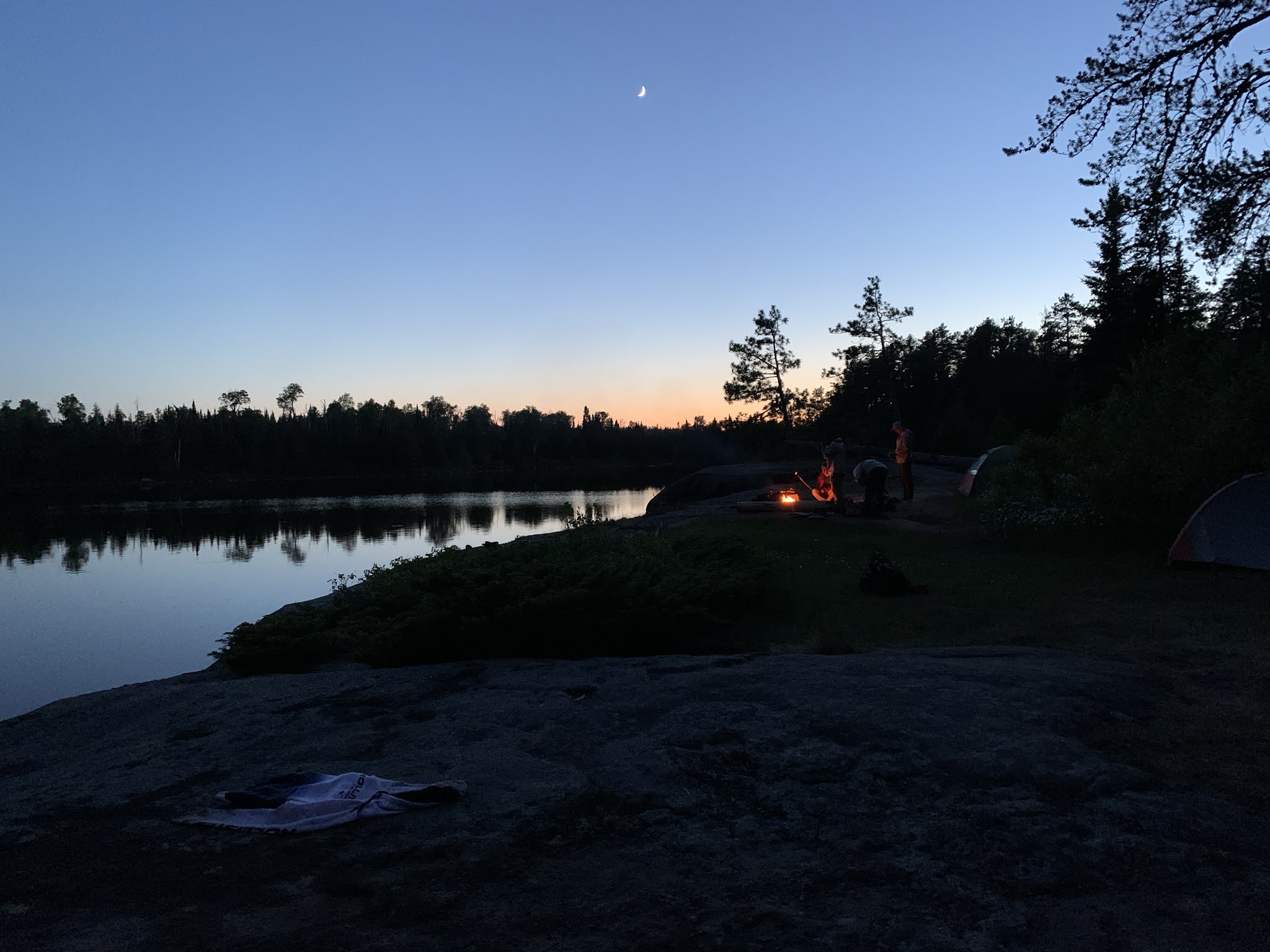
That night, Mr. K woke everyone for star-gazing. Astrid, coming out of a death-like sleep, to see one of the most spectacular sights she had ever seen, fumbled out of her cozy, one-man tent to look up to behold a dynamic, clear, twinkling sky full of stars. Through her sleepy fog, she knew it was beautiful and rare, since there was so little light pollution in the BW. And, though she had wondered and written about the splendor of a clear, star-filled night sky, in And the Darkness Has Not Overcome It\’, the sight always carried a vein of frustration with it. At first, she thought it was because she was spoiled, with Bjorn always staying up (read: keeping the family up) to photograph stars on their trips–but that wasn’t the whole reason. It was because the stars were untouchable. 

So many beautiful things she’d seen on her parochial travels held within them a point of contact, of relatability; she could touch the bark of the gigantic redwoods, hear the calls of the birds, come within feet of animals, touch the tannic waters, the dirt, the car-sized boulders … but the stars, they were beautiful, mute and … untouchable, incomprehensible, even if she did understand a tiny bit about what they were and where, they were all very theoretical to her, except for their light.

It made sense that people looked to the heavens when praying to God, who is omniscient, omnipresent and omnipotent. Although the Judeo-Christan God, as the Soviets found out when they sent a man into space, does not live there*, He is credited with the construction of the heavens. The vastness of the star-lit skies, the seeming unending expanse and its untouchable sacrosanct-ness gives us puny humans a slight hint about how incomprehensible God really is. 

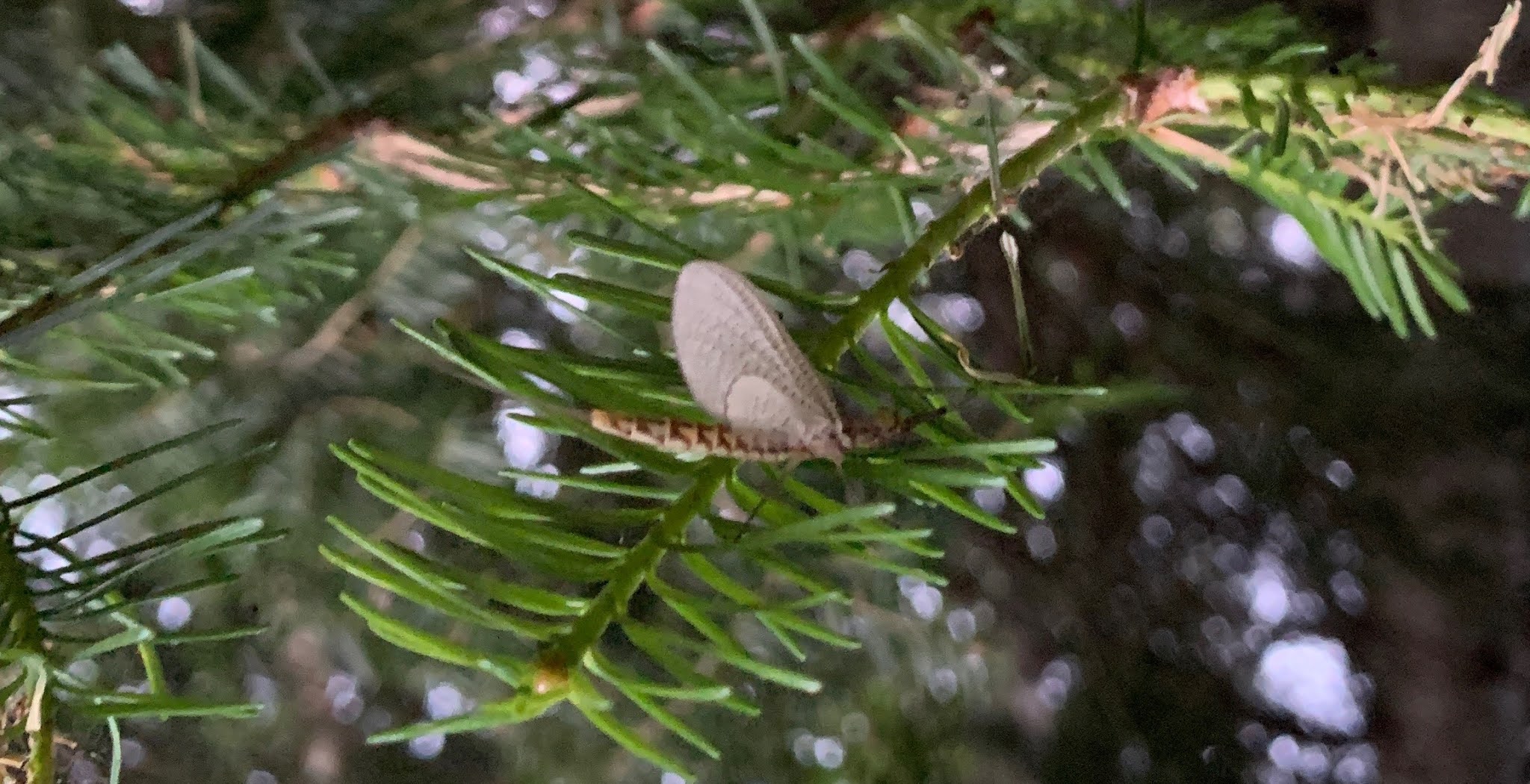
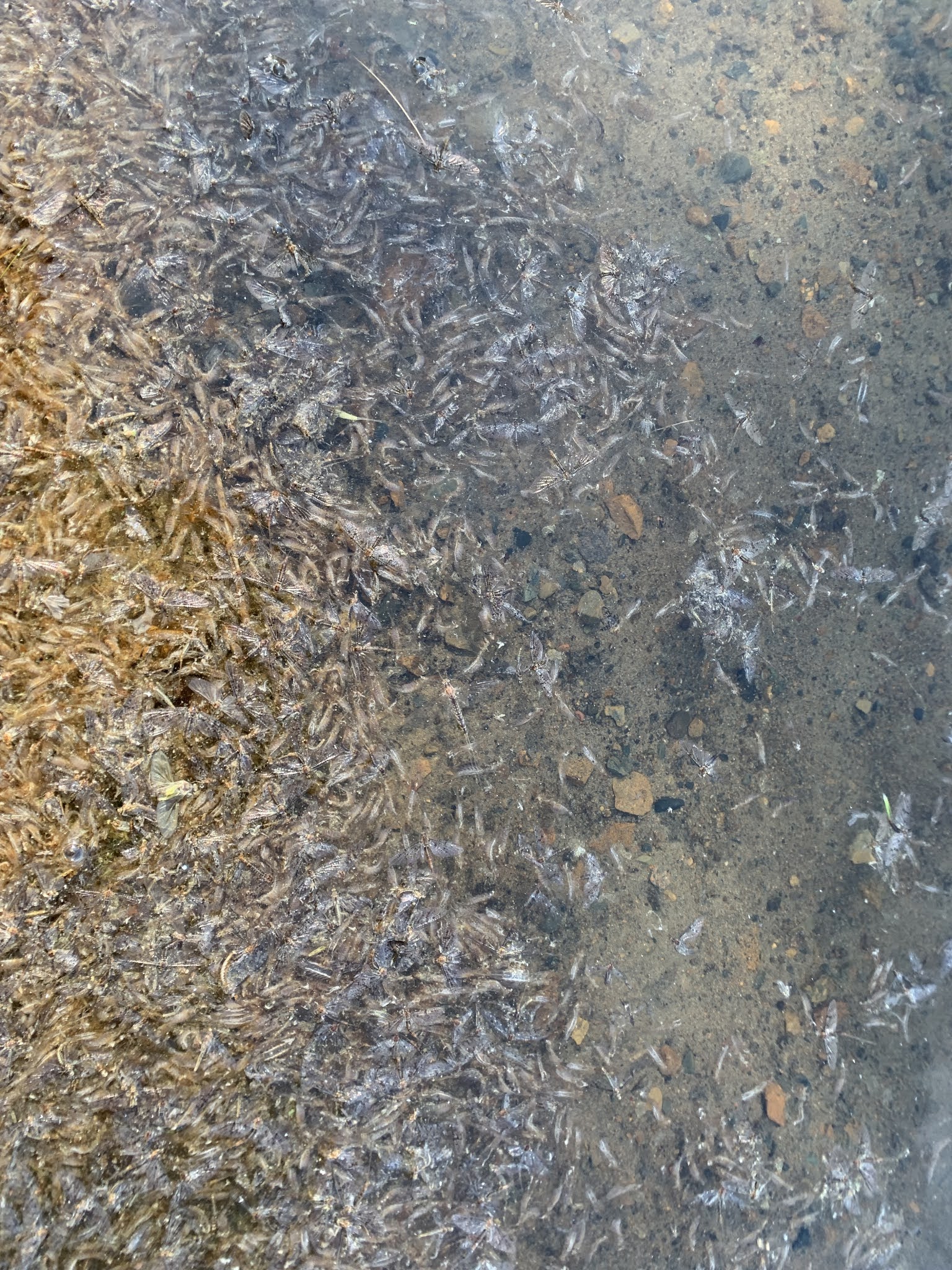
In the morning, the lake was covered with a film of dead Mayflies (Ephemeroptera spp.), which had died en masse during the night, and fallen into the water. They washed up in sheets onto the shores and dotted the waters everywhere. The mayflies seemed to be as numerous as the stars in the sky Astrid saw the night before, but unlike the almost-eternal stars, the delicate insects live for only a day. 


In the morning, all eight members of G2 packed a lunch and set off from The Best Campsite, traveling east to the Kawishiwi River, then south toward Fishdance Lake to see the Fishdance Picture Rocks, ancient drawings on the side of a rock. All along the trip, fishermen fished, non-fishermen paddled and looked and enjoyed the trip. When Astrid finally saw the rock hieroglyphs, she was a bit underwhelmed; the Fishdance hieroglyphs looked like smudges of red on rock. 

They paddled leisurely back, fishing, swimming, eating lunch and portaging. When they finally returned to their campsite, and Astrid started to peel off wet boots and socks on the warm rocky ledge over the water, one G2 canoeist came around the bend and said, “I found them!”

“Them” were Group 1, nine canoeists who had spent the day paddling (and fishing) down from their route to meet G2. In the BW, voices travel easily over the water, and speaking in a normal tone will carry yards and yards, possibly miles, so they could carry on a normal conversation standing high on the rocks without G1 disembarking from their canoes. It was nice to see them. Funny how fond one grows of our friends when we see them again, after toiling on some shared, but separate journey. 


G1 paddled to a nearby campsite to set up camp, then paddled back to The Best Campsite Ever, to swap stories of long fish and short portages, fishing triumphs and losses, meals and sights. 


At 3AM the next morning, wakefulness found Astrid once again, leaving her restless and wondering when she would fall back asleep. Staring up at the ceiling of her tent, she noticed a marked difference from other nights: it was deadly still outside. There was no breeze, no critter scurrying, no sound, nothing but the occasional bright flash outside her tent. 


When she unzipped her tent and stood up, she understood. The sky was so overcast with dark clouds it shut out even twilight, making the skies inky black. The eerie darkness felt closer and more oppressive than ever. But the lightning bugs flashed all the brighter. As she returned to her tent, drops of rain pocked the canvas, then grew into what sounded like a downpour, then dwindled into a pitter patter again.


In the morning the rain had gone but had left the best smell ever, of piney woods after a rain; sweet, subtley perfumed, dewey, but fleeting as the morning sun came up to burn it all away. 


“The End” must come, to every pain, every journey, every lesson, every joy, every life; to everything we put a cage of time around, there must be an end. And that morning, they had reached the beginning of BW Canoe Trip 2020 End. 


After breakfast, G2 packed up and paddled over to G1’s campsite, soaking in each other’s company before setting out on their trip back to where they started. 


The whole flotilla stopped for lunch at a peninsula of rock and gravel. They were encountering more and more canoeists traveling the opposite direction. One family traveling the other way said they could not find a campsite up to that point, which gave them some concern.


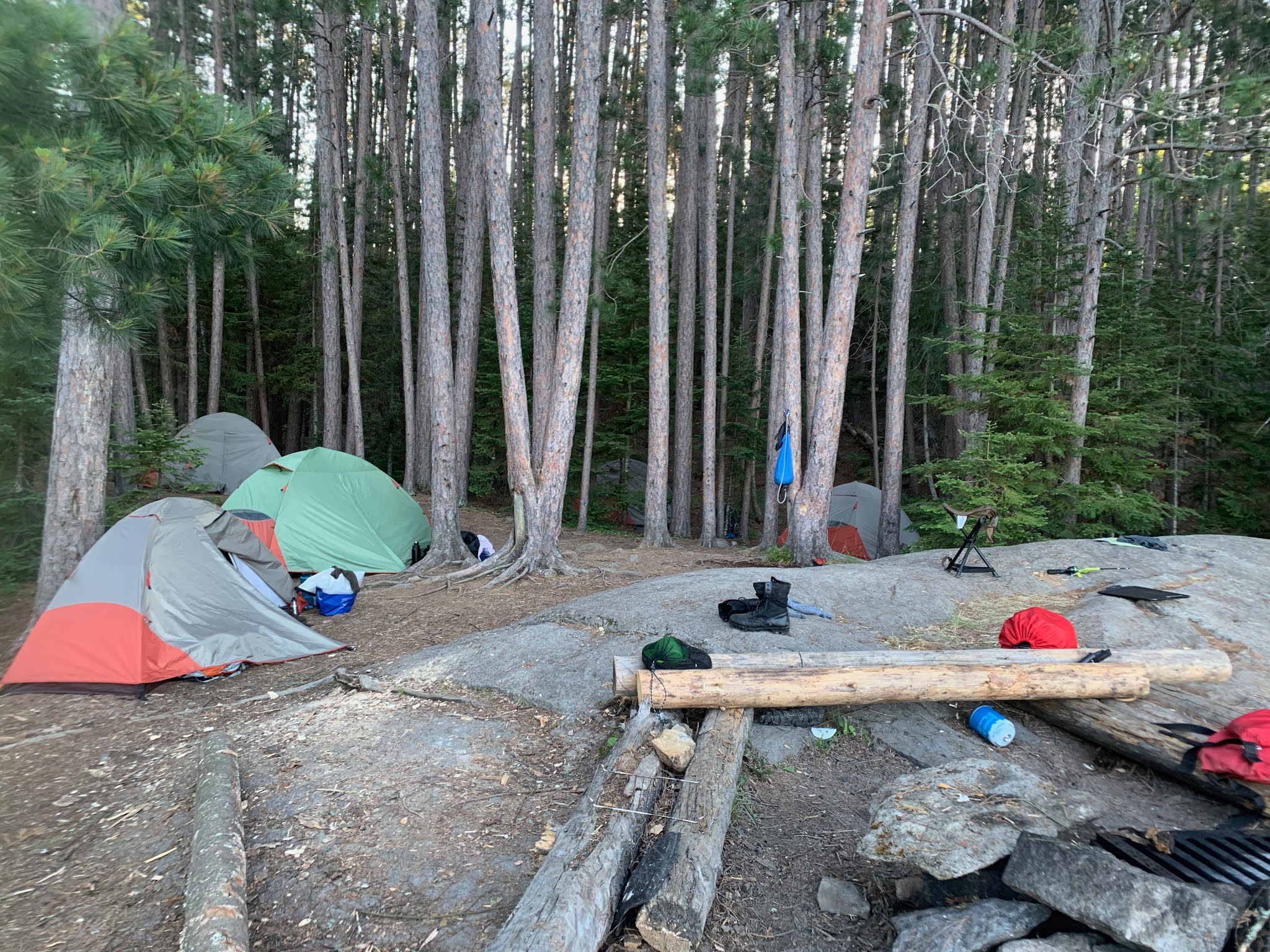
They paddled across Lake Four and into a healthy headwind, the waves lapping against the hull of the canoe, to the first empty campsite, site #1495. Great boulders, sloping down into the water lined the shore, and behind it was a stark, recovering landscape with jagged dead trees and thick, green, but short undergrowth. Unsure they would find another site, and because a few G1 canoeists needed trees for hammocks, G2 took the sight and G1 paddled on.  


The site was dry, small and rocky, hot in the afternoon sun, but it was place to rest and stay for the night before heading off the water. The path to the “restroom” was overgrown, a hint that it was not much used. But they made the best of it, napped on the boulders, swam out into the cool waters and explored the area. 


It was the last night they would spend in the BW wilderness. One last night to see the untouchable stars sparkling over the water. 

Up to that point, Astrid’s life was not much affected by the national reaction to the COVID-19 pandemic, other than losing some part-time work. But as she was sometimes empathetic to a point of fault, and slightly germaphobic, it worried her–for the health of those around her and the economic and social repercussions of the state and national lock-downs. Along with enough food and equipment and clothes for a week of canoeing in the BW wilderness, she carried all these worries with her, too. 


“Worry will follow you into the wilderness, but will it follow you back out?” she asked herself many times that week. In the end, at the less-than-ideal, but still beautiful campsite #1495 in Lake Four, her answer was, “Yes, but.” But, because your journey into the wilderness has given you a unique soul-deep rest, made you literally stronger, and figuratively taller, you can look at this worry from a different perspective; from above it, instead of from under it, and it will feel smaller even though it hasn’t changed. And considering it from that height and strength, it cannot do much harm. 


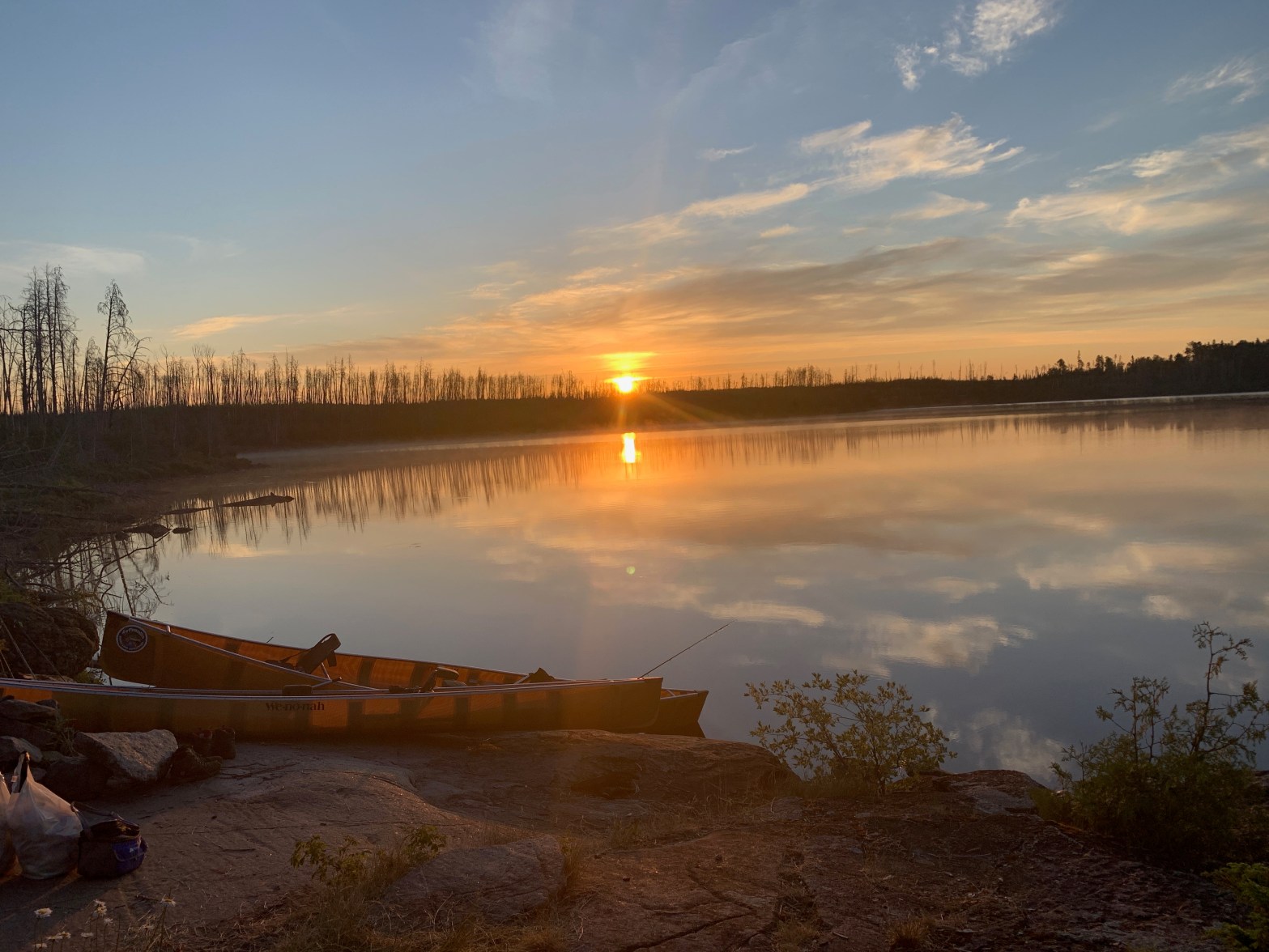
Every day, the BW’s wilderness offered gifts–an early morning sunrise over the water; a mirror-still lake reflecting the sky; a bald eagle sighting; the eerie wail of a loon song; hope growing green, new and lush to heal over devastated fire-torn forest; fellow canoeists’ joy in their grand pursuits; incomprehensible stars begging far-away, unanswerable questions; the after-rain perfume of the forest; wildflowers tucked away in verdant corners; spectacular sunsets to close the days. The final gift was bittersweet–it was a slight sorrow, but edifying satisfaction of a journey well-traveled. Juxtaposed with these daily gifts, it was as if nature never heard of COVID, and if it did, it just shrugged. 


In the morning, after a quick breakfast, they sought and found their friends, G1, and paddled out along placid waters, back to where they started. They piled up all six canoes and all 17 lifevests, waited for LaTourelle’s Outfitters to come pick up the equipment, then got a long-awaited shower back at the outfitter’s.  


The group picked up lunch and souvenirs in the nearby town of Ely, Minnesota, then started on their drive home. They spent the night front-country camping at a state park in Wisconsin Dells, then drove back to Southwest Michigan the next day.


“Now we were to return, like the voyager in the play, and see what rearrangements fortune had perfected the while in our surroundings; what surprises stood ready made for us at home; and whither and how far the world had voyaged in our absence.” –Robert Louis Stevenson An Inland Voyage 


When Astrid returned home, she found that the world hadn’t voyaged far; COVID still raged, jobs were lost, everything was canceled or at a standstill, but the pandemic didn’t seem as big and threatening as before, because she knew she could and must, paddle on into the wind, into uncertainty. 


* In 1961 the Russians sent up Yuri Gagarin into space. The quote, “I went up to space, but I didn’t encounter god,” is often misattributed to him.

Out of Myself I Go: Beauty for Ashes Pt. 1

Beauty for Ashes* Pt. 1

On the way back from an early morning shower, Astrid had been lured down a trail leading to a lake by burning orange light filtering through the trees. The skies wanted to give her something. 


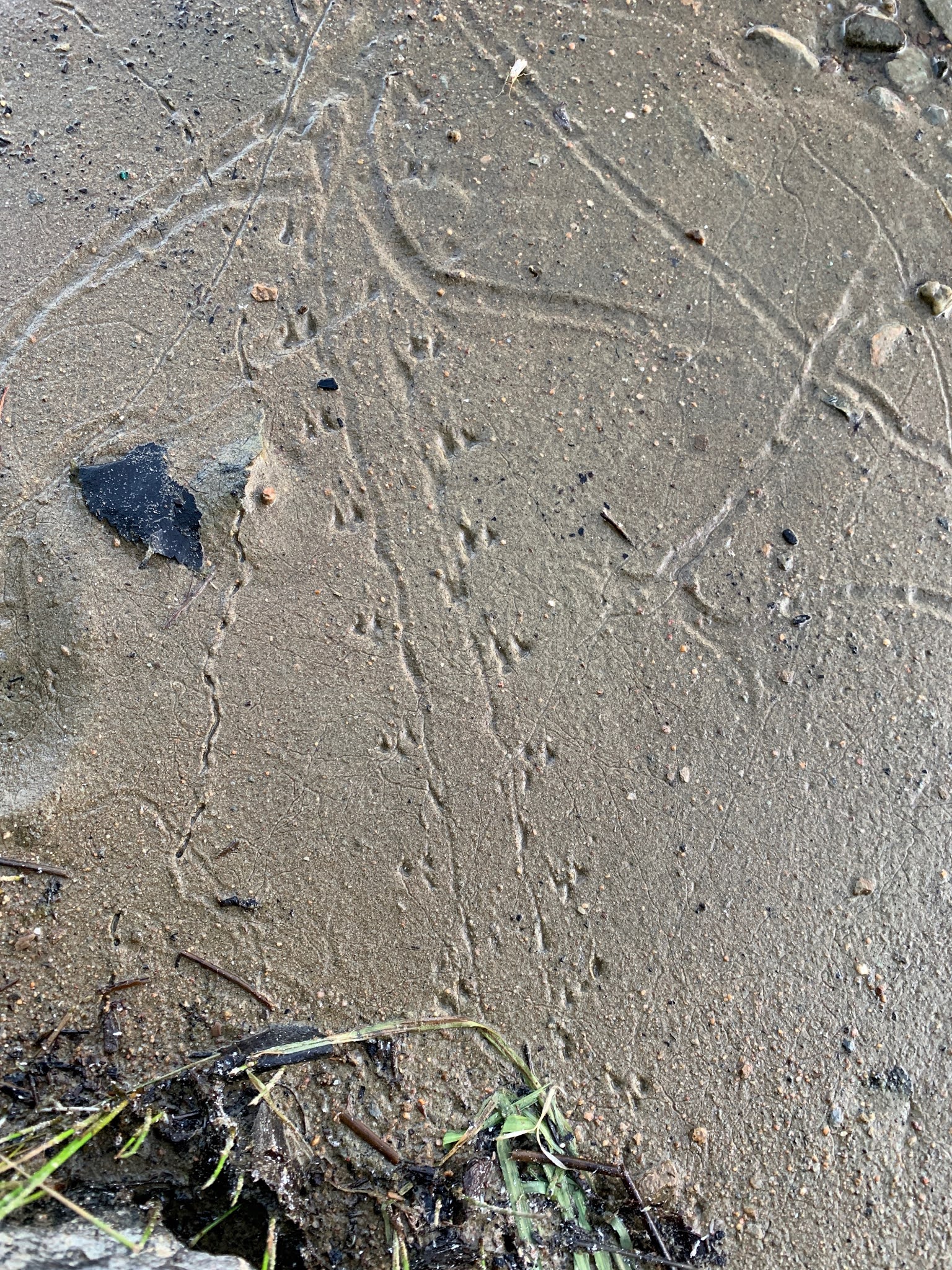
She crouched at the edge of the lake, distracted by wispy little footprints running toward the water: a little turtle? As she pondered these small marks in the mud, the soft light of dawn reached over the water and lifted her face to a magnificent horizon.  


She was standing on the edge of one of the many lakes in Superior National Forest, in the Fall Lake Campground. Up the shore a distance, fishermen were setting off in noisy motor boats, fishing poles standing at the ready, off the bows. 


This sunrise was the first gift she received from the wilderness during her time in Boundary Waters Canoe Area Wilderness. The 17-person group she was traveling with arrived in Ely, Minnesota the evening before, after a many-hours-long drive from southwest Michigan, and spent the night at the campground before setting off into the wild.


Within a few dim and dusky morning hours, everyone had eaten breakfast, packed the tents and myriad necessities away into backpacks and drove to LaTourelle’s Outfitters to pick up their canoes and head out into the Boundary Waters (BW). 


Groups are limited to nine canoeists in the Boundary Waters, so the larger group split into two: one high-mileage group, group 1 (G1), the other, a lower-mileage, more leisurely, fishing-intensive group, group 2 (G2). Though neither were fisherman, Astrid and Snorri chose the low-mileage group.


After seeing G1 off into the tannin-tinted waters by the outfitters, G2 followed their canoes (being hauled on a trailer) to drop-off point numbered 30 on their maps. 

***

\”Canoeing is pretty straight forward,” a friend commented when discussing the trip the previous December. 


“I don’t find it so,” Astrid said. In her very limited experience, canoeing was not straight forward–it was a very crooked endeavor. It’s not a difficult thing to paddle a tandem canoe, but there is some finesse needed, some learning and refining of a technique to keep the canoe moving in a straight-ish line. As in life, speaking and walking, it involves constant course correction, but most people have more practice speaking and walking. 

“The attempt to speak what I mean is the same kind of failure that walking is–a mere constantly recurring recovery from falling.” -George MacDonald

For the next six days, with few variations, G2 would follow this routine: breakfast, pack-up camp, paddle/portage, lunch, paddle/portage, set up camp, fish/swim/rest, dinner, sleep. But there was so much more to it. 


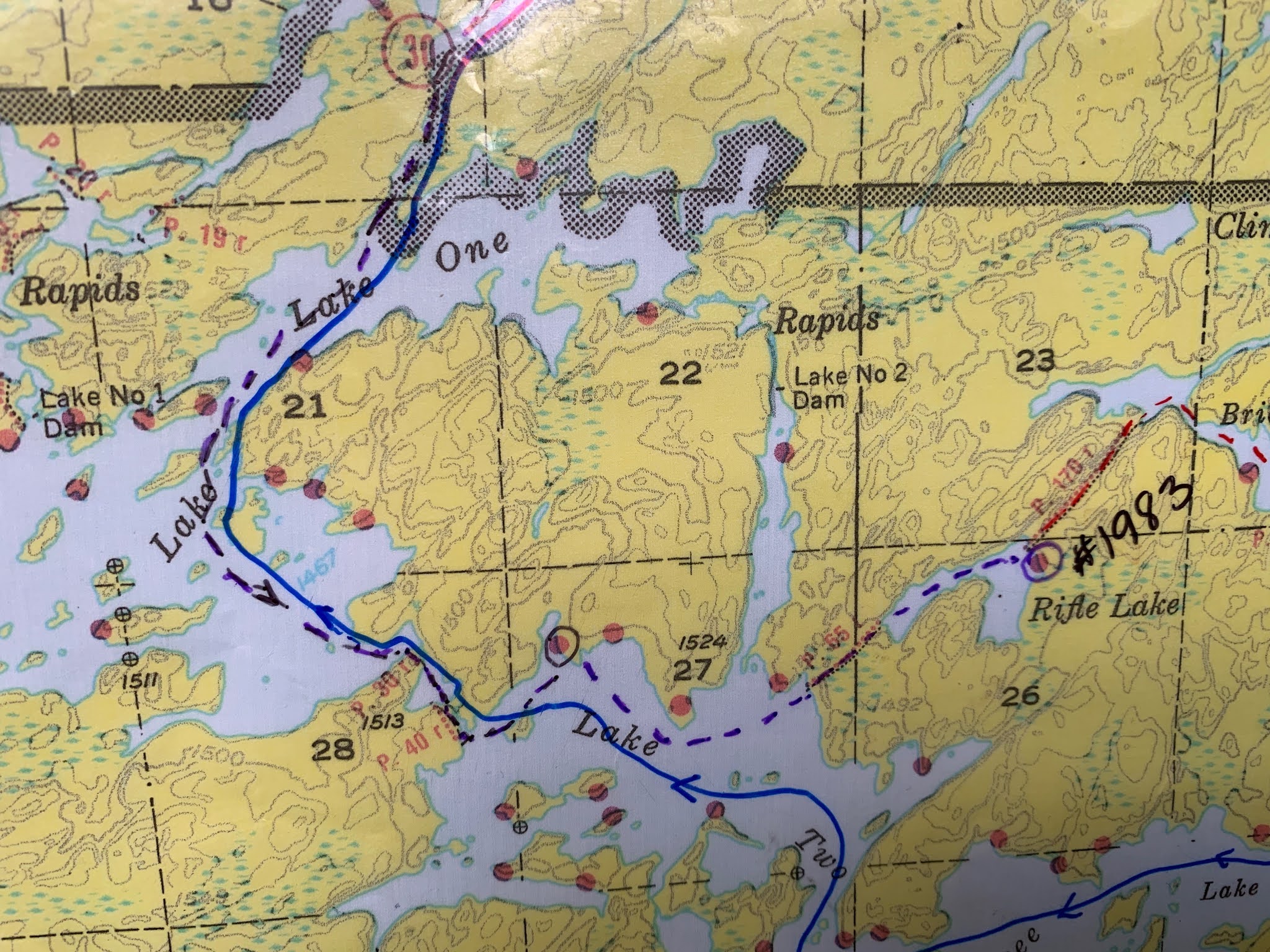
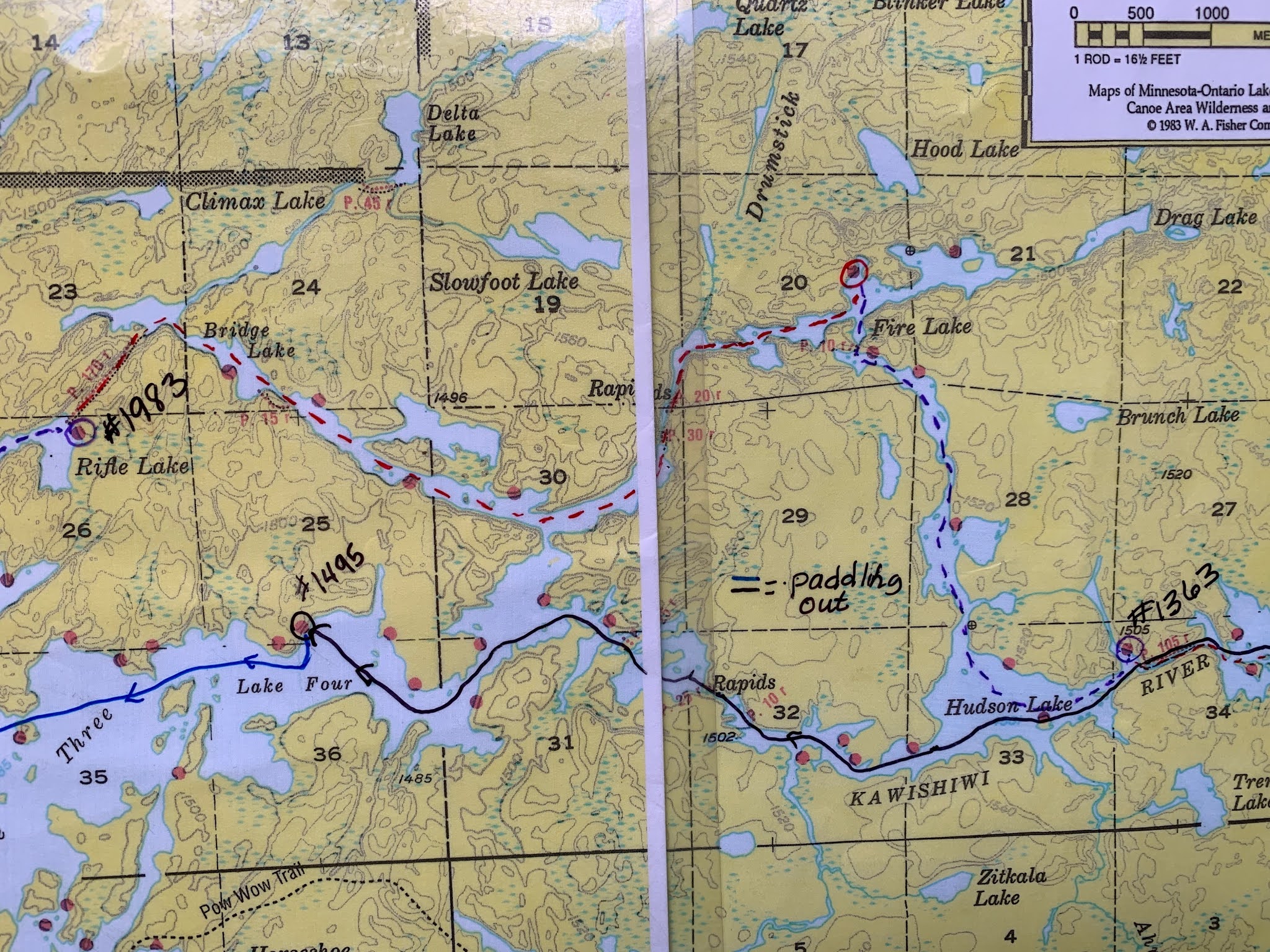
G2’s three canoes paddled around the first shallow lake, through yellow water lilies (Nuphar lutea), looking for an outlet. When they finally found their way out to a bigger waterway,  other canoeists, were heading out–going home from their week in the wild. One group they encountered consisted of a single canoe full of young children, with their ingenuous father using boat oars to row the canoe (one usually rows a boat, but paddles a canoe). After paddling down Lake One (dashed line on the map), G2 encountered their first portage.


Portaging is the act of carrying your canoe over dry land. It meant donning backpacks, and carrying any other lose equipment, one or both persons turning the canoe upside down and carrying it on their shoulders over sometimes rocky and challenging terrain. Their first portage was marked 30r, or 30 rods. (1 rod =16.5’ or 5 meters.) Regrettably, Astrid only carried the canoe once, a last short portage at the end of their week.


After their first two portages, they stopped at a campsite on Lake Two for lunch. Campsites were denoted on the map by a red dot, and in real time by a “hob” or grate to cook on, usually situated on a big rock if possible. 


As they prepared to pull their canoes up onto the campsite, a couple with photographic equipment paddled close by. Astrid saw them earlier, pointing large, long camera lenses at the bank. 


“There’s a Merganser nest with babies,” the woman said, eyes sparkling as she paddled past. 


She was in her element, doing what she loved, what made her heart full, you could hear it in her voice. To some people, it sounded odd. It was just a bird, with a nest, in a watery wilderness. What’s the big deal?


Everyone has their deep interests, those subjects and pursuits which, when engaged in, build us up, and though they may involve strenuous work, exhaustive tedium or deep laborious study, they grow us and energize us like nothing else can. 


Taking pictures of waterfowl and wildlife was this woman’s (and presumably, her spouse’s) deep joy, her big deal and Astrid thanked God to see it in her, thanked God for the woman’s joy and excitement about a tiny, but significant bit of His creation. 


After eating lunch, the G2 flotilla paddled their way across Lake Two and made the 55r portage to Rifle Lake. The lone camp, #1983 at the end of Rifle Lake was vacant, so after collecting a consensus, they decided to stay for the day. Pulling the canoes up onto a small bit of sandy shore, they set up camp among tall pines and boulders. 

When two canoe-fulls of fishermen went out to find a side-dish to dinner, Astrid and Snorri (a curious soul, but not necessarily a fisherman) explored the campsite. Astrid followed faint paths in the undergrowth up hills and around dozens of car-sized boulders. Unlike Merida in the movie Brave, who found will-o-the-wisps and a witch’s hut among Gaelic boulders, Astrid found something much more practical and useful: a vault toilet–just the toilet, no walls. It was a lot less repulsive than most she\’s seen.

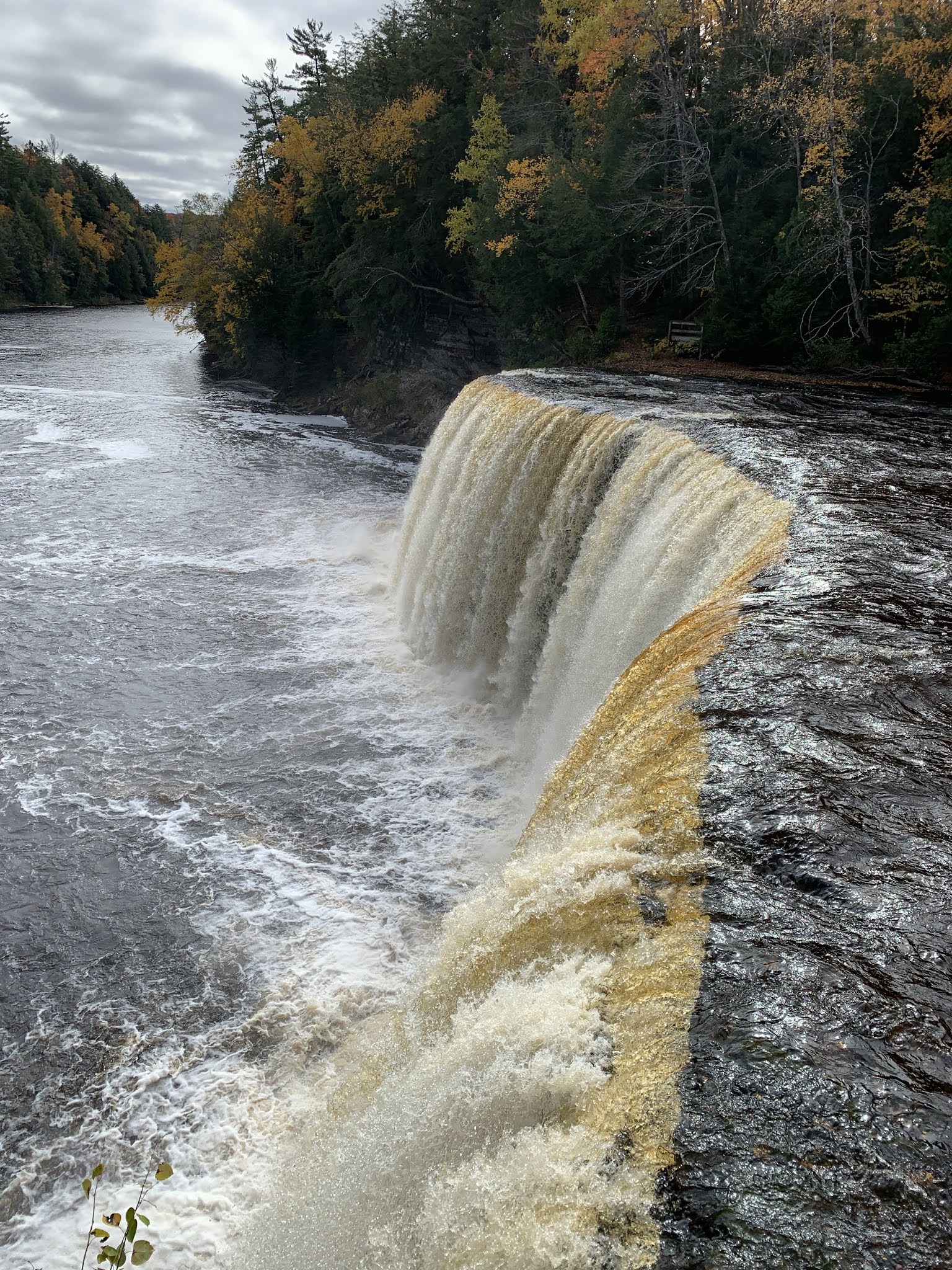
The water of many of BW’s lakes were tinged brown with tannins. Tannins are plant phenolic compounds that come from decomposing plants and leach out of the ground, into the water. They are largely harmless for human consumption, and cannot be filtered out by typical backpacking water filters. It’s always a little weird and disquieting to see and drink if one is not used to it. The water of Tahquamenon Falls (pictured above) in the UP of Michigan is brown with tannins. 


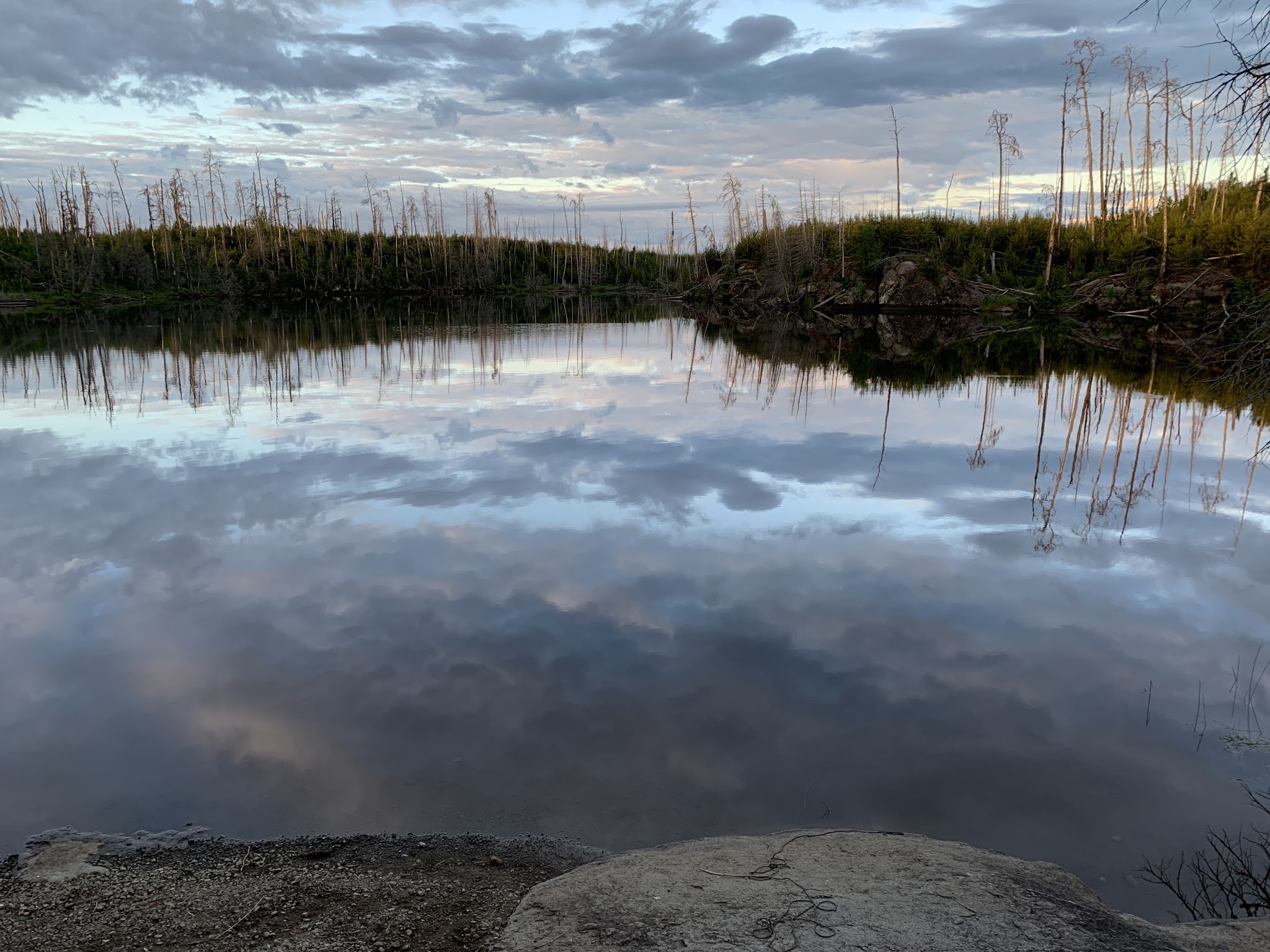
Gun Lake’s water was brown with tannins, too and when in the evening, it became still as glass, it created a surface filled with dynamic reflections of the cloudy evening sky. The mature forest floor of the campsite was sparse, with a few understory plants, the thick canopy of trees keeping the sun to a minimum. Although voices and sounds traveled far in the clear watery wilderness, the quiet was just as profound, the only noises coming from animals or the weather. The night was even more quiet, punctuated by soft splashes of some aquatic animal frolicking in the dark, and the far-away calls of waterfowl, the loon’s song eerily distinct over them all.


On Loons (Gavia immer)

Astrid first heard the wonderfully strange bird’s call one night when camping in New Hampshire, at Pawtuckaway State Park, on their way to Maine. The sound they made, so loud and mournfully eerie, justified them being eight feet tall, but alas, they are just a bit bigger than a Mallard duck (or a Common Merganser, if one wants to get out of the ordinary). Both male and female loons, to fit their outsized and varied calls, wear a dynamic appearance in summer: black with various white spots, and very red eyes. Discontent with water-surface food, it dives under water for its dinner. If the Mallard duck is Joe Q. Public of the waterfowl world, the Loon is the heavy metal head. 

***

The morning promised another beautiful day with a clear blue sky, and after taking a bit long to breakfast and pack up, G2 hiked the 170r portage into Bridge Lake, then through a few short portages into Fire Lake. 

The flotilla stopped at a campsite for lunch which had a curious mix of vegetation. The landscape was no longer thick with tall pines and huge boulders, the trees were sparse and undergrowth thick and green. As they paddled further on that day, they moved into not-so beautiful areas that were slowly reclaiming themselves from a decade-old fire. 


In August 2011, a lightning strike started a fire that would eventually burn 93,000 acres of northern Minnesota, including areas of the BW. What Astrid saw was the latest, northern-most areas where the fire burned. 


After the trip, Snorri said the recovering landscape was ugly and bare. And it was. Dead trees still stood, making for a ragged and eerie horizon, especially at sunset and sunrise, but there was more to this picture than first impressions. The short, young, green grown was not majestic or beautiful yet, but it was a lot like hope sometimes; desperate, fledgling, awkward at first, but with a promise to grow into something glorious. Nature would and is turning the forest fire ashes into beauty, slowly, but surely. These forests, and many plants in them adapted to tolerate forest fires every 20-30 years; Jack pine (Pinus banksiana) cones only open in intense heat, fireweed (Chamerion angustifolium) flourishes after fires, forests are renewed and \”cleaned out\” by fires.


Bald Eagle (Haliaeetus leucocephalus)

They paddled on against a stiff breeze, from Fire Lake down to Hudson Lake, stopping to check out a potential campsite in which a bald eagle was perched on top of a dead tree. The bird sat surveying its domain while the members of the G2 flotilla came up on shore to check out the place. The eagle flew away, and the canoeists did too, the site was too small. 


When Astrid was young, it was impressed upon her that The American Bald Eagle was an endangered species. In college, she learned that a very effective insecticide (DDT) which permeated the environment was biomagnified in the carnivorous birds’ food and weakened the female birds’ egg shells. The insecticide was banned in the US, and now, in a phoenix-like resurrection, in the BW of Minnesota, Astrid saw at least one bald eagle everyday, whether soaring far above them, or sitting in a dead tree. 

G2 moved on, eventually finding a suitable campsite, #1363 (dotted line, to the right of the map) amidst the recovering landscape, at a site next to a portage on Hudson Lake. As Astrid put up her tent and settled into the spot, she could see better how so many different plants were helping the fire-ravaged land heal. All around her was low, green brush. Wild rose, blackcap raspberries, dogbane, wildflowers of many kinds, Christmas tree-sized Jack Pine, grasses, were filling in, taking advantage of the full uninterrupted sunlight. All around, in what should have been thick shade, under the green brush, was fallen, burnt trees, dead rotting logs. The fire had been devastating, but life goes on; a forest was rising from the ashes; it was going to be beautiful someday.

On her way back from her exploratory hike of the campsite, she tight-rope-walked a large fallen tree, took a picture and wondered, cell coverage? She took her phone off airplane mode and … the spell was broken. 

“In some ways, our journey may be said to end with this letter-bag at Compiegne. The spell was broken. We had partly come home from that moment. No one should have any correspondence on a journey; it is bad enough to have to write, but the receipt of letters is the death of all holiday feeling.” –Robert Louis Stevenson, An Inland Voyage


Surely, Astrid’s loved ones at home were glad to hear she and Snorri hadn’t been eaten by bears or drowned in a freak canoe-moose accident, but the worries from home, of economic situations, of COVID, could just as easily come over those communications, and they did, interrupting Astrid’s concentrated immersion into the wilderness. 

That night, when the sun went down, the mosquito population soared to the point where everyone retired early into their tents just to avoid them. In the tent, Astrid could hear the blood thirsty insects buzzing, hunting for food, and for a way inside her tent. 


The next morning Astrid rose early as usual and haunted the campsite, took pictures of the sunrise against a jagged fire-carved horizon and collected firewood for cooking breakfast. 


Dried pine needles were the best tinder, they caught fire in a second and burned fast, with a snapping, fire-cracker like crescendo. It gave her a better understanding to how the fire moved through the area: the existing smallish lightning-sparked fire heated and dried the pine needles on the trees around it until they became dry like tinder and exploded in fire, growing exponentially, moving across the landscape. As she loaded the hob with the dried pine needles and dead wood, a swarm of mosquitoes which were keeping warm on the ashes flew up into the air. 


With some help from the morning\’s cook, she lowered the bear bag of food down from a dead tree and helped start breakfast. 

*Isaiah 61:3 To appoint unto them that mourn in Zion, to give unto them beauty for ashes, the oil of joy for mourning, the garment of praise for the spirit of heaviness; that they might be called trees of righteousness, the planting of the Lord, that he might be glorified.

**Blogger seems to be buggier with it\’s new format … I can\’t seem to get the formatting streamlined, sorry if that annoys you as much as it does me. Thanks for reading!


Out of Myself I Go: Prologue

Theodore Roosevelt National Park

 “ ‘Out of my country and myself I go*’. I wish to take a dive among new conditions for a while, as into another element. I have nothing to do with my friends or my affections for the time; when I came away, I left my heart at home in a desk or sent it forward with my portmanteau to await me at my destination. … I have paid all this money, look you, and paddled all these strokes for no other purpose than to be abroad…”

-Robert Louis Stevenson, An Inland Voyage

Once it is in the past, 2020 is a year that will live large in many people’s memories for so many reasons, but with one, persistent, connecting cause: COVID-19. I won’t go into a timeline, or commentary on the virus, just to know that it is a stark reality which cannot be avoided or wished away is enough. For the past five months, the world’s collective reaction to it has changed all our lives drastically. I refuse to say that our current methods of social interaction–video conferencing parties, meetings and virtual everything–are the new normal, but they have come in very useful during this time of prophylactic self-isolation. I and so many others, bereft of our usual person-to-person meetings, now understand more completely that humans, no matter the personality, need real, face-to-face, social interaction or we become … buggy. 

I was never called back to my part time job after March. Media and Facebook acquaintances so constantly urged me to “Stay Home, Stay Safe” that it started to sound like a rebuke–as if I made a regular habit of going out and licking handrails. In reality, all I did for 3 months was go to the grocery store, masked and covered in hand sanitizer. (I did take long solitary walks along rural back-roads, too, but rarely came within fifty feet of anyone.)

At this point in my life, I have come to understand that my mind is very dangerous place to be confined to. Encountering other people, besides my family, and encountering different challenges, brings me out of myself, leaving all the over-self-introspective neuroses that nest in my mind to wither and die.


I swear to you gentlemen, that to be overly conscious is a sickness, a real, thorough sickness.

                                        ― Fyodor Dostoevsky, Notes from Underground

Jordan Peterson, in his 12 Rules for Life, posits that when monumentously** bad (or good) things happen to you, it’s as if you loose your place, don’t know where you are or who you are because such fundamental things in your life have changed. In a word, you are lost. Your mental and sometimes physical landscapes become unrecognizable, things are not as you thought they were. COVID feels like that. Like floating in the air, ungrounded, with no point on the horizon, going up, then down–uncertain. Things are planned, then canceled, planned, canceled, closed, shut down. A glimmer of foundation shines on the horizon … but then, it disappears and hopes for normalcy are dashed again and again. All one is sure of is consciousness inside of one’s own mind. 


I found myself so self-reflective, self-thoughtful and obsessive of COVID statistics that frankly, I came to be utterly exhausted with my own company. I’m sure my family was a little tired of me, too. I am a Myers-Briggs introvert, but even then, I need other people. 


Even as I write this, it seems that everything is still in reference to COVID–from the first time you step out the door until when you get back home to wash your hands raw. And we still don’t know what to expect, when it will wain, or if we just have to ride it out and do the best we can when people get sick until, and if, a vaccine is developed. 


Even if you do not have to leave your home, it is changing so much about your life and your interactions with others, that you are in a different place. You may be getting used to this place, you may even like it or you may still be lost and frustrated. This is what COVID and its consequences did and is doing to so many people, including me and my family. 


So when the trip to Boundary Waters Canoe Wilderness in northern Minnesota, which I had planned to go on with a group of acquaintances was not canceled, I weighed the risk: mental degradation and despair against risk of coming down with the virus. My personal and very subjective decision: I was willing to risk it. 

My trip to Boundary Waters interrupted metaphorical and existential directionlessness, and replaced it with a better directionlessness; the real, physical challenge of trying to navigate ( in reality, help navigate) through a strange watery, literal-wilderness marked with very few man-made landmarks, and a landscape (and map) that appeared to be all the same, in every direction. But when I looked closer, and was given a hint by someone who had been there before, it started to make sense.


Admittedly, I spent most of my time in the canoe trying to match the landscape with my map and failing, but there were times when I knew where I was–physically and mentally–and that brought a sense of certainty of place which was refreshing. 


This trip came exactly one week before a significant change in my family’s future, directly an outcome of the COVID economy. The immersion into physical survival mode in Boundary Waters–carrying everything you need for the week on your back or in your canoe–of large expansive vistas of nature, of the absence of any sign of COVID, was therapeutic to my soul, strengthening me for what was in store when we got home. 


Later this summer, Bjorn and I decided, in a possibly extravagant move, to keep our travel plans as written earlier in the year. Like so many people, we decided to go to a less-popular place, the least visited states, possible to travel to by car: The Dakotas. Apparently many people thought the same, as not less than five families I know made a similar trip. I intend to document our trip despite the repetition, because the impact travel makes on a person is personal, subjective, unique to the particular traveler. We went to the same places, observed many of the same things, but saw them all differently.


We changed a few of our travel habits due to COVID. We backcountry camped two nights, one night in Theodore Roosevelt National Park, another in Badlands National Park. We brought at least half of our meals with us, ordered take-out and ate in our hotel rooms many other times. We disinfectant-wiped all the touch points in our hotel rooms. We wore masks indoors, and on crowded trails even when most other people weren’t. We went, we managed risk, we explored, we discovered and we got out of ourselves for a week. And we didn\’t contract COVID.

                                                                                                    –\”Astrid\”    


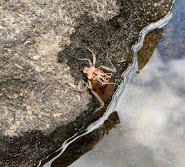
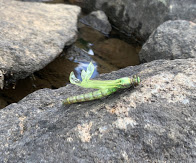
A dragonfly nymph (the empty skin, bottom, left) must get out of itself literally; it must shed its outer skin in order to grow, to let its wings inflate and grow strong, so that it can become the flying insect-eating terror that it was created to be (adult, just emerged, with wings still folded bottom, right). 

*“ ‘Out of my country and myself I go’\” This phrase was quoted in the text of An Inland Voyage. It wasn’t footnoted in the book, and I don’t know if it is Louis’s original or he is quoting it from some other text. 
 
**I made up this word, apparently.  I can\’t find it in the dictionary. 

Hiking The Manistee River Trail Loop Solo, But Never Alone

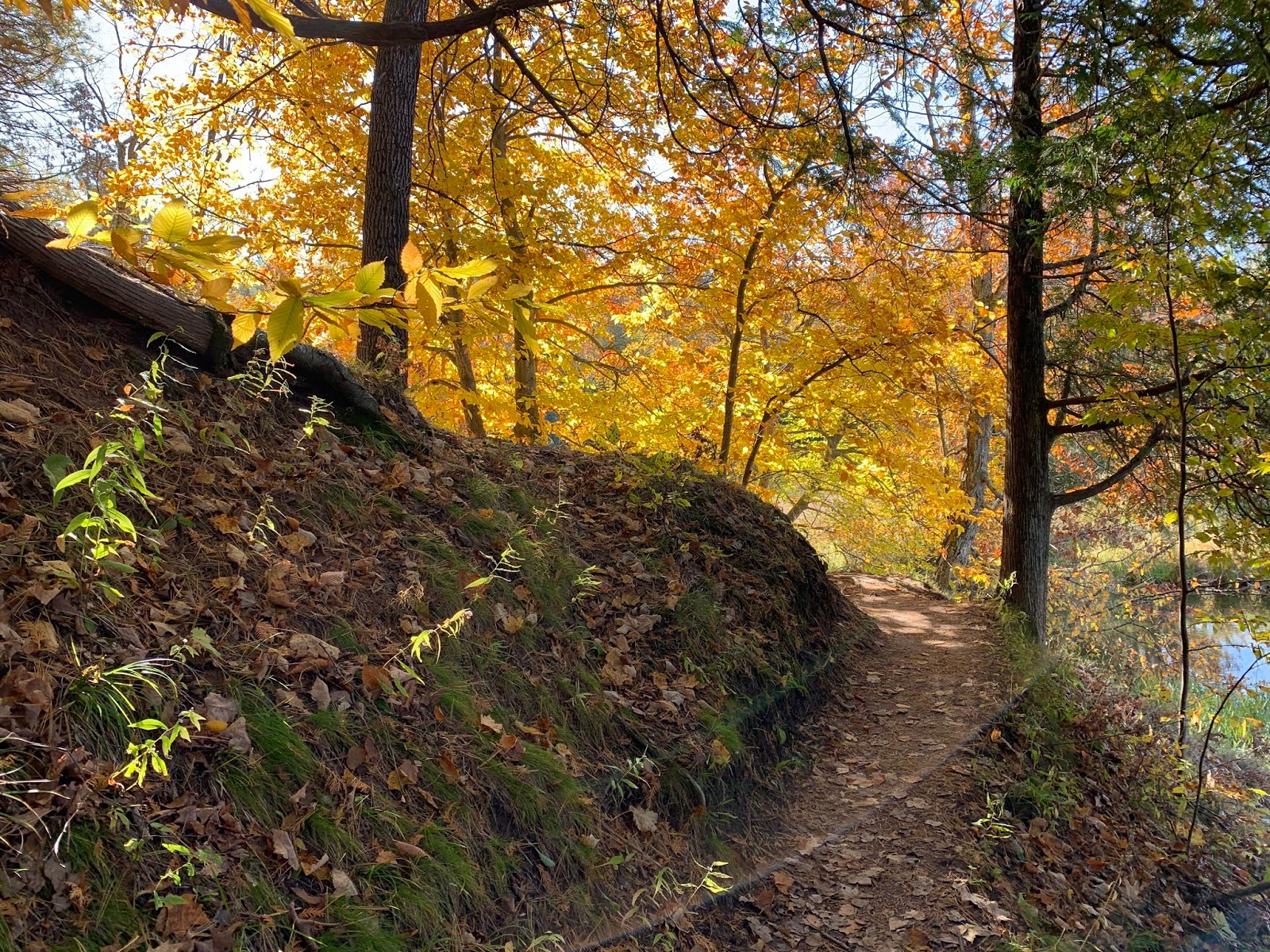
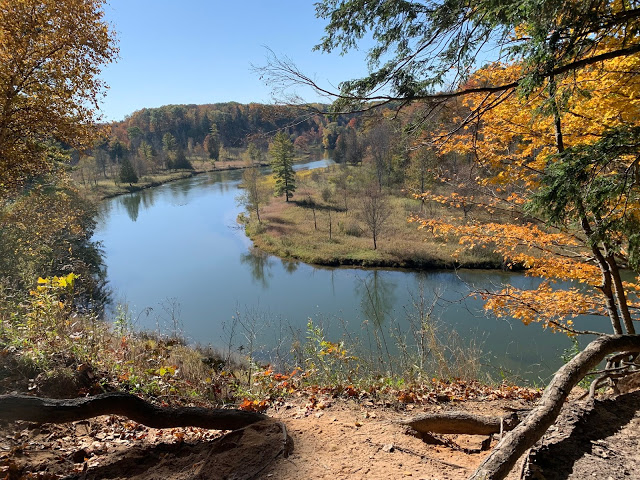
Manistee River Trail Bluff
“Sometimes you just have to walk,” Astrid said. She was talking to her brother on his front porch as his sweet little girls raced by in their plastic cars. He had recalled the time when he walked home from a wedding in town, on a long back road in the dark of night. A deer in the woods nearby had snuffled and grunted at him, a strange thing to hear, especially in the dark, at night on a lonely mountain road. 
That was when the idea of backpacking–somewhere, anywhere–became so loud a buzz in her head, that she had to take action. To be outside and just walk–not around the gravel track near her home, or on the hard cement neighborhood sidewalks to the store or post office, but in a forest, for a long time, all day: that was what she was going to do. But when? Where? With whom?
The rest of that summer was used up in a road trip to see her sister in Maine and in preparation for the school year. Through September she researched where she could go, then started to plan her “walk” in earnest. She chose the Manistee River Trail Loop, in northwest Michigan. 

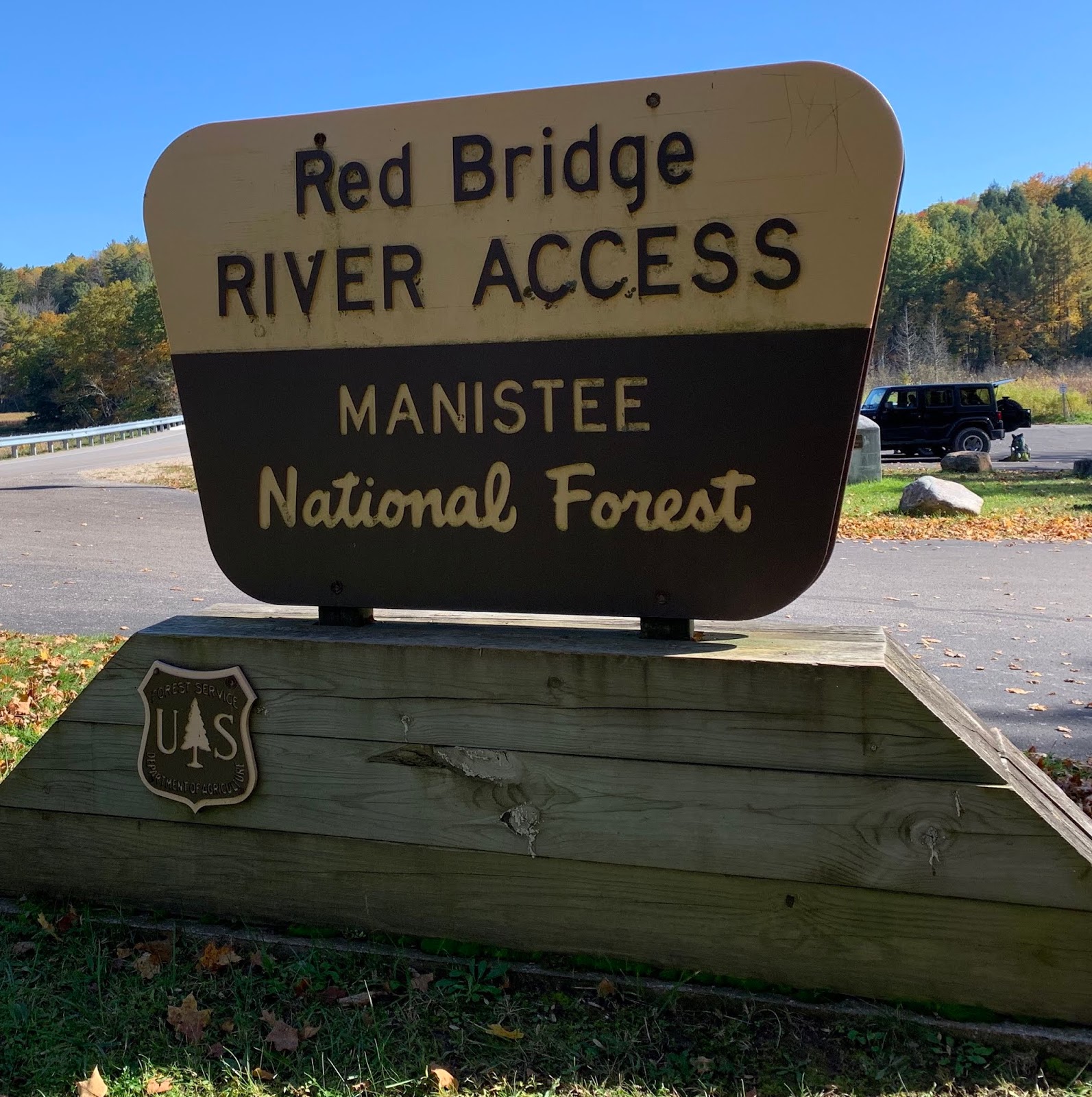
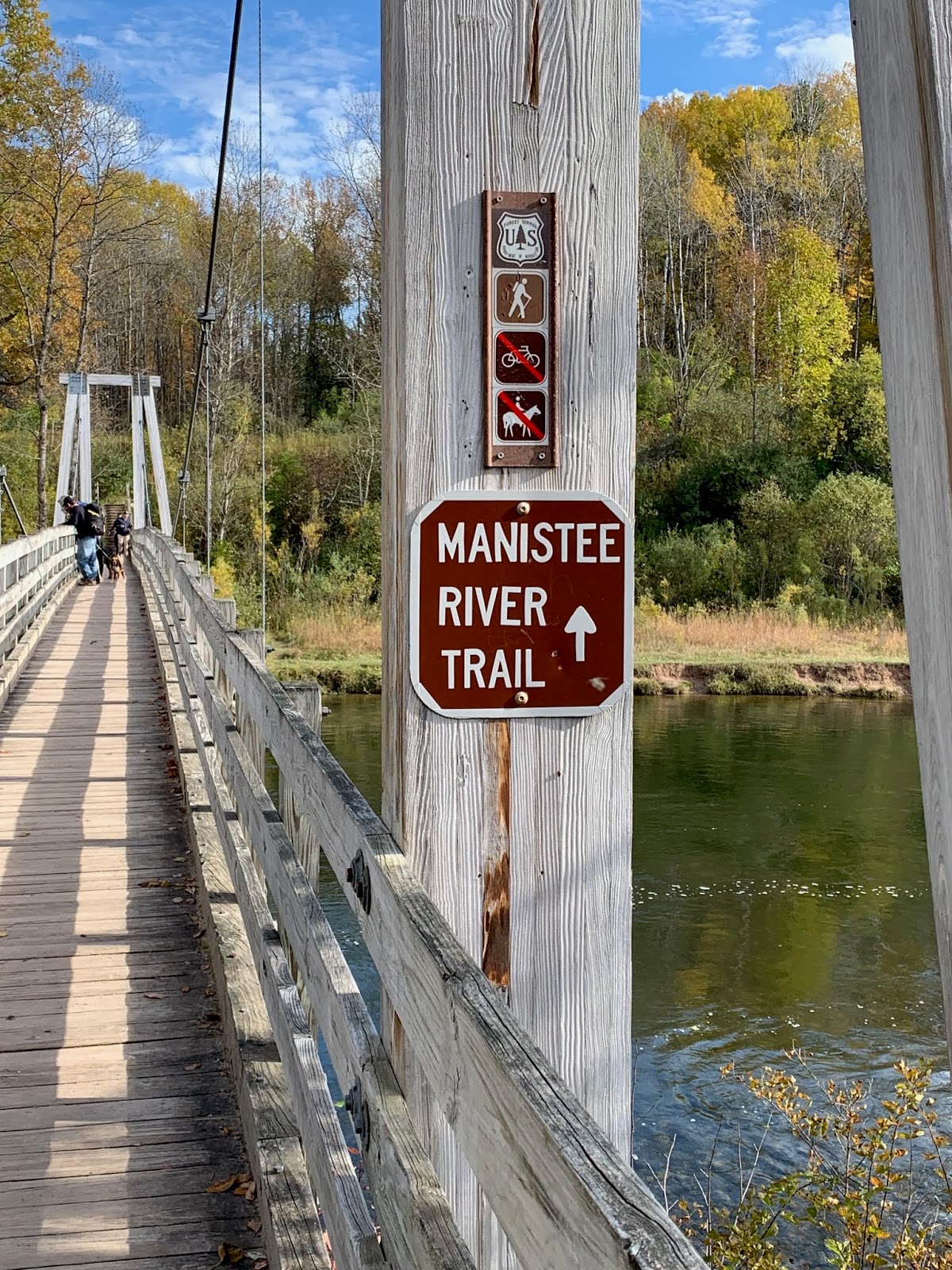
The Manistee River Trail (MRT) Loop is a 22-ish mile hike in the Manistee National Forest which, combined with a portion of the North Country Trail (NCT) (the whole of which transverses parts of MA, NY, PA, OH, MI (lower and upper), WI, MN, and ND) forms a loop connected by a suspension bridge on the north side and Red River Bridge on the south side. 

“I am planning to hike–backpack–the Mannistee River Trail Loop, would you come with me?” she asked Bjorn. 
He looked at her the same way he did when she asked if he would take ballroom dancing classes with her. She wanted to learn how to waltz. 
She asked Snorri, even gave him a choice,  “Go on a scout outing or go backpacking with me.” He chose the scout outing, which didn’t disappoint her too much. 
It wasn’t really possible to learn how to ballroom waltz solo, but she could backpack solo, couldn’t she? 

As she composed lists of items to bring, accumulated backpacking gear, pored over maps, reviewed others’ experiences and advice on hiking the loop, her courage waxed and waned. At night, when darkness blotted out the windows and the cold fall wind whistled, her courage faltered a little, dark thoughts filled her projected plans. 

“How am I going to spend the night alone in a tiny tent in the wilderness? Alone, in the dark and maybe wind … and maybe critters?” 
Eventually she leaned into the fear, accepted that she would be a little scared, but in reality she would probably be okay.
 The date was based on weather first, leaf color second. She planned to use a whole weekend to do it, from Friday to Sunday, if needed. She set the original date for October 4-6, but fate intervened. So Astrid put it off until Oct 25-27 and to Snorri’s minor annoyance, joined him on his outing. 
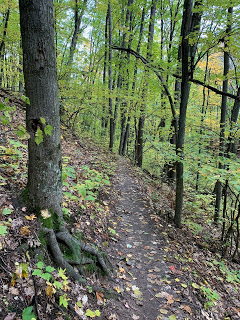
NCT

After collecting all her materials, she stuffed a borrowed external-frame backpack with 30-ish pounds of magazines and water bottles and took a hike, a dry run, in a nearby state park. She walked 2.6 miles in about an hour and wasn’t too bent and bruised from it. It was one more thing to convince her that, yes, she could do it. 

The next week she was busy with cutting her supplies and obsessively checking the weather in Harrietta, Michigan (a town near the loop). And it didn’t look good, but the weather for the weekend before (10/18-20) looked great, 60℉ day/40℉ at night and nary a sprinkle. But she wanted to see Snorri perform with the band at a football game that Friday. 
Needing a small nudge of guidance, she reached out to Bjorn in an e-mail, asking what he thought–when should she go?
“Every movie trailer I’ve seen on the subject seems to indicate that it is a bad idea for any female to go hiking by themselves. So, I’d be worried about either option.”
Despite his invaluable advice, in the end, the warmer weather won out. She had cold weather-camped; it involved layers, more layers and a pointed and strategic fight against cold and chill. Cold was one element she didn’t want to deal with on such a new and novel experience of backpacking. So, she would do it on the warmer weekend, but she would have to do it in just two days.
She packed her bag with 35 pounds of “necessities,” including 80 ounces of water, and in the wee morning hours of October 19, she drove north toward Harrietta, Michigan.

It was a glorious fall morning, and the sky and trees along the highway rejoiced in it. It was the most pleasant drive she had taken in very long time. It was the same route to her son Olaf’s college, but this time she passed the usual exit and continued through empty highways flanked by bright yellowing foliage tinged with green.

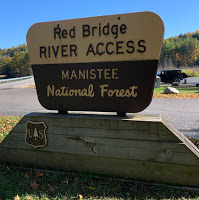
When she arrived at the Red River Bridge Trailhead, the parking lot, boat launches and camping sites were full. Various parties there were breaking camp, having stayed there the night before. No empty spaces. So she parked along the road with other cars, used the vault toilet nearby, hefted on her pack, picked up her walking stick and “just walked,” following signs for “NCT.” 
“At first things seemed to be going pretty well. They even thought they had struck an old path; but if you know anything about woods, you will know that one is always finding imaginary paths. They disappear after about five minutes and then you think you have found another (and hope it is not another but more of the same one) and it also disappears, and after you have been lured out of your right direction you realize that none of them were paths at all.”- Prince Caspian, C.S. Lewis, pg126
The path ran parallel to the road for a few hundred yards, then lead her, with white blazes, into a pleasant, thin woods, over a fallen tree, then promptly ended in a wet, mucky swamp, with no white blazes in sight. 
Astrid scanned the trees to no avail, the blazes had disappeared. She backtracked, noticed a slightly inferred path, but it seemed to go in the wrong direction. 
Using a map and GPS, she started off in what she thought was the correct direction, to the Upper River Trailhead Parking lot, which lead to the NCT. In her hurry, she tripped and fell, with all 35 pounds on her back. A little mud and struggle later, she decided to bushwhack her own path through loamy squishy forest soil, then through a roadside fern bed to reach the parking lot. 
“If you see movable branches/small logs across a path, that means it’s not the right way for the MRT/NCT trail,” a wise hiker wrote in a post and at a Y in the path, Astrid heeded his instructions and avoided getting lost what would be the second time in the first hour of her hike. Up an incline filled with roots, she stopped once to take off an extra wool layer. It was going to be a nice day. 
She walked for about three hours, then sat down to eat lunch at the top of a slope where the wind filtered through her coat, so she sat bundled, chewing on beef jerky, celery and granola bars, while a few groups of young hikers passed her. 
She had passed a few lone women-hikers. which made her feel a little better. Two of them had dogs with them.
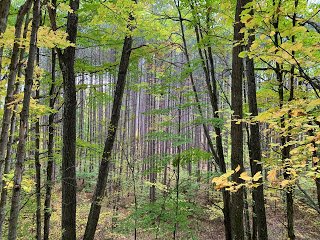
NCT

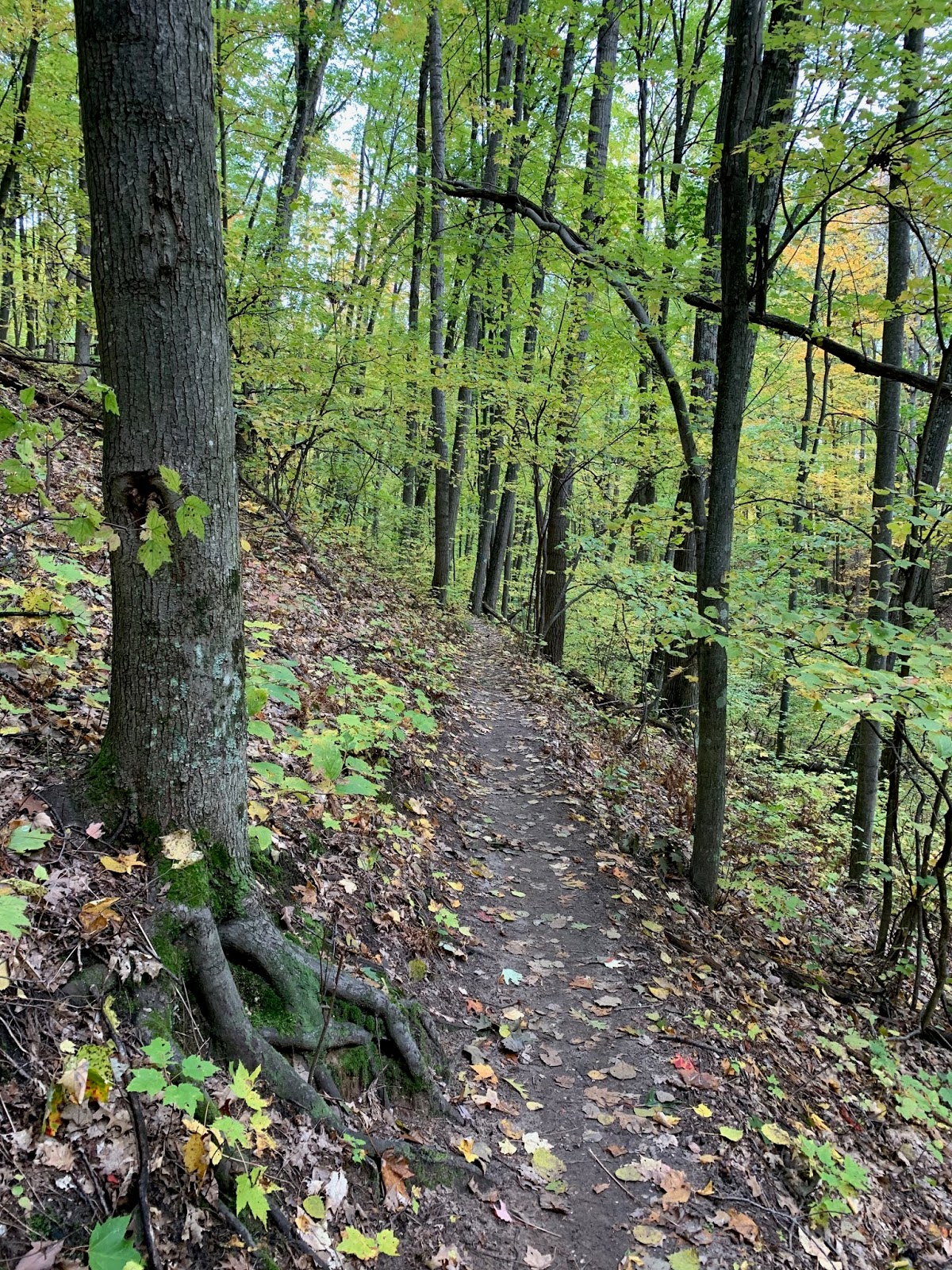
Most of the NCT was flanked on one side by a hill, the other a downward slope, the trail going up hill and down, circling ravines through a surprisingly thin forest. Astrid’s motto in hiking, after health problems reduced her top abilities, was “Slow and Steady.” She could walk for a long time without taking a break, just not very fast. Groups of young hikers passed her by, but she didn’t mind. Hiking was not a hurried pastime for her. Hiking was more “forest bathing,” and for that you couldn’t rush.

In the next hour, she passed the youths stopped for a break and continued to leap-frog various groups as they hiked and stopped, hiked and stopped. 
The NCT ran parallel, but a long distance from the Manistee River. The trail crossed water only after about eight miles (hiking north from Red River Bridge) to Eddington Creek, then there was water everywhere in the form of the Manistee River. By 2 p.m. she had reached Eddington Creek at the north end of the NCT, then veered off the NCT onto MRT, still on the west side of the river and this is where things got confusing. 
“Thank God for white blazes,” she muttered as she spotted the painted rectangles, assuring her that she was going the right way. But again, as she followed signs pointing to MRT, skirting the river’s edge on the floodplain, and back into the wood, still heading north, doubt and fatigue began to set in. The white blazes disappeared, but not the worn trail. 
A fire ring with logs pulled up as seats served as a great spot for a longer rest and map study. She was on the MRT, but still on the west side of the river, which confused her slightly. The reality is that some portion of the MRT is on the west side of the river, the small portion that connects NCT to the “Suspension Bridge”. She broke down and turned on the GPS on her phone, and put in the trail from where she was to the bridge, and it guided her up an access road she had crossed shortly after coming off the NCT.
Day hikers and loopers were standing in the middle of the bridge as she squeezed by, the bridge swaying with the weight. 
Once off the bridge, she turned south, onto the MRT proper, backtracking a half mile to double check the map because the white blazes turned into blue diamonds and there were signs prohibiting camping and fires. But about a mile south, (after leaving Consumer’s Energy, the people who own the land around the hydroelectric Hodenpyl Dam nearby), the forbidding signs disappeared and she started to notice tents and hikers. A lot of them.

Now came the dilemma; where to camp for the night? The MRT and NCT allowed dispersed camping, which means, as long as you followed the rules, you could camp anywhere, even outside designated campsites (though you couldn’t technically have a fire). 

She walked on for a mile or so before she looked at her watch: 5:00 p.m. The sun was due to set around 7p.m. and she wanted to eat, set up her tent and bedding well before night fell. Everywhere she looked hikers were setting up camp. 
“You gotta find a spot before 5:30 p.m.,” she gave herself a deadline. She walked on, past tents settled high on bluffs over the river, past illegal and risky camps set just feet away from the river, past tents set up in cozy little flat spots. 
Continuing on down the trail, she passed a Scout troop setting up camp with all its usual hustle, bustle and noise. 
“No, not this time,” she said and was determined to move at least out of earshot of the exuberant youths. 
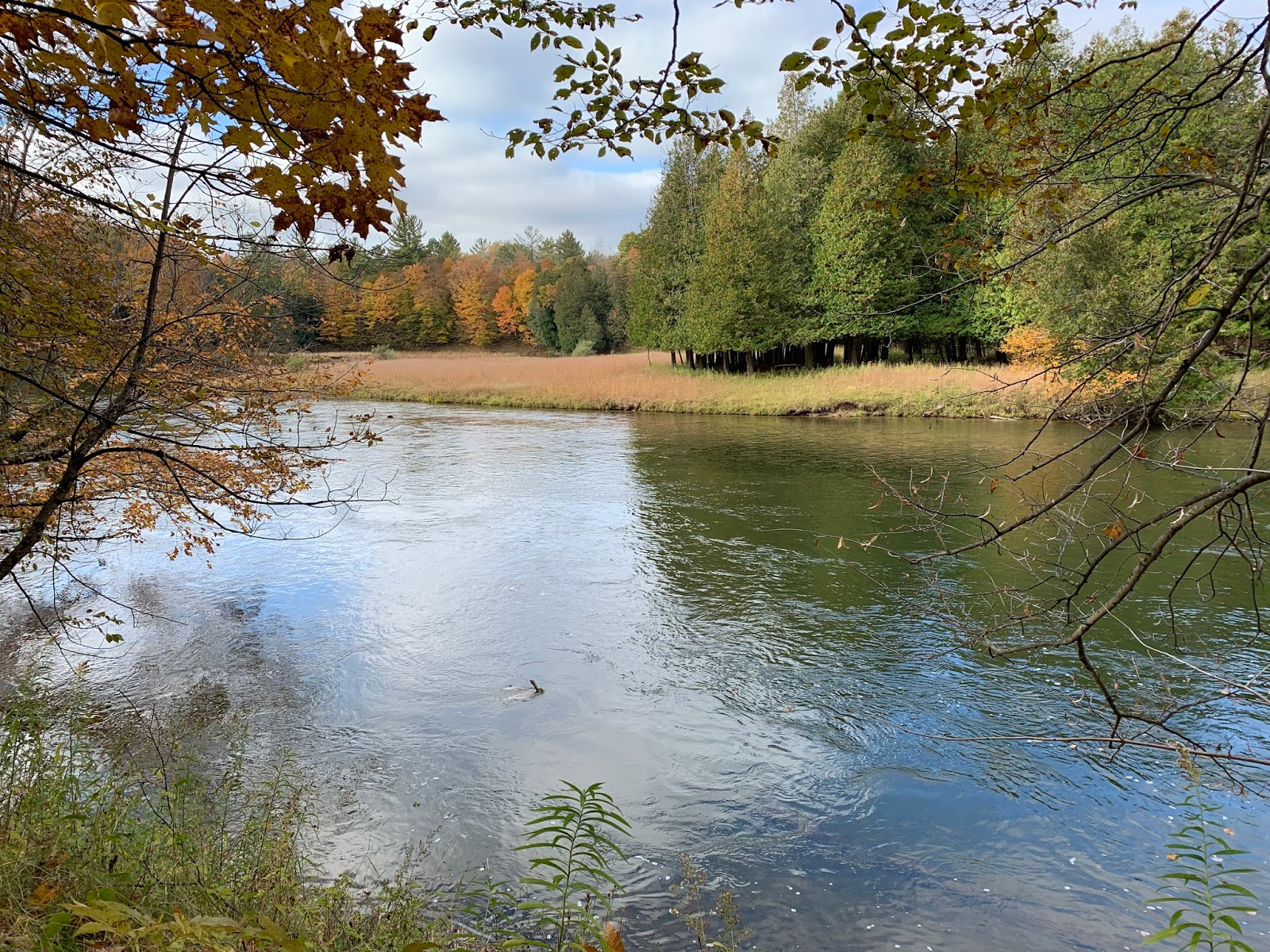
The MRT was more varied than the NCT, tracing regularly down into ravines and back out, crossing streams and straying to the very eroding edge of the bluff above the snaking river. 
At one point the trail dipped down into a steep ravine with a vigorous little stream at the bottom, to a point where the water acted so much like a cataract that indeed, the spot was called “The Falls.”
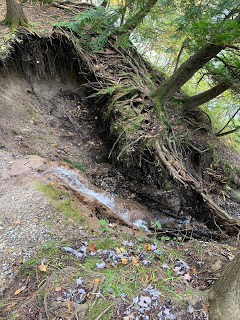
The Falls

She crossed the little waterway, a little jealous of the group who had snagged the designated campsite situated alongside the running water, but then the trail climbed a little hill, then dove down into a low spot again. As she crested the hill, she saw a gentlemen trying out his cell phone. 

“Any reception?” she asked. He put his fingers up in a pincer shape. 
“A little.” Cell reception was bad for most of the MRT.
As she hesitated, she turned and noticed the little narrow hill high off the trail to her left. It was high ground, flatish, possibly a good spot to sleep for the night. She climbed the spot and noticed it was empty, except for what looked like an ammo box in the low crotch of a tree. She walked back out to the trail and asked if the man intended to camp up there.
“No, no, I’m down there,” he said and pointed down over the bluff. Everyone seemed to want a water view. 
She went back to the box and opened it, which confirmed her hunch. It contained bits and bobs and a log of visitors: it was a geocache. Nearby a fire ring of rocks indicated someone had thought it a good place to camp in the past, so she gladly took off her pack and walked, now light and free, looking for a flat spot, with no dead tree limbs hanging above, to put her tent. 
After relocating her tent three times, she finally pegged it down, unpacked, forced herself to eat a scant dinner (she wasn’t really hungry), with some ibuprofen and acetaminophen for her aching hips and feet. Then she put her food bag up in a tree. 
Bear bags were recommended, but the area rarely had bear visitors. The recommendation was probably to keep all wild animals with sharp pointy teeth away from campers’ tents. 
Closed up in her tent, she got ready for bed, but then it was only 6:30 p.m. Because she packed for a later, colder weekend, half the stuff in her pack was unneeded, but not regrettably. Being prepared for differing circumstances statistically meant you would always carry more than you used, especially if things went well. She was willing to carry the insurance, and it was practice for carrying heavier packs for longer trips.  
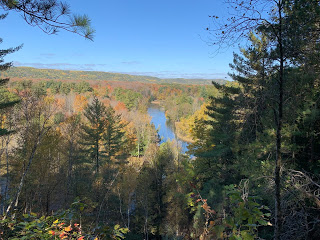
MRT

One thing she was thankful she packed was her e-reader. Books, to her, were always preferable to e-readers but the portability and capacity of the e-reader won out on hiking and camping trips. So she opened her device to Essays on Travel by Robert Louis Stevenson. 

How apt, she thought. She had read his Travels with a Donkey in the Cevennes where he documented a “backpacking” journey with a donkey to carry his things in the Cevenne Mountains. The narrative pulled and coaxed Astrid into documenting her travels, planting the seed that bloomed into the tiny, but significant step into backpacking. 
Stevenson was plagued with poor health and attacks which left him bedridden for periods throughout his life, frustrating his ability to travel, except to various therapeutic climates, in hopes of healing his lungs.
Finally the clock at the top of her reader read 8:00 p.m., an acceptable time to go to sleep, so in the not-so-lonely dark, with voices of her neighbors down on the stream’s flood plain, the constant rippling watery gurgle of The Falls, and the constant rush of the Manistee River, a stone’s throw away, she fell asleep.  
Around 3 a.m., wide awake and alert, Astrid wandered out to find Mother Nature’s WC, then read more of RLS’s dismal but creative life, before falling asleep again. 
It was 8:35 a.m. when she next saw the clock. Dim light was filtering through the trees, calling all the hikers to pack up and hit the trail. 
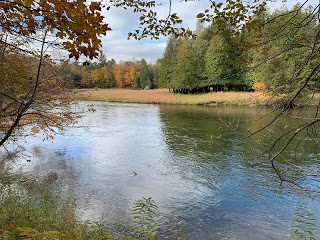
MRT

Astrid struggled and wrestled with dressing in the tiny, one-man tent, but eventually sorted herself out, broke down the tent, repacked her backpack, retrieved the food bag from the tree and dragged her tent tarp to sit on the ridge overlooking the vociferous stream and ate some cheese, bologna and nuts while she heated water for instant coffee on her backpacking stove. 

The minute she put on her pack, she gasped in pain. It felt as if someone had put a rock in her shoulder strap. In reality, a slide from her undergarments had been positioned at a boney point in her shoulder that was very sensitive. Astrid steeled herself against the pain, put her pack back on again, but let most of the weight settle onto her sore (but not painful) hips and was on the trail again. 
She saw a few hikers she passed the day before on the NCT. The lone hiker with the dog, the older lady, the couple, a mother-son pair. The mother stopped Astrid to look over her external-frame backpack, since she used an old one herself. 
One exquisite encounter occurred at a high bluff over the river, a spot flanked with golden leaved trees and a meadow-like area beside her. Three young men were hiking toward her: the middle one with a puff of smoke trailing him. Astrid moved off the trail to let them pass. 
Her first impression was negative, not wanting a whiff of cinder-cigarettes or unnatural smells of a vaping pen. But as the group moved closer, she smiled.
“Oh, it’s a pipe!” she said out loud and moved a step closer as the pipe smoker passed. “It smells so good!” 
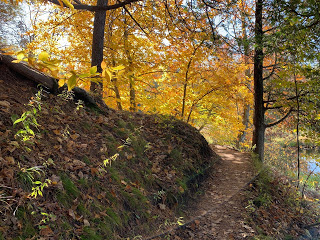
MRT

The smoker laughed and moved on, too quickly for her reminiscences. In her opinion, pipe smoke was the best aroma because at one time in her childhood, her father partook in the dying habit. 

She passed the five mile mark, now aware that she had to relish every mile, it was the end. 
To walk, and to do nothing else is, in a way, relaxation, rest, vacation. One may have loads of work to do somewhere; dishes in the sink, laundry piled high, in-boxes bursting at the digital seams, but when you walk out into the wilderness with all you need on your back, there is no room for guilt or work, walking will take you away, but it is also the only thing that will bring you back to your responsibilities and you can’t do much concurrent except look around. 
As she walked along the path, back to Red River Bridge, she was tired in body, but rested in soul. The MRT side of the loop trail was, at every turn, magnificent. The NCT was a pleasant walk up and down wooded hills, but it was the more visually tame trail. The MRT lead along beautiful tree-backed meadows, along ravines with streams snaking the bottoms, treacherously close to the edge of a high bluff overlooking the elegant curves of the blue Manistee River. 
Ready for responsibilities, but not wanting to go back, triumphant knowing she could walk ~14 miles, then 8 miles with 35 pounds on her back, but unsure if she could do more, as her hips and feet complained, she hobbled to her truck, and said goodbye to the beautiful Manistee River Trail Loop … for now.
Summary: 
NCT :Trees and hills, bikers, no water for ~8 mile stretch, until you get to Eddington Creek. There are designated camping spots, but fewer than MRT, and farther between. 
MRT: A lot of hikers, campers, day-hikers everywhere; more dynamic views.
If the Manistee River Trail Loop is a “D” shape, the NCT is the backbone of the D, the MRT is the curved, longer part, with the river dissecting the middle. 
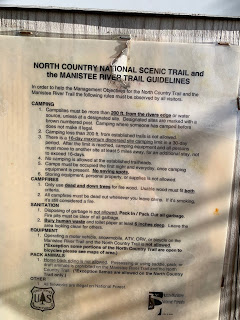
No horses, but you can have llamas on the trail (bottom).

OR: The Chipmunk’s Trap, and Three Sisters

“Is that a Blockbuster?” Astrid asked in disbelief. “A real Blockbuster?”
They had exited highway 97 North to refuel the car and pick up lunch to go. 

“Oh, yeah … right. It’s the last Blockbuster store in the U.S. I forgot it’s in Oregon,” Bjorn said, craning his neck to get a good look at the icon from their young adult years. 

An Albertson’s grocery store was nearby, where they picked up lunch items, coffee and almonds to snack on.

Recreational vehicles (RVs) and campers were everywhere in Oregon; on the highways, huddled in groups in designated spots, rotting in front yards, or deserted in the middle of a lonely plain. 

Whether they were towed behind a truck or car or driven, they were everywhere.  Astrid thought Michigan had a lot of RV traffic, until she visited Oregon. Almost every small town and highway exit had an RV park. She also thought that an RV park was somewhere a person “camped” to enjoy a little bit more of nature. No. Now she knew better. It was just a place to park your RV, while you slept, a veritable portable hotel room where you never had to unpack. The better places provided water, electricity and a dumping station. 

In addition to RVs, Oregon had more than a few memorial highways dedicated to veterans: Vietnam Veterans, Veterans of the Middle East Wars, Veterans of World War II, just to name a few. 

“Oooh, this is a nice area,” Astrid commented as they passed through the quaint, picturesque town of Sisters, Oregon. There were no cheap dollar stores, no apparent dispensaries on main street, but neat sidewalks full of visitors. 

Sisters, Oregon had an older feel to it-things were not so spread out. On the other side of Sisters, the neat greenery turned into what looked like fire-ravaged pine forest, hills, commercial logging, then … lava. 

As if the road were mined through it, the lava came up to within inches of the road at places. They were in a very volcanic part of Willamette National Forest. The sun was hidden by a cloud and mist moved in, flakes of snow fell sporadically. 

They stopped at the Dee Wright Observatory  to appreciate the view and eat their lunch, parking the car in a lot looking out over a field of black lava rock punctuated by a tower built of the stones. 

“Hey, look, there’s a chipmunk,” Astrid pointed in front of the car, to a ledge of volcanic rock overlooking the parking lot. “I wonder what it eats out here. There’s no vegetation for miles,that I can see. Poor thing.” 

It started off as an overcast chilly day with the dim light of morning seeping through the cracks in his burrow. But every day was getting warmer. A few snowflakes snuck in. The outlook was good for a decent haul that day. More and more traffic passed through the area. The chipmunk yawned, stretched and preened its fur for a few minutes then became calm again. It sat still, listening for the trap to be tripped. 

About noon, after a few measly sunflower seeds he had stashed away the day before, he heard the engine of car idle, then stop nearby.  It was time. 

He scurried out of his hole, cautious, but casual, stopping occasionally to sniff the air for danger or food, zipping here and there, out for his regular phrenetic stroll. He stopped at his usual spot on a flat rock, in the open in full view of the parking lot. He felt a little exposed, and he knew he had to be careful, but it was worth it.  

He could smell it already. There was food in that grey car and the giant biped humans were eating it.

It was a risky business, his trap. He was a very light colored specimen of his family, which made it easy for flying predators or any predator to see him against the dark lava rocks that filled the plains for miles. But his excess adipose fat was an apparent testimony to his trap’s success. He ate well. 

The grey vehicle in front of him wasn’t turning out to be an easy mark, though. The  human bipeds had been eating in it for a while. A biped had come out of it and put stuff in the trash bin nearby. It had passed his trap, paused, but went back into the vehicle. The trash bin was only his last resort, this chipmunk was out for the premium stuff. 

Patience, he told himself. Maybe a little more acting. He twitched, itched himself, then lay full-bellied on the rock, staring straight at the big grey vehicle. 

Finally, a human came out, walked up to the edge of the sidewalk and put something on his feeding rock. Then she stood there, watching him. 

He ran down, and of course, like always, she backed away a little. Almonds! He shoved one in his cheek, and carried the other. But she was still there. Easily fixed. The chipmunk ran down to the sidewalk and as always, the biped walked away quickly, back to the grey car. It was good haul. 

….

“It was a trap! There was even a little flat rock there, with sunflower seed shells to put the food, as if it were an altar to put all the sacrifices! He’s done it hundreds of times before this,” Astrid said, suddenly aware of being duped and manipulated by the tiniest con-man ever. “He just sat there, looking super cute. He knew it. He knew humans have food, and a soft spot for furry animals.  That was amazing. He knew how to manipulate humans, how to game the system!”

She had failed. She had been seduced into breaking her promise to follow the Leave No Trace rule #6 of not feeding wildlife, duped by her deep-seeded maternal instinct to feed cute, furry little things. Her guilt and betrayal lay heavy on her conscious as they drove away. 

Later that summer, as penance to her infraction, she did three hours of community service in conservation, pulling up invasive weeds at a local state park in Michigan. 

Up hill and down, around hair pin turns punctuated by short straights, they drove, through misty fog and patches of sun, by roadsides sprinkled with pink digitalis wildflowers on one side of the mountain, white fluffy flowers dominating the roadside on the other side of the mountain. 

When they parked and got out at Proxy Falls Trailhead in Three Sisters Wilderness in the Willamette National Forest, it was still misting, but lightly. After using the restrooms, and paying, they set off on a wondrous trail flanked by volcanic rock, giant, moss-draped trees and dark green pines.  After hazarding a steep downhill trail into a ravine, over fallen trees, they reached their destination: Proxy Falls. 

While Bjorn waded dangerously near the cataract, out of sight, Astrid found a damp, but cozy seat in the crutch of a tree, opened her journal and started to write. 

How to Travel with a Landscape Photographer” was the title. It expounds on all the interesting hobbies which are conducive to waiting for your landscape photographer travel-mate to take pictures. It may never reach this blog, but it was worth writing a draft. After she wrote all she could, she realized she was a bit cold, so she got up and explored the ravine which was criss-crossed with huge fallen trees, the waterfall coming down a quite steep and high wall of  it and a stream wandering crooked along the bottom. 

Over and over, she tight-wire walked the large slippery, moss-covered logs, exploring every corner, rock and gully of the ravine; just messing around in the woods, looking in crevices, touching moss, kicking a rock. It was worth every minute.  Then she tried to spot Bjorn. There were a few other photographers there, standing in the stream, disappearing into the woods; doing weird things as if in a sacrificial slow-dance in front of the alter of the ultimate photographic subject–the waterfall. She couldn’t see him. She wasn’t worried. 

Eventually he appeared, damp with waterfall spray, having taken all the pictures he wanted. The trail back out to the car was as beautiful as the one going in. 

They drove out of the close, curvy mountain road into a close, straight mountain-flanked road, with the pine-tree green slopes of the mountains making a V-shaped sky in front of them. 

Still misting, they stopped at Sahalie and Koosah Falls Trail, near MacKenzie Bridge, Oregon and walked along a crystal-clear stream that jumped down precipices in a few water falls. The colors surrounding them were vivid; a dozen shades of green leaves, aqua-blue water with white froth, brown-red tree trunks, grey stones, clay-red dirt; all the objects’ hues popping vibrant against the dull, mist-filled sky. 

Astrid noticed that every natural place she traveled to specialized in different colors. Spring in northern England showcased bright green in its hills and pastures against grey skies with white specks of sheep. Northern Michigan used a lot of the dark green of pines against blue sky and an ever-changing palette of the lake. Here, Willamette National Forest was best at \”earth-colors\” and they were spectacular. 

On their way back to Portland, they stopped at a pizza shop.  

“My post- and pre-adventure jitters are starting to overlap,” Astrid said as she ate, her mind traveling a few hours ahead of her in time. Post-journey leaving always carried with it a vein of stress–her imagination ran away with scenarios of missed flights and disastrous situations. And her pre-journey jitters were just beginning for the new adventure that wait for her just a day after they got home. 

After arriving in Chicago, they picked up Snorri and his friend from the other airport, and headed home to pack up-in a plastic tote this time. She would have one day to prepare, then be off to another week-long adventure of chaperoning summer camp. 

Three Sisters ~2000

OR: And the Darkness Has Not Overcome It*

Starlight over Crater Lake

The road into Crater Lake National Park thread through a fire-bitten, young pine forest, the ground underneath the pathetic trees patched with snow. It was going to be cold at the top of the mountain.  

They stopped and paid the entrance fee to the park, then, as it is in so many of the national parks, kept driving a few miles before coming to the center of the park. As they drew closer to the visitor\’s center, Astrid noticed snow poles along the sides of the road. These are poles put in the ground vertically, marking the edges of the road when the snow is high. The poles were about eight feet tall.  

At the visitor’s center they picked up information and maps. Astrid bought a National Park patch, which then obligated her to buying one in every national park she would ever go to and try to collect the ones from the places where she had already been. 
Half the 33 mile road circumventing the lake was closed because of snow, many of the trails were part-snow, part-mud, so snow-shoeing or skiing were not attractive activities for the day they had to spend. They drove as far as they could around the road, then back to a pull-off overlooking the lake. 

Astrid stood on a ledge looking over a jewel-blue lake; to her right was a tall, still-snow-covered mountain with tracks that could tell a tale going up, then down. To her left was a smaller hill, a trail traversing it, but with snow obstructing it at the top. In front of her was a caldera. 
This caldera happened when the mouth of  Mount Mazama volcano collapsed. It was one of the most beautiful things she had ever seen. The lake was one of her favorite colors, filled with the bluest, oddest water. There were no tides, not even proper waves driven by wind like in the Great Lakes, just little patches of shimmer here and there where the breeze brushed the surface. All the water in the lake came from snow melt and rain–no springs, no rivers, no streams fed into it. 
 Snow in June (6/19) was a bit incongruous, even to a Michigander who is not surprised and even expects a dusting into April. It was cold and windy, but they skies were clear, and promised to stay cloudless and that was the most important thing.  
Phlox

One of the first sights that caught Astrid’s eye, despite the glittering deep-blue marvel in front of her, was the plants. There were patches of Phlox subulata, a plant she was very familiar with, being a staple of the nursery industry for early spring blooming and groundcover. Here, it was planted by no home-owner or landscaper, but by Mother Nature herself. 

Another little gem that sparkled up from the dry, gravely ground was a small, unassuming little flower, Anemone occidentalis, Western pasque flower. It was an anemone, a plant Astrid had tried countless times to grow from seed, to her utter failure. But here they were, growing in what looked like harsh stony soil, on the side of a caldera, with snow just a few feet away. 
Pasque Flower

Bjorn, in all his planning prowess, had gotten them a room in the lodge for one night. Of all the national parks they had visited, they had never been able to stay in the lodges. The Crater Lake Lodge was built in 1915, of stones and logs, in a very rustic, but sturdy architecture. Over the years, sections were added, re-built, reinforced. 

They checked into their room with literal keys to unlock the white-painted door. Everything–from the paint on the walls, the style of furniture, the bathroom fixtures, the windows–was refreshingly from another era. It was a treat for Astrid to stay there, even if their room looked out onto the parking lot and she had to fiddle with the bathroom door for it to stay shut. 

They ate dinner in the lodge dining room, seated a few yards from the windows looking out over the lake, but still able to see the glistening blue. Teddy Roosevelt had made Crater Lake the sixth national park on May 22, 1902, and Astrid was so glad of it. 
Crater Lake Lodge
“This place would be utterly ruined in the hands of private citizens,” she said, sparking the conversation. “This is one instance where I am glad that the government owns it and keeps it whole and uninfested. There would be boat launches, docks and cabins all around the edges, motor boats … maybe an ugly mansion on the island, who knows what else” 
Bjorn had planned to photograph the dark skies over the lake that evening, so for that, he would need night. They hung out in their room, reading, resting, staying warm until the sun was almost gone. 

As the sun was slowly being extinguished by the turn of the earth, they drove back to the overlook they had been at during the day and sat in the parking lot while the darkness and cold moved in. Bjorn got out to set up Tripod and Camera, then hopped back in the driver’s seat, shivering. He wrapped the towels they had borrowed from the hotel room around his neck and shoulders for a little extra warmth. 

“Okay, here goes,” he said and walked out into the night, out of sight of the car to the steep edges of the lake. 
Astrid sat in the cold dark for a while, wondering what to do. Standing out there for more than ten minutes in her sorely thin clothes was out of the question. She read from her e-reader a little, but was distracted by shivering. She started to watch some episodes of Father Brown, a show very loosely based on Chesterton’s detective priest stories, on a screen dimmed to the lowest level.  But her distractions did not satisfy. Neither did her insufficiently insulated clothes keep her warm. What was a little cold, when before her lay such visual splendor?\” she asked, steeling herself to get out and look at the sky.  
A few cars passed by, cutting the undiluted dark like sharp, severe knives. At the click of the car door,  she unlocked the doors and Bjorn hopped in, huffing and puffing with cold. 

“Ah it’s cold out there, but … you have to go out and see. It’s so clear, the light over to the right,” he said, pointing out of the windshield, “It’s a town, it’s a small town, but makes a lot of light.” He showed Astrid the view on the tiny screen of his camera. 

“Well … give me the towels,” she said, pulling them from his neck, then headed out into the dark with a flashlight. 
“Turn off your flashlight when you get out there,” Bjorn called after her. 
She shined the light in front of her, on the trail, up steps to the cement platform of the overlook, then switched the light off.

But it wasn’t dark; the sky was covered in light. She stood, turning, trying to take in the view, trying to see deeper, more. The Milky Way lit up as a vapory trail splitting the star-spattered sky. She breathed in the cold air, blowing it out in a white puff. It felt as if she were standing on the edge of the earth, floating, vulnerable out in the middle of the sky (she was, after all, on top of a mountain, just not the tallest mountain around). The light phenomena of stars in the dark was so very far away, yet it made a profound impact on her senses. It was a beautiful sight, but there was something else. 
It was the lights. Concealing darkness lay like a heavy fog near the ground, in the crevices, along paths, under trees, but the sky, the immense, engulfing sky, was lit up as if it didn’t know that it was a time of darkness and fear for us puny humans on earth. For the sky, it was a time of splendor, to paint with the more subtle nuances of light and not-so-light.   
Moon rise over Crater Lake
It wasn’t like the sun which blanks out every other light during the day–this sky was filled with millions, trillions of tiny little points of light**–and that made all the difference in that cold night.
If you are a human living in the world, at times in your life you will experience figurative darkness. It may be because of pain, evil, loss, literal sight-loss, natural disaster or illness–anything that holds you back from moving forward. In those times, it is of utmost importance to remember that there is light in the world. There is more light in and around the world than we know, and it has power to dispel darkness. The light is all around us but sometimes, to see it, one must shut off the artificial light from our screens, put on a layer of courage, go out into the cold night, and look up. 
The light in the sky made her think of the TSA man checking tickets and passports at the airport before their flight. She had noticed him because he shown bright out of the miasma of stressed and hurried passengers, and the stone faces of every other airport employee. He smiled, greeted people, even laughed as he processed their information; he was cheerful. People smiled back at him. Astrid loved him for it. There is light in the world. When the moon peeked up over the mountains, Bjorn packed up. The moon shine was so strong it overpowered the millions of tiny lights, making capturing good pictures of starlight almost impossible.  

We need the big lights, like the sun and moon, the heroic deeds and millionaire philanthropists, but don’t think for a minute that your little kindnesses and generosities, your hours of caring volunteerism, your smile in drudgery, your little points of light don’t make a difference in a sometimes very dark world. 
Figurative language goes only so far. There is absolute darkness, literally, under the earth. Some plants’ seeds require darkness to germinate, people and animals use darkness as cues to their circadian rhythms. Bats are wonderfully freaky animals that thrive in the dark. Astrid experienced absolute darkness in the Upper Peninsula of Michigan mines, Hawaiian lava tubes, and Kentuckian Mammoth Caves. Speaking figuratively, like evil, absolute darkness is disorienting, demoralizing and paralyzing. But the tiniest bit of light shining through it inspires hope in expanding, infectious magnitudes.  Next morning, Astrid and Bjorn watched the gentle yellow sun light up Crater Lake as they ate breakfast in the dining room. As she sipped her coffee, she knew there was a lot more to this place that she didn’t see and may never, but was eternally thankful for the opportunity to visit, and experience the clear celestial skies that blessed the spot at night.

The whole time they were at Crater Lake, there was no cell service. She had no contact with either of her boys, or the outside world, but it turned out to be okay. They drove past the giant crater on their way out, into the wilderness spotted with tiny towns and all their usual small-town components, where they recovered cell service, a little to her relief and dismay.

Moon-lit Crater Lake


 As they drove on, the road leaving flat, visually dry areas and plunging into pine-covered, close mountains, they were unaware and unprepared for the severe trial of conservation principles that lay before them …

***
 

*John 1:5 The light shines in the darkness, and the darkness has not overcome it. Astrid (AJ, then) wrote about Hawaii’s light in A Light in Darkness

**President G.H.W.Bush mentions “points of light,” in a few of his speeches, referencing volunteer clubs and organizations, and he later founded a volunteer organization named Points of Light.