Coronation Spoons, Black Jewels, and Dead People in the Church Basement


Wednesday  June 13, 2017
AJ, B and TwoSon were back on the Tube early the next morning, rubbing elbows with soulless-looking, rushed people on their way to work, nary a smile or smirk among them. Because of a fire in Grenfell Tower in Central London, trains were being diverted and the Tube was especially crowded. 

As the family came out of the station opposite The Tower of London, a salesman accosted them, promoting a kiosk which sold tickets to The Tower without waiting in line. B took the bait, and used the machine to buy tickets. 

“I wonder if we had just been taken?” he wondered out loud. 

“We’ll find out soon,” AJ said. 

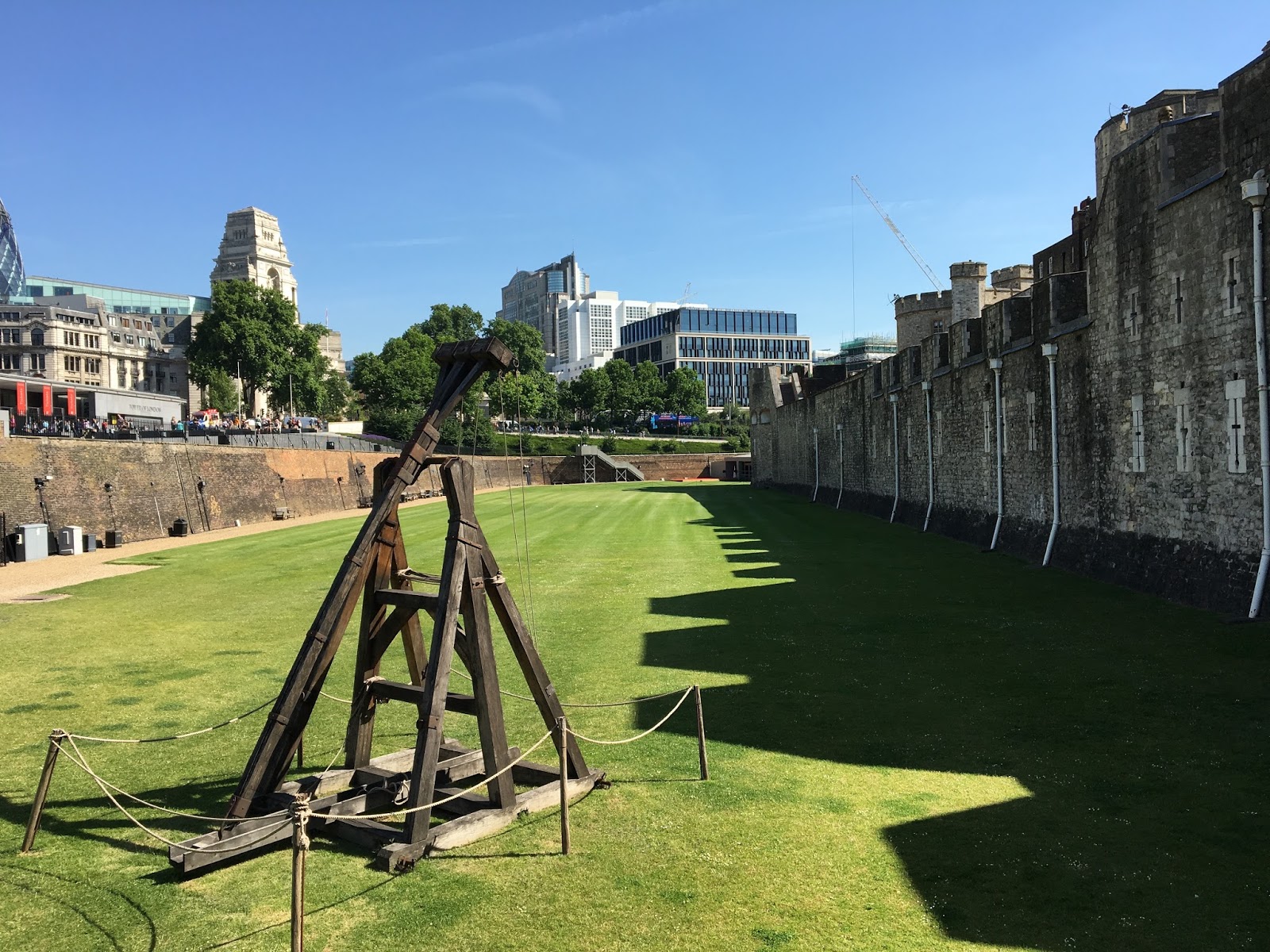
The Moat


Turns out, he wasn’t, the tickets were legitimate, and he saved some money to boot. 

They walked into the great walled spectacle that is the Tower of London, over a bridge spanning a grass moat, past the battlements into the inner courtyards. On the way to the Crown Jewels exhibit, an unmistakable, deep croak floated through the air to awaken wonder in AJ. To any other ear, it would have sounded coarse and cacophonous, but to AJ it was a most beautiful sound. 

“Ravens!” she said, turning and turning, trying to find out where the sound came from. “Tower Ravens!” she pointed  in the distance to a railing atop a stone embattlement. Two Tower ravens sat preening, posing and calling. “We’ll be able to see them, right? Close up?” she asked, looking longingly at the birds. 

“Yeah, they’ll probably be around, they never leave,” B reassured her. The birds couldn’t leave. In order to artificially fulfill a prophecy that said that the tower would never fall as long as ravens lived there, the birds’ wings were clipped.

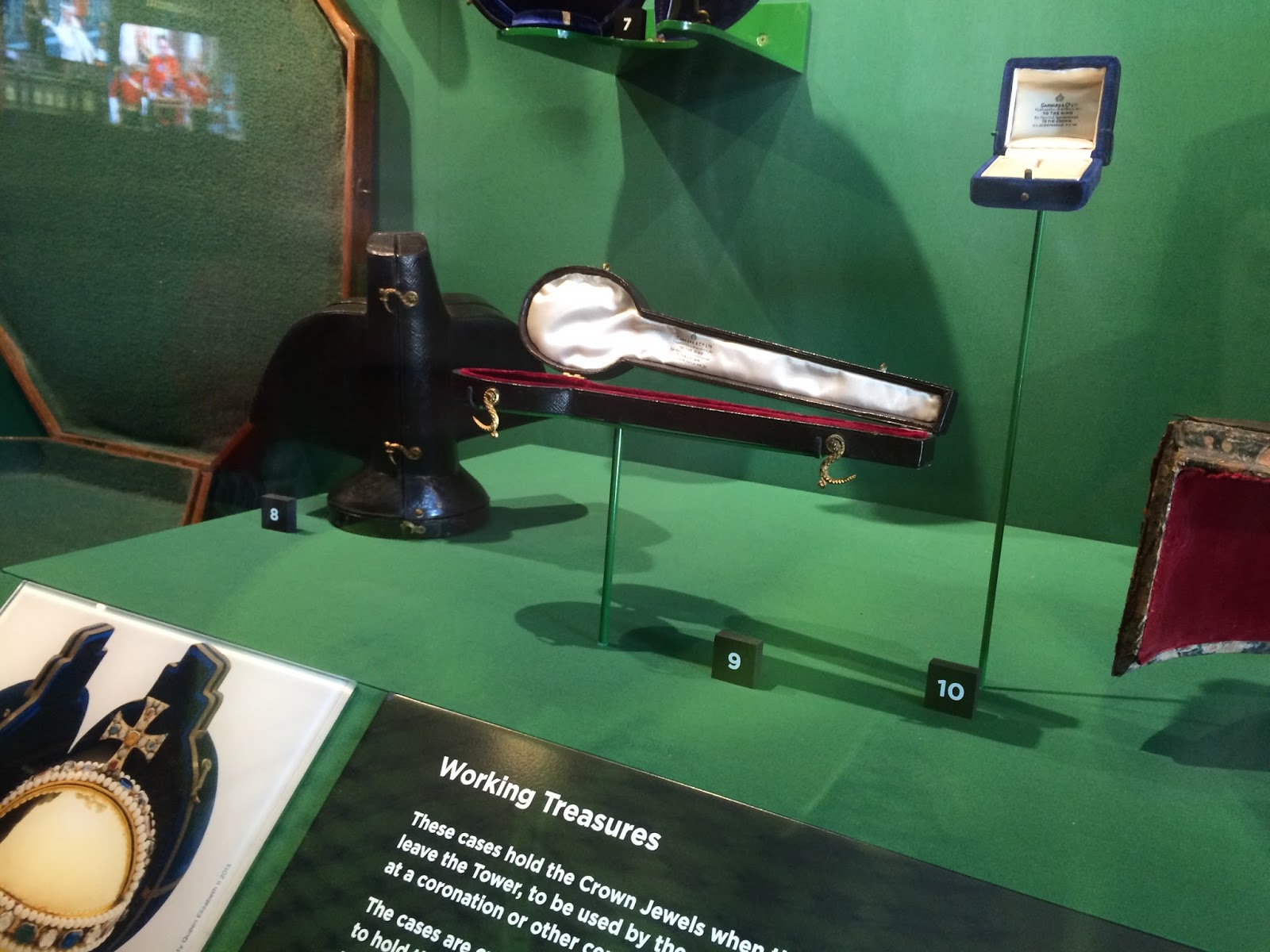
Coronation Spoon Case
Coronation Spoon

The family breezed through the beginning of the crown jewels exhibit easily and quickly since it was early. The large rooms that usually held long lines of tourists were empty. Displays of sparkling gold swords, drinking vessels and coronation spoons lined the walls leading up to the main jewels holding the actual royal gems. 


As she stood on the platform that moved past the glittering royal treasures, AJ looked in awe at the sparkly, cold, motionless gems–in awe because she wasn’t impressed. Cut glass would have been just as pretty, although not as indestructible. 

“They\’re are of no use to me. They are pretty, but … useless, really,” she said, aware that her sentiments were contrary to most people’s. 

For AJ, the real gems were the obsidian feathers and low, intelligent croaks of the ravens who stole her attention earlier.  Gold and sparkles were dull, they had no life compared to the clever, mysterious black-feathered enigmas that were ravens*. 
After admiring the jewels, they climbed up to where the ravens were perched and watched them preen and groom. Ravens are big birds, and as the brochure warned, “are still very wild.” AJ was a little intimidated to stand close for a picture, she didn’t want to know what a raven bite felt like. After saying goodbye to the black beauties, they walked down from the wall, where AJ discovered a down feather from one of them and tucked it into her notebook.  

On the Beefeater tour, a soldier-turned-tour guide lead them and about a hundred other tourists through The Tower complex, pointing out highlights and lowlights, shouting history and information at the crowd. AJ had watched a few documentaries that involved the London Tower, one which featured how King Henry the VIII used the place as a prison to get rid of wives he didn’t like. 

The White Tower

Inside the tower of London (or officially, Her Majesty\’s Royal Palace and Fortress of the Tower of London), stood a square stone tower, or the White Tower (after which the whole complex is named). It was built on the spot 1078 by William the Conquer because of it’s strategic military position for defending the city from invaders. It was used as a prison shortly after completion up until 1952. All the beheadings, disappearances and the glorious and goried past of the place surrounded them as they trod the walkways and cobbled stones with the tour ending in the Chapel.


Next, the family reluctantly trudged up the 200 steps through war-themed exhibits in the White Tower, marveled at the 15-foot thick walls, complete with “toilet,”  then on their way out, passed through the museum of torture in one of the battlements.  

The history didn’t grab AJ, but the birds did. The place was old, very old and filled with so much royal history bad and good, but although fascinating, it seemed too big, too important to impress her. The things that really fed her awe and wonder were usually small, lonely, domestic antiqueness–plebeian and well-worn. The tower complex was so flooded with modern-day people, it relayed more of a carnival atmosphere than hallowed history.  

After lunch at Pret A Manger, B lead them to St Dunstan Church, a literal shell of a church, walls with no ceiling, filled with garden beds, beautiful flowers and business people lunching on the pleasant lawns. The Church of England building carried a storied history of burning in the Great Fire of London, being rebuilt poorly, bing patched up and finally, after being bombed in the Blitz of 1941 in WWII it was turned into a public garden. 

Leadenhall Market

St Dunstan\’s

Next they strolled down the cobblestone streets of Leadenhall Market, past restaurants, shoe-shiners, taverns and stores, all the facades elaborately decorated in gold, silver, cream and burgundy.


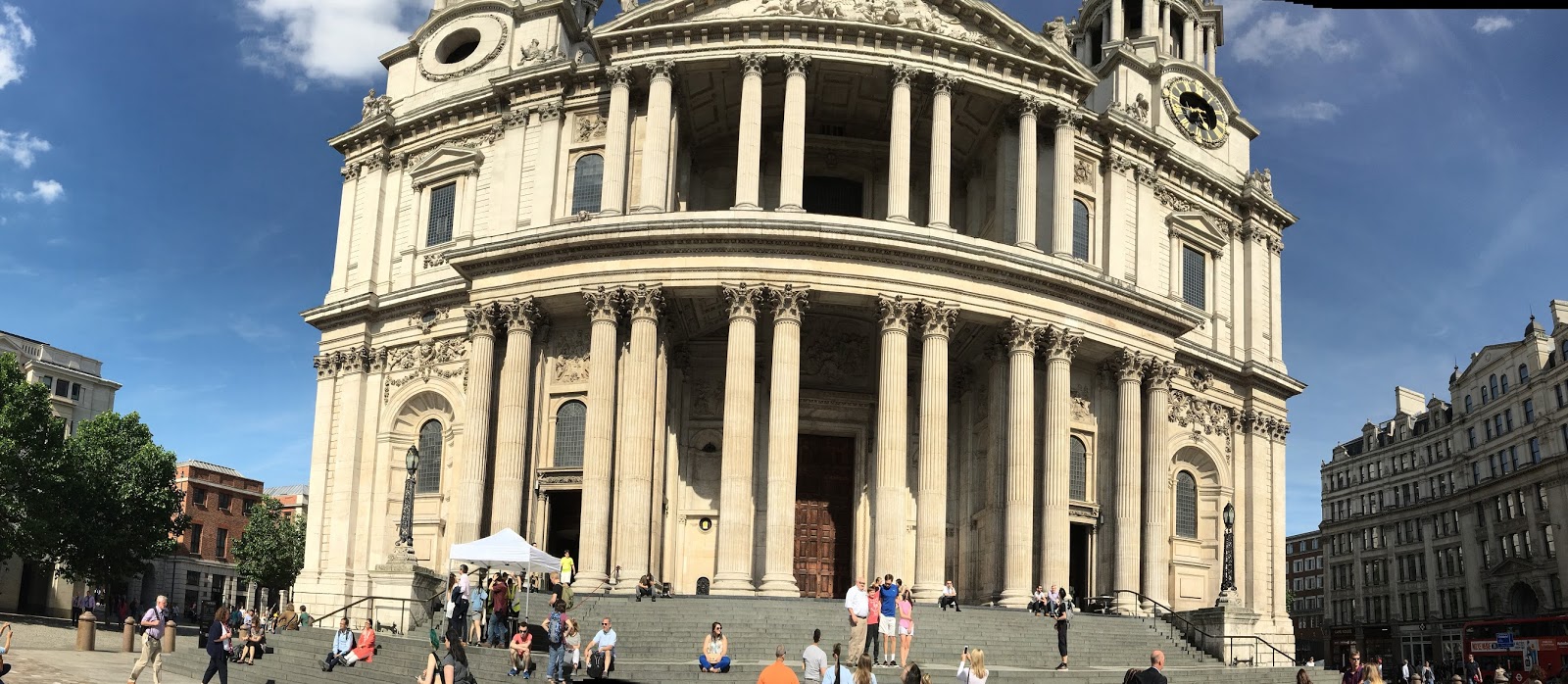
St. Paul’s Cathedral is so big, a gigantic behemoth of a building that when AJ, B and TwoSon finally found the front entrance, they stood looking up in bewilderment at what to make of the spectacle. It was too big to get into the frame of the camera when standing on the square in front of it. Covered with a glut of detail inside and out, stories were packed in every space, every color, every glint. History hung in the air and hovered around all the monuments to brave men, holy men and dead men. In a small chapel off the main building stood a memorial to 28,000 American soldiers who died for England in WWII. 

The family joined a guided tour then walked around admiring the many splendors of the vast place.

The present Cathedral was finished (depending on what you consider “finished”) in 1708, designed by the architect Christopher Wren and included many domes, not spires like the first had (which burned in The Great Fire of London in 1666). 

The steps up to the first level of the dome were shallow and numerous as the family trudged around and around to get to the middle of the top. The first real landing opened to an expansive dome with a narrow ledge, bench seats and a railing around the edge for viewing purposes. Up there, they could see the mosaics, paintings, statues and other magnificent works a little better. After walking along the wall and finding a place to sit, AJ realized that TwoSon really, really didn’t want to be there, so after a few minutes, they found the exit and walked back down.  

A distorted, abridged view of St Paul\’s Cathedral

“It wasn’t the height that I didn\’t like, it was the wide open space in front of me,” TwoSon said as they were safely on the ground level again.  


The basement held just as much interest as the rest of the church–there were people buried there. As an American it was odd to see graves in the basement of the church, but it wouldn’t be the last time the family saw it on their trip. 

AJ took an interest in one John Rennie from Phantassie, East Lothian who was, apparently so talented and appreciated as a Civil Engineer, he was buried there. Other cerebral minutiae AJ took away and treasured from her trip to the cathedral included the fact that a lot of the earlier popes in the church had the word Aelf- in their names, which reminded her of elf, which reminded her of The Lord of the Rings trilogy. 


There was something about the “muchness” of the place that prevented AJ from connecting anything there personally to Christ, or faith in God. It all seemed so far away, in many senses, from her. But it was built for Him with the utmost talents of so many people, for worship to Him and that was something she could appreciate. 


After they had their fill of the cathedral’s greatness, and the use of the very nice restrooms, the family exited out the gift shop and wandered down Regency Boulevard to browse shops. They perused an everything-M&Ms store, then, of course went into the The Lego Store


While waiting for a seat at The Flat Iron restaurant, AJ visited the Doc Martins store, and a few other small shops. 

The Flat Iron restaurant served steak–that was it–and a few sides, and maybe a special dish or two. Tiny cleavers were provided to cut the steak. B ordered Fentimen’s Ginger Beer and found it too “bitey” so AJ finished the bottle for him. 


After dinner in their last night in London, they split up, AJ and TwoSon returning to Balcombe street B&B to try to get the tiny washing machine/dryer to dry clothes without cooking them, while B took more pictures of London at night. 

AJ had dozed off and woke a little after midnight to find that B still wasn’t back, which made her angry for worry, and sleepless. Eventually she heard him trudging up the 53 steps, late because he had to ride The Tube a lot farther because of limited service at night.
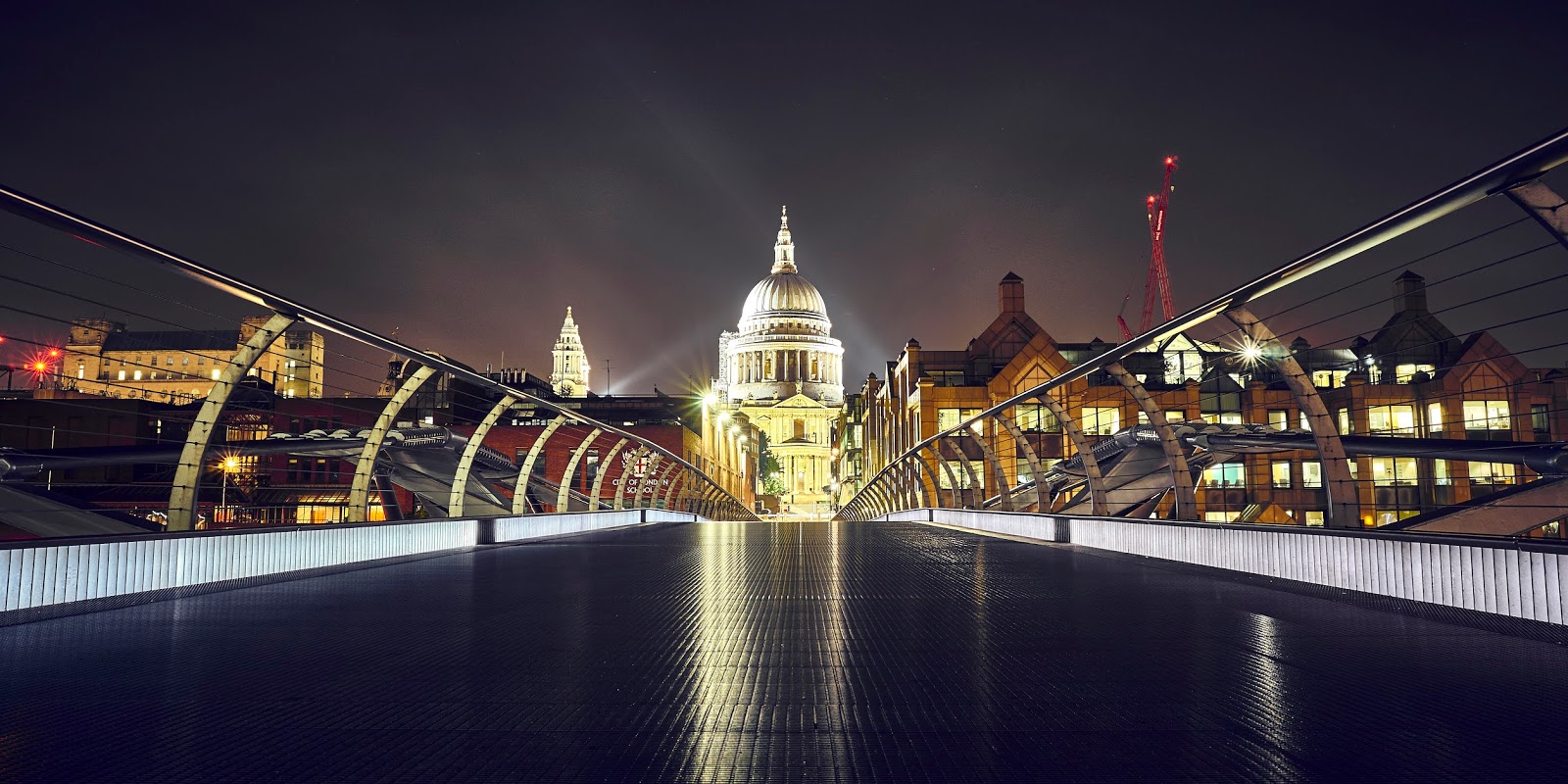
View of St Paul\’s at night


*AJ’s favorite book on corvids: Mind of the Raven by Bernd Heinrich 

A Friendly Spider, Miss Quackers Eats Peas, and Pub Dogs

Tuesday, June 12, 2017
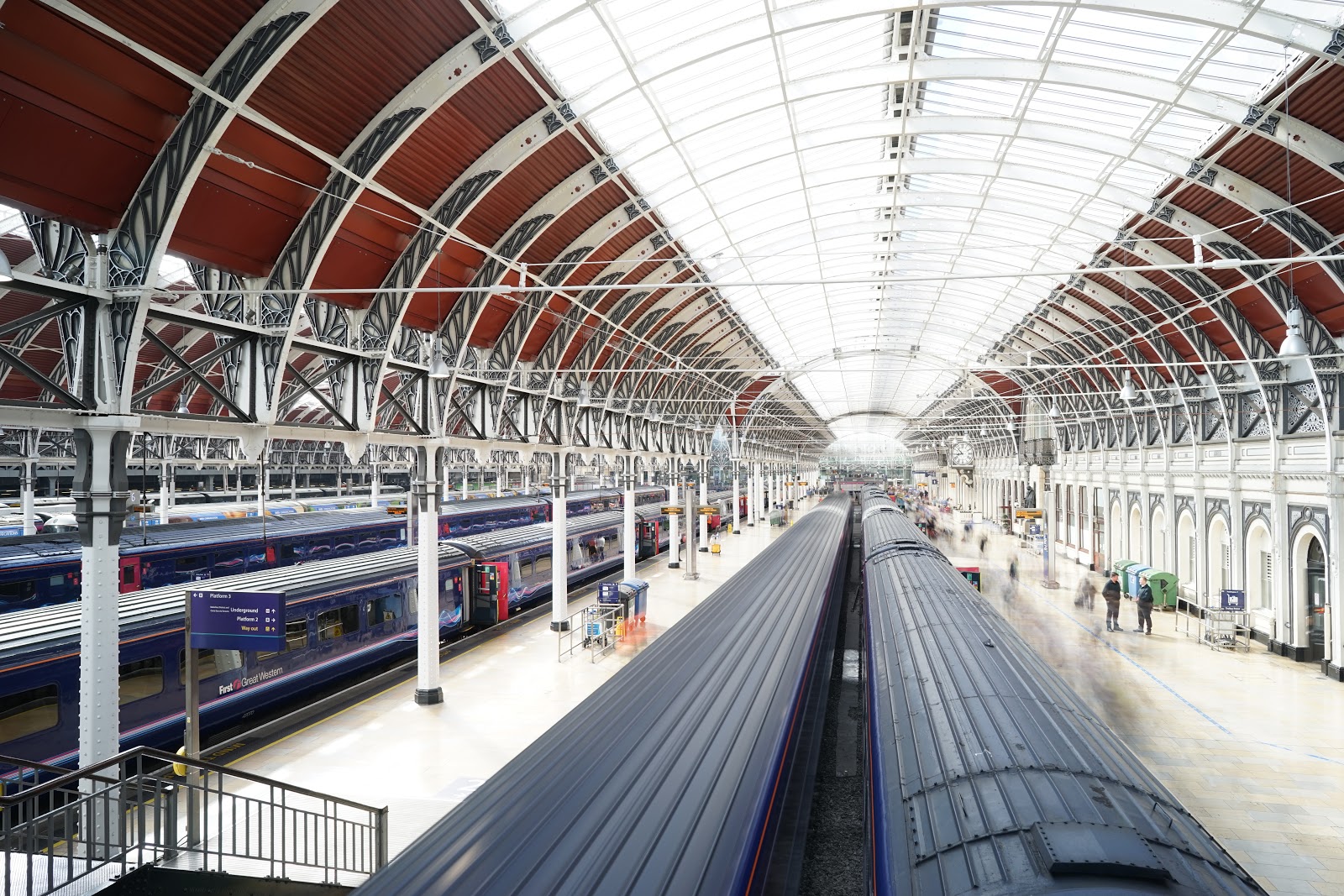
First thing Tuesday morning, the family rushed to the Tube at Marylebone Street Station, hopped off at Paddington Station (yes, as in Paddington Bear) picked up their train tickets to Morton-on-Marsh and stood staring at an ever-changing electronic board among dozens of other commuters eager to discover from which platform their train would depart. They were going to The Cotswolds.
Paddington Station


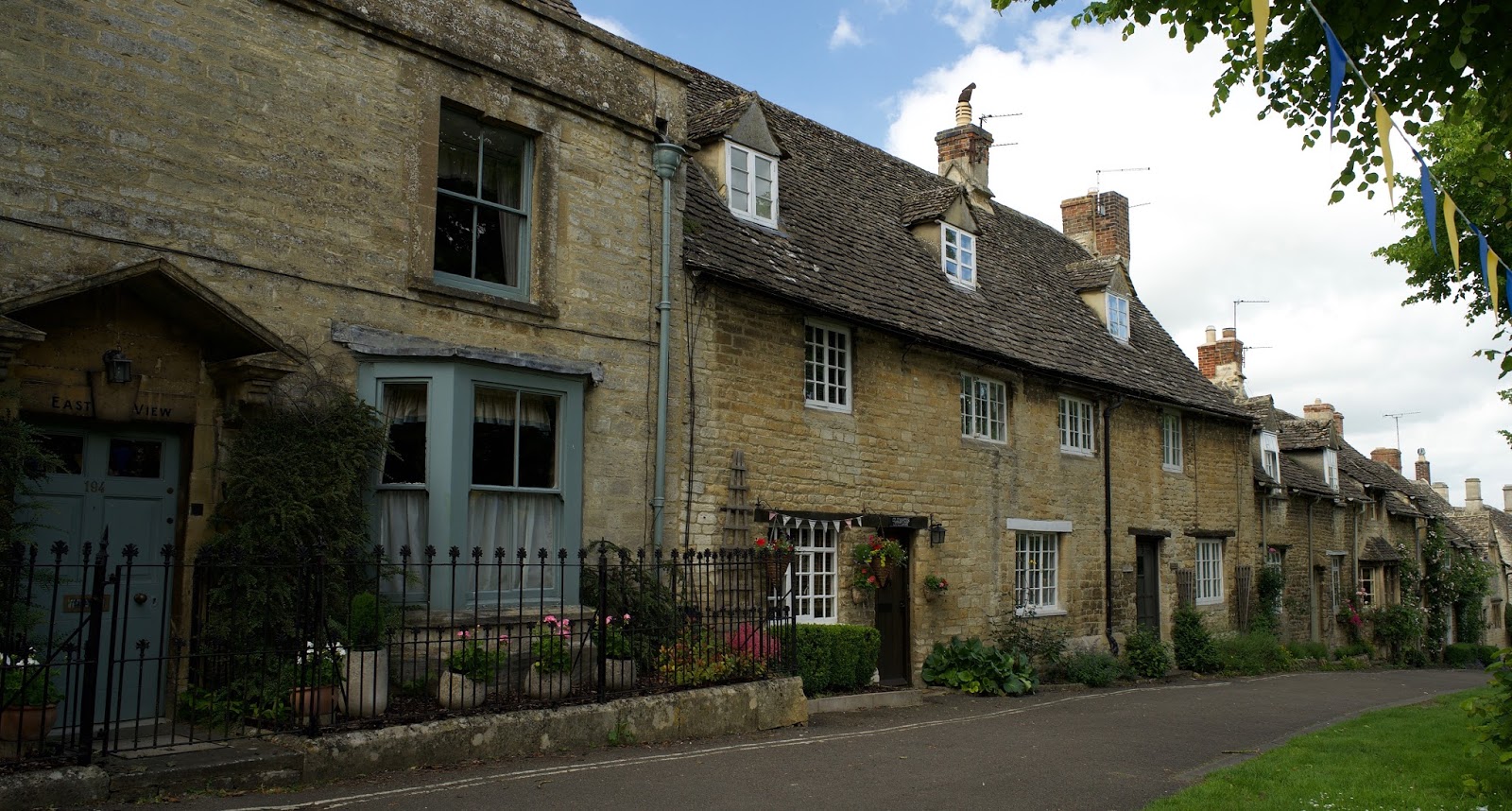
The Cotswolds is an AONB (Area of Outstanding Natural Beauty), kind of like the US’s National Parks, but most AONBs have people living in them.  The Cotswolds is an area encompassing towns and villages, with houses and buildings of honey-colored stone, green pastures, expansive estates, and sheep. The bucolic landscape and townscapes are what many think of when they think of England’s countryside.


When they finally found the right train, and the right carriage,  they settled into their seats, TwoSon greeted  there by a little spider sitting atop the seat reservation card, dancing and swinging.

“Do you want me to get it?” AJ asked, knowing how he felt about arachnids. 

“No. I’ll just watch him.” This one was small enough for him.  

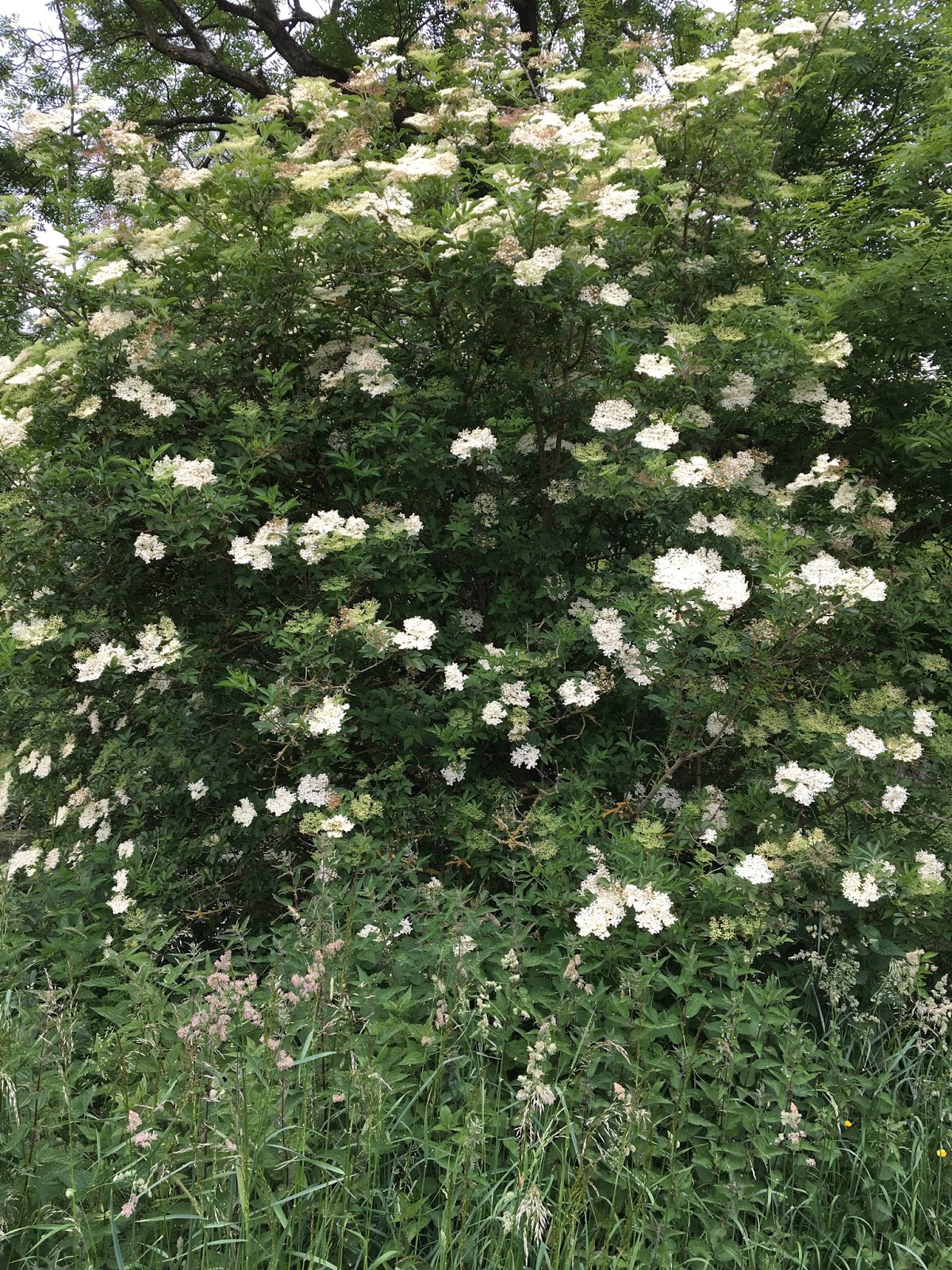
Elder bush

As they traveled further outside of London, the landscape became more familiar to AJ. The manic traffic, crowded streets and endless buildings melted away to pastures, houses huddled in villages, gentle hills and recognizable flora. 


Butterfly bushes (Buddleia) grew as weeds along the tracks, the yellow-white blooms of elder (Sambucus) dotted hedge rows, a sprinkling of flaming orange poppies adorned fields of wheat. Just like at home, some kind of hawk sat on a fence post. Cow parsley, burdock, mullein, dog rose, locust trees, fireweed, thistle (of course), daisies, brambles blooming white andVirginia creeper crowded the sides of the railways. But it was a little different: there were community gardens, canals, low green hills dotted with sheep and a field wrapped in solar panels. 

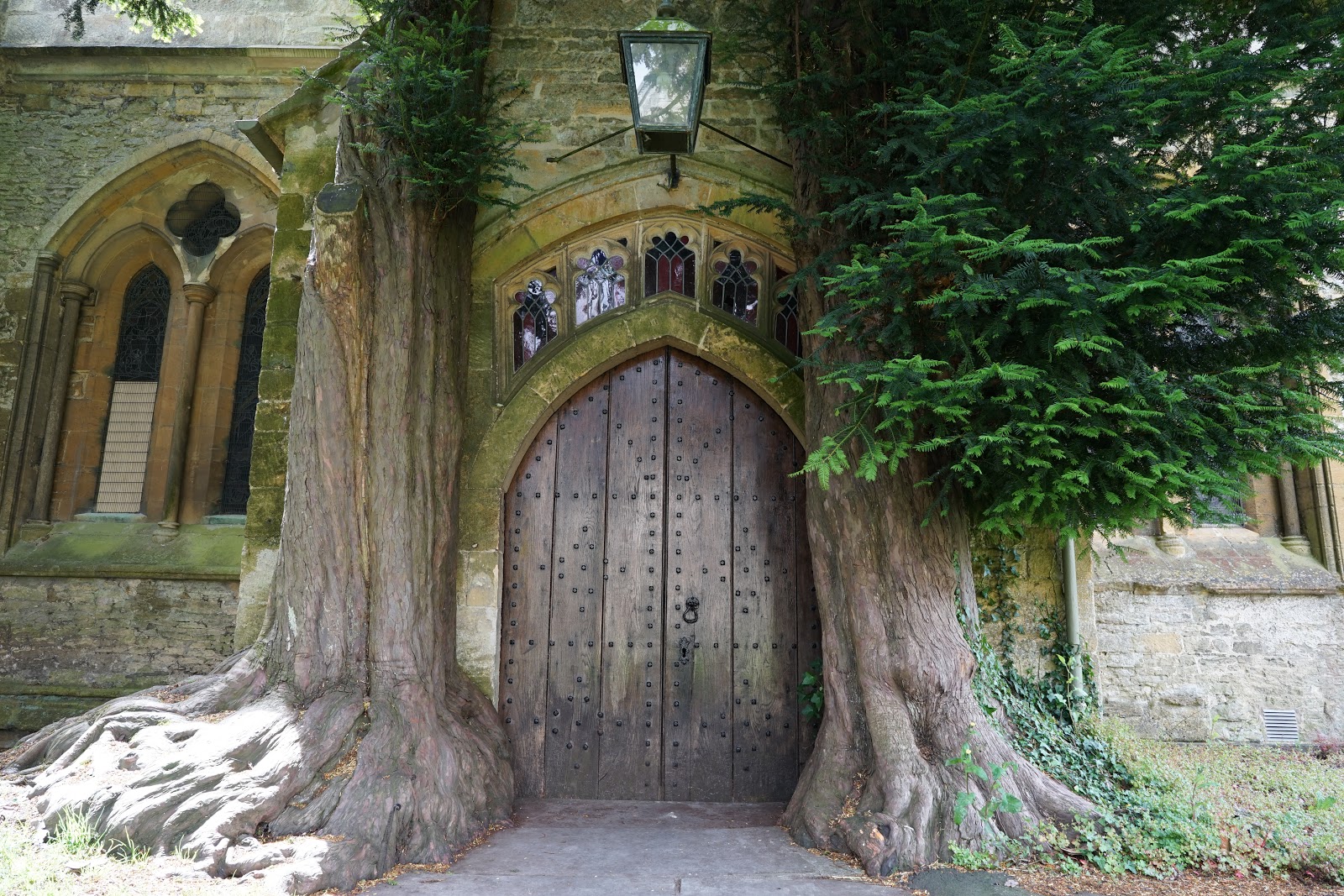
At the train station, they met Mr. Nick from The Original Cotswold Travel Company, who had grown up in the Cotswolds and was their tour guide for the day. They piled in his black Toyota and drove off to their first destination, Stow-on-the-Wold, a sheep-made village where St. Edwards Parish Church stood with a spectacularly curious doorway which inspired JRR Tolkien\’s imagination in writing his book, The Fellowship of the Ring

Mr. Nick drove comfortably along the narrow roads. All the buildings were built with the same sand-colored bricks–they didn’t build with anything else in The Cotswolds. Mr. Nick was forthcoming with facts and tales and important information, stopping readily for B to take pictures and make small jaunts among the Cotswold-nesses, with a hearty and happy, “It’s good?!” to greet them back at the car as they took off again. 

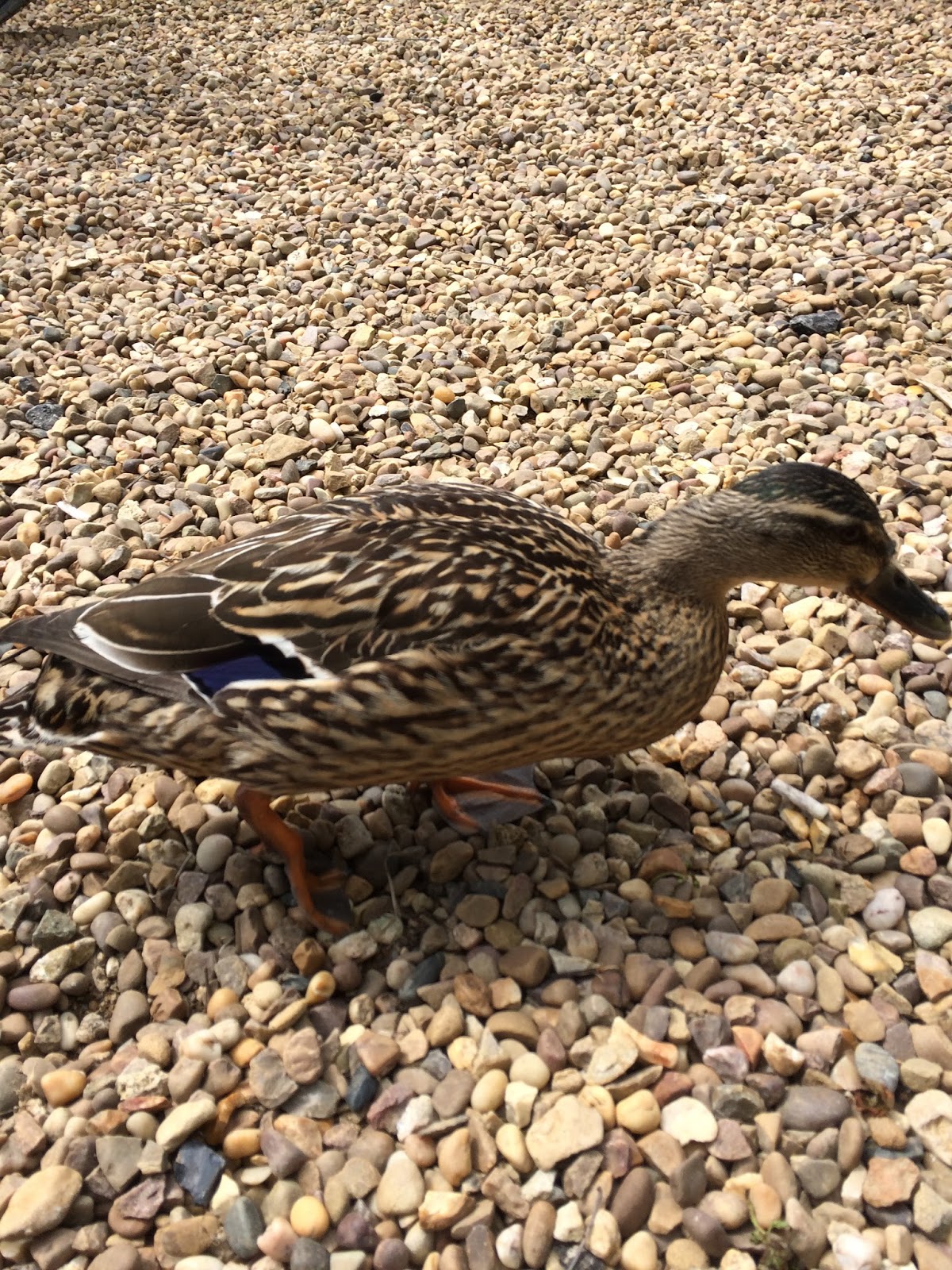
For lunch, he chauffeured them to The Fox Inn in Oxfordshire.  They picked a spot in back of the stone-built pub, along a stream and small pond and sipped locally made fruit juices as they waited for their fish and chips, and sausage and mash. A duck came waddling up to their picnic table in the sun, curious as to whether they had been served yet, because it knew something they didn\’t. 

Then their dishes arrived, laden with beautiful green English peas. 

“Here, Mr. Quackers, have some peas,” B tossed the duck a few green gems, not being a favorite with his. 


“It’s Miss Quakers, can’t you tell? She has subdued, humble colors, except for that pretty periwinkle patch on her sides.”

“Excuse me, Miss Quakers,” B apologized, tossing the hungry duck a few more peas. A small dog at the nearby table watched with eyes eager for the chase, frustrated by a collar and leash. 

As they left, the pub dog (every pub had a dog), a wolf hound mix, big and shaggy, lay down at TwoSon’s feet, pleading for a pet. 

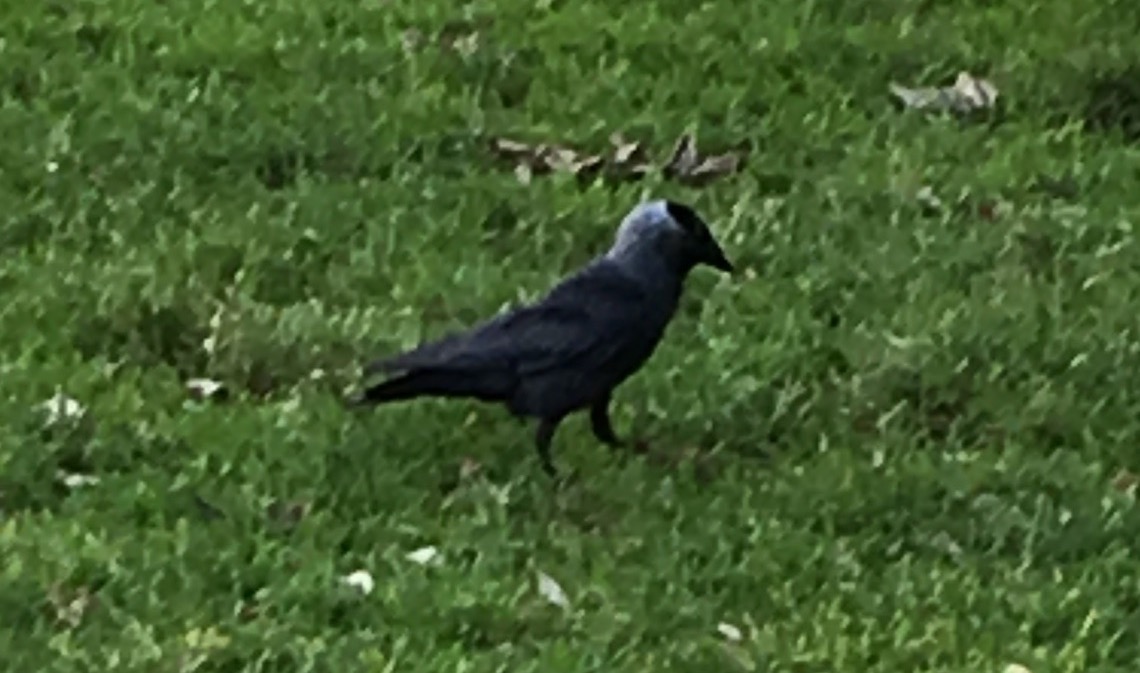
Birds were only second to plants in AJ’s naturalistic passions, and the ones she saw flitting along the trees and gliding in the air were of the greatest interest and one of the highlights of her trip. Jackdaws (Corvus monedula), black, elegant birds with white-grey rings around their eyes and necks, strut and hovered intelligently around the peopled places. Jackdaws don\’t live in the US. Konrad Lorenz included his extensive experiences with the smart birds in his book, King Solomon’s Ring.  


Magpies, black with a white vest were also among the avian attractions at many of their stops. According to a nursery rhyme, the number of magpies seen at one time is very important.  

Jackdaw


One for sorrow,
Two for mirth,

Three for a funeral

And four for birth


Arlington, Bibury

After lunch, Mr. Nick rushed them to so many beautiful spots that it all started to run together in AJ’s mind. It was trip of absorption; of soaking in the essence of the area, of observation. Very few new thoughts or wonders came to her as the day progressed, and after the trip, not many specifics came to her about the region. It was quaint, beautiful, old and marvelous.

Bourton on the Water

 The memory, which shows so wise a backwardness in registering pain, is besides an imperfect recorder of extended pleasures; and a long-continued well-being escapes (as it were, by its mass) our petty methods of commemoration.  On a part of our life’s map there lies a roseate, undecipherable haze, and that is all. – The Wrecker by Robert Louis Stevenson


It was too early for the lavender fields of Snowshill, so they contented themselves with poppies, even finding wreaths of them adorning WWI monuments. 

A quick, mile hike through beautiful sheep pastures and wilderness between two villages gave them a more up-close taste of the area. After that, they stopped in at The Noel Arms Hotel Pub (complete with a dog sitting on a stool at the bar) in Chipping Camden for a snack and coffee. 


The tour ended with a long-distance view of Broadway Tower. It had closed to visitors a few hours earlier, so B had to take pictures from a distance. AJ contented herself with investigating plant and animal life of the stone fence hedge while B snapped pictures.

In the train back to the rushing, vibrant London, AJ stared past her reflection through the window to the outside world where light slowly slipped away to darkness and civilization glowed electric in houses, buildings and along streets. 


Spirals, Stoney History, Cool Enlightenment, and Magic

Monday, June 11, 2017

Morning arrived early to Balcombe Street, but couldn\’t wait for the still-slumbering family to rise. It moved on without them and by the time they were ready for their second day in London, they were behind Agenda\’s schedule.  

“I think we’ll switch today’s and Wednesday’s mornings, because I wanted to get to the Tower before it opened and now it’s too late,” B said.  


AJ had diligently studied Monday’s activities in The Agenda the night before, but now she was going into her day, a little clueless again. Surprises were nice. 

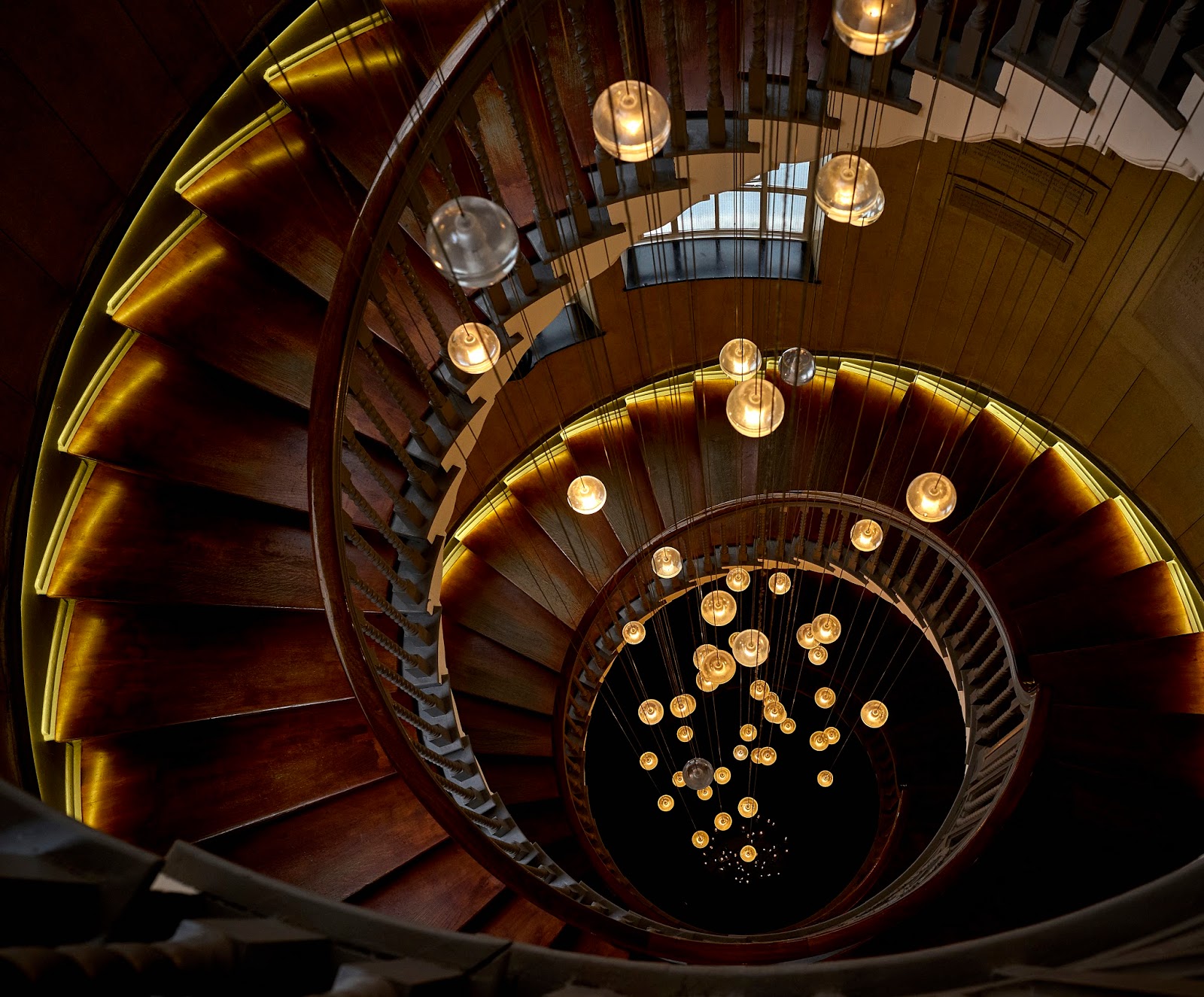
The first stop was at Heal’s Furniture Store, whose spiral staircase served as a photographers\’ haunt ever since it was built. B set up Tripod at the bottom, then proceeded to start a photographer’s “tiff,” waiting for the photographer at the top to get done and out of his shot. 

The Cecil Brewer Staircase at Heal\’s Furniture Store
The two photographers, B and the man at the top of the stairs, were recording the same object–a spiral staircase, ornamented with round lights–but the results would invariably be different. They approached it from different angles, different points-of-view. They saw different things in the object and expressed it, reacted to it, re-created it differently. So it is the same in writing–fiction and nonfiction. The eye or ear of the beholder is what makes photography, writing or any representation of objects (art) interesting, worth investigation and contemplation. 


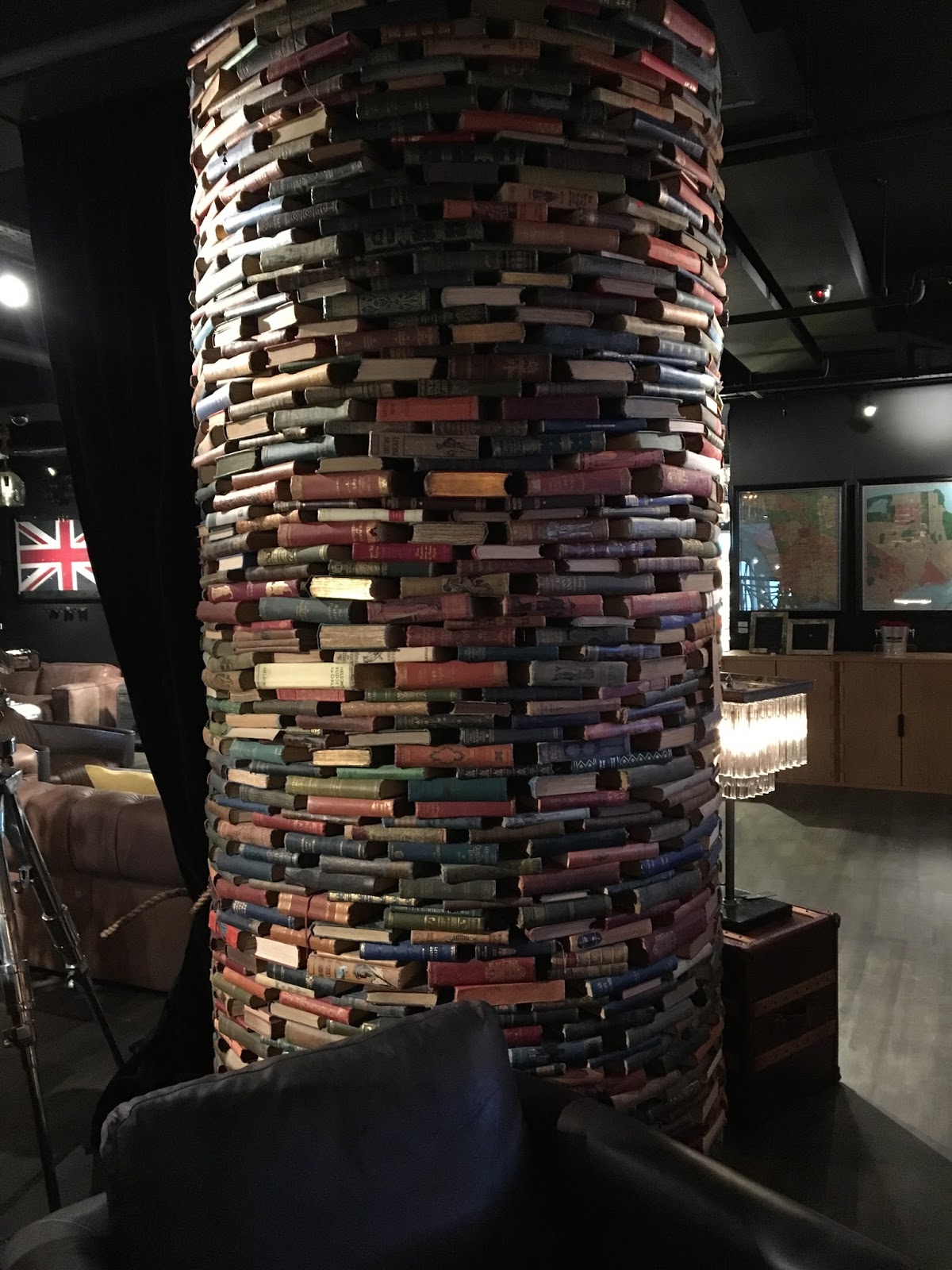
AJ and TwoSon roamed the furniture-filled floors while waiting for B. On the second floor, they came upon a literary atrocity: two, floor-to-ceiling towers made of old books. Old books were AJ’s favorite for many different reasons (tactility, smell, content) but none of those reasons included making furniture of them, which necessitated that they would never be opened again, the content bolted or glued in place.

As they waited, amongst modern, clean-lined furniture and furnishings for the fashionable Londoner, AJ had an opportunity to look back and forward on her short time in UK. She didn’t hate London yet. It was early in the day, still. Yesterday, pushing through crowds, lugging luggage, getting lost; her senses overloaded by people, new traffic patterns, new ways of everything, cars, noises, sights–yesterday she hated London. She would probably never love it, but now, sitting in a furniture store before heading to the British Museum, she didn’t hate it. 

On the roundabout search for The British Museum, they walked past a stone building of common architecture, but with strange accents on the windows. Each window was decorated, with what at first AJ thought were all insects (she loved entomology), but a snake and a scorpion disrupted the pattern. The sign at the main entrance relieved her curiosity: Hospital for Tropical Diseases.

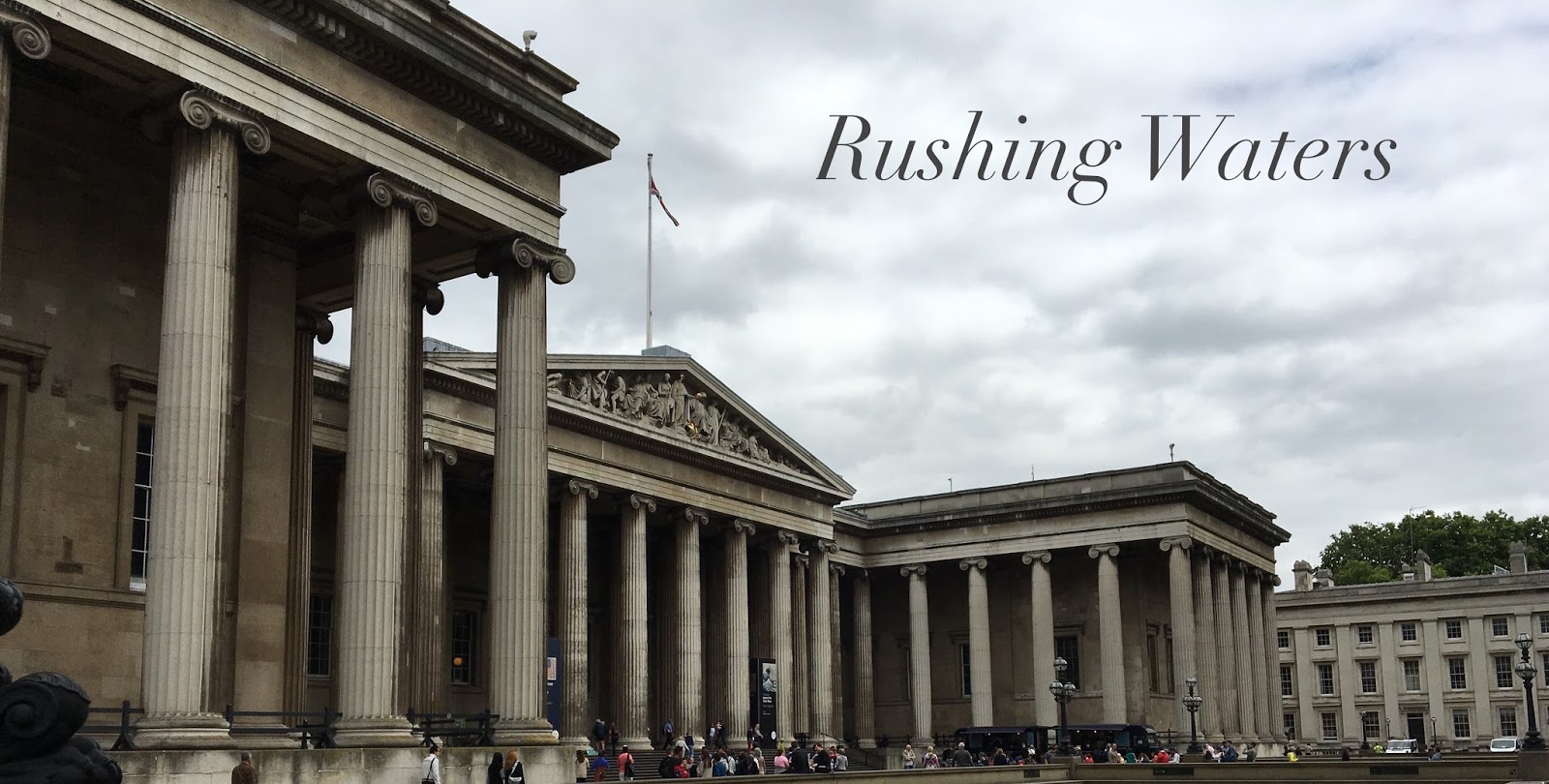
A few blocks later, after going through a bag-check, they walked into the British Museum. Just walked right in, without paying. Because museums were free. 

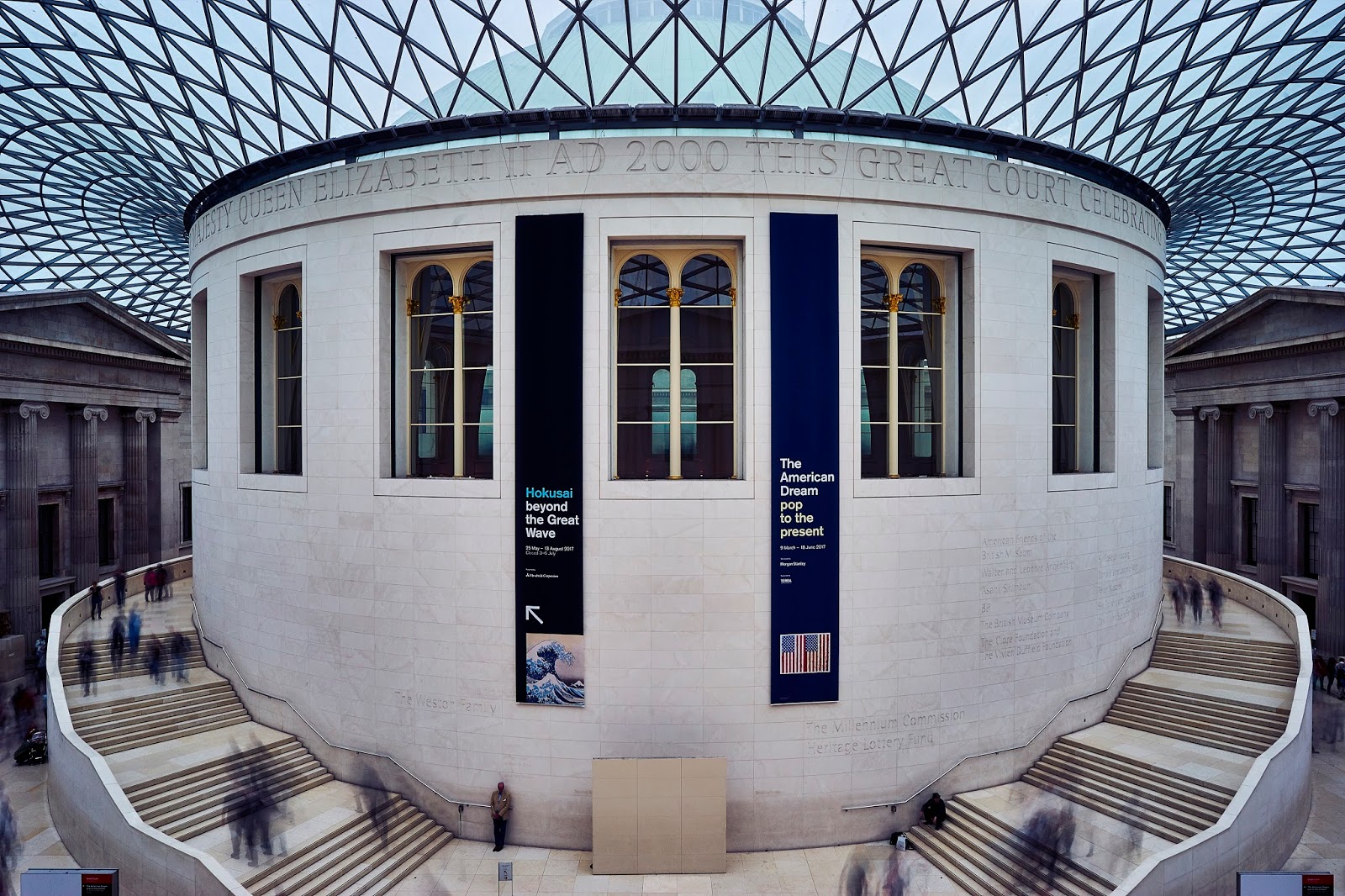
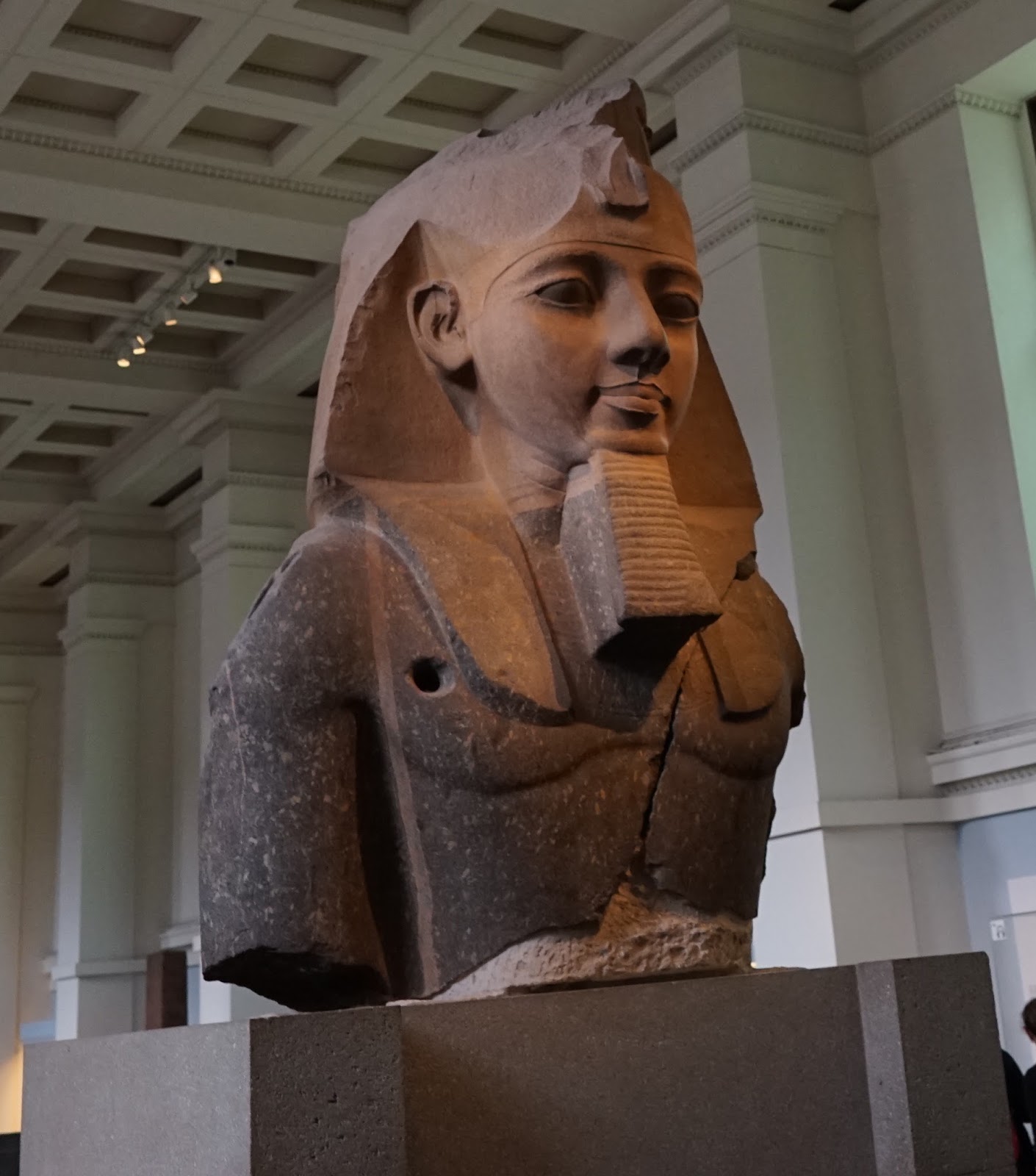
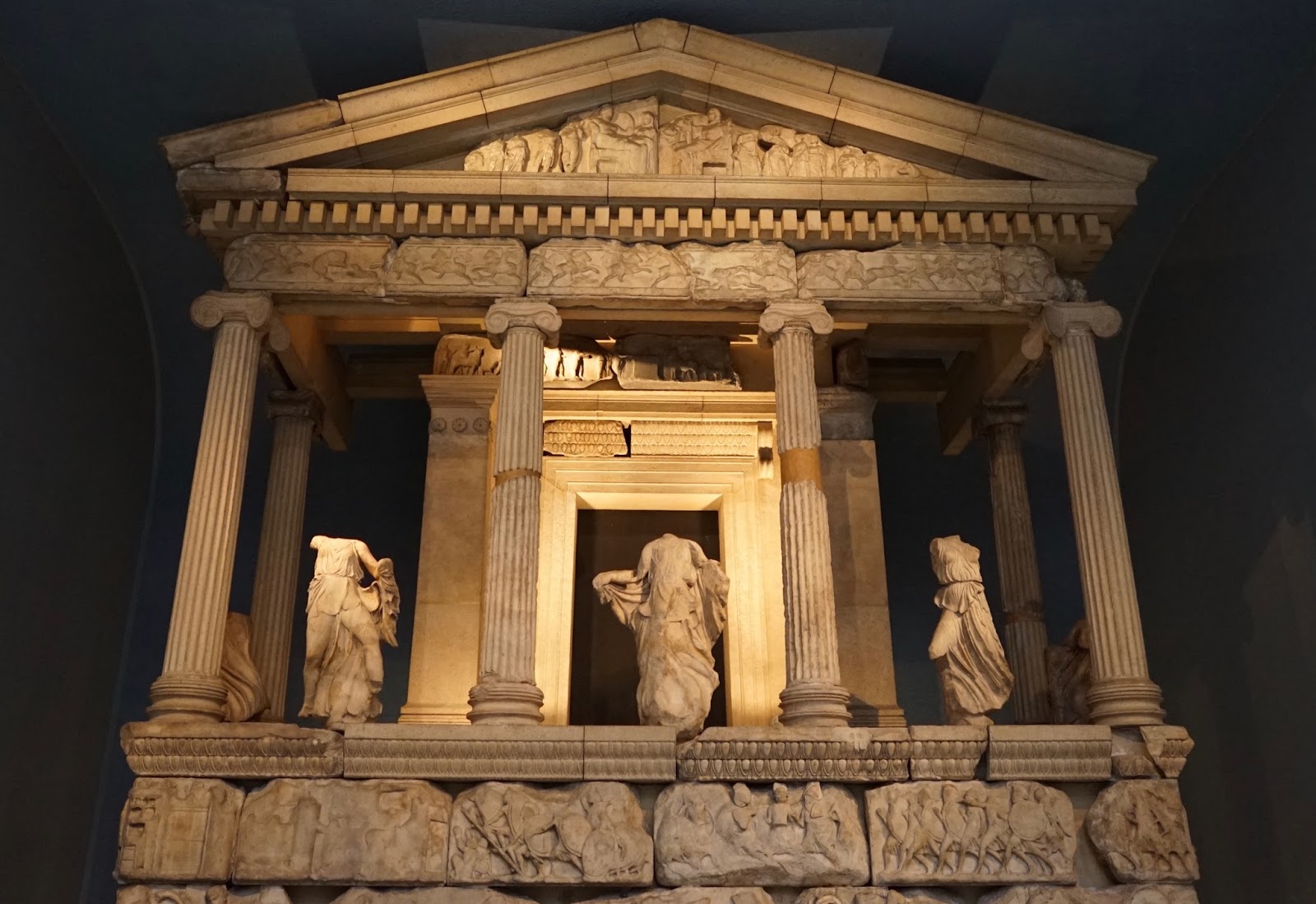
After B got a shot of the greatness of the museum’s Great Court, they started their tour of the ancients. The Rosetta Stone and many other magnificently old and beautiful stone structures, originating from so far, far away in time and space, were mobbed by people, so the family strolled around, picking up bits and pieces of information, snapping pictures here and there, content to see the objects from a few meters away. It was stuffy, hot and crowded amidst the ancient relics, making prolonged interest, awe and real information absorption difficult. 
For lunch, B and TwoSon gnawed French baguettes with cheese and ham while AJ nibbled salad. After lunch, they visited an exhibit on money from all over the world and from ages past.

Watching their time carefully, they walked through the “Enlightenment” exhibit, located in a long, pleasantly cool, gigantic room lined with cabinetted book shelves and antiquities, including astrolabes, gigantic tomes of atlases, and other archaic devices and gee-gaws. The visit was cut short by time: too soon they had to leave to catch a double decker bus to a magical place.   

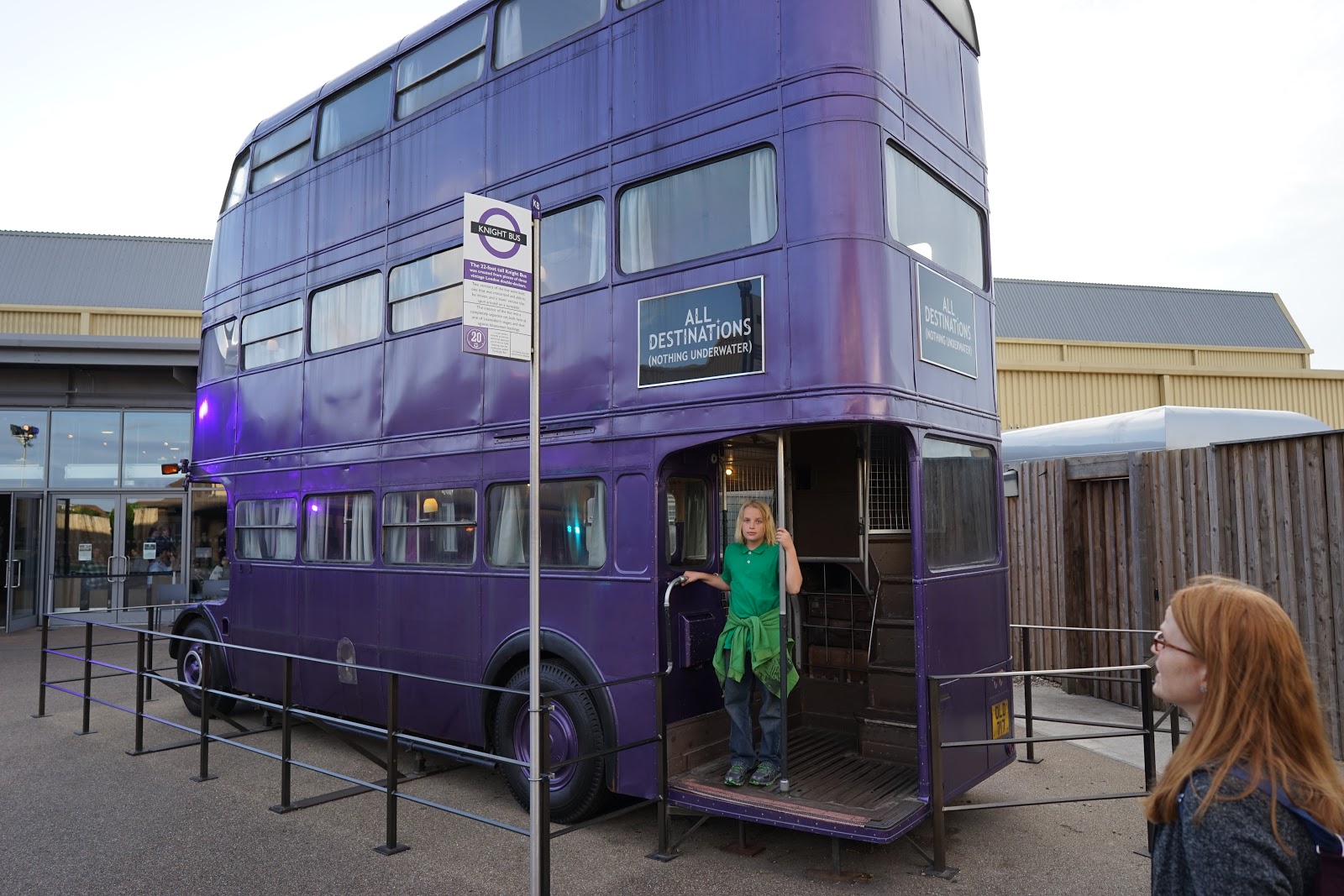
At a stop on Baker Street, they climbed onto the second story of a double-decker bus to the Harry Potter Studio Tour in Leavesden, UK, AJ snoozing on the hour-long ride as Harry Potter and the Sorcerer’s Stone Philosopher’s Stone* played on the video screens.   

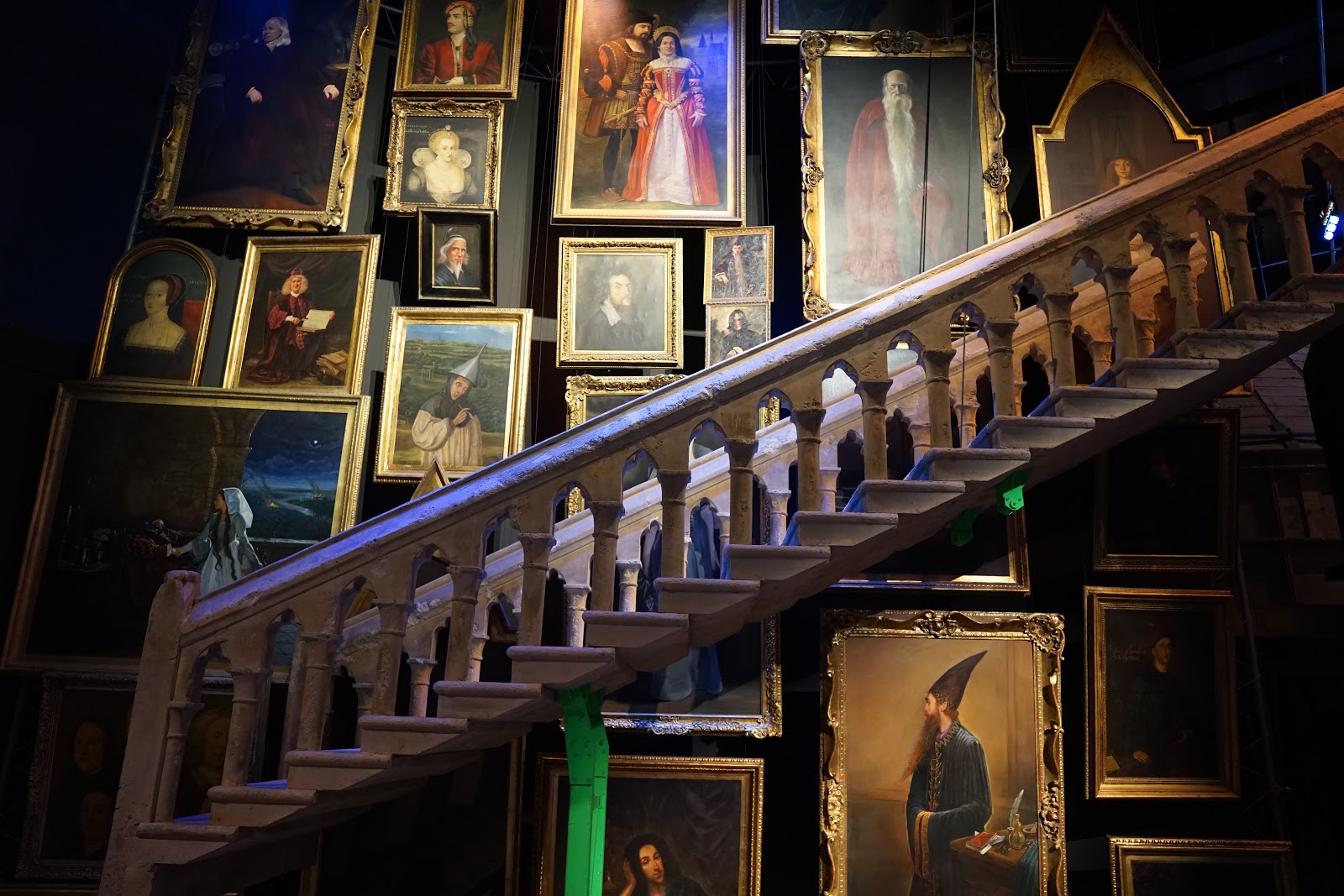
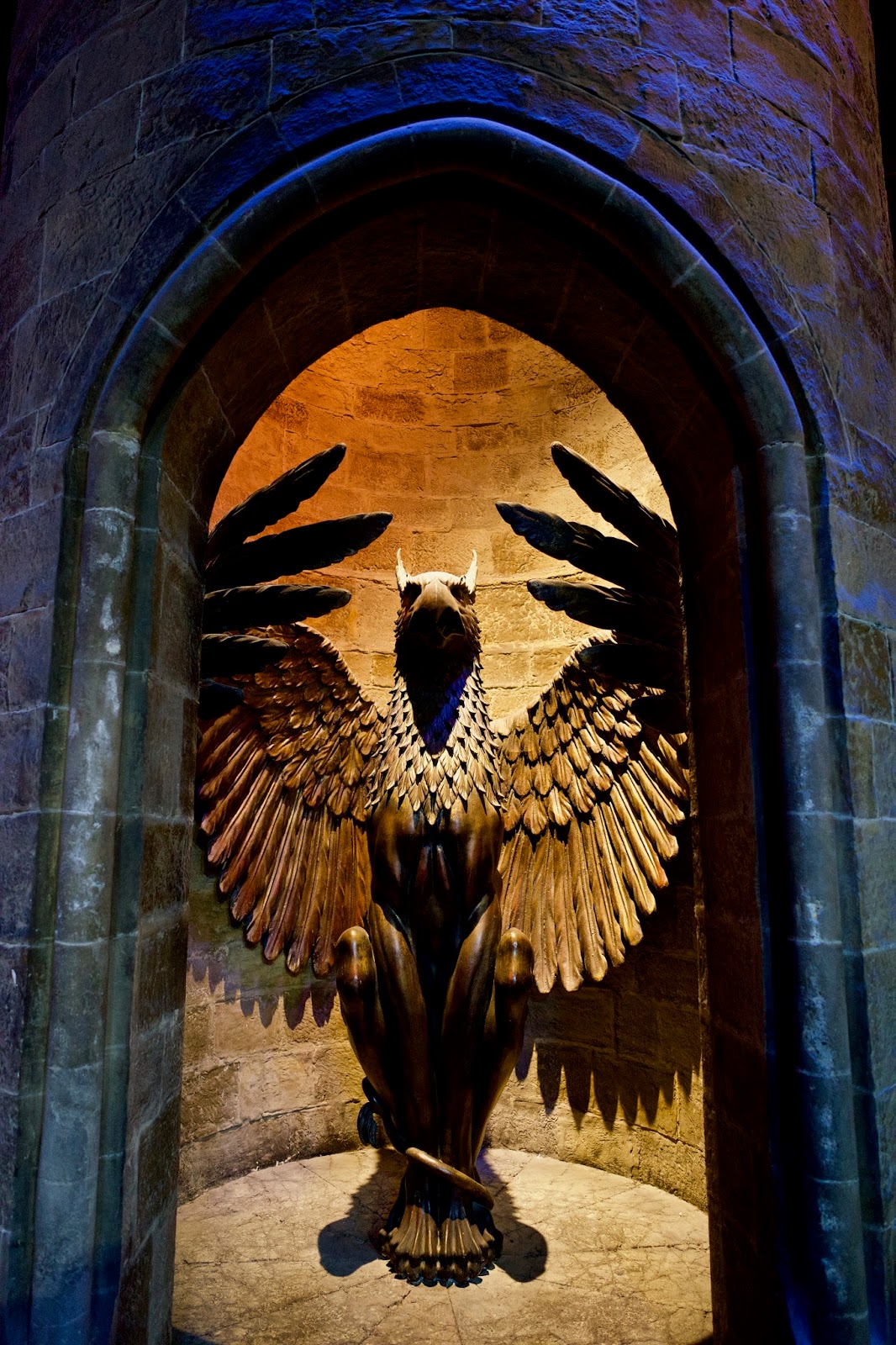
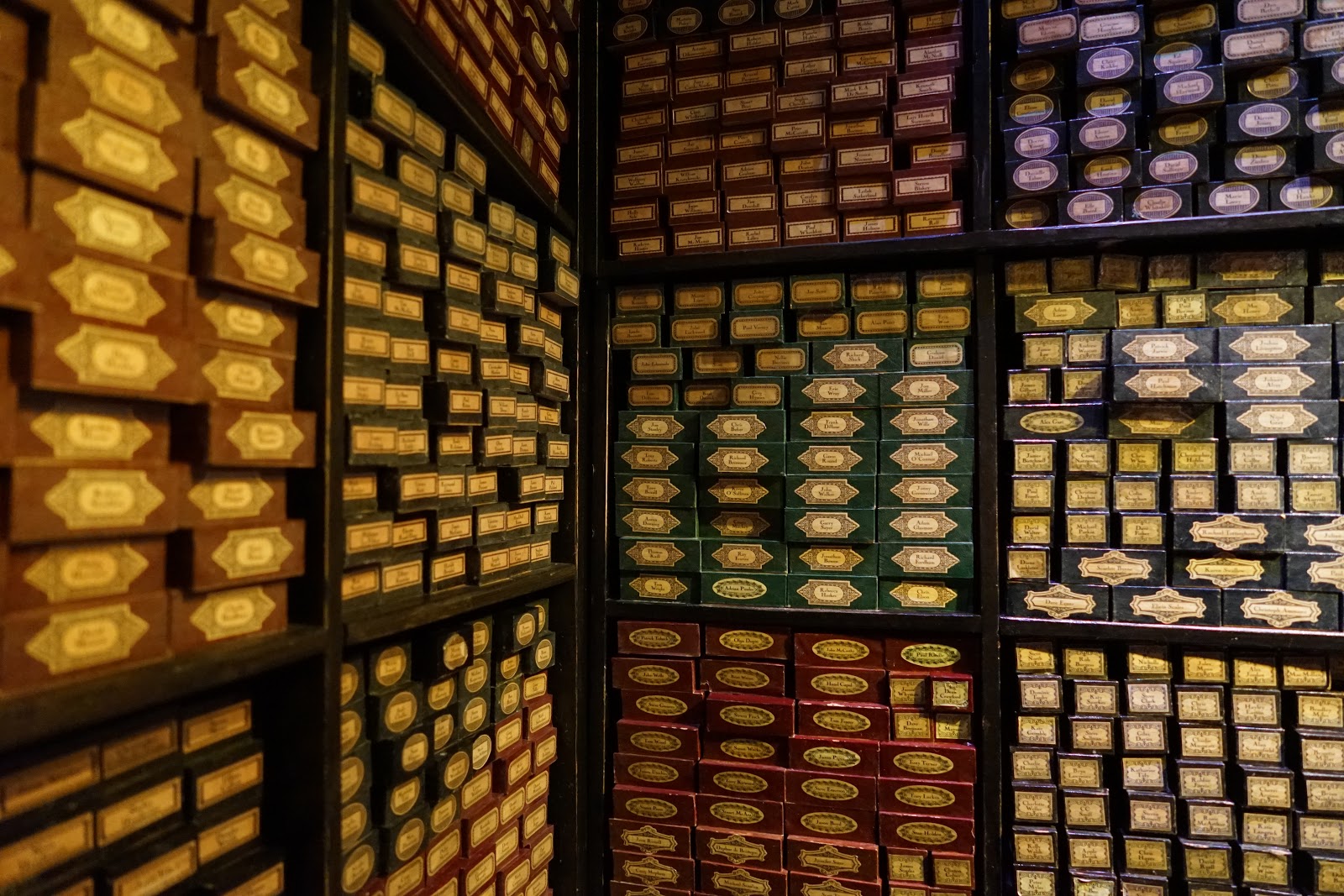
The Harry Potter Studio Tour was just that–rooms and rooms of movie props and sets, in fascinating, realistic detail. AJ and B combed over the visual feast, admiring the artistry. TwoSon refused to participate in the interactive exhibits, not wanting to show too much enthusiasm and outright refusing to see the giant spider props.  

Half way through the magic, they dined at the Studio Backlot Cafe, AJ fueling up with coffee, B and TwoSon indulging in a cup of Butterbeer. After the last half of the tour, they strolled leisurely through the gift shop, browsing all things Hogwarts and related, then caught the last bus back into London.  

“Do you feel like you’re in a foreign country yet?” B asked TwoSon again. Earlier, he said it didn’t feel as if he were in a foreign country, but now he said, “yeah”, as he watched the tall black taxis rushing by. 

“Do you?” he asked AJ. 

“Oh, yes,” she said, “it’s like a subtly strange dream, where some things are very familiar, but so many things are just slightly, weirdly different.”

*After returning home, AJ, curious about the namesake of the Ashmolean Museum in Oxford, England (though she didn’t visit there), looked up Elias Ashmole and his works. She found the following, which probably had some influence in JK Rowling’s idea for the first book in her Harry Potter Series: The Way to Bliss. In Three Books., a book by Elias Ashmole, which contained the chapters “Of LONG LIFE.”  and “That the PHILOSOPHERS STONE is able to turn all base METALS into SILVER and GOLD.” 


AJ accrued a strong suspicion, through reading many British authors, that Rowling probably drew inspiration from other books and authors, including Charles Dickens (especially The Pickwick Papers), Dorothy Sayers, PD James and Agatha Christie. 

Thanks for reading!

Time Travel and 53 Steps

Sunday, June 10, 2017

AJ flit through the house, picking up wayward items and putting them in their place and stopping periodically to brush cat hair from her jacket and pants. She wiped a counter here, decluttered there. 

Their flight wasn’t until 4:30pm Chicago Time, which left her ample time to try to leave the house a little more tidy, while bugging OneSon with questions and instructions. He was staying home from this trip to house-sit and work at the beach. 

“There is chicken in the freezer you can have for dinner, and leftovers in the fridge. Use the toaster oven for the chicken. I brushed the cats, but you can take them outside for another brushing, they could use it. The house plants should be okay. You know how to water the plants out front, right? You take the hose from the side and …” 


“Yes, I know,” OneSon replied, restraining annoyance from his voice. 

“Order pizza and have friends over for a game night,” B suggested. 

“Yeah, I might,” he mumbled, with a smirk. 

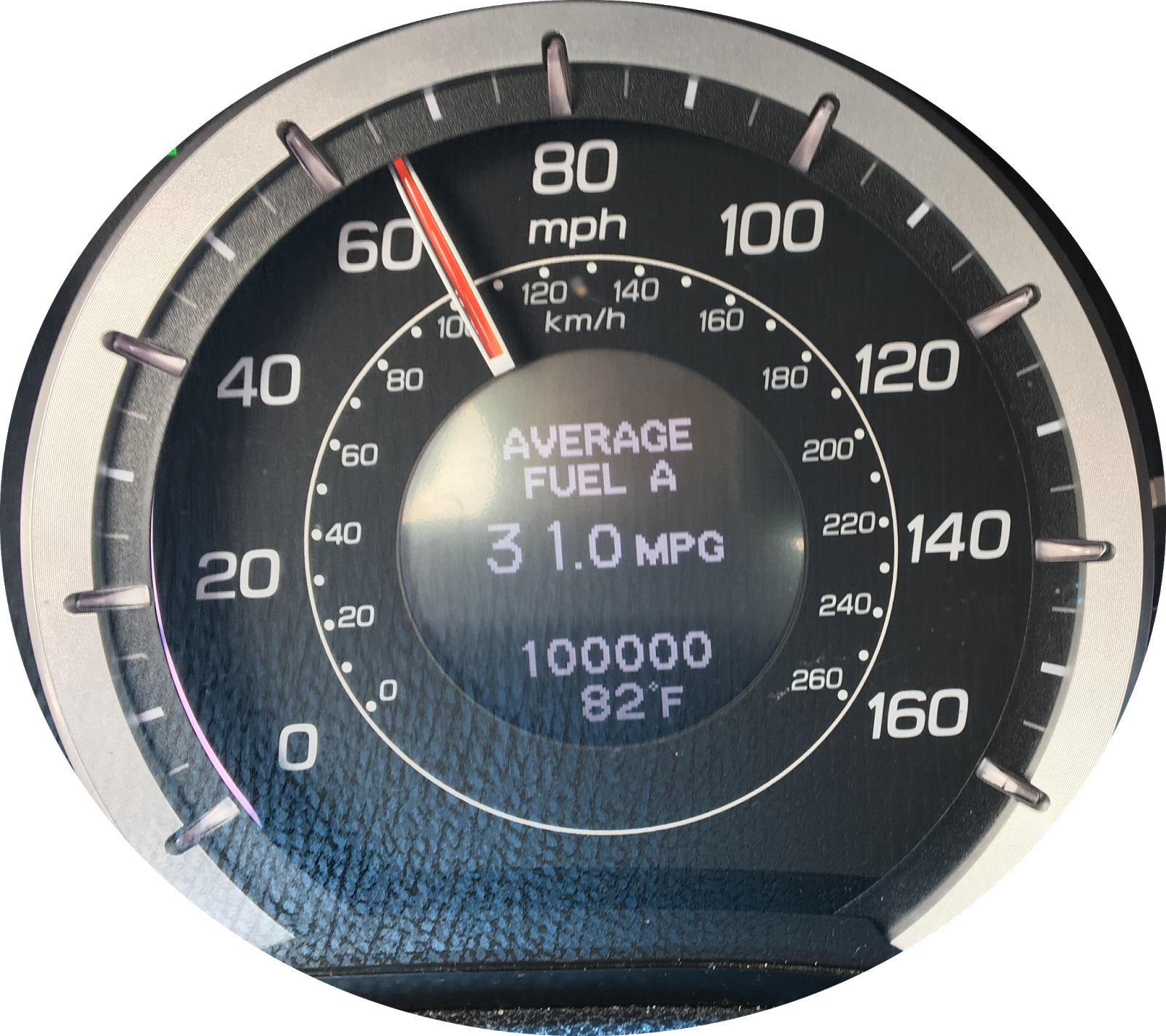
After hugs and final luggage checks, B, AJ and TwoSon loaded the car and left. The drive to the airport was periodically slow and sunny, uneventful except that B’s car hit 100,000 miles. 
The shuttle bus driver from the parking garage to the airport mistook TwoSon for a girl. But the metal-detector usher in security didn’t. “I’m going to count how many times that mistake happens,” TwoSon said.

 “Should’ve got your hair cut shorter,” B said. AJ admired TwoSon’s reaction-he didn’t seem to get too upset about the mistakes, he liked his hair long and that was that. But he was waiting eagerly for the day when he could grow a beard. 

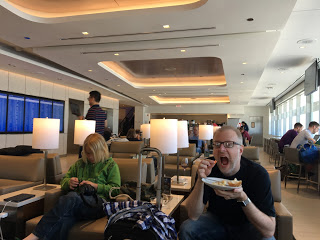
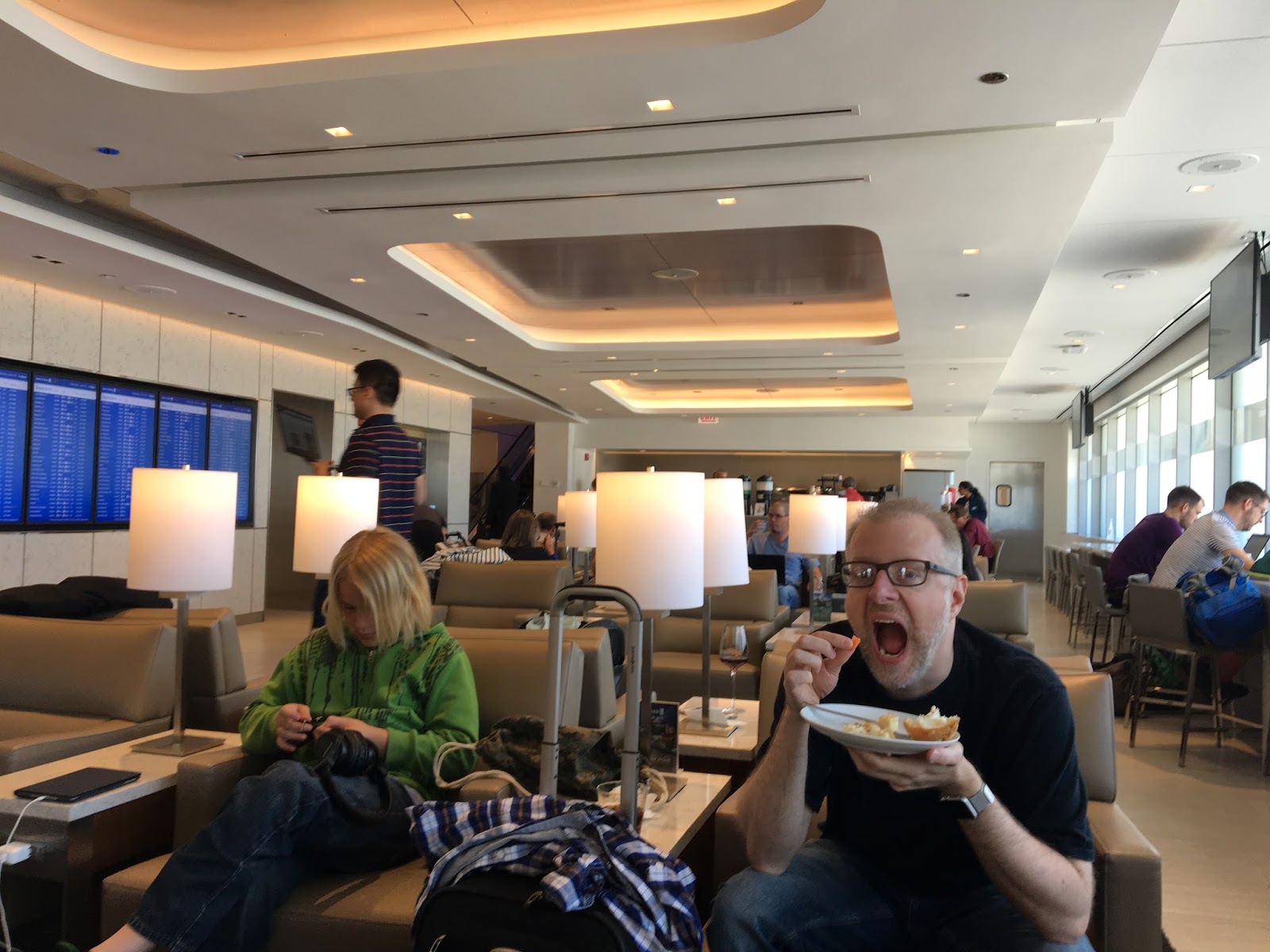
Once through the hassle and awkward juggling luggage through  security, B lead the family to a large paneled glass door that slid open elegantly, opening to a reception area with two women at desks. He had saved up “Extra-Special Airport Lounge” free passes (not the extra-extra special lounge passes, not United Airline’s Polaris Lounge) which let the family eat, drink and rest in surprising peace and comfort. 

Free Wi-Fi induced most patrons of this special club (of which the family were only free-pass intruders) to open electronics immediately upon sitting down. B and TwoSon were no different except they waited until they finished eating to indulge. AJ, after a snack of salad and nuts, leafed through The Agenda*, determined to know more of the finer details of where they were going, when and how. 


“This land is old–as in, people have been inhabiting it a lot longer than over here. I mean, large populations have been there. And the landscape will be so different,” AJ commented as she flipped through pictures of castles and stone mansions.  

“Mmm.” 

“I think you’re a grand-vista and night sky type photographer, no people,” AJ said, wanting a little more from B. 

“Yeah, no people, not anymore.”

As most patrons buried themselves in electronics, AJ looked around, taking in details of furniture, surroundings, people. 

It would be a long wait, but a nice one. “If everyone could be treated like this, it would make flying more pleasant, I bet,” AJ said. “… and more expensive.” 

To AJ, airports were a place full of grave seriousness, hurry, strife and downright depression. She rarely saw a happy or contented face there, the workers and flyers were never cheerful, excepting little kids going to Disneyland. 

The lounge slowly became noisy and crowded. An extended family traveling to Israel for a bar mitzvah, single travelers checking in and out, and another family looking as if they were on their way to somewhere tropical were just a few AJ noticed. The noise and voice level rose with each new traveler, and in between bouts of scribbling, she watched. 

The family’s passes were complimentary, but the privilege usually cost a lot, or required frequent flyer miles. And people paid, depending on their reaction to waiting. 
“This is how people react to waiting, boredom, the time before things happen,” she thought. They drink, eat, submerse themselves in tech, read (not many), watch TV (baseball on the screen) or talk. 

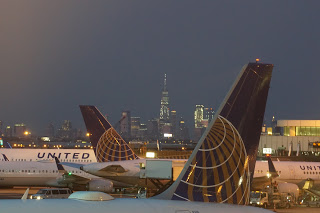
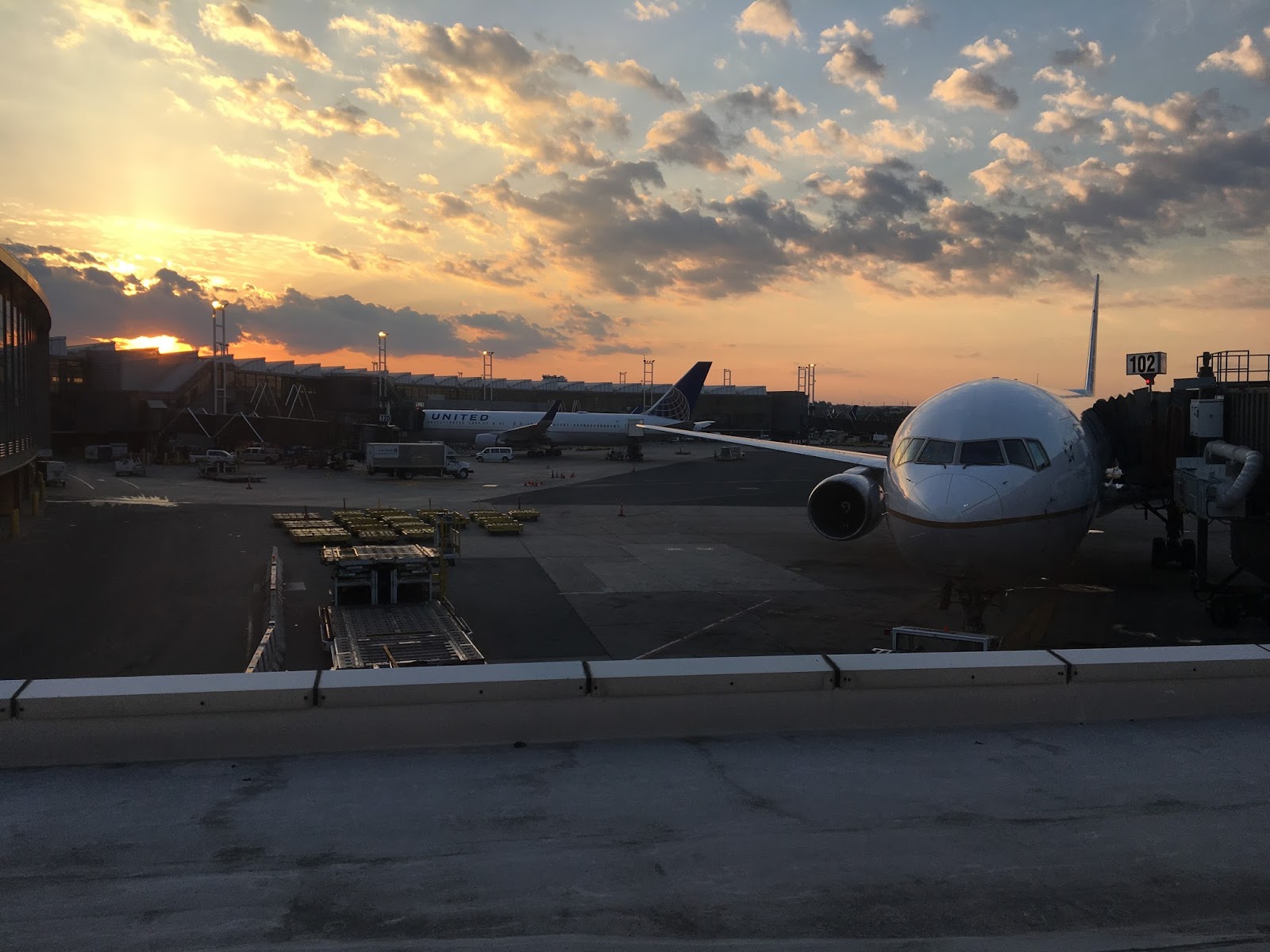
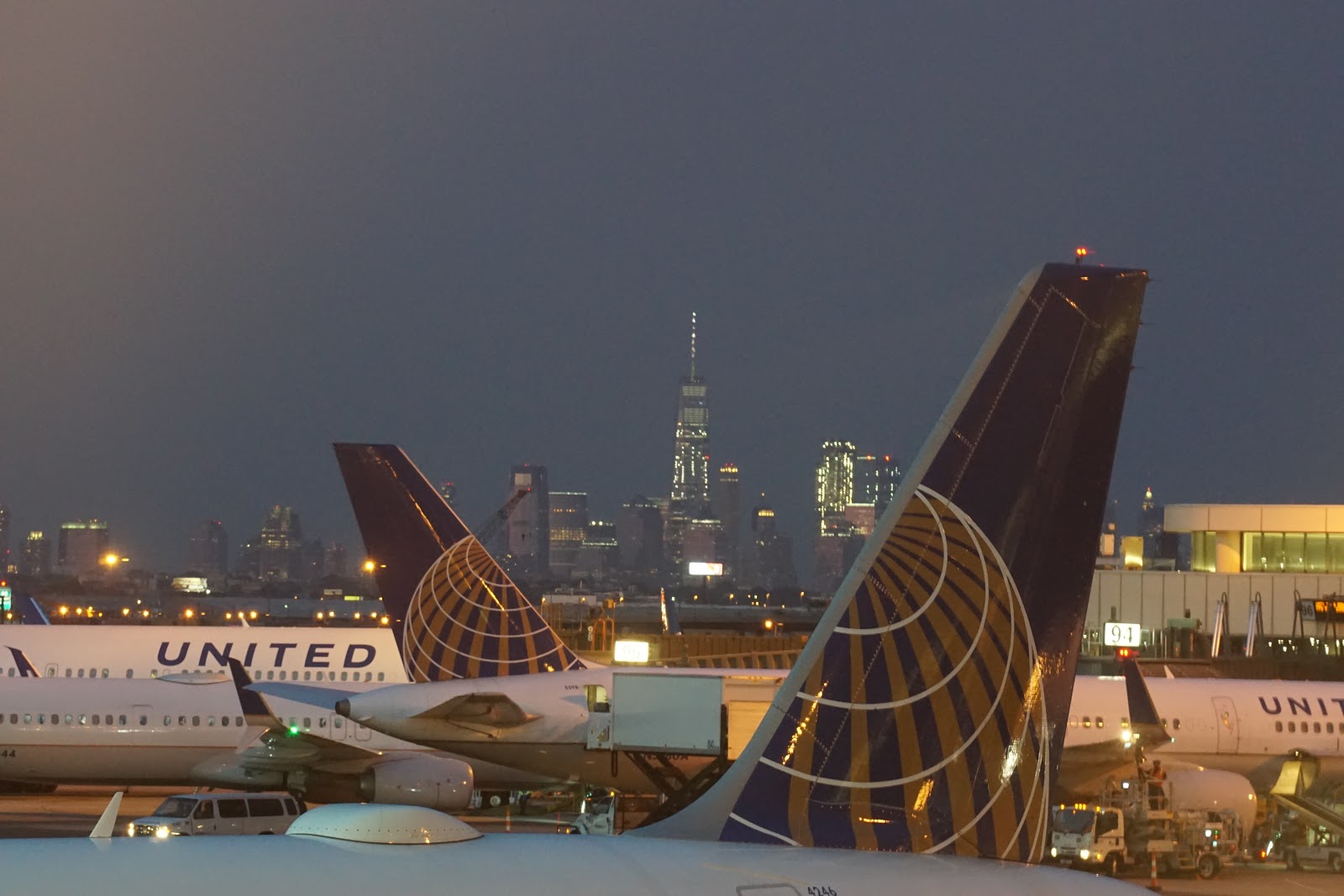
The 1 1/2 hour flight from Chicago to Newark Airport was uneventful and easy. On their way to their next gate, they passed windows framing dozens of planes fronting a background of the NYC skyline

At the gate, while they stood in boarding lines, their wait to board the plane stretched on an unforeseen 45 extra minutes. AJ’s feet, prone to pain if stationary too long, foreshadowed an equally miserable flight.  

Whenever AJ flew on planes, at least one part of the journey involved agonizing torture in the form of one or all of the following: sleeplessness, restless-leg syndrome, loud neighbors or seat-kickers. The flight to London was filled with all the above, except the last. Fate would save the seat-kicker for her flight back. 

 She tried to alleviate the torture by breaking it up with the audio book Rob Roy by Sir Walter Scott, eating the pacifying, distracting and unneeded food the flight attendants handed out, and combing over The Agenda. 

After 7-hours in the air, they had skipped ahead 5 hours in time to successfully land in United Kingdom’s London, England

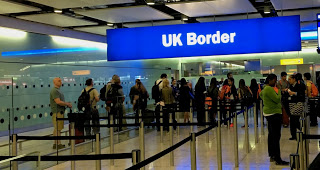
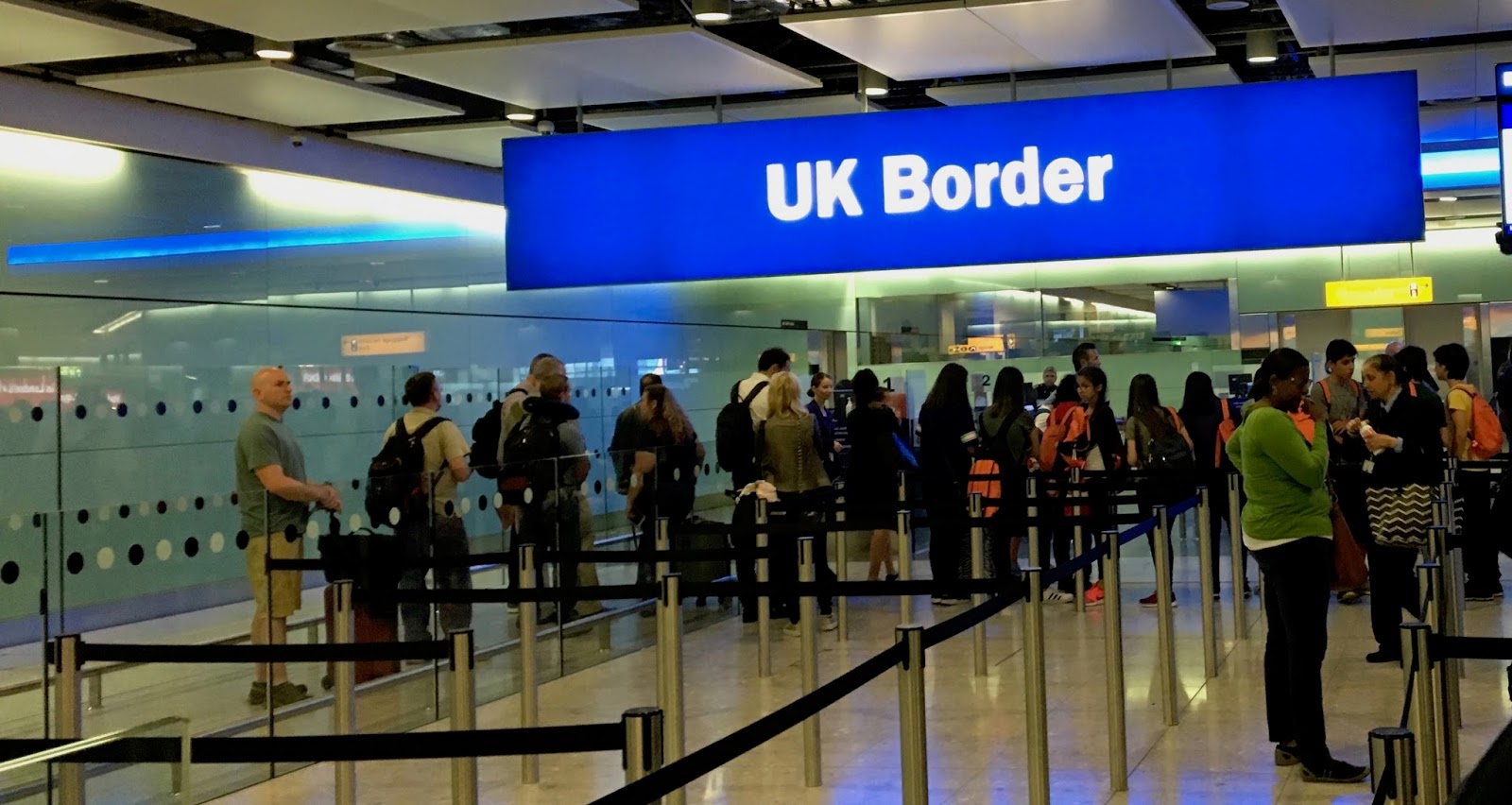
At London’s Heathrow Airport, after a bathroom stop, they shuffled through snaking cordoned lines to get through UK customs, dragging their luggage behind them, entertained by eavesdropping on a friendly conversation between two Canadians behind them. 

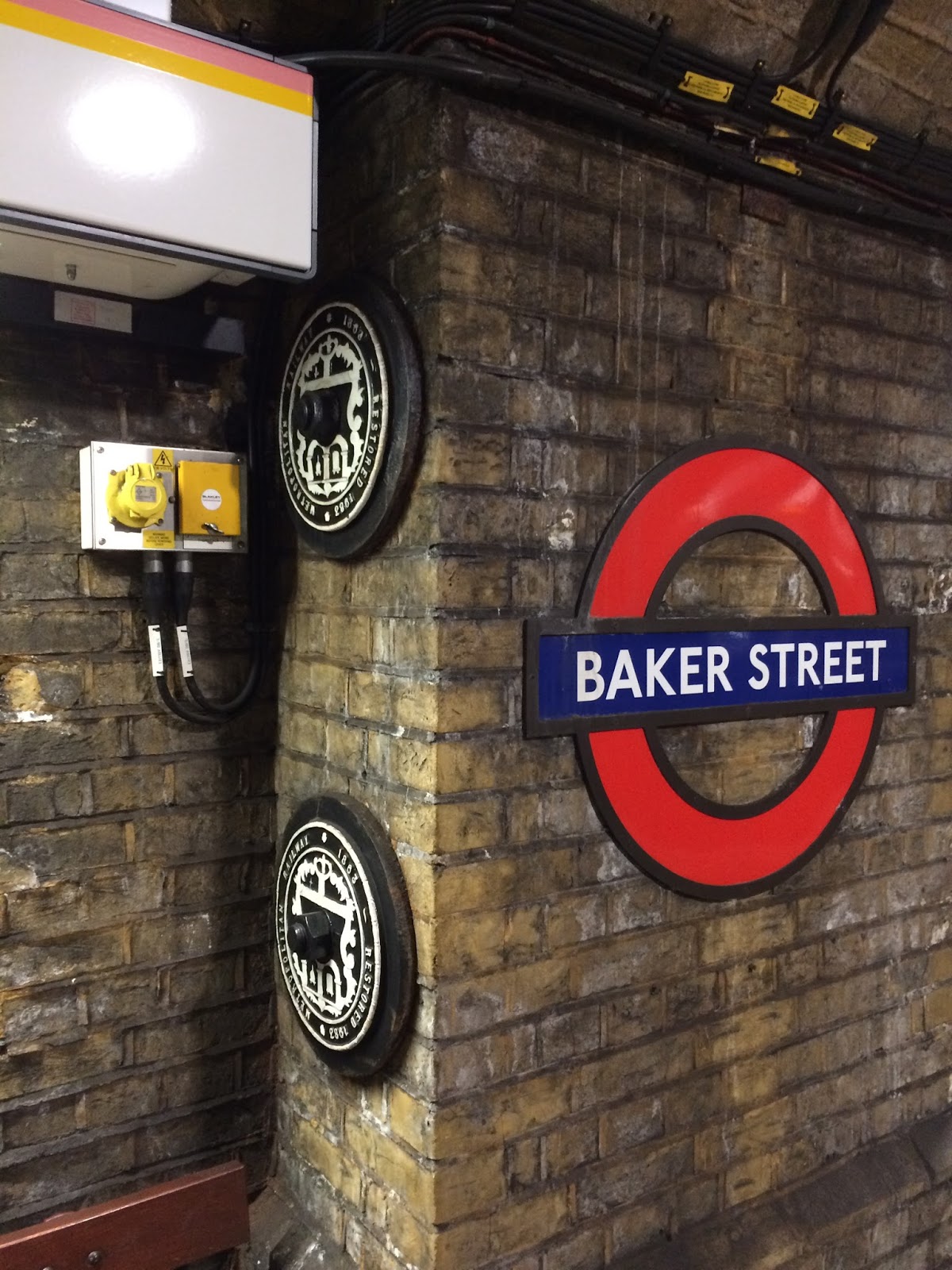
Once through customs, the first stop was at the Tube, or London’s train system, Heathrow Station, for Oyster cards (train passes), and then a crowded, hot ride to their first stop: Baker Street Station. It was Sunday, people were out shopping and enjoying the sunny warm weather, and piling into the trains.

As the they hugged the train walls, pulling luggage out of the way, the conductor urged space economy in the first English-accented voice the family encountered, “Please move into the center of the car. There is lots of space there, people look in and think there is no room, but there is …”  
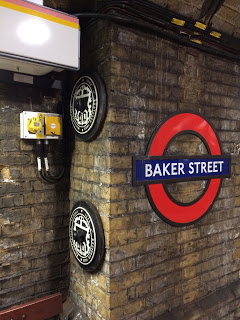
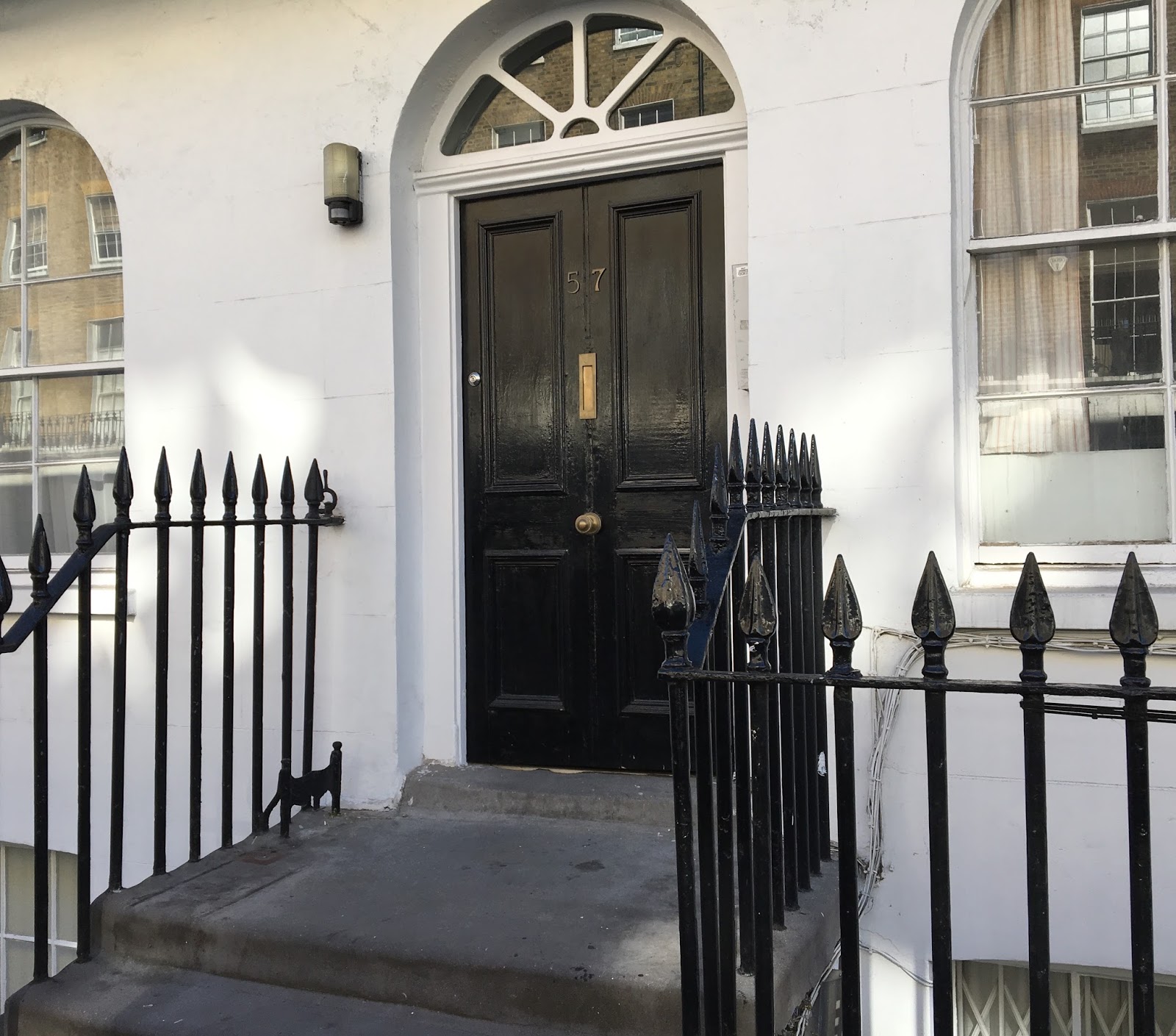
Once out of the Baker Street station, the family, dragging and tripping over their luggage,  followed B, who was following Google maps over narrow sidewalks and weird traffic patterns. They walked past the Sherlock Holmes Museum, at 221b, through rushing herds of people who looked simply annoyed at lugguge-lugging pedestrians. Out of the rush and bustle of busy streets, they came to a quiet street that would be their home for the next four days, 57 Balcombe Street. 

After a few messages to the Airbnb proprietor, a woman in a yellow and green Brazil tee-shirt came walking toward them. 

“B?” she asked. “So sorry, I stepped out to the laundry. Please come on up. I just have a few last touches and then the rooms will be ready.” 

She unlocked the large black door, swinging it open to reveal a small hallway that lead to stairs. She hurried up the stairs.  “It’s all the way to the top,” she said, not waiting for the travel-weary, heavy suitcase-dragging family. 

After struggling, huffing and puffing, they made it up the 53 steps to the top, where they waited in the bedroom for the hostess to finish her task. It was a neat, clean, adequate flat on a quiet street, with a bedroom for AJ and B, a futon for TwoSon in the living room, and a kitchenette complete with electric kettle and a tiny clothes washer/dryer. 


When the hostess left, they opened their luggage, picked things out, changed clothes and let out a sigh of relief. 

They left the flat for lunch at an Italian place, stopped at a cell phone store for a SIM card (because AJ’s cell phone, which was supposed to work (but expensively) in the UK, constantly showed the “No service” message despite re-configuring and multiple shut-downs). On the way back to the flat, they stopped in at a Tesco (a chain grocery store) for water and breakfast foods.  

“I had a notion that all English people drank loose leaf tea,” she said as she scanned the tea shelves to find nothing but bagged tea. She reluctantly chose a box of Twinnings green tea bags.
Back at the flat, the family lay down for a short nap amid the daily street noise of motorcycles, voices, cars and sirens in the distance. 

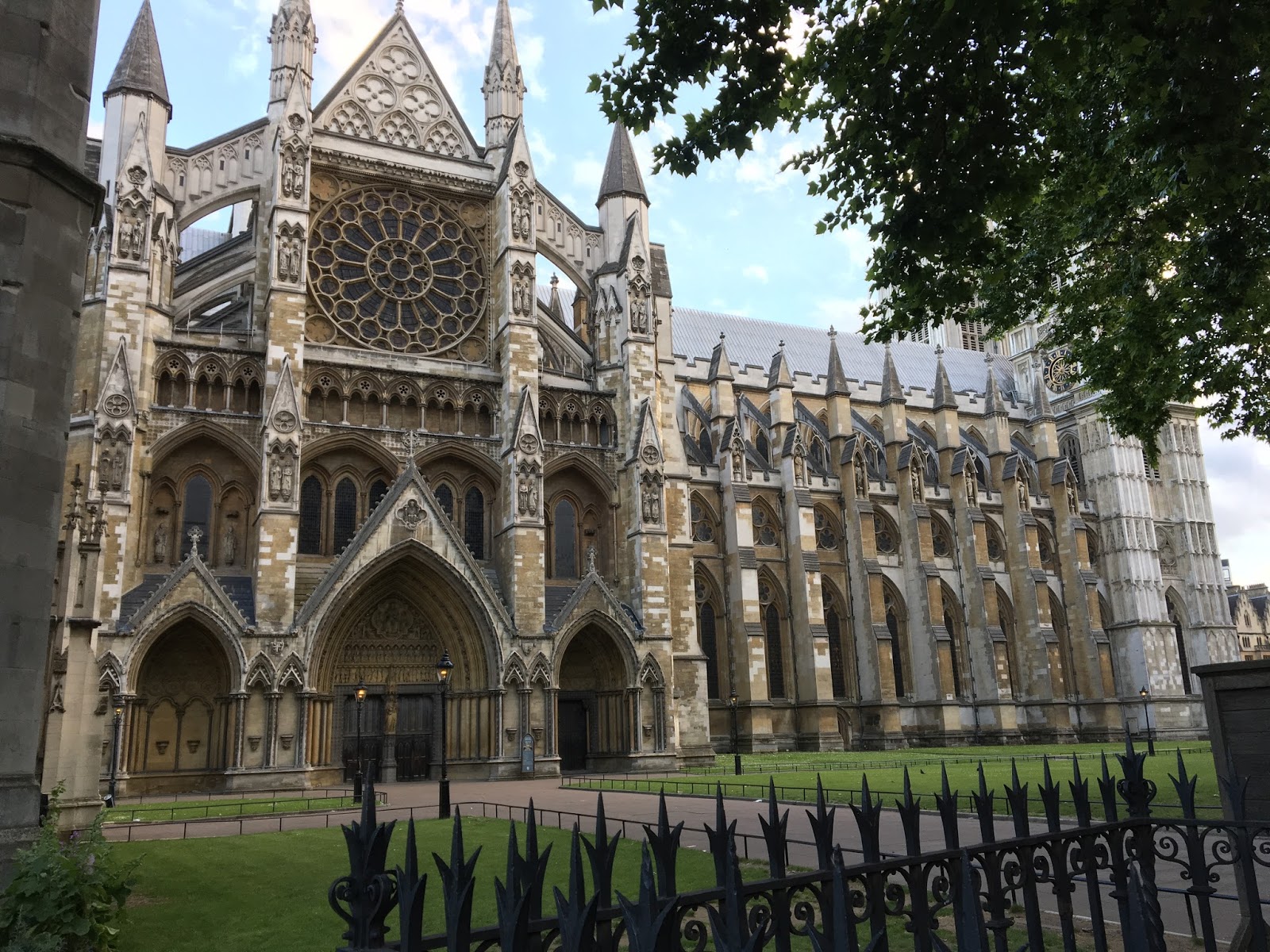
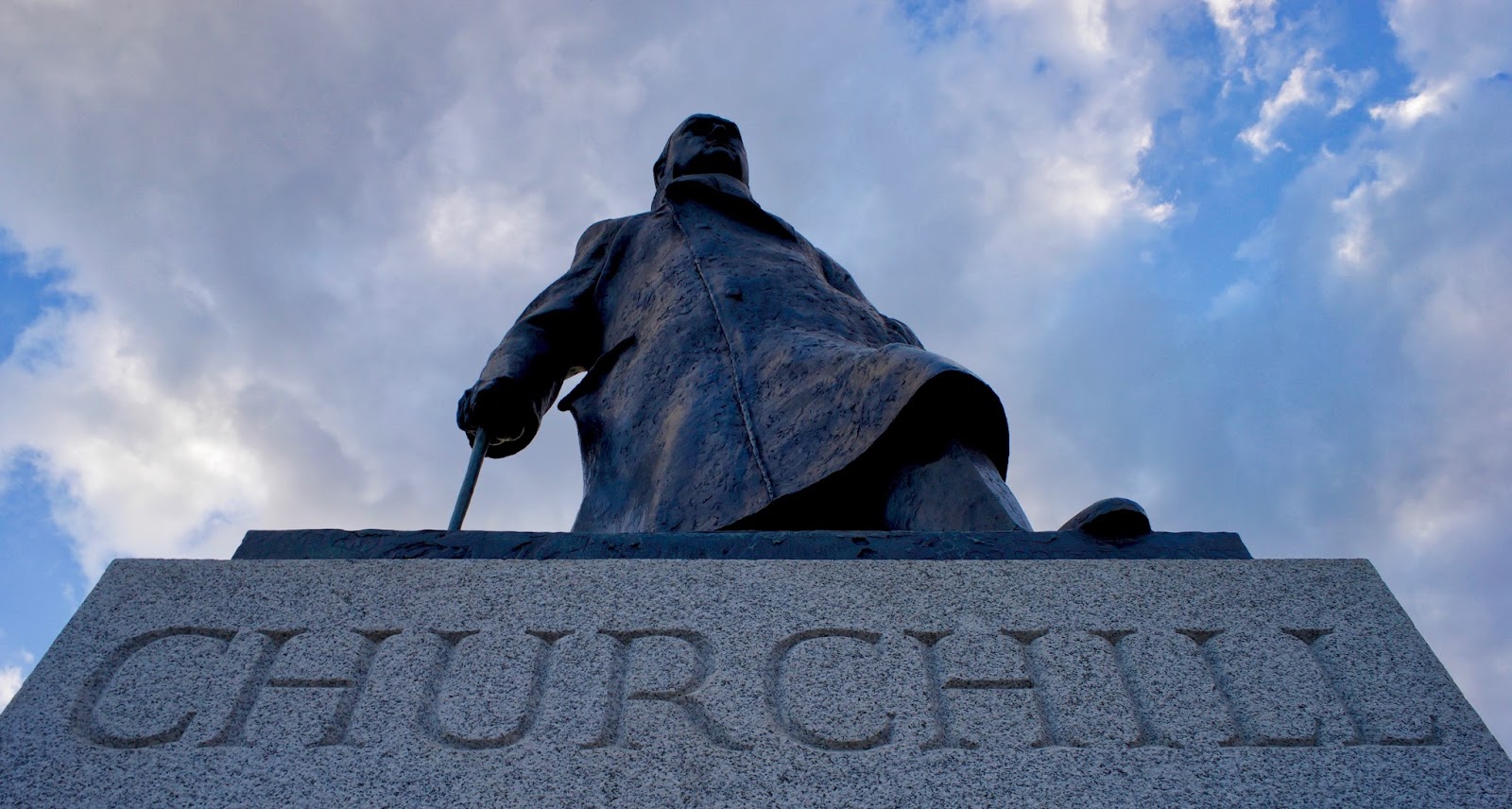
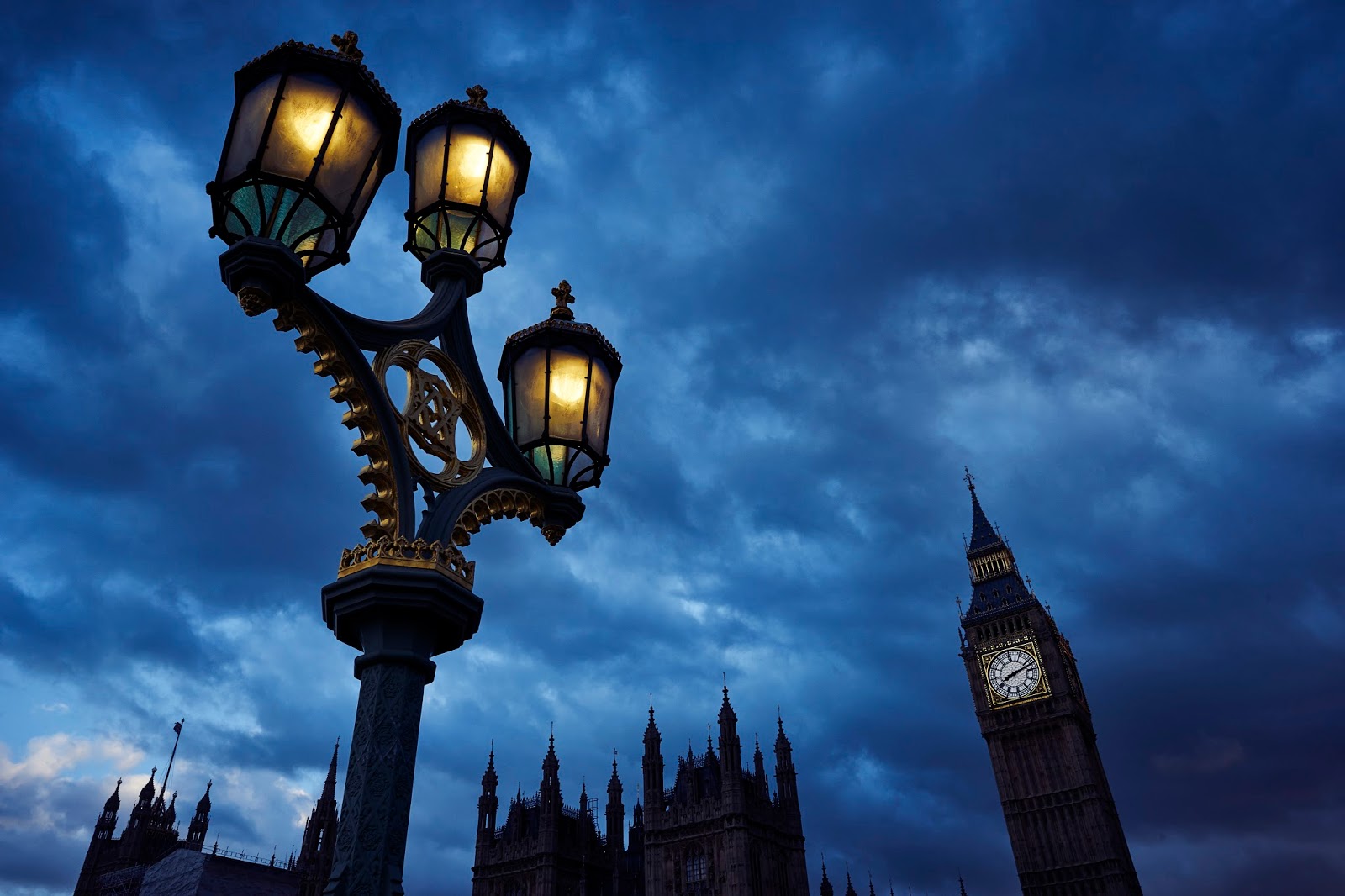
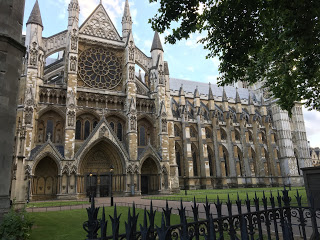
After the much-needed rest they set out for some sights, walking cautiously through the new and foreign traffic patterns around Westminster Abbey and Big Ben, where they perused a garden of bronze statues including Abraham Lincoln and a Quasimodo-ish Winston Churchill

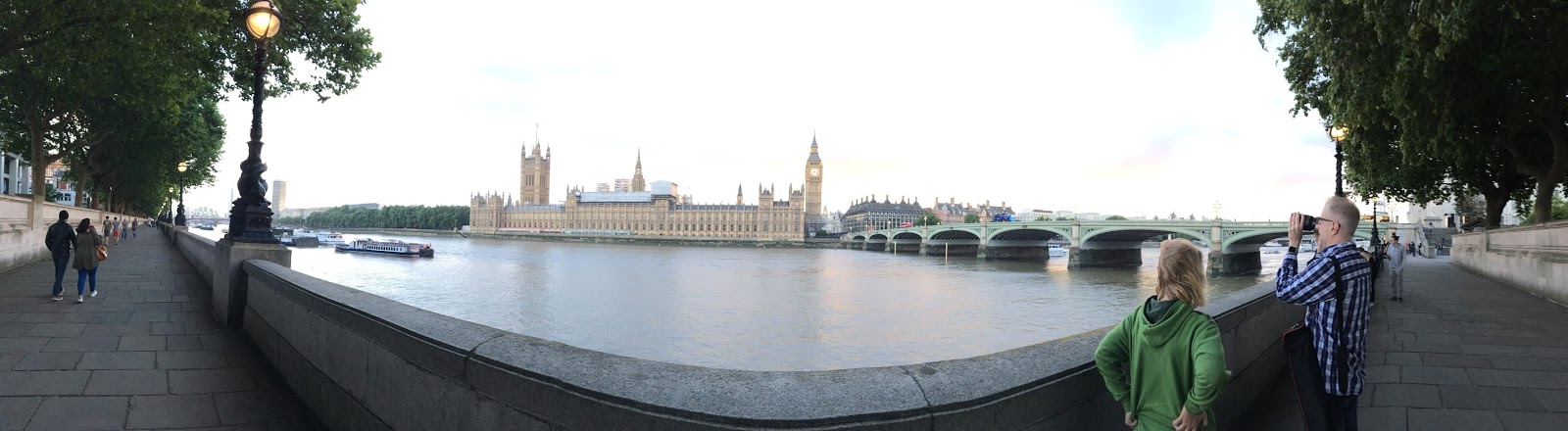
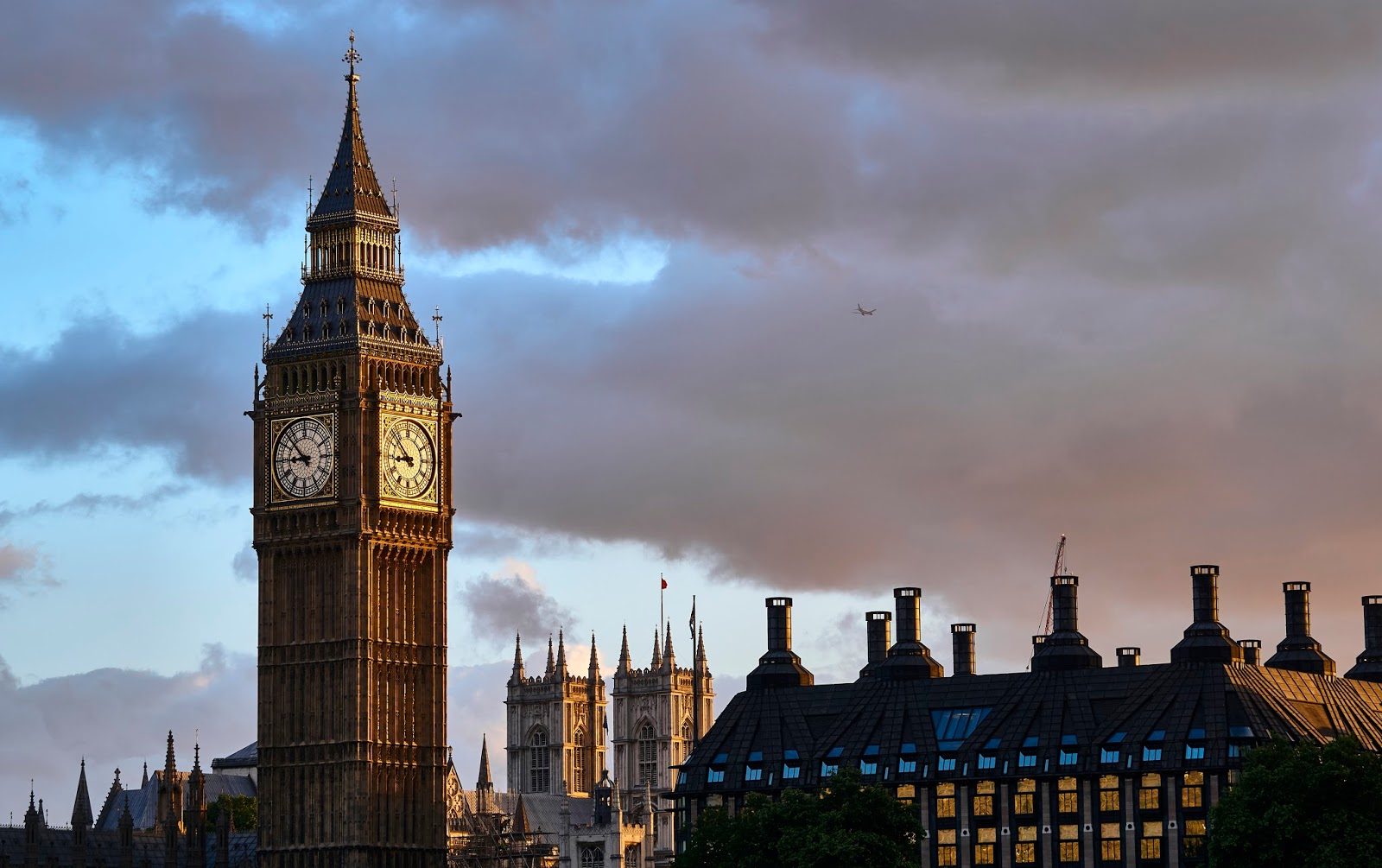
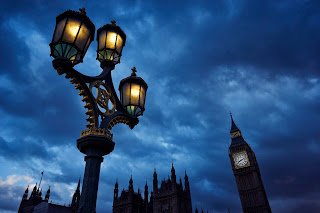
A cool breeze had blown away the heat and fatigue of the day leaving a chill in the air which became more apparent as they crossed Westminster Bridge. B framed Big Ben, the river and the sun setting on Parliament Building from the stone wall as AJ and TwoSon admired the fish-themed lamp posts. 
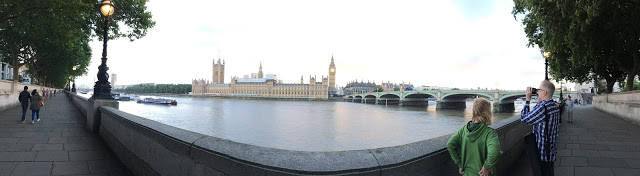

\”Dull would he be of soul who could pass by
A sight so touching in its majesty…\”**


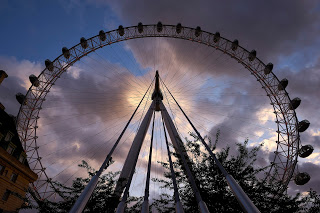
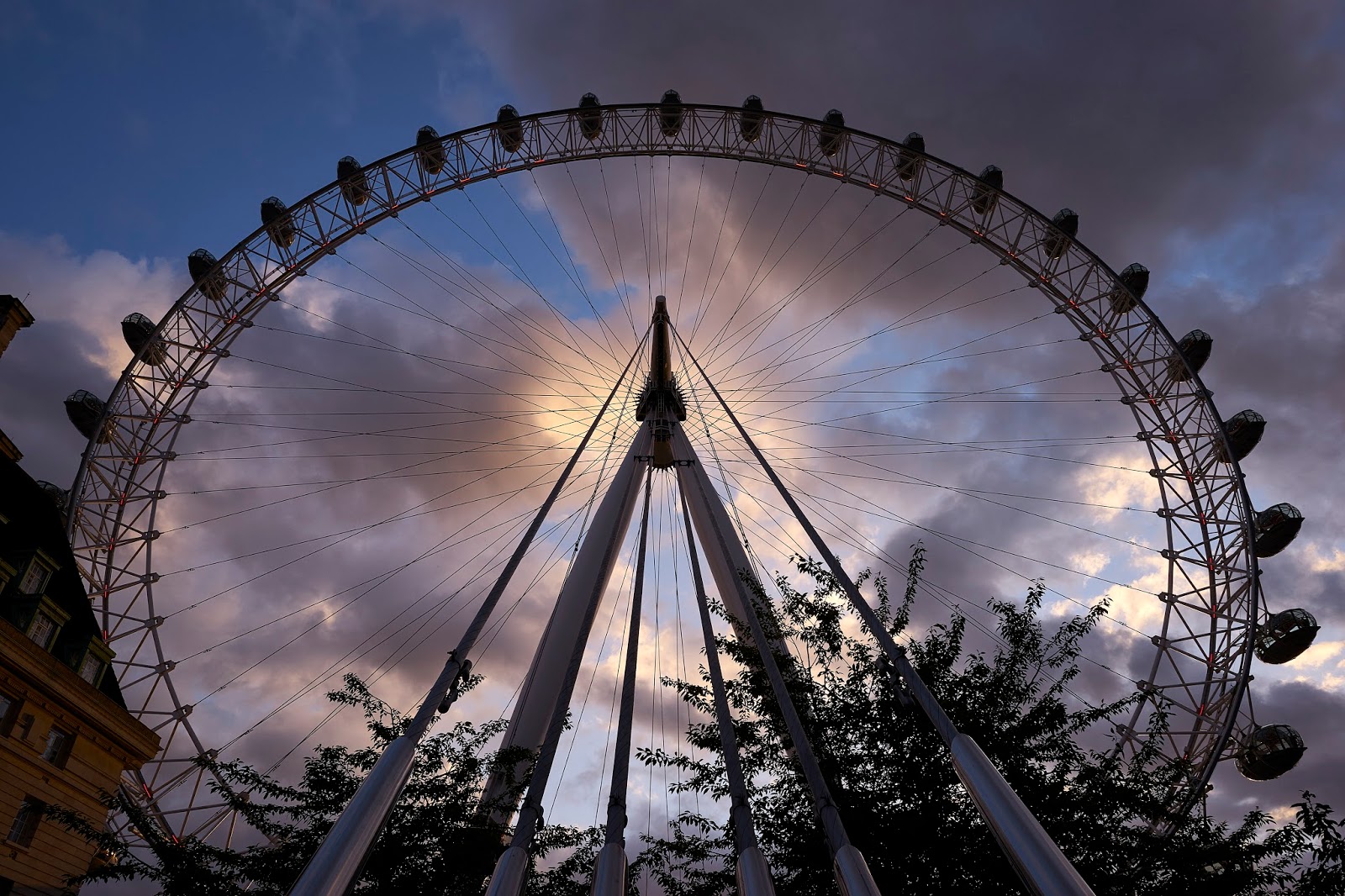
Along the river, they eyed the London Eye, then stopped in the nearby McDonald\’s for a treat. The London Eye, though a large part of the London landscape, was never especially recommended, even by the locals. “It’s overrated, a long wait, your time’s better spent elsewhere,” they said. So, the family didn’t. 

AJ and TwoSon left B to roam the area for night pictures, and they headed back to the flat. After letting Google maps lead her the opposite direction on Baker Street for a block or two, past little restaurants, travel apparel shops, curio stands and darkened cafes, AJ turned around and eventually made it back to the flat. (Google maps is difficult to follow when you are walking, or just starting your route b/c it has a hard time knowing where you are and what direction you’re heading.)
She waited by the open window three stories above the street, studying the Agenda and listening for B, not trusting the messaging on their new UK phone number. In an hour or two, she heard footsteps below, looked out, and saw B. \”I\’ll let you in,\” she called from above.  

106 steps later, (up and down), AJ and the rest of the family settled down to end their first typical-touristy day in the United Kingdom. 

*The Agenda. With a life of it’s own, The Agenda is the itinerary, carefully and painstakingly put together by B, with input from AJ and TwoSon. It contains plans, schedules, directions, pictures, insider tips, reservations, tickets, confirmations, photographic information, astronomical charts and so much more. It was and always will be part of the family when they travel.

** \”Composed upon Westminster Bridge\” a poem by William Wordsworth

A Note From the Author


“Yet all experience is an arch where through

Gleams that untraveled world, whose margin fades
For ever and ever when I move” 
Ulysses by Tennyson, lines 19-21


Let me step out from behind the curtain of third person point-of-view for a brief moment and speak without the filter.  


This is challenging … all of it : the mining every event of every day of every trip, for pieces of interest I can sew together to make a theme; the writing it all down; the translating first hand experiences into third person by trying to hop out of my head and see the big picture; the scribbling in my notebook on swaying trains, turbulent planes and stop-and-go automobiles; the stitching together chaotic notes and incomplete thoughts to compose a meaningful essay; the choosing pictures that accentuate the story. 


But I love it. It’s not the most riveting thing I write (in my narrow opinion) but it is challenging, meaningful and worthwhile.

I have chronicled two family trips so far and it has now become compulsory for me to do so. To go somewhere, to experience a place and time so different from my  home in an organized manner and not chronicle it, record it, think about it, let it change me in some way, would seem like a huge waste of time and resources.
Travel helps me learn about myself. It forces me to react to challenges, to new sights, new tastes, new people. Travel with loved ones helps me learn more about them and provides ample practice of conflict resolution and problem solving, like the problem of driving on the left side of skinny treacherous, high-speed roads. 

“Do we have a neighborhood pub?” I asked myself upon coming back to our room from Cuilfail Pub in Kilmelford, Argyll, Scotland. It surprised me that I had to mentally walk a long way back to Michigan to find the answer. With my mind immersed in Scotland’s landscape and driving and houses and castles and beautiful language accents, it was as if Michigan lay deep in my memory and getting back to it took a lot of thinking. That is what I love about travel. For just a little bit, you are not yourself, not the same old, you get to live a different life. But you still have the familiar, and get to go home again, but as a slightly different person. 

By changing your point of view, your scenery and your comfort, travel (even to the next county over) changes you, just a little or a lot, depending on how much you let it. 

I find that writing does the same. When you change your point of view, when thoughts become words, when actions and objects are cemented in ink or images, it changes the writer just a little bit. When \”I\” must become \”she,\” it changes you even more. 

In his book, Man\’s Search for Meaning, Viktor Frankl lists three things that make man\’s life meaningful. The first is to create a work or do a significant deed. The second is to experience something or encounter someone. The third way to create meaning in life (and which Frankl\’s book emphasizes, as he was a Nazi Concentration Camp survivor) is to rise above oneself, grow beyond oneself, thereby changing oneself. 

For me, travel does all three. I create travel essays based on my trips, I experience (as you may have noticed) sometimes mercurial moods and emotions, while experiencing the new places I go to and thirdly, I am forced to rise above myself to do some of the things travel encompasses. 
I am the caution side of the equation in the force of these annals. If it were up to me, we would rarely wander outside our humble state of Michigan, keep our feet planted firmly on the ground and never presume to wander into another country. That’s why the planning usually (always) falls to B. 

A friend noticed that B did a lot of the planning, implying that I didn’t get to choose.  Well, there is no injustice here, I assure you. He doesn’t have 100% say in the places we go, he just has the more outgoing, organized temperament and he knows where to go for great pictures. For me, there is always a challenge, a call to courage and fortitude on my part, as well as gratitude and love. I am more than willing to go on these adventures and scribble and stare as I wait for him to snap pics. 

My next adventure takes me and most of my family over the Atlantic, to England and Scotland, where, I hope I have chronicled the days well enough to make for an interesting read. I know the pictures will be spectacular, B took them. 


As always, thanks for reading. 

Below and Above; Darkness and Light


April 8, 2016
The morning greeted the family with a wet grey grimace, but it didn’t matter, where they were going, the rain couldn’t follow. 

For the last time, they gathered the luggage, stuffed it full of dirty clothes and underutilized, just-in-case items, tidied up the house and packed into the rental car, with one last look at their jungle abode. 

A few miles down the highway, over dirt roads eaten up with puddles of surprising size and questionable depth, they pulled into an unassuming driveway, ending in a small unimpressive house. This was the start of the Kilauea Caverns of Fire Tour. Donned in raincoats, in the house they were greeted by a friendly dog, happy to see them, and begging for affection. When another family joined them for the trek, they were all issued hardhats, gloves, flashlights and instructions then followed their intrepid tour guide in a line, to the wonder that lay so close, but hidden. 
The outside of the lava tube.


The other family in the tour was a husband and wife with a small child and a grandpa and a grandma. As they started down into the lava tube, AJ and family filed in behind the older couple, waiting patiently as the grandmother tremulously and with much support stepped down what seemed to AJ like simple steps, inconsequential rocks and small ledges. 

“I’m taking a walk every day for the rest of my life,” thought AJ. “I never want to get old and feeble.” She wanted to be able to move, explore and enjoy God’s creation even in her golden years, and not be timid and fragile as the grandmother in the group seemed to be. 

It was a vain desire. Age comes to everyone, she knew, and she couldn’t avoid it. But with care, effort and action, she might be able to put off immobility until the very last. 

A root growing into the cave.

A lava tube is essentially a cave made from flowing lava, the outside of which cools before the inside. When the lava stops flowing, it leaves a hollow cave-like structure. 


The sweet, damp smelly dog followed along, begging attention from the group every time they stopped. As they walked, ducking under low ledges of lava, they shined lights on the walls of the cave. They were surrounded by dripping, black lava walls, with fissures and ledges. The tour guide explained that there was not much animal life in the caves, and no bats, because bats rely on echolocation to “see” and as the lava rock absorbed their signals rather than reflected them, it was difficult for bats to “see” in the cave. It was the same for humans.  

When they reached a place where the tunnel narrowed significantly, they took an opportunity to experience real darkness. The whole group turned off their lamps and … nothing. There was nothing. Darkness muted and muffled AJ’s sense of being. No light passed through her eyes. It was darker than the darkest night, darker than eyes closed in a closet. A darkness that transformed “being” and turned one’s attention to the only thing that could be sensed: oneself.  Only sound and touch were left, and what those senses registered was not encouraging. 

Relief came as the guide turned on the flashlight again. The darkness was awe-inspiringly powerful, isolating, disorienting and shocking. Though in itself not bad or evil, AJ understood through experience why “darkness” was used as a metaphor for ignorance, want, evil and wrongness.  
 
They stopped at a Taco Bell for lunch, then sat admiring the step-like falls at Boiling Pots a while, waiting for their next adventure. 
They circled Hilo International Airport twice, trying to figure out where to go for the next and last stage of their journey. They finally parked and searched for the Paradise Helicopter Tours office. After being briefed on safety, they climbed into a doorless helicopter and took off. 

After surveying green mountains and myriad waterfalls, they stopped at home base to re-fuel and took off again. AJ and TwoSon, who now was in agony of what turned out to be very bad strep throat, sat in the back shivering in the chill wind. B and OneSon sat in the front. 

As they flew over the volcano, the temperatures warmed up and for a moment AJ stopped shivering. Below, molten lava churned and spurted, turning black as it cooled. Trees at the edge of live rock flow burned, making a desolate, but fascinating scene.


All during the helicopter ride, flying through the air to specific, flight-inspired songs, AJ’s hair whipped and whirled so that by the time they landed, her hair was in the first stages of becoming dreadlocks, and she wouldn’t have time to comb them out until 24 hours later, when she landed back home in Michigan. 


Dinner was a hurried meal at a fancier restaurant, accessed with uncommon ease, food served and eaten in an hour, then they went to the airport to turn in a tired, scratched, ice-creamed rental car and catch the flight home. 

But not directly home. First to LAX. The family was bleary-eyed, exhausted, bereft of awe and interest in what was going on around them while navigating airports, luggage lugging, check-ins and faint, hopeful glimmers of dreams of home. 

Though she moved zombie-like and exhausted through the last stage of the journey, she preserved the awe and wonder, inky words across pages of her notebook, to be sifted through and re-lived in the next year. Trusting that the words would make her trip much more valuable and filled with awe. 

Thanks for reading!


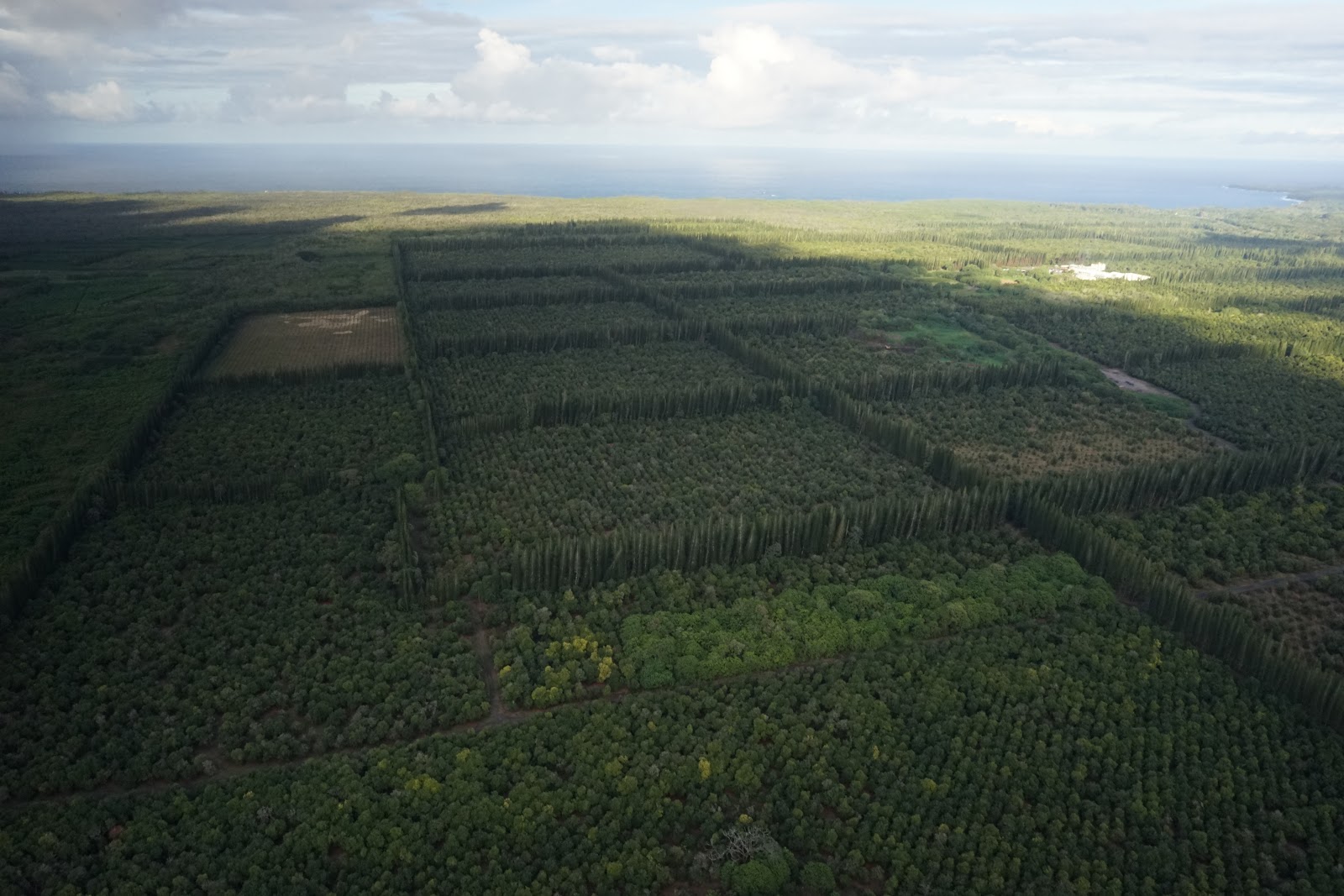
Macadamia nut groves


What the Light Uncovered

April 7, 2016
Thursday morning seeped in through a light, misty rain. 

After another slow morning the family drove back to Volcanoes National Park for a few smaller sights and shorter trails. 

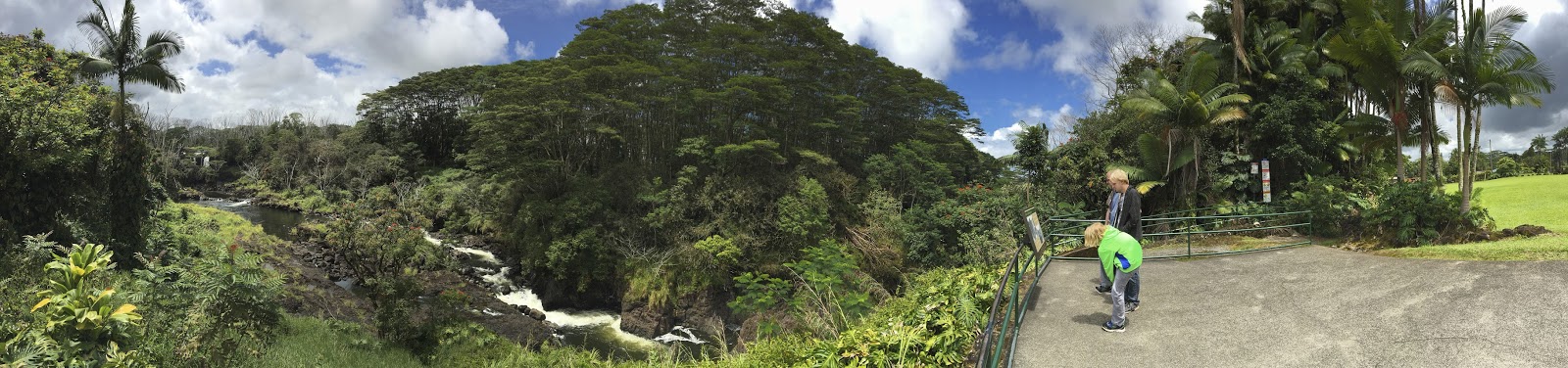
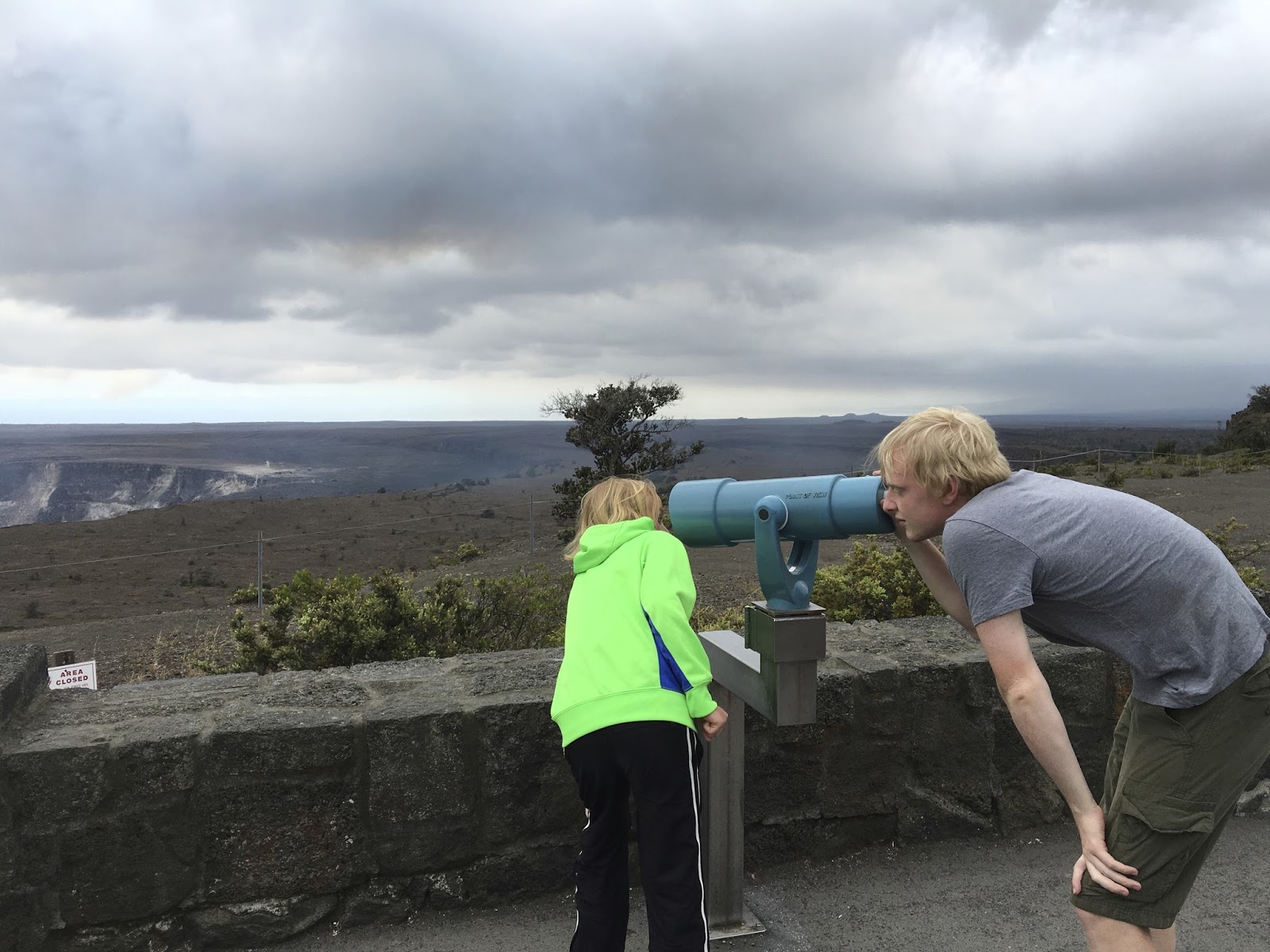
Their first stop was at the overlook they had visited on their first visit to the park (April 4), when darkness hid everything but the glowing volcano in the distance. The morning light transformed the place, uncovering what had been hidden on their first visit. 

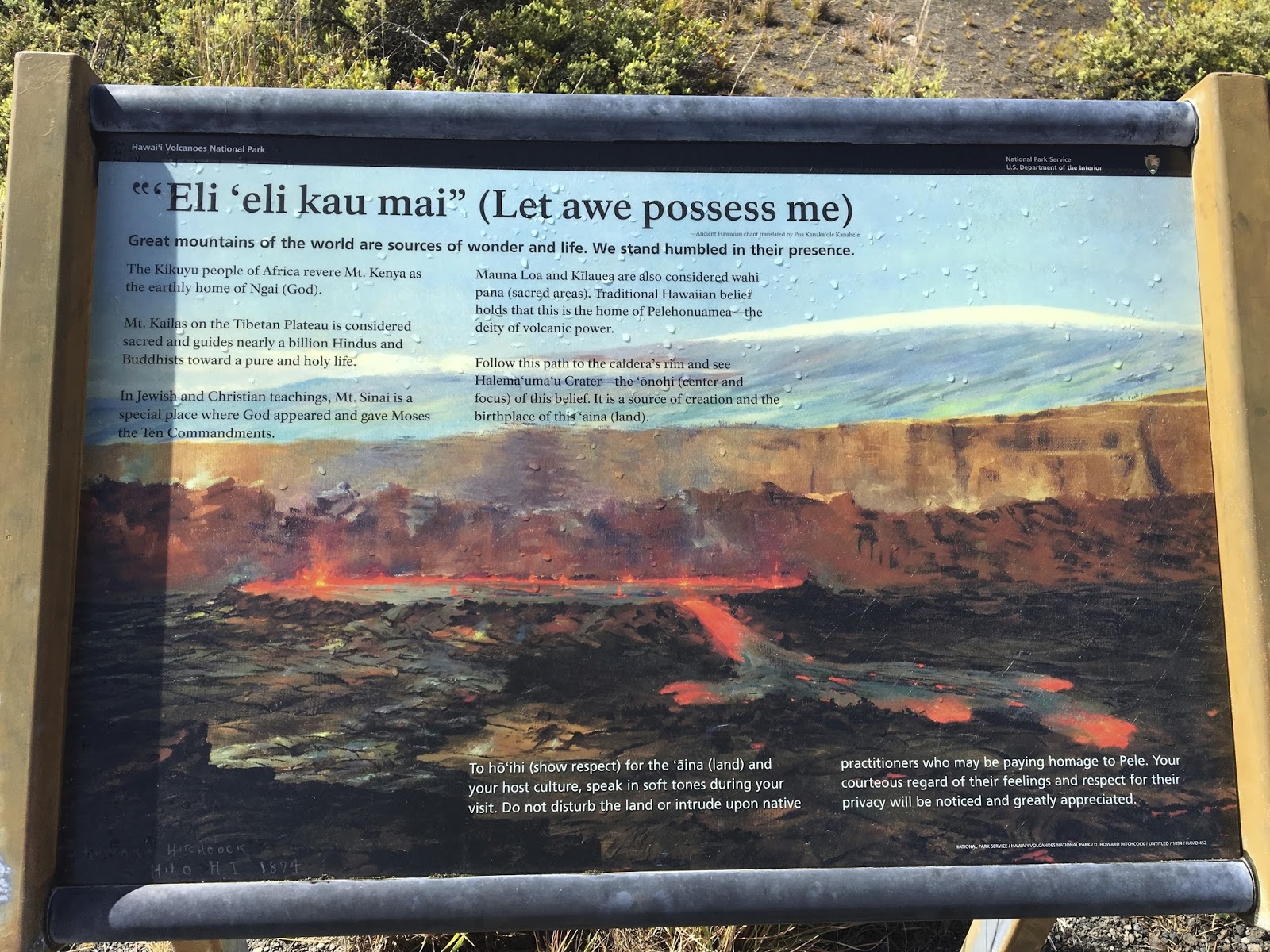
AJ walked up the path and read the first informative plaque, planning on a quick scan, but she stopped in her tracks, smiling at what she found. “Let Awe Possess Me” was the title on the sign describing how people from all ages, backgrounds and religions felt awe in the presence of mountains and the more obvious feats of The Creator.

Awe and wonder had been haunting her for days, though she couldn’t to get a good grip on them, but now, with the smoking crater in the distance, and the enlightening plaque in front of her, it sank deep into her soul, colored her views with delight and thanksgiving to Him who made her. 


Details popped. The sound of stones grating under her feet was distinct; the little cages around protected plants drew her curiosity. Plants and trees were more than green nothings now, they were individual organisms with unique flowers, leaves and purpose. The glowing volcanic jewel of the island meant something, it wasn’t just a burning hole in the ground. It stood as a heart wrenchingly beautiful and formidable part of creation. God’s signature saturated  it, and she could see it now. 

Come, Behold the works of the Lord, how he has brought desolations on the earth. Psalm 46:8

To man, it looked like desolation but, \”… my thoughts are not your thoughts, neither are your ways my ways, declares the Lord.\” Isaiah 55:8 

As the family took in the view from the crater overlook for the last time, AJ’s mind swirled and swam in questions, questions she welcomed and jotted down in her travel journal. 

“What is awe and how does it come to be? Is it birthed in questions that don’t appear to have answers? Wonder is awe. In a way, it is an enjoyment of not-knowing, of letting mystery reign over you without pushing back. To keep a container full of questions dear to your heart and add hints you come across every now and then? Wonder sets you down content in front of natural vistas to stare for hours and breathe in the questions.”

“Wonder is a hopeful looking forward to revelation, a slow eking out of hints that may or may not build to an answer, but also a patience and contentment, a savoring of the question, a respect for mystery.” She scribbled these disconnected thoughts as she walked back to the car and rode to their next destination. 

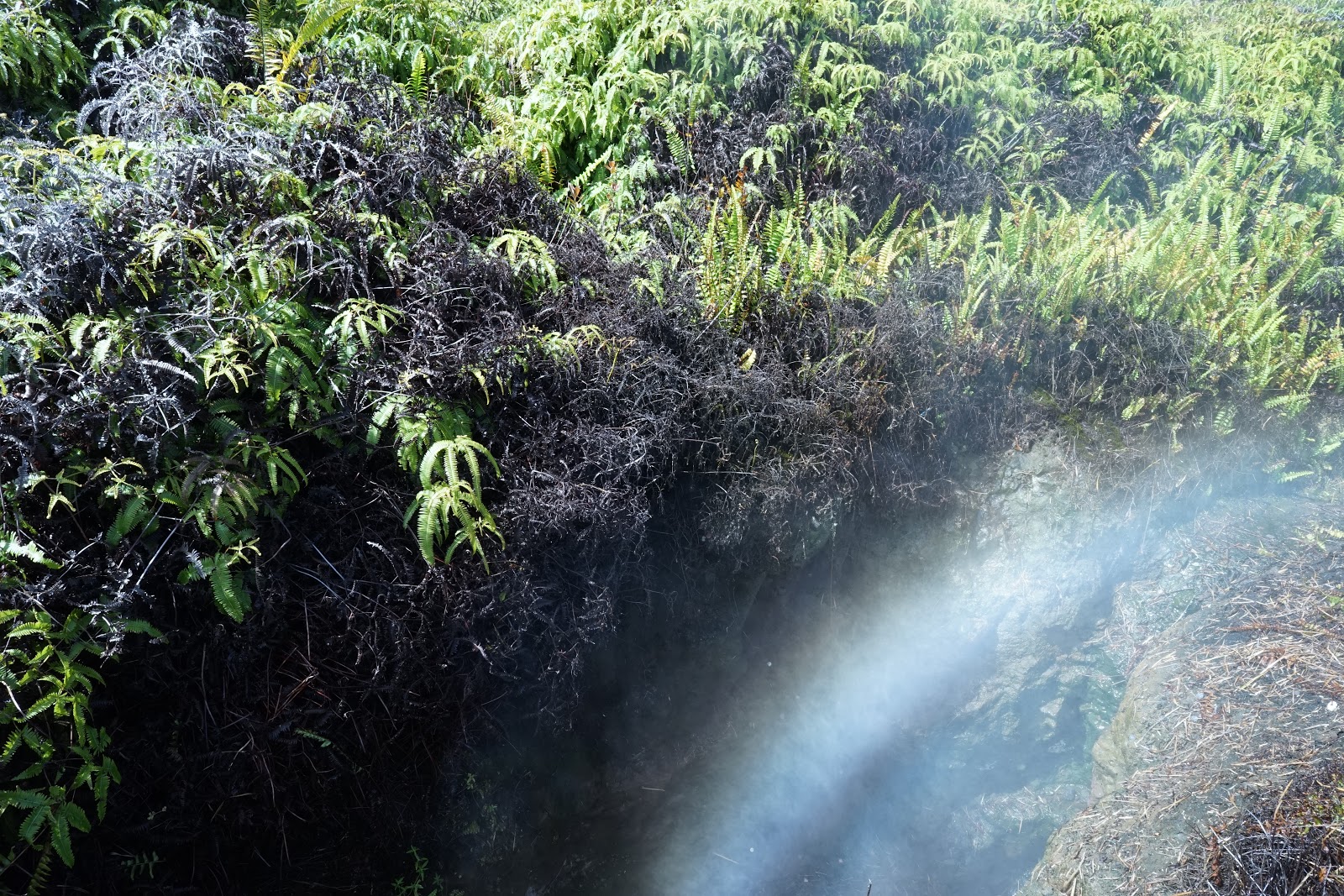
A short trek lead the family amongst steam vents: humid, hot air rising out of holes in the earth from some mysterious depth. B spent half an hour trying to get good pictures of the phenomena, but couldn’t seem to do it. The steam was ghostly, camera shy in the strong sun. 

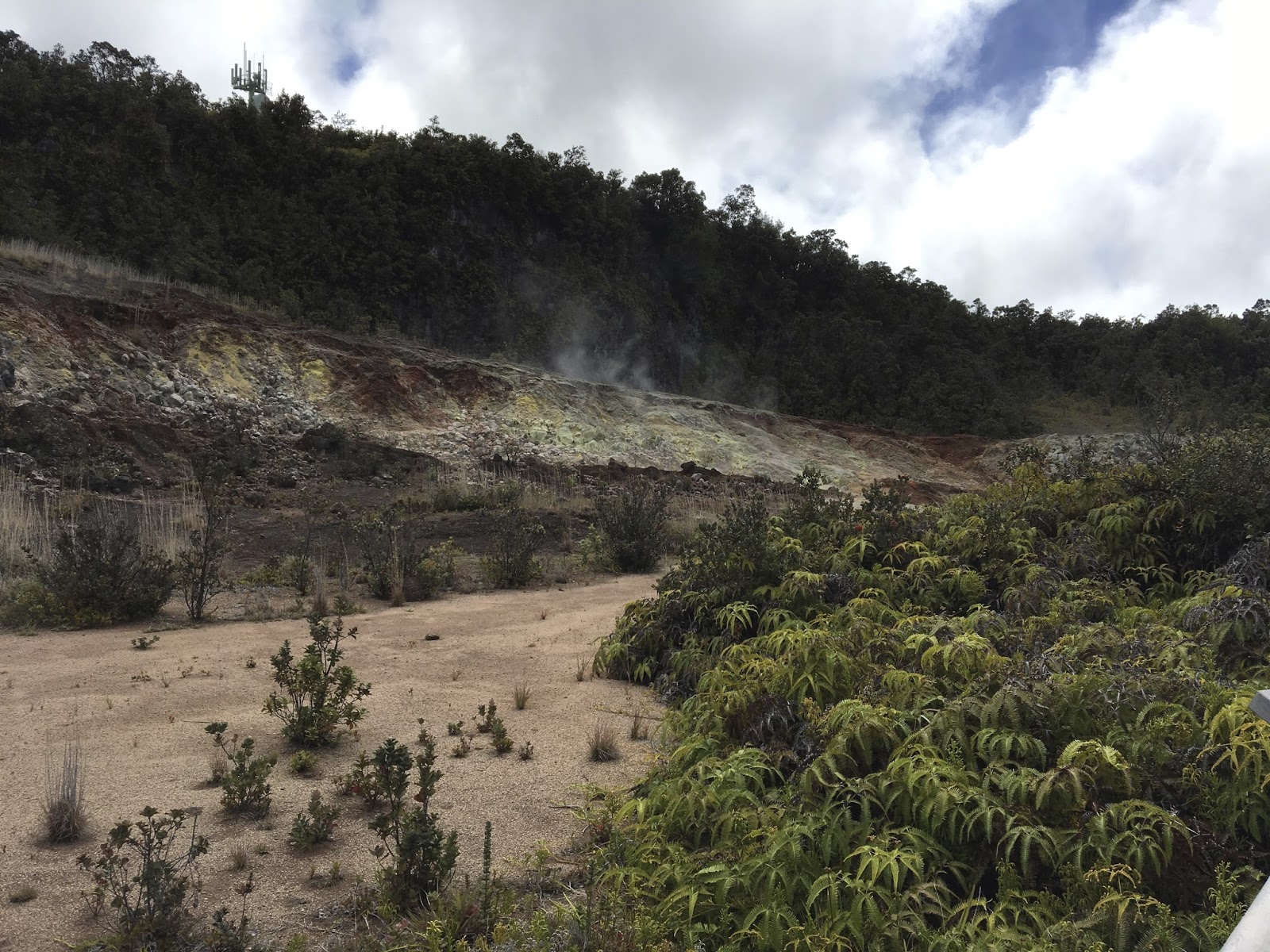
They followed Ha’akulamanu (Sulphur Banks) Trail among sulfuric, scorched earth ablaze in strange mineral colors. 

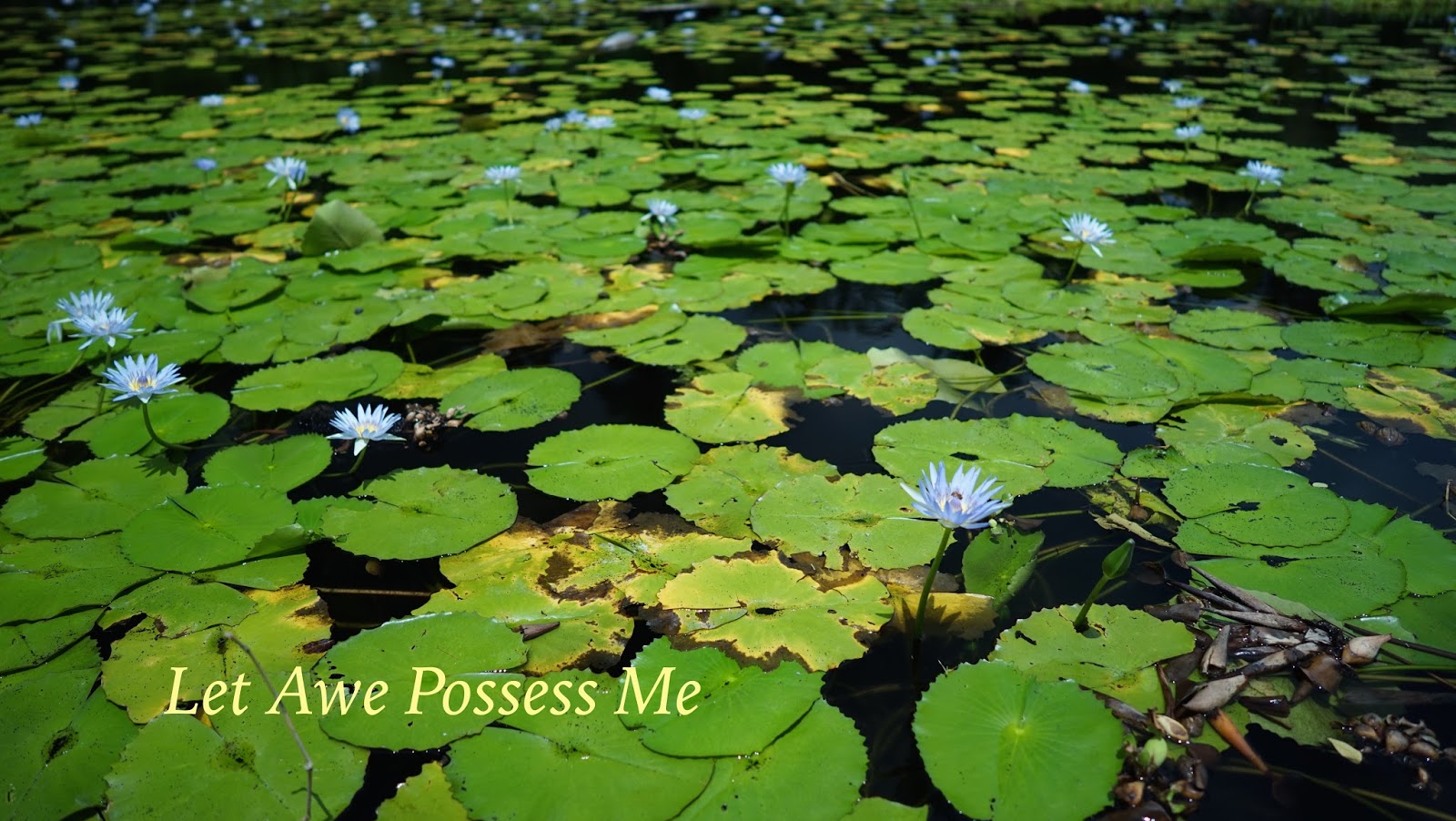
The next leg of their island exploration took them out of the national park, to the southmost part of Hawaii Island. A short stroll on the black sand of Punalu’u Black Sand Park afforded them a glimpse of a sea turtle struggling onto the beach from the water, and then a pensive pause at a water lily pond. 

Continuing south along Mamalahoa Highway, they stopped at Punalu’u Bakery, which specialized in Hawaiian Sweet Bread. It hails itself as the south-most bakery in the U.S., which provided lunch, and the most heavenly fresh-bread baking smells.

The ride to their next adventure rivaled the final destination. They turned off the highway onto South Point Road, to a dirt parking lot surrounded by what looked like ruins of modern-day buildings. The parking lot was filled with makeshift refreshment stands and big-wheeled four-wheel-drive trucks. For a price, locals with capable trucks will drive you to the green sand beach for a look-see, or you can hike it (about 5 miles roundtrip).

Not long after getting out of the car, they were approached by a local man offering them a ride to the green sand beach. AJ sat in the front of the double cab, beat-up truck, and B and the boys jumped in the bed which was equipped with bars in the bed for passengers to hang onto.

In between grinding gears, crawling over rocks and straddling deep gullies, the driver talked about the area. The 4-wheel-drive-only rule was not overcautious. The roads, if one could call them that, would chew up a normal truck and spit it out bent, scraped and ruined. The high-lift 4-wheel trucks the locals used looked pretty bad as it was. 

Green-ish Sand

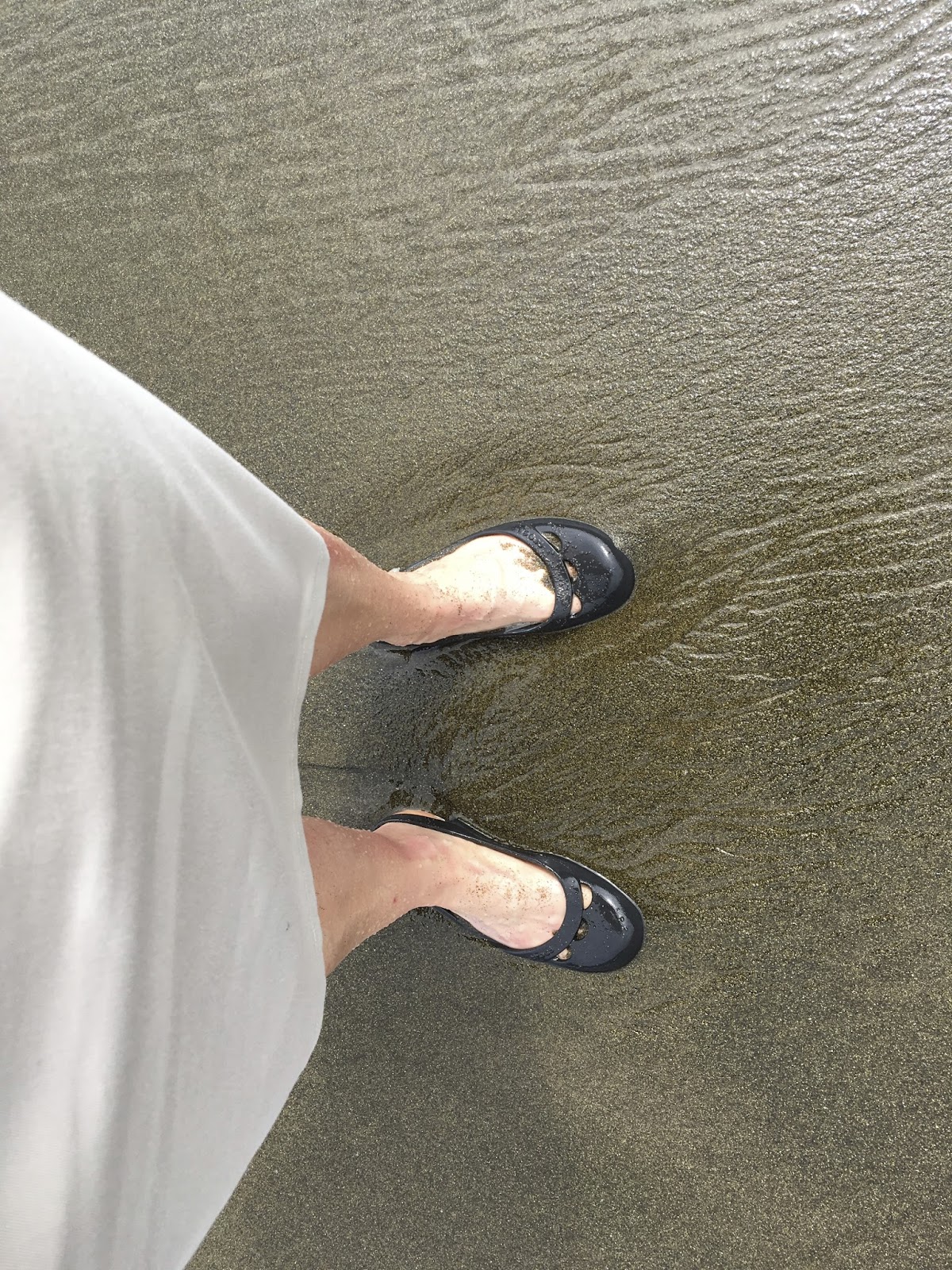
After bouncing and scraping through a dusty winding labyrinthine knot of a road (the locals know the best routes to the beach) the truck stopped at the top of an incline that ended in a greenish-sand beach and the ocean. The driver allowed 1/2 an hour of seeing and sanding at Papakolea Green Sand* Beach. While wading into the surf, an aggressive wave caught AJ off guard, drenching her bottom half. To keep from soaking the truck seat, she sat in the truck bed on the way back. 

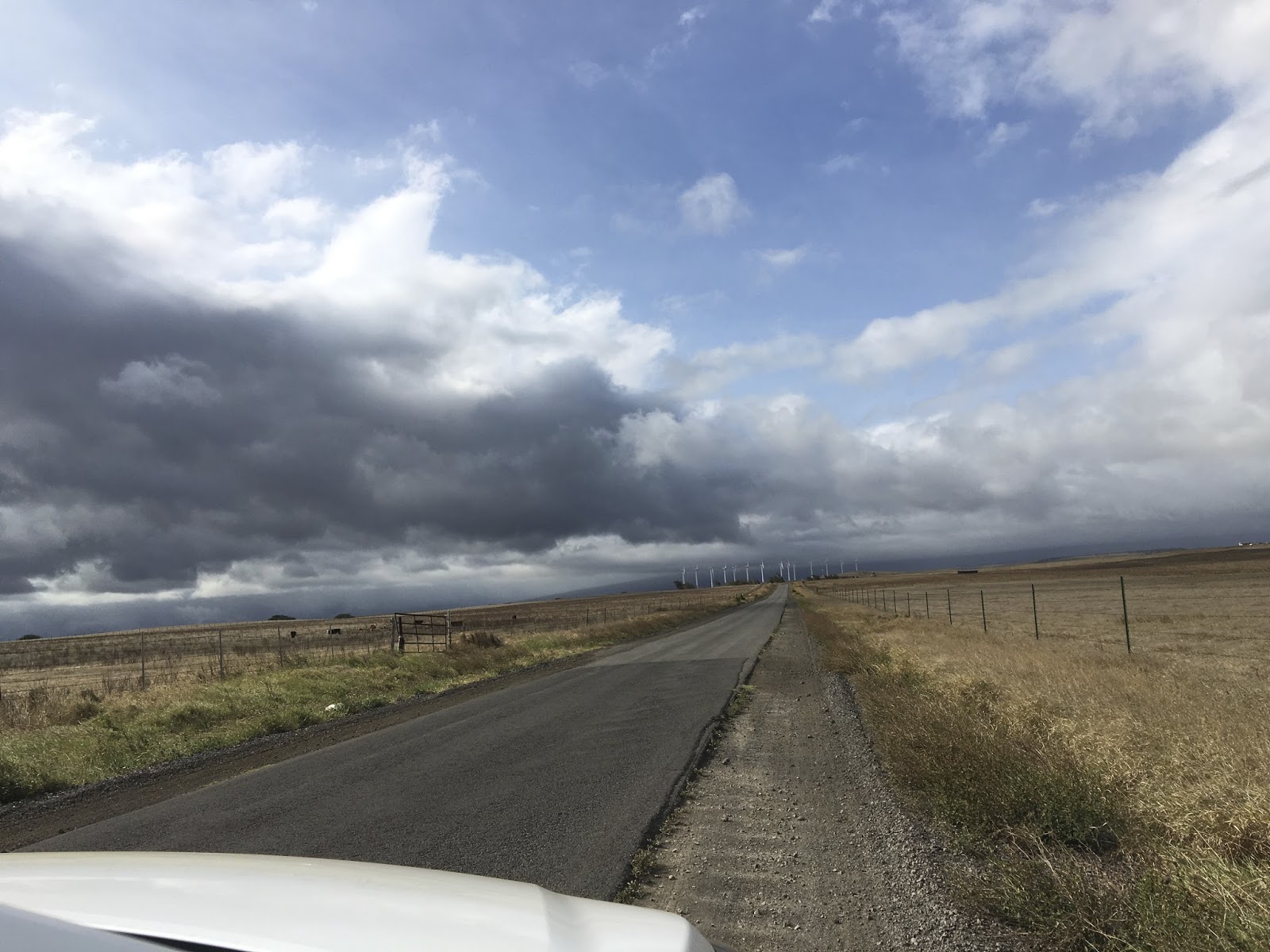
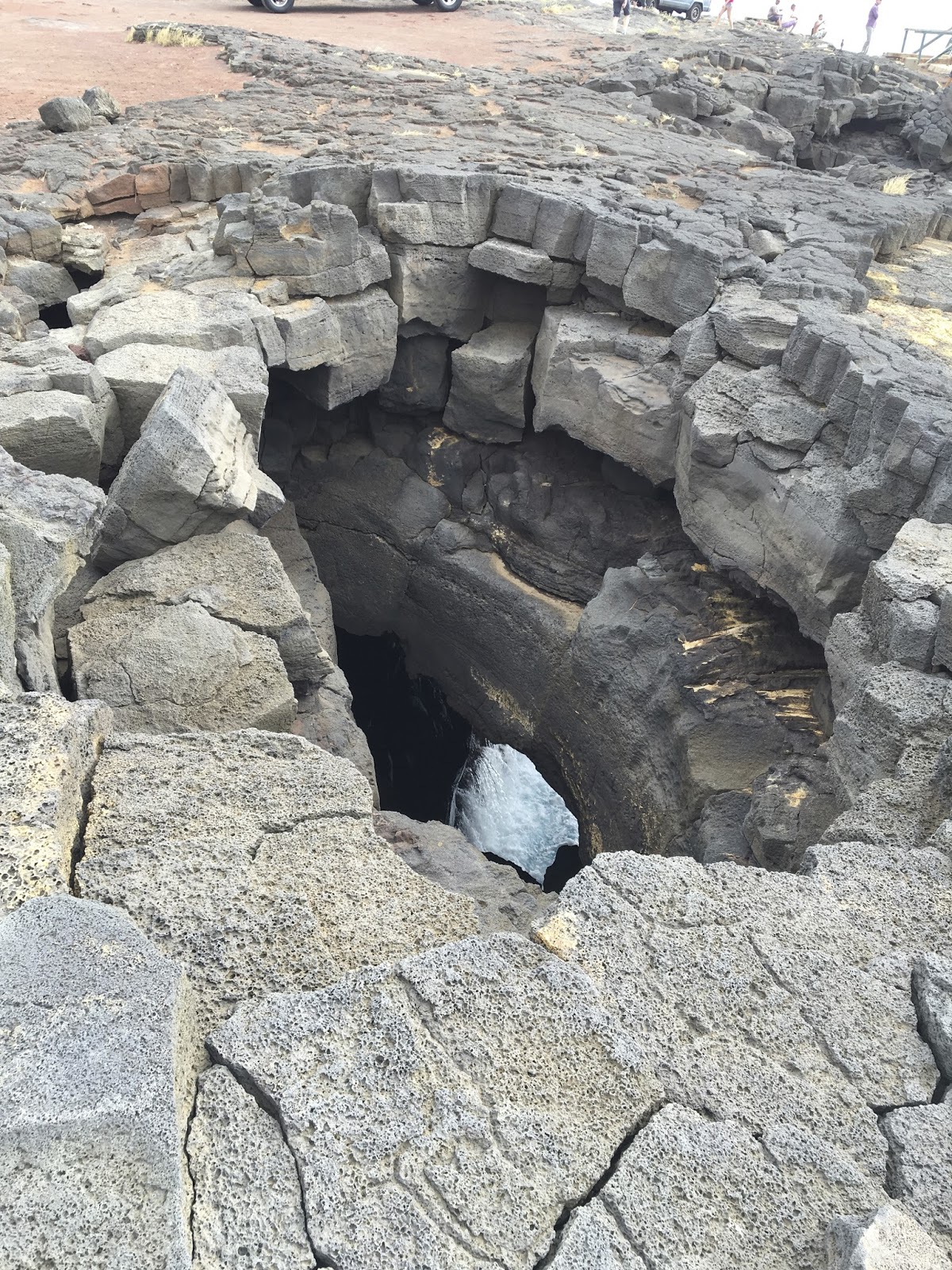
Next, they drove further south along South Point Road along wind-swept pastures, homesteads, and wind turbines to Ka Lae or South Point (the southern-most point of the US) and walked along the hole-pocked rock cliffs, where fishermen sat watching their poles and vendors sold wares out of the back of their vehicles. AJ bought a necklace, bracelet set of green rock.
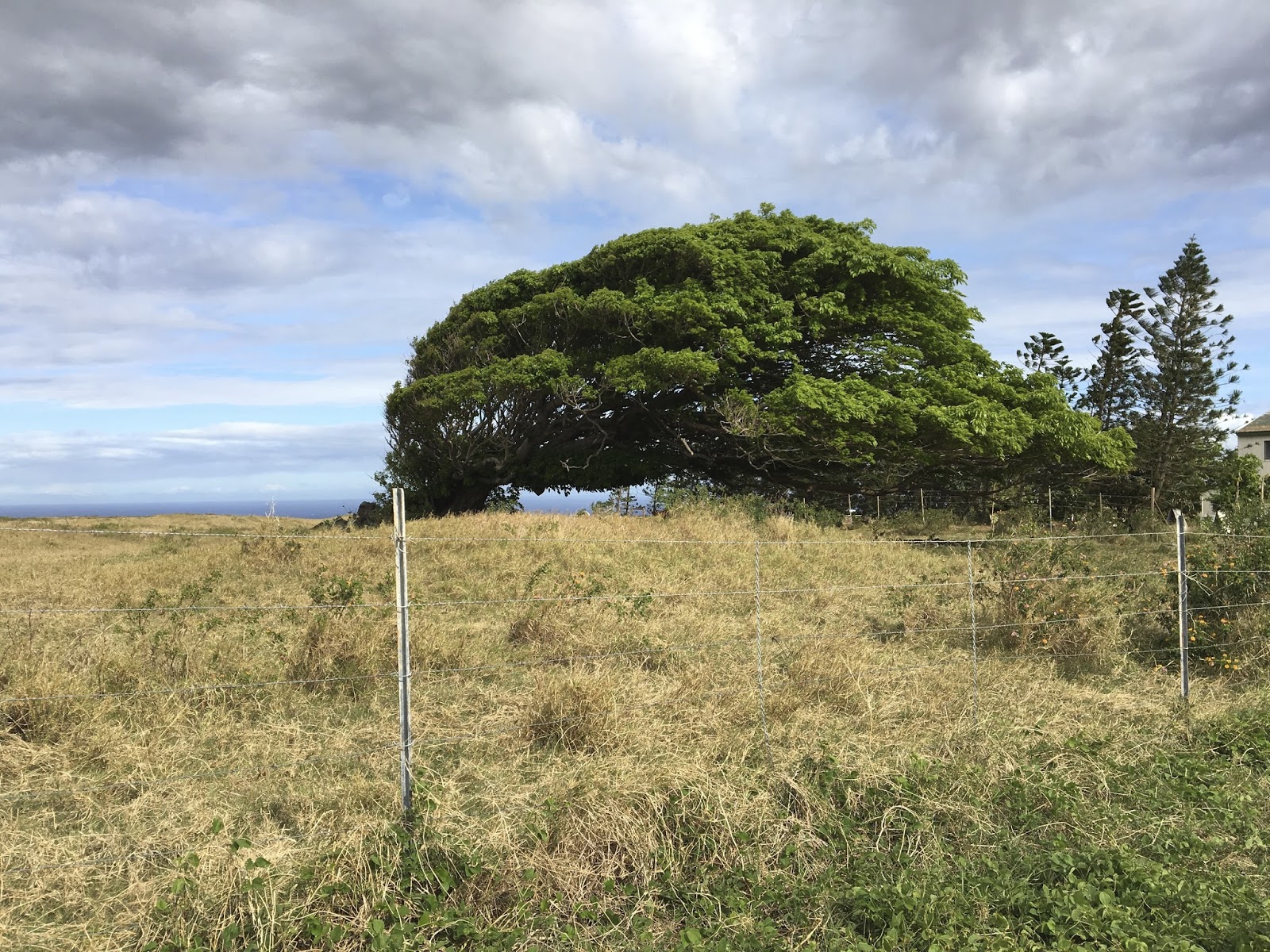
The trunk of this tree is at the far left.
The wind blew it into this shape. 


They ended the day with take out pizza and a slow, last evening in their Hawaiian home away from home. 

As she sat thinking, pen in hand, the days on the island started to meld together, glued into place by wonder, tinted by awe. 

Hawaii Island is a land of fire below and ice above; of high-lift 4WD locals who pass goose-necking tourists on highways with a friendly Aloha; of jungles, deserts, plains, valleys, caves, beaches, cities and towns; of living, moving lava that rules the inhabitants, telling them where they can live; of the ever-present ocean that roars or whispers around it. 

Wherever AJ went, especially to places that differed from her home, she was impressed at the apparent simplicity of creation. Rocks (earth), water and plants: the same elements were everywhere, they were just used differently, appeared in different proportions and developed differently in different parts of the world. 

In Hawaii the elements of earth are on fire; molten rock flows from the earth. It\’s a place where one can witness land being born. The violent, burning story that is so hidden and lost in time for so much of the earth is visible here.  

The plants are bright green, of all shapes and sizes, allowed to grow luxuriantly all year around, never to go dormant or be threatened by frost. The trees and plants invest heavily in bright flowers to attract pollinators and dispersal agents. 

The ocean water spans amazing shades of blue, becoming calm and violent in turns. Fresh water runs down the craggy mountains in countless waterfalls into the ocean. 

All on an island a fourth the size of the Upper Peninsula of Michigan. 

 *What is green sand? The sand at Papakolea Green Sand Beach and the stones making up the green rock jewelry AJ bought is the crystal olivine, a common constituent of lava that had erupted from a nearby volcano 50,000 some odd years before. The crystal is heavier than the black volcanic sand and tends to accumulate on the beach while the black ash drifts out to sea. 


Thanks for reading. 

Fear, Hiking Volcanic Craters, and A Botanical Expedition


April 6, 2016, Wednesday
B woke at 1 a.m. to go star hunting. His absence, the nearness of the jungle, the strangeness of the place, the open windows of the house against the blackness outside, and the eerie creaks of the house amplified by the nighttime quiet set off disquieting alarms in AJ’s mind. 

She got up, snuck down the steps to check the locks. The front door was unlocked, the house key sat on the ledge nearby. 

“If I lock the door, B won’t be able to get back in, but if I leave it unlocked, I won’t be able to sleep,” she thought, caught in a neurotic, middle of the night conundrum. 

She paced the living room and kitchen a while before coming to a decision: she would keep the door unlocked, but lay down on the couch (in full view of the door) and being a very light sleeper, would be alerted to anyone–B or otherwise–coming in. 

On the couch AJ wrestled with sleeplessness for about an hour or two, until B came back, apologetic for leaving the door unlocked. He forgot about his wife’s paranoid neurosis, and that it was usually worst in the dark, at night, in strange places. 

Rain moved in before the light of day and persisted sporadically throughout the morning, so the family donned raincoats, packed umbrellas and set out for Volcano National Park again. 


Indoor activities were a good idea, so they went through the Thurston Lava Tube, a domesticated cave made through lava, with electric lights and handrails. This tube is the only tube available for visitors in the park, its sides and floor worn down by curious tourists’s hands and feet, leaving it bereft of all natural cave life. The other tubes are protected from the scouring effect of feet and hands, as bastions for the natural flora and fauna. 

After touring the lava tube, they sat longer than usual for lunch at the Kilauea Lodge, a restaurant and hotel in Volcano Village, waiting (or resting, depending on what kind of mood each were in) a long time because of some tiff between waitresses. The food was good, the decor beautiful and inviting but the atmosphere was off-putting. The family felt like the staff just didn’t want them there. 

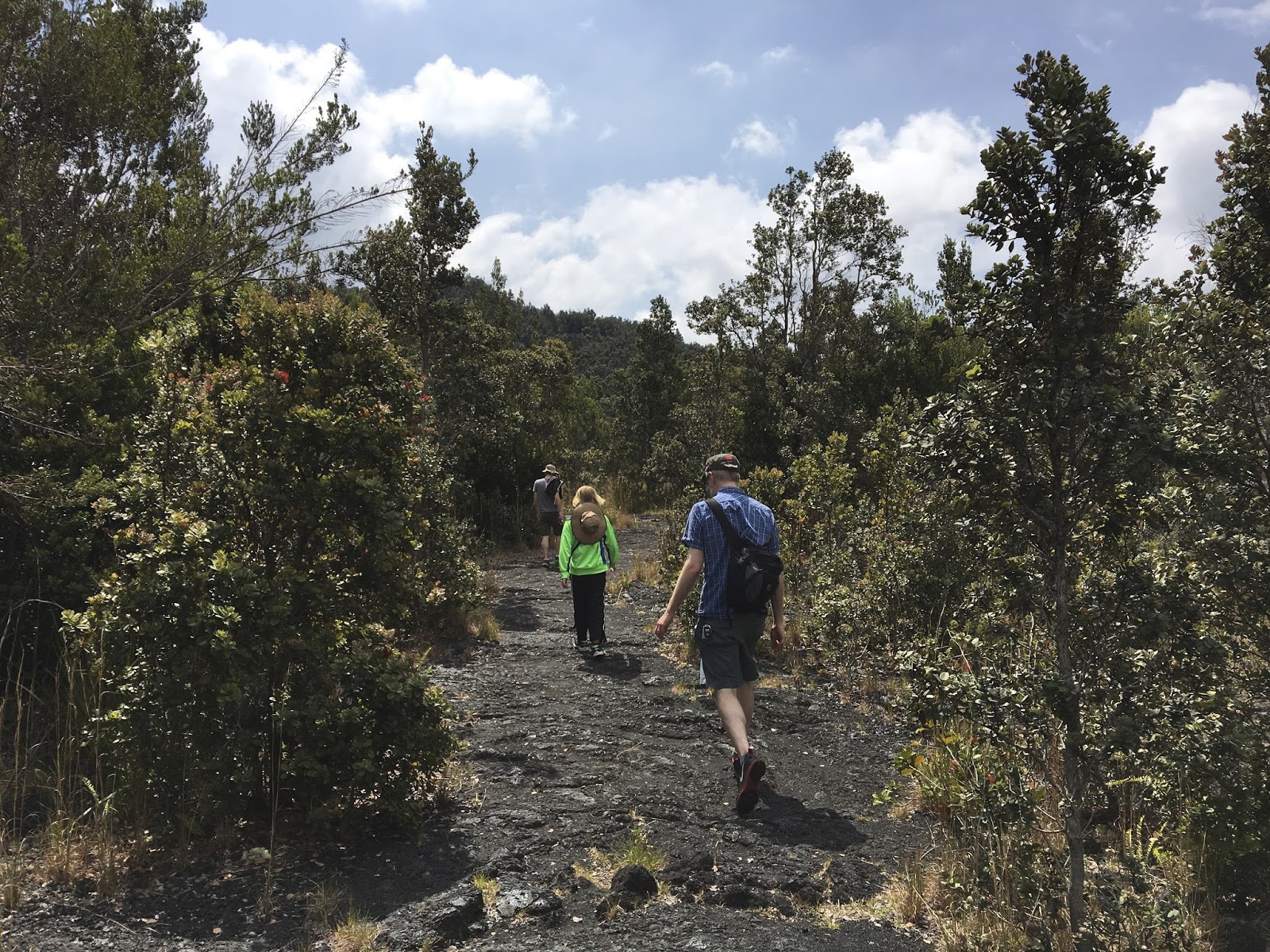
After lunch B parked at a pull-off and they started down the Kilau Ike trail. The trail semi-circled the outside of a volcanic crater, then lead them down the side to dissect the crater amidst steam vents and struggling flora. In all, the trail was 4-ish miles, and as in past family vacation hikes, walking induced brain movement, and brain movement induced strange questions, conversations and arguments. 

“Do you want to know the story behind sour Skittles?” TwoSon asked suddenly. 
“There\’s a story behind sour Skittles?” AJ replied.
“Well, it’s my story. It’s a dream I had about them.”
“Okay, what’s the story?” AJ smiled, loving these conversations.
“I had a dream about seeing a poster with sour Skittles that asked, \”What is 23 x 6?”
“138,” interjected B low, so TwoSon didn’t hear.
“What is 23 x 6?”
“Hmmm … 138?”
“And you dreamt that? Do you still like sour Skittles?”
“Yeah, but they always remind me about that dream.” 

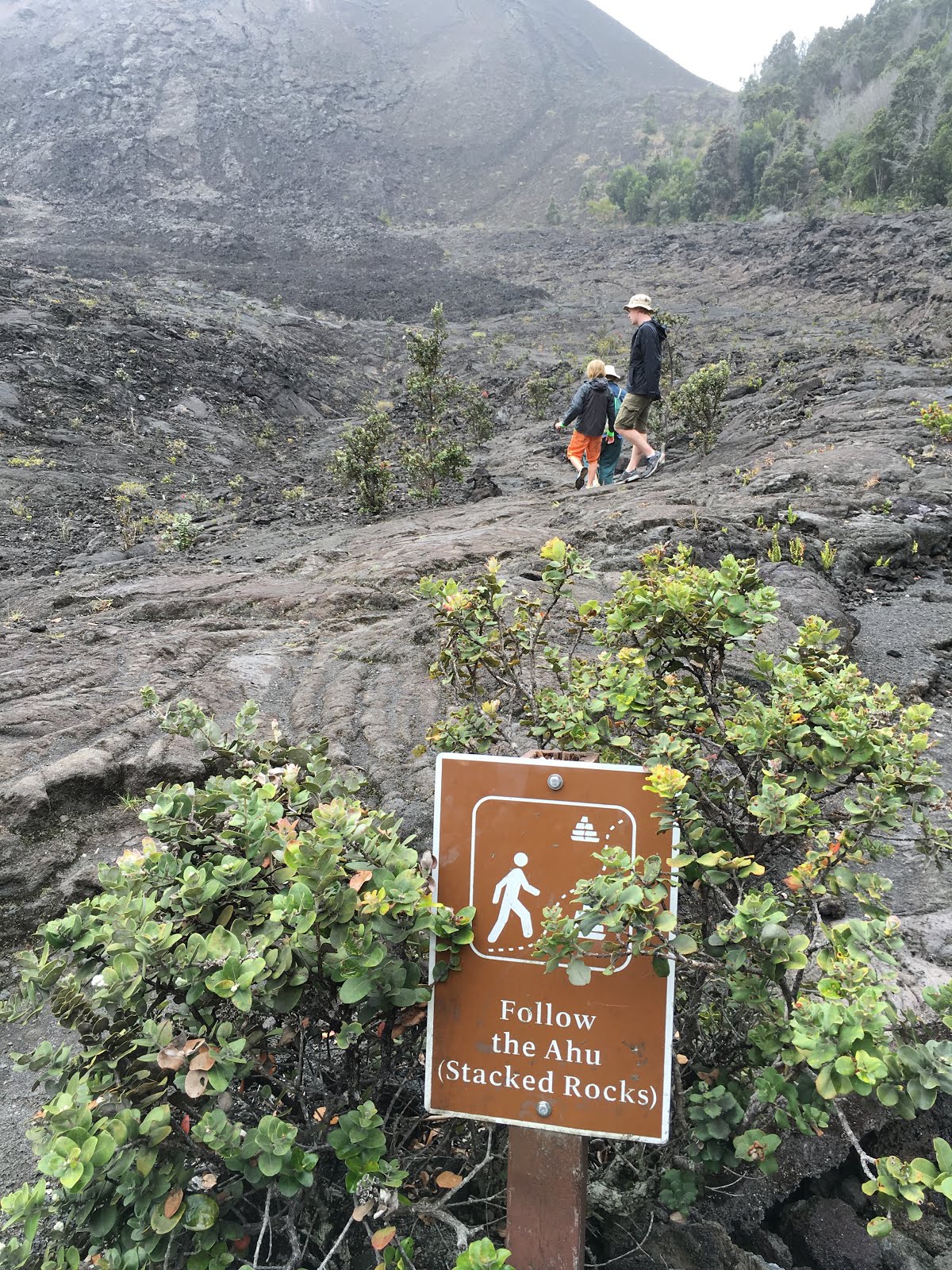
The first two-thirds of the hike was easy, through wooded path, then it crossed a volcanic crater of pahoe’hoe lava. The trail across this hardened flat plain was marked by piles of stones (called ahu). The crater bottom was pocked with struggling plants and steam vents, whose heat originated at unknown depths under the hardened lava. AJ donned and shed her raincoat as the mist grew heavy and light in turn. 

The last third of the hike was the challenging part, where AJ’s endurance dimmed. It’s wasn’t that she couldn’t make the hike, she was just a lot slower than the family. AJ slowly, but persistently trudged back and forth the steep switchback trail that lead up and out of the volcanic crator. 
The decision about the next activity was put into AJ’s hands and being a plant person, she opted for the Hawaii Tropical Botanical Gardens, located on the other side of Hilo. 


Trying to ignore the rain, B, OneSon and TwoSon thread their way along the paths in the gardens, snapping pictures of brilliant flowers and trying not to look miserable while AJ read the map and soaked in all the horticultural glory of the place.

Towering bamboos, massive ferns, freakishly shaped flowers, and slightly dangerous trees filled the area which ended at the ocean with a view of a Onomea Bay, then frothy with crashing waves. 
 
Being warm and rainy almost year around, the flora of Hawaii could afford to grow wild, wonderful colors and plant structures. Michigan flower colors paled next to the brilliant reds, yellows and oranges of the tropical plants. 

When the rain started heavy and they couldn’t ignore it anymore, they gave up the botanical expedition, and soaked and soggy made their way back toward Volcano. 

Along the way they stopped at the grocery store for potatoes, steaks and broccoli to cook at home. 

As well as the poorly grilled steak (the grill was low on gas), broccoli (for a healthy vegetable) and potatoes (for a starch), AJ stole some camera-rice and cooked it up, as she preferred it to potatoes.

The rest of the evening was spent fighting the chill and damp with the stove on in the kitchen for heat and amusing themselves with a movie, or games or frantically trying to guess the weather. 


Ever Before


April 5, 2016

Tuesday slipped in cool and slow. Somewhere in the neighborhood, a rooster, hidden by jungle, crowed about the glorious morning, the wild birds stopping their songs to let him have his say. Cereal, coffee, nuts and fruit were waiting in the kitchen. 

Although she was the only coffee drinker in the house, AJ wasn’t an avid one. There was a time when she drank the stuff everyday, laden with cream and sugar, but now, cream and sugar were off the menu. Needing energy and bereft of her usual “rice milk drink,” she faced a black steaming cup of Hawaiian coffee with a little unease. 

 “Why isn’t this bitter?” she asked a few sips into the steaming cup. Because she was in Hawaii, a state known for quality coffee. Coffee, as Alton Brown once said, is not supposed to be bitter. AJ’s epiphanic experience with Hawaiian coffee set off an interest that had her delving into Turkish, Greek, Espresso coffees, etc. that was fuel enough for a blog entry that may not ever see the light of day. 

The house was cool, but filled with light. Excessive heat was not a problem on the east side of the island. The house sat on stilts, open underneath, the floors were cold in the chill mornings. Lack of rain was also not a problem. 

The morning crawled on, the family snug in the cool, wooded house, slowly waking, intent on electronics. From the couch, B sighed.

“Weather …” he said. 
“What?”
“It’s going to rain tomorrow, so I rescheduled the helicopter tour, but now I don’t know what to do.”

There were a few things that dictate where and when the family went places during the week, and none of them was a person. Light, or sunset and sunrise, and weather (which would either allow light or block it, or get expensive electronic photographic equipment wet) were the dictators, especially when one of the party was intent on optimizing conditions for great photography. 

And it doesn\’t take just a quick look at the weather map. It’s consulting astronomy charts, knowing where stars will be, the minute the sun rises and sets, maps with locations, certain atmospheres, etc. Add cloud cover and rain into the mix and you have a flurry of elements that boggles the mind when considering travel activities.

With the next few days’ weather looming over them, they left the house and headed back to Volcano National Park. The Pu’u Huluhulu Trail was first, a walk across miles of solid pahoe\’hoe lava to an overlook, past curious flora that insisted, despite the odds, on flourishing. 

The Volcano House served a great lunch with a view that overlooked the volcano. As they sat, they planned some more, then smashed pennies and browsed the gift shop, thankful for the non-trail bathrooms. 
After-lunch they drove down scenic Chain of Craters Road to where the lava meets the ocean, stopping at picturesque spots along the way, providing opportunity for car-sick OneSon to switch seats with AJ and tamp down the travel-induced dizziness.  

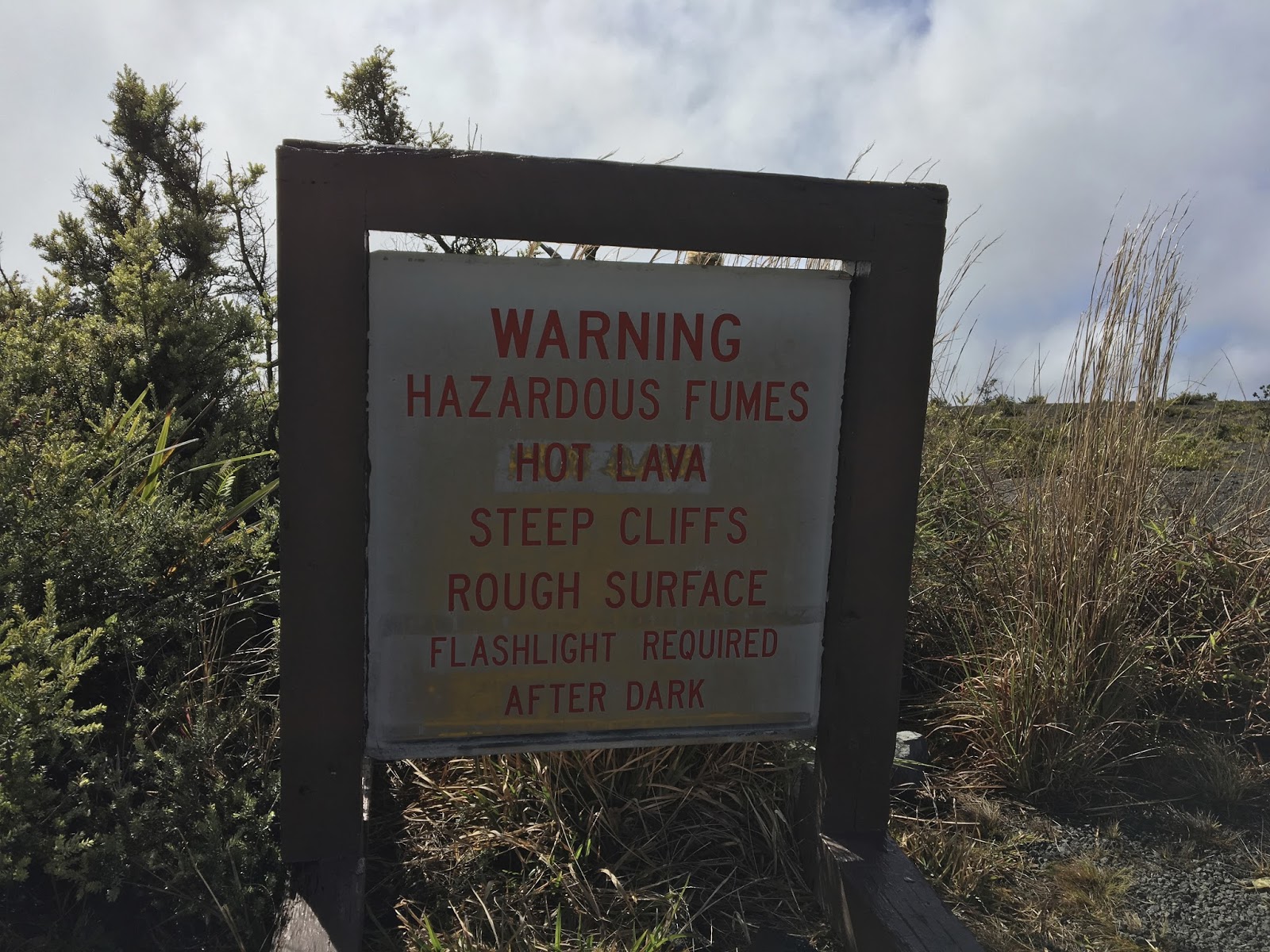
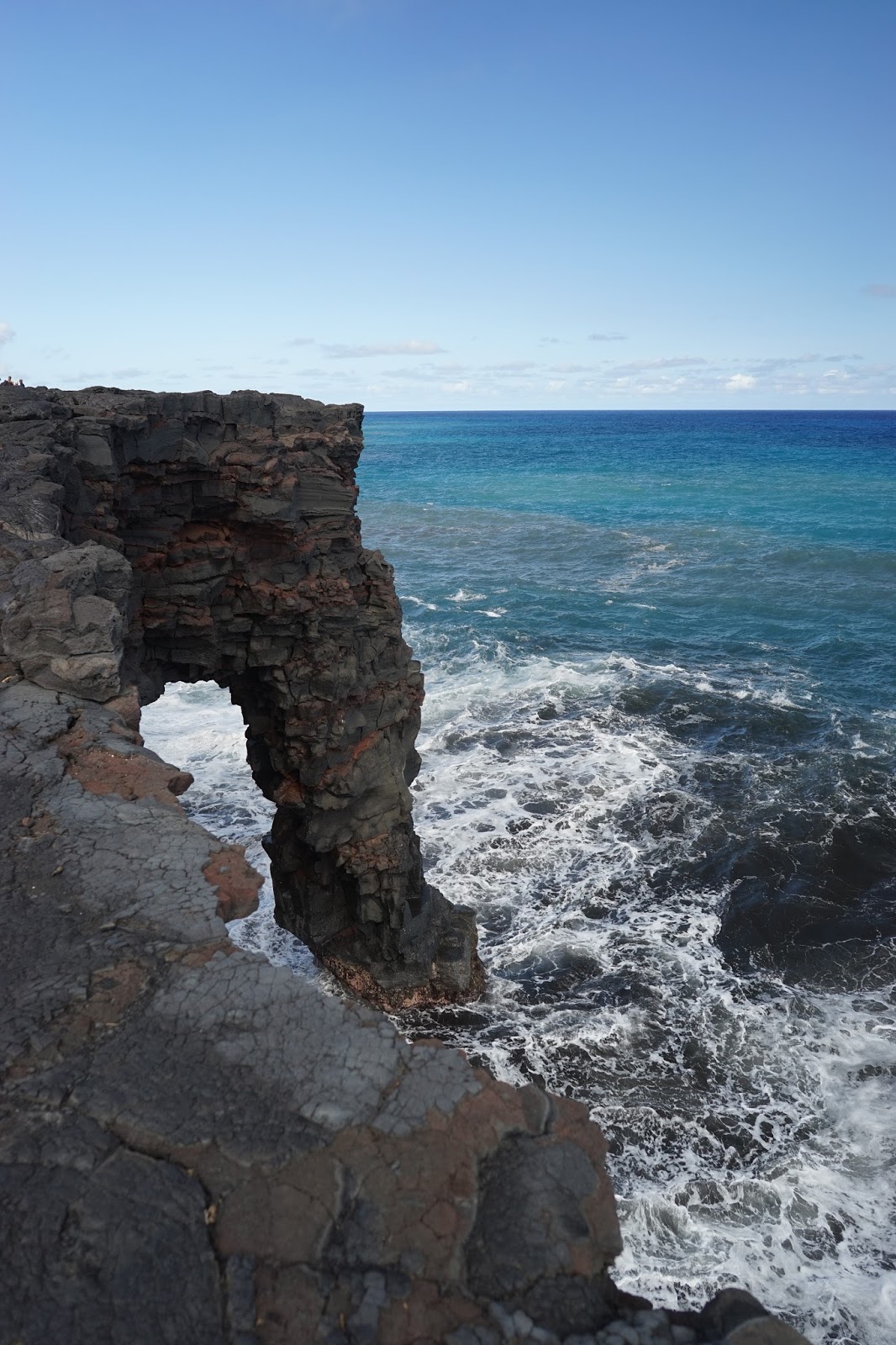
At the end of Chain of Craters Road, B and OneSon hopped the rope barrier risking their lives at the edge of the lava cliff to take  pictures of the Holei Sea Arch while from yards away, AJ and TwoSon fumed and “tsk-ed” at their daring feat. 

When the two were safely back on the right side of the rope, B suggested a hike.

“This road leads to  a lava flow that went across the road,” B said. Real-life evidence of the destructive nature of lava lay ahead, and the family wanted to see it. 

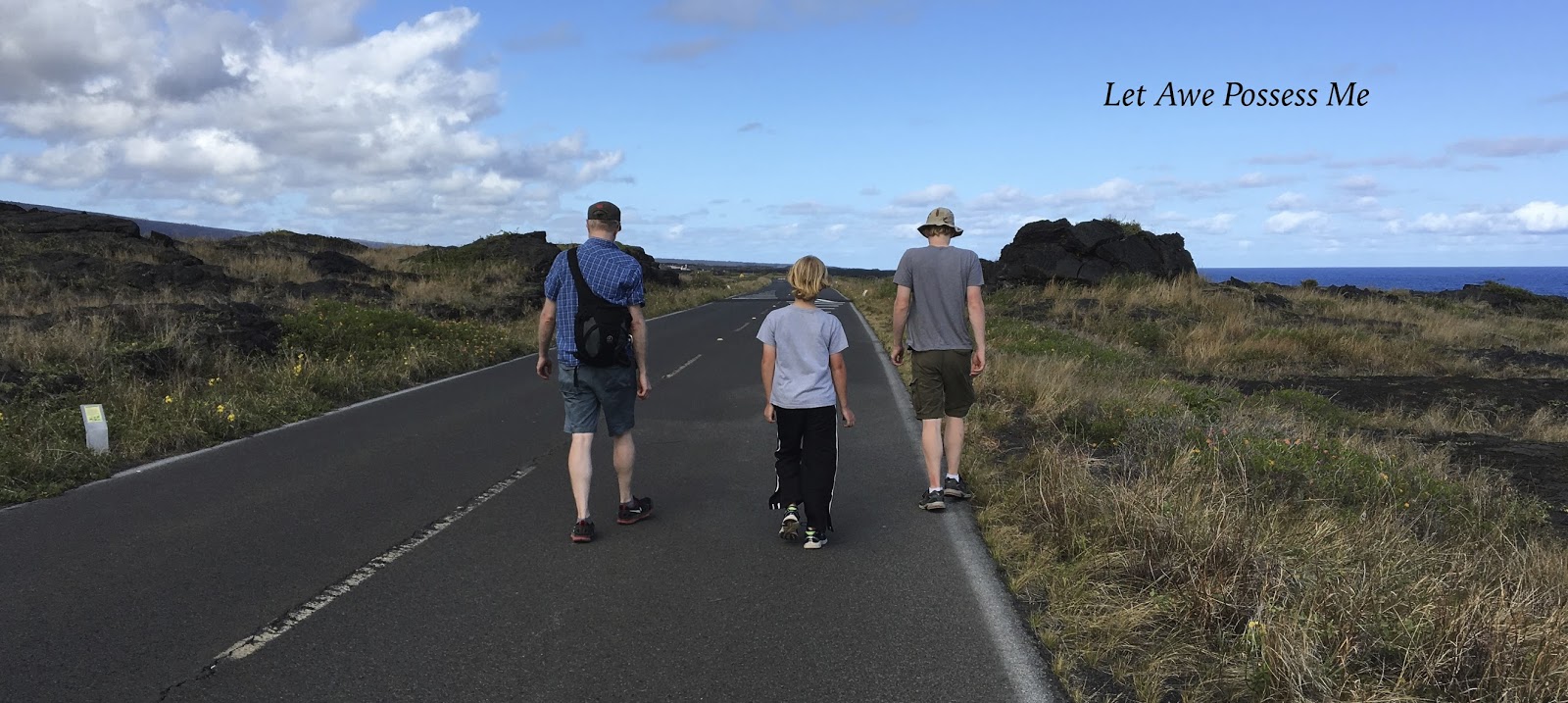
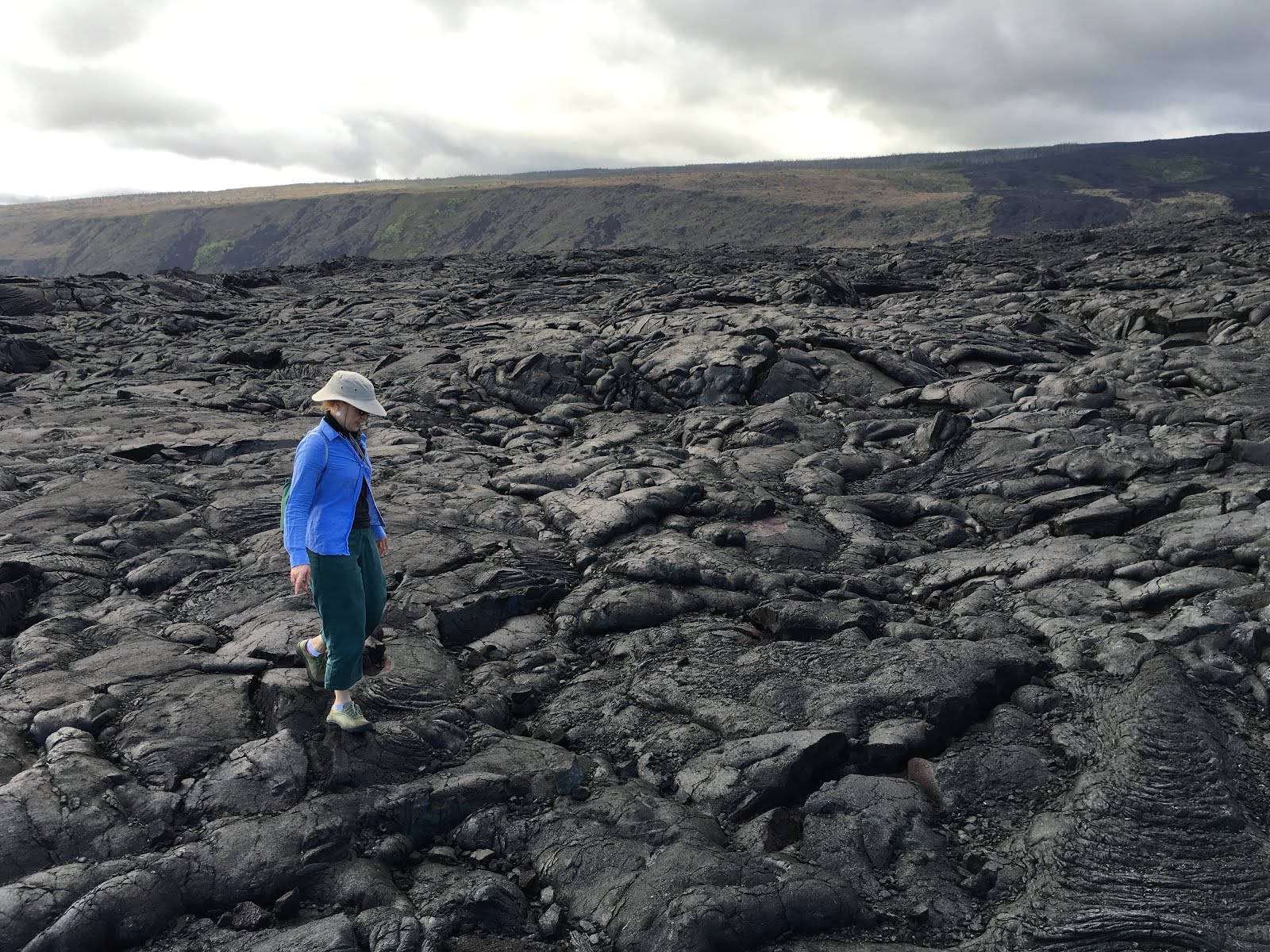
A nice smooth paved road ran on for miles ahead of them, cutting neatly through a lava-encrusted slope, but AJ and TwoSon preferred walking on the smooth pahoe-hoe. Eventually the paved road turned into lava-gravel. 

AJ could hike the hikes, climb the trails, see the sights, but she was slower than she used to be, which gave her a heart-pleasing view to every hike. She often lagged behind, and B and the boys, unless B was taking pictures, were ever before her. Hawaii provided backdrops of black plains of lava, of lush green jungle and brown prairie, but what was ever before her plucked her heartstrings, resonating emotion into the experience.  
  
After walking so far that it elicited complaints from TwoSon, and never seeing the obstructive lava flow, they headed back, and found out at the information station on their way out, that lava no longer covered the road, it had been cleared.
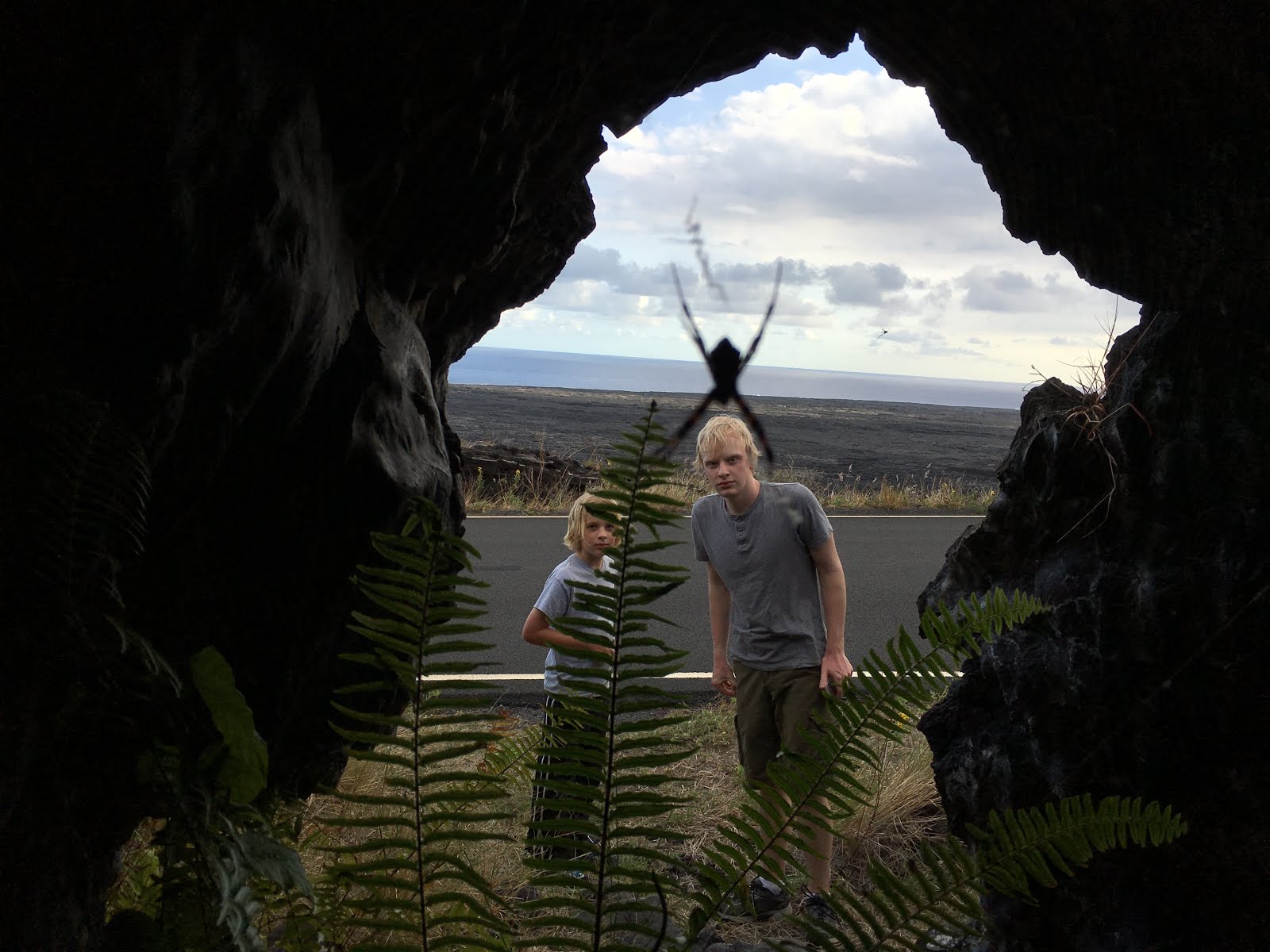
On the way back up the Chain of Craters Road, they stopped at a lava tube OneSon had spotted, where a spider had set up a web, ready to catch dinner. 

They traveled back near their jungle ohana, where they ate at the Lava Rock Cafe, where AJ had the Kapuna Pork for the second time, this time realizing that it did not have much seasoning.
  
With sun sinking and night taking over, the family returned to the Jaggar Museum and Overlook, amidst an overflowing parking lot and museum teeming with visitors. B jockeyed for a good position to photograph the glowing pit in the earth while AJ, OneSon and TwoSon browsed exhibits over and over, filling their wait time with lava lore, science and facts, and people-watching.

A Light in Darkness


April 4, 2016

Crazy-early next morning, B snuck out to the Pololu Valley Overlook for sunrise photos. He returned hours later ripping and raring to go as the family crawled from their rooms. It was their last morning in their Basement Ohana. 

“Do you want to go the beach a little? It’ll be your last chance to go boogie-boarding,” he asked first thing. 
“No,” TwoSon said. OneSon, face still glowing from where the sun smacked him around the day before, grimaced, pretending not to hear the question through his headphones. 

“Are you sure?” 

“Yes.” A little bit of beach goes a long way for the family. Michigan-style beaches, with their three months of swimming and six months of shore-walking were just right. They were more of a hiking family. A wait-while-Dad-takes-pictures family. 

B and AJ colluded to shuffle and change the schedule due to sunburn, beach exhaustion and weather while the boys packed up their stuff and helped put it in the car.

They drove the sneakily steep Saddle Road back to Hilo, stopping at Rainbow Falls just as a bus-load of selfie-taking tourists flocked to the spot. Rainbow Falls is a large arch with water falling over it. Stairs along the cliff lead up to a beautiful banyan tree. The tree spanned for yards in all directions, standing like a tall woman, spreading her arms which were draped with a string shawl. Except this tree-woman had hundreds of arms. 


After lunch at a cafe in downtown Hilo the family stopped for dessert at Hawaiian Brain Freeze, a little shop in a strip mall known for their Hawaiian Ice where the boys ordered … ice cream. Unaccustomed to eating ice-cream in hot weather, TwoSon dripped more ice-cream on his clothes than in his mouth. 

To fill up some time, they stopped at the Asian-inspired Lili-Uokalami Gardens and walked out to Coconut Island. The park was filled with tremendous monkey pod trees, expansive banyans and camouflaged feral cats. Eventually B’s early morning jaunt caught up with him, so they mostly sat and rested, taking in the scene. 


The forty-minute drive to Hale Ma’ukele (the name of the house) in Volcano, Hawaii took them past stores and commerce which dwindled into dense woods and lonely roads the farther they drove, reminiscent of the the Upper Peninsula of Michigan. GPS directed them off the highway into a veritable jungle where they found their next Ohana hidden behind palms, tropical trees and lush greenery. 

The owner of the house built and designed it himself with rich brown-red native woods, cement countertops and open house plan, complete with a rain-water tank outside. 

The small store nearby supplied milk and information. At Volcano National Park they registered TwoSon (4th graders and their families got in free), then picked up a quick meal at what was at one time a Military Training Center, complete with little cabins and a mess hall. 

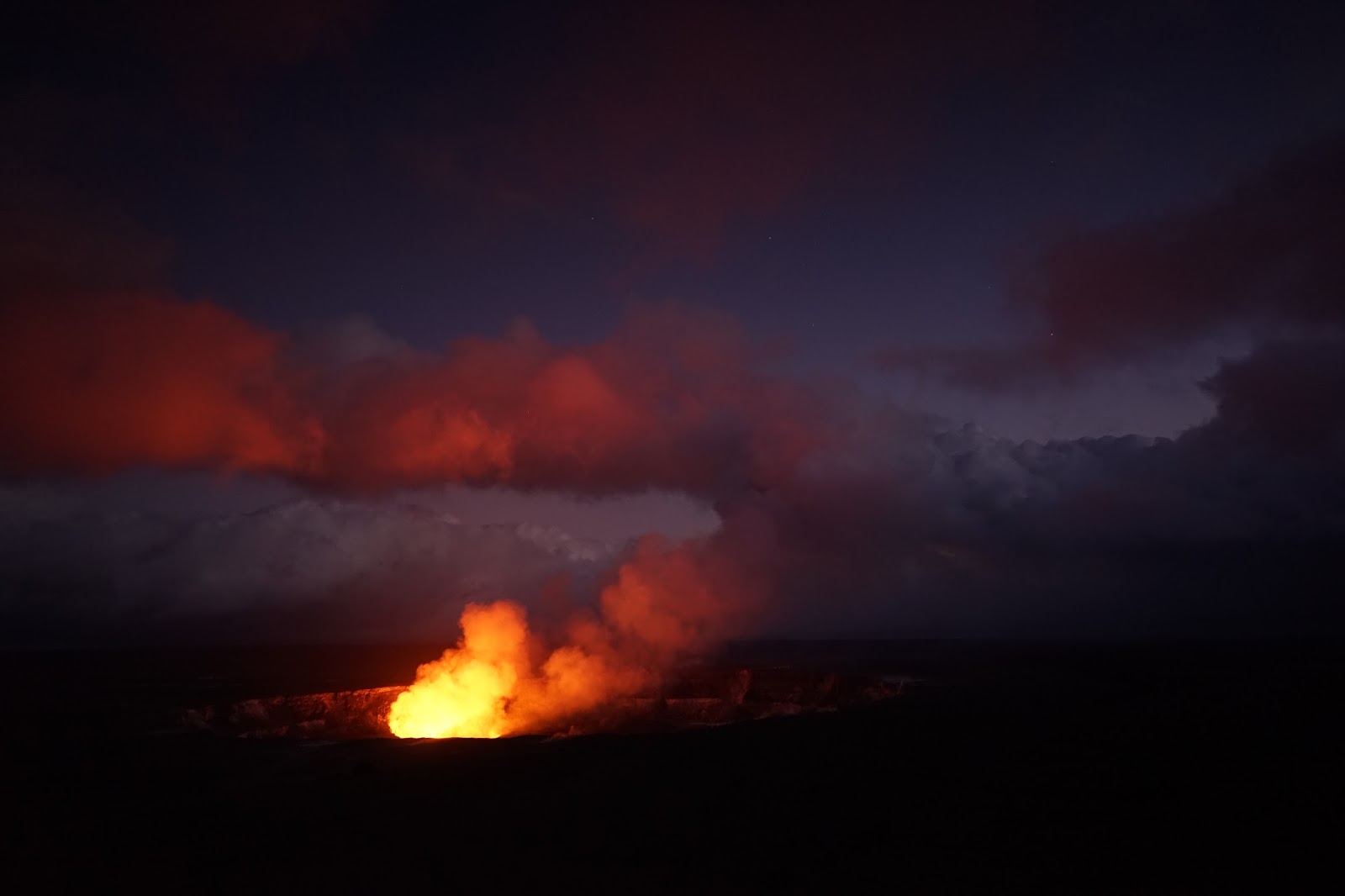
While they ate, the sun snuck down below the horizon, but that was what B was waiting for. There were still sights to see after dark in this National Park. At a turn-off at the end of one of the roads, in the dark, the family followed lighted walks, stopping at a fence that overlooked a vast space of darkness, punctured violently by a huge glowing red light in the distance. It was the volcano, burning, smoking, glowing with the most natural light around. 

As a northeasterner, fire, smoke and liquid rock coming from the ground is a weird, wild and wonder–inducing concept for AJ. Shivering in the cold, watching the glow of molten earth from afar, breathing in the charred, sulfur air, a smile crossed her lips, and sank deep to touch her heart.

Although she didn’t know it at the time, something else existed at that spot for her, other than the glowing red hole in the distance. Something hidden in the dark, safe but enlivening, something AJ seemed to sense but not see. Whether it was the dark, or the power of the orange glowing, molten lava far in the distance, or that yet-to-be-discovered something, her mind started to turn faster, dig deeper and see more clearer than she had since stepping foot on The Big Island.