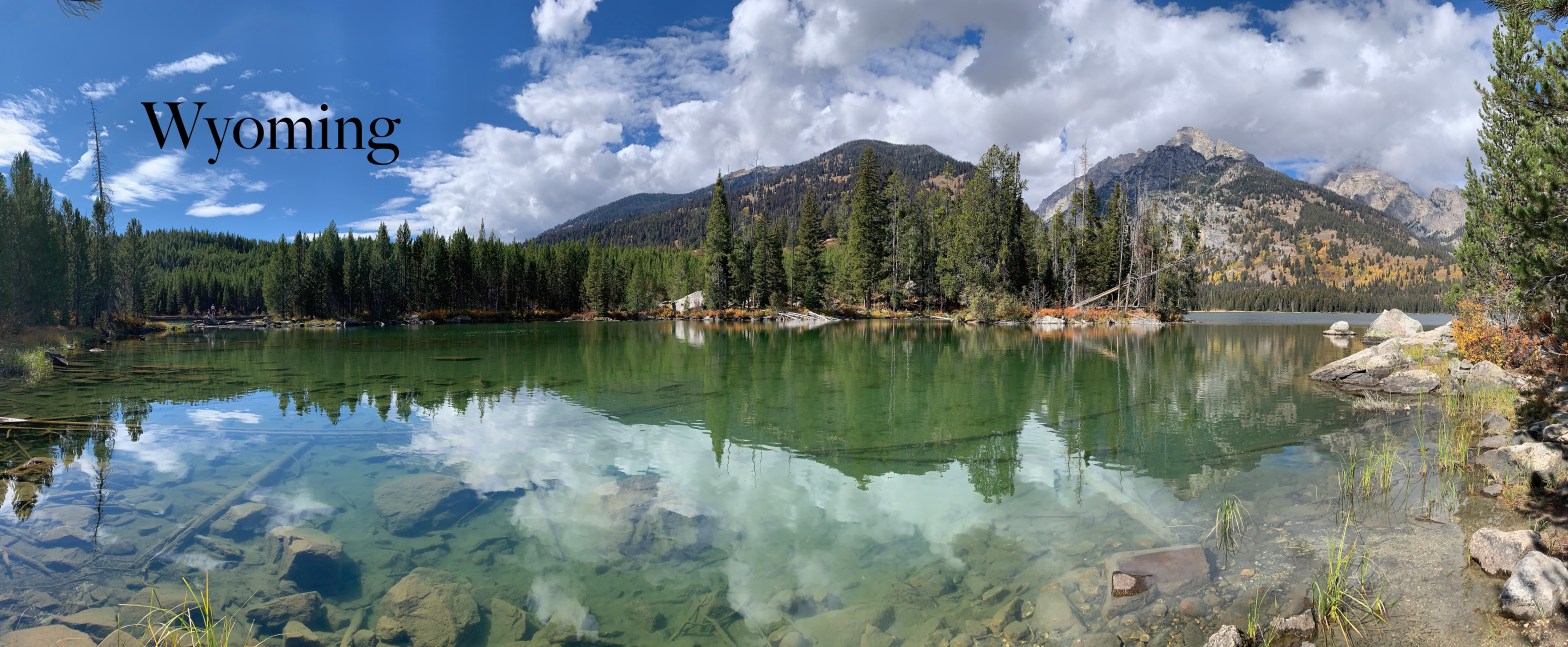
The next morning, Astrid and Bjorn ignored all the “Wildlife Parties*” along Moose Wilson Road in Grand Teton National Park and drove straight to their destination: Taggert Lake-Bradley Lake Trail.
What do you think of when you think of a moose? The fumbling, lovable oaf Bullwinkle of the cartoon Rocky and Bullwinkle? Gentle, bovine giants sticking their long muzzles in the water to munch water lillies? Yeah, they do that, but when you actually see one you might get a different impression, if you know what you’re looking at.
Moose, or Alces alces are the tallest, heaviest deer in the world and, among North American land animals, are only second to bison in mass. The bulls are a half ton (and more) of pure muscle and bone, on long, thin legs and grow giant racks of antlers every spring only to shed them after mating season. They Grow. Back. Giant. Chunks. Of. Bone. On their head. Every year. (Same with many deer-type animals.)
It boggled Astrid’s mind to know these things. And she had the chance to see one, live, unfenced, without barriers, in the wild.
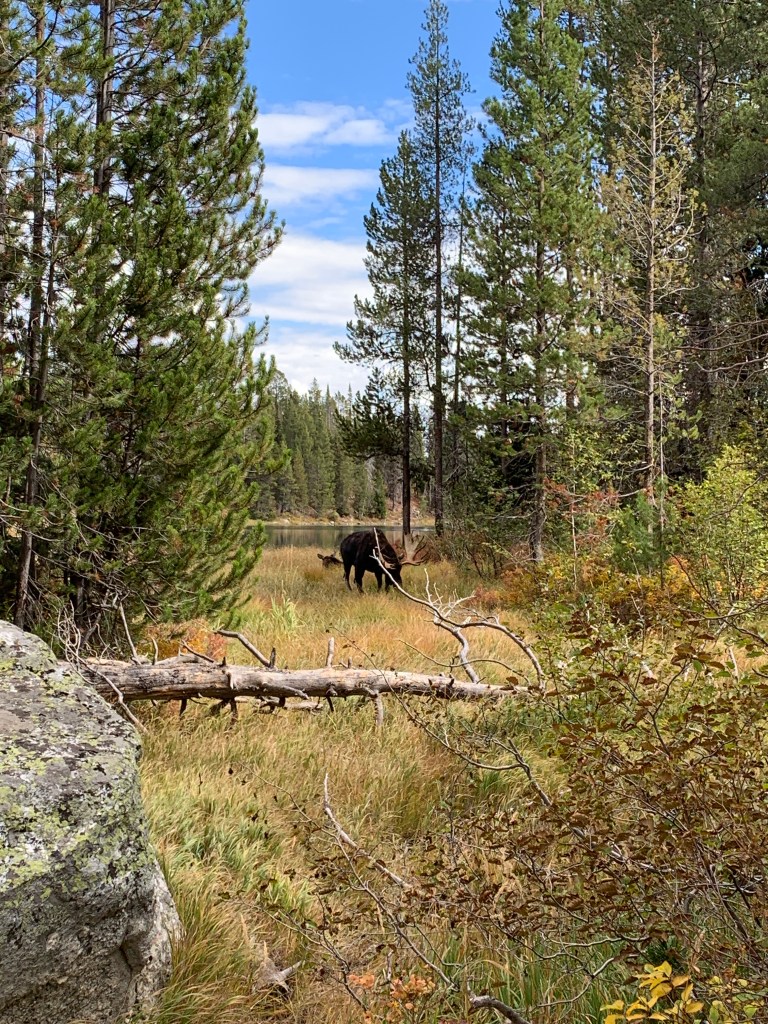
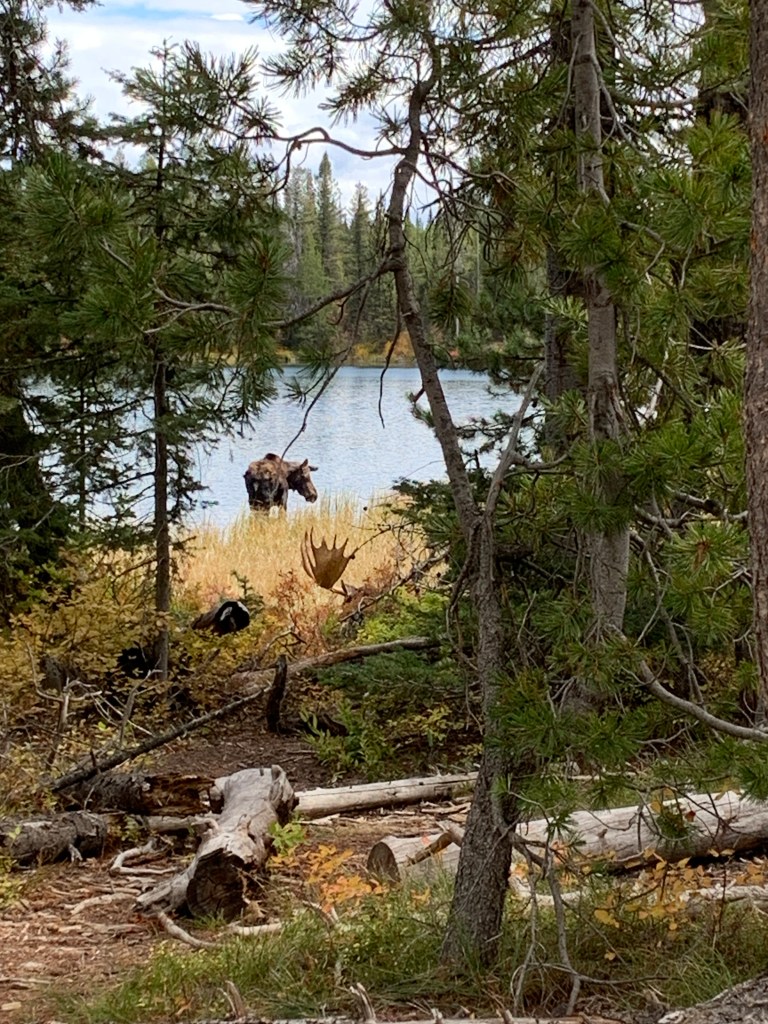
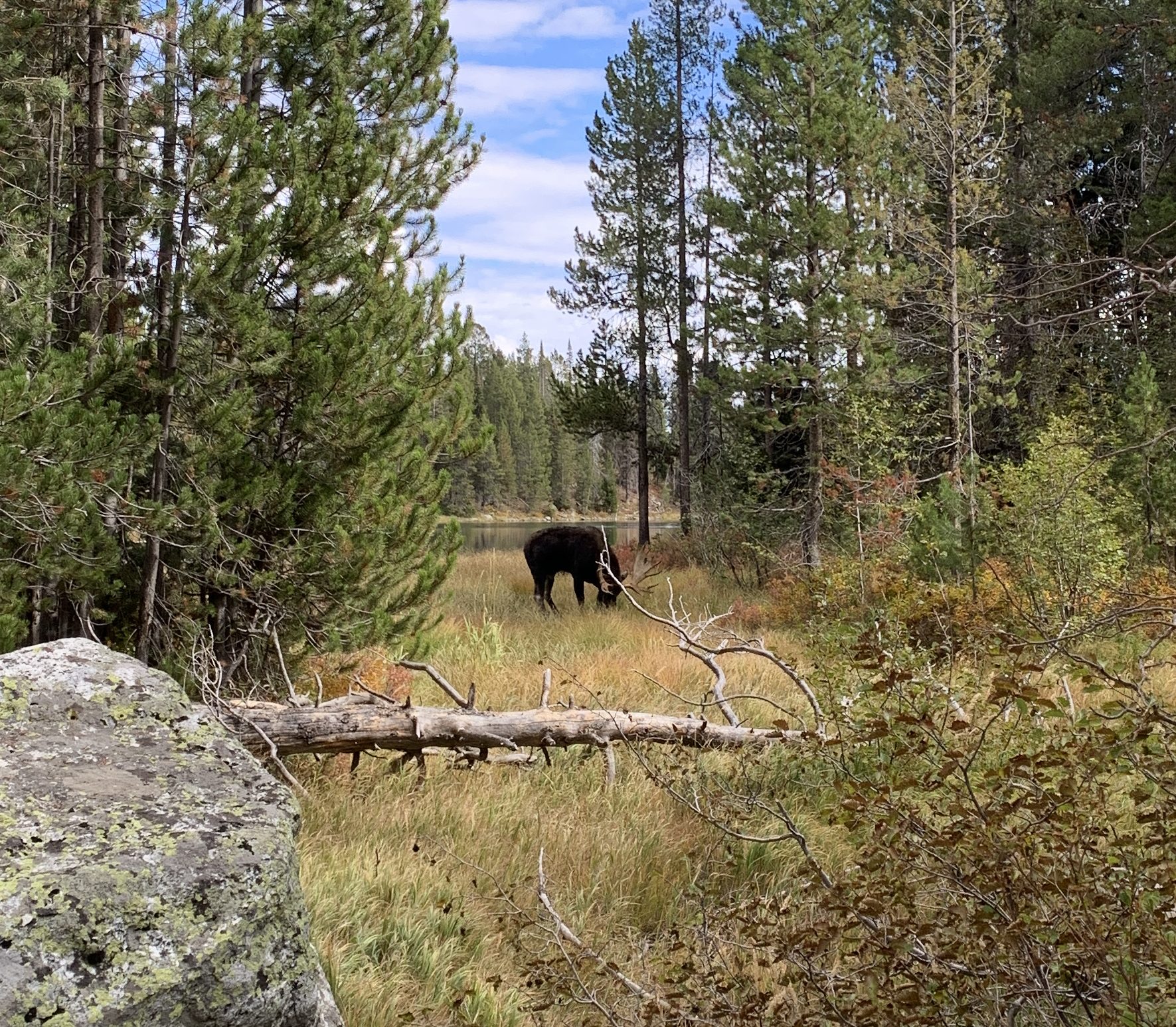
Astrid and Bjorn set out on their hike, wanting to see a moose. At least, Bjorn wanted to. Astrid was a little skeptical and scared about the prospect of being in the presence of such animal bulk and regenerative powers, untamed and going where they please, as fast as they please, when they please.
And at the end of a magnificent hike over dry dust trails, through shaded woods, following fading signs around clear, aqua ponds, they found a pair. A few yards off the trail, in a grassy area beside water, a pair of moose–a cow and a bull–lazed away in the September sun, munching, resting. Astrid’s heart beat faster, her senses sharpened to every sight and sound.
Wild animals–moose, bear, etc. have no code of conduct except what instinct tells them. They’re not human, so we have no shared moral system, we have low prediction of their behavior (at least, Astrid does). If the bull moose felt the urge to charge, he could and would do it, and be fully within his rights.
Astrid felt electric wonder in the presence of the beasts, because she knew what she was looking at. In person, moose are jaw-dropping huge chunks of living muscle on four very tall legs. Bjorn was content to sit a few yards away to eat lunch. Astrid sat, angled toward the beasts, too anxious and awed to eat. There was a crashing in the underbrush and she was to her feet in a second. But it was not the moose charging ;the bull just got up to move to a different spot. Astrid couldn’t relax being so close, so they moved off to the nearby Bradley Lakeside and had their snacks.
⚔︎ Olaf of the Sword ⚔︎
Hiking back from their lunch with moose, they passed a young family of four, a mom, dad, baby and toddler. The toddler wielded a found stick in the shape of sword, hilt and all.
“Olaf, put the stick down. Put it down and come on. Honey, Olaf. Put the stick down,” the mom pleaded with the tow-headed toddler as she shifted the weight of a baby carrier to her other arm.
But little Olaf was enthralled, like King Arthur and his Excalibur. Little Olaf had a destiny, a mission given to him with his found sword, he couldn’t just drop it.
As Astrid passed, she smiled and said, “We have an Olaf, too. He’s much older.” But she wanted to tell them so much more. Things she would have told her younger self.
Her two boys were grown to adults, one doing life, the other in college. She wanted to tell little Olaf’s parents, “Let him have his found sword of glory. At least until you get to the car. Let him slay his dragons, let him defend you and his baby sister, let him feel the power, let him carry it proudly, feel pride in wielding the beautiful, fated weapon. I know you’re scared he might hurt himself, and you’ll end up in the ER. So, Dad this is where you step up, teach him how and when to use this tool of defense, with skill, honor and truth. Teach him when to use it, and when to keep it sheathed.” ***
& Magic Doors &
On the hike out, Astrid and Bjorn came across a patch–no–larger than a patch–a small forest, a woods, of myriad, straight, man-planted thin pines, all bare, grey thin ghosts of their potential. Most of them carried only a hint of life far above on their swaying tops. Starved of light and nutrients, possibly scorched at one time. As they followed the trail through, it was as if Astrid had left a room of plenty and went through a magic door to a dystopian dreamscape of dread, foreboding and despair, but with a hint of green beauty and maybe hope way above their heads. The sensation was notable, and curious enough to work on her senses and imagination. She wanted to stop and study, and see where it led in her mind, but she pushed her feet on, toward the visitors center, the thoughts and sights truncated, never fully formed, except to note how it immediately made her ask questions, “What happened here? Why were these trees planted like this?”
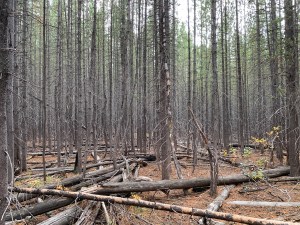
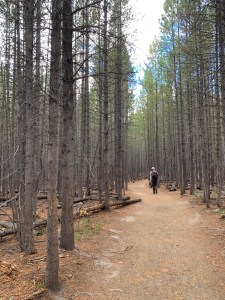
Astrid is a middling horticulturist, a second-rate naturalist, and a poor arboriculturist, but she can identify a few trees now and again. Looking at an average garden landscape, she can identify most of the plants, and the weeds. It’s a useless talent in this day and age. Pines are the most mysterious to her. Presented with a grove of different evergreens, she is stumped. It is a chlorophyllic mystery.
Do you know what you’re looking at, in a wild landscape, roadside weeds, or on a hike? Do you know all the names of everything you see? Do you know how those organisms live? If you don’t, like Astrid often doesn’t, you are closed out of that particular world, like a door shut and locked.
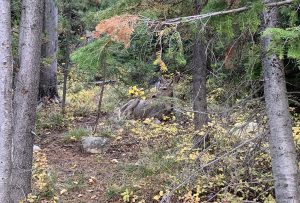
But, as in the best of fairytales, when you ask yourself, “What is that little yellow flower?’ you are really asking “What’s behind that door?” And, if you follow the trail of questions, online or in reference books, as in fairytales, that door-question can take you on an unexpected adventure, even if only in your mind. Just like people, every plant, every animal has a story.
This ‘door-question’ may not lead to supernatural magic like in fairytales, but it might lead to a knowledge of a natural magic, which is what Our Creator used to make us with and the world we live in. It is what we can touch, know, learn and explore. Sometimes we call this observation and measurement of natural magic, “science,” but it often seems like so much more.
What natural-magical world can you see? What imperceptible details mark its boundaries, signs others pass by without knowing? If you let it ignite the childlike part of your mind, you just might find yourself in a story.
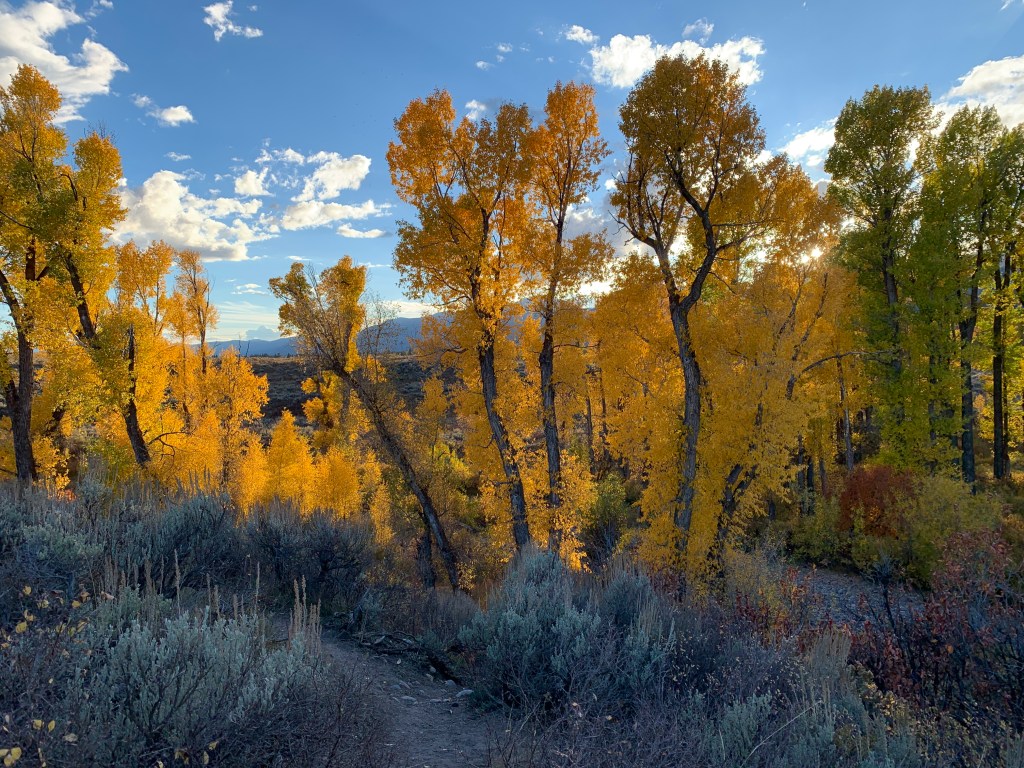
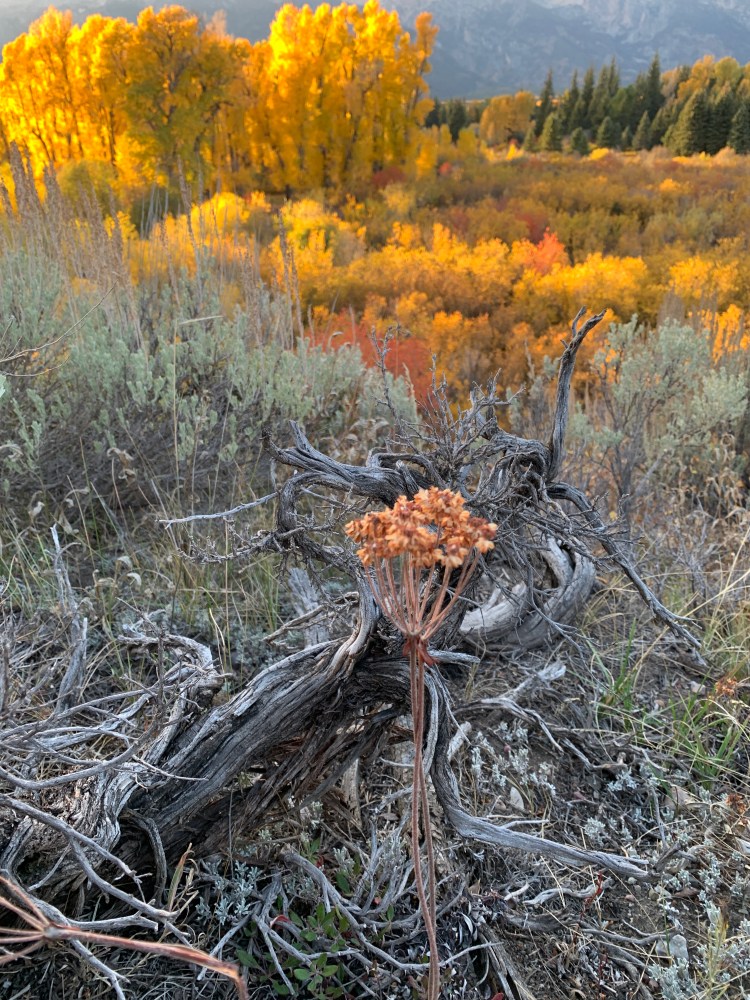
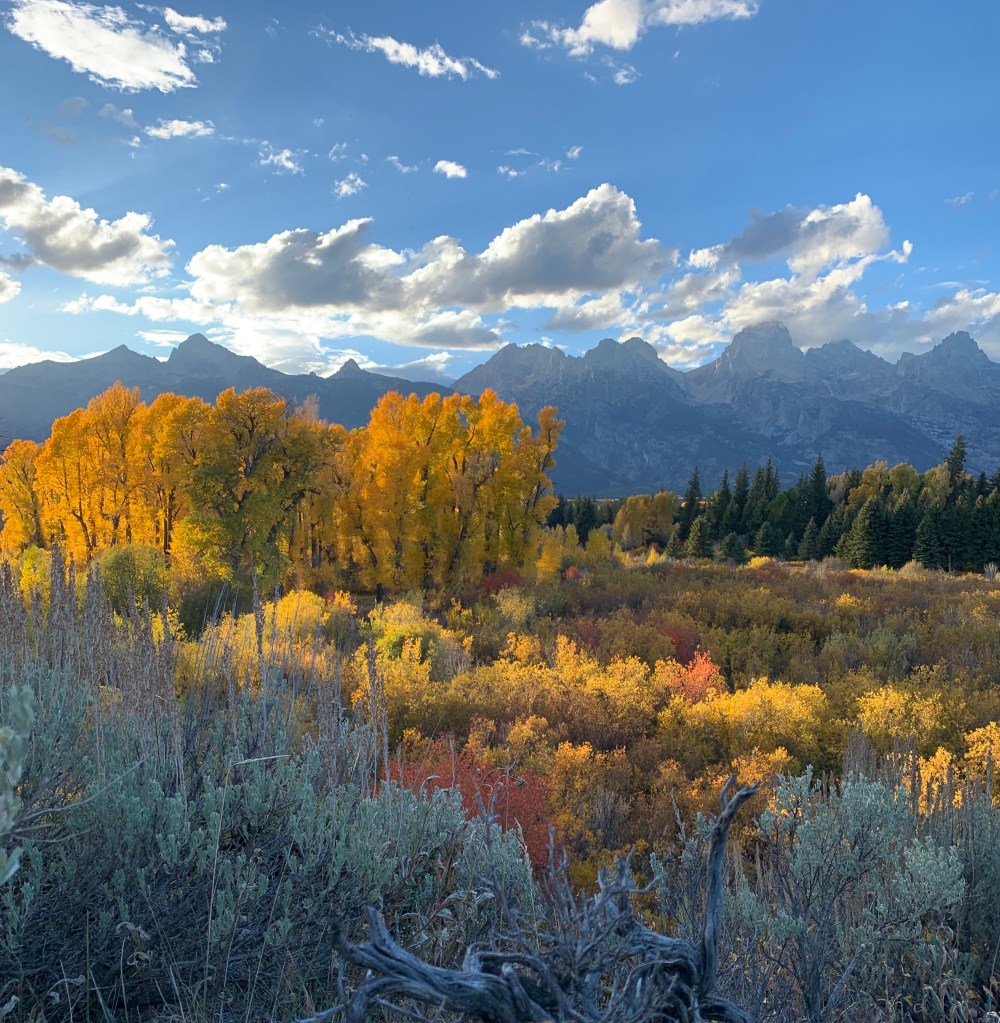
To close out the naturally magical day, at Blacktails Pond Overlook, Bjorn set up Tripod with Camera, and waited for good clouds. Astrid paced nearby, along a short trail on the banks of an exhausted stream, and wondered about the plain filled with rugged and gnarled artemisia .
*Wildlife Parties: large conglomerations of people or long lines of cars on a road, brought together by a wildlife sighting
*** True cautionary tale. “Yeah, I have a story about sticks,” a seasoned scout leader interjects with a doleful air. “Some kid at cub camp was hitting a tree with a stick, as scouts always tend to do, and it broke, ricocheted and stabbed him in the chest. Blood everywhere. I was there, saw the paramedics. He didn’t die. But it was a lot paperwork for someone. So don’t hit trees with sticks, at least, not on scout campouts.”
 Not I
Not I 